

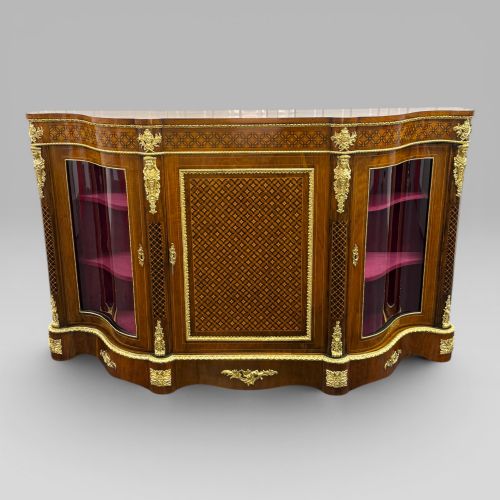
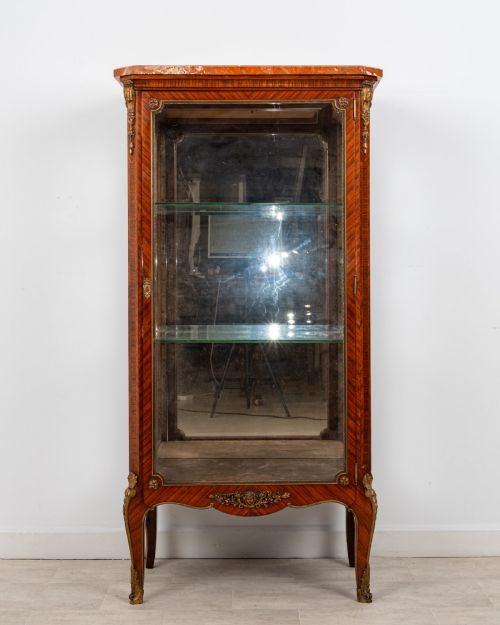
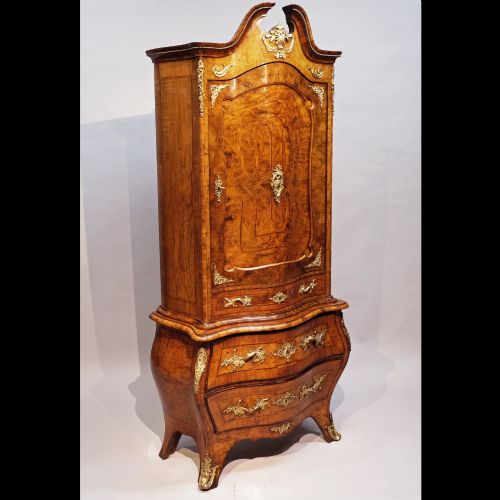
French Marquetry Display Cabinet
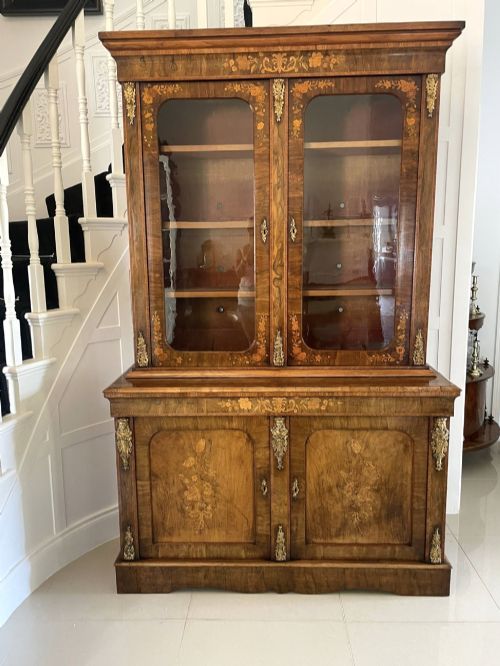
These pieces of French marquetry display cabinet unite intricate wood veneers with glazed panels to show off prized possessions.
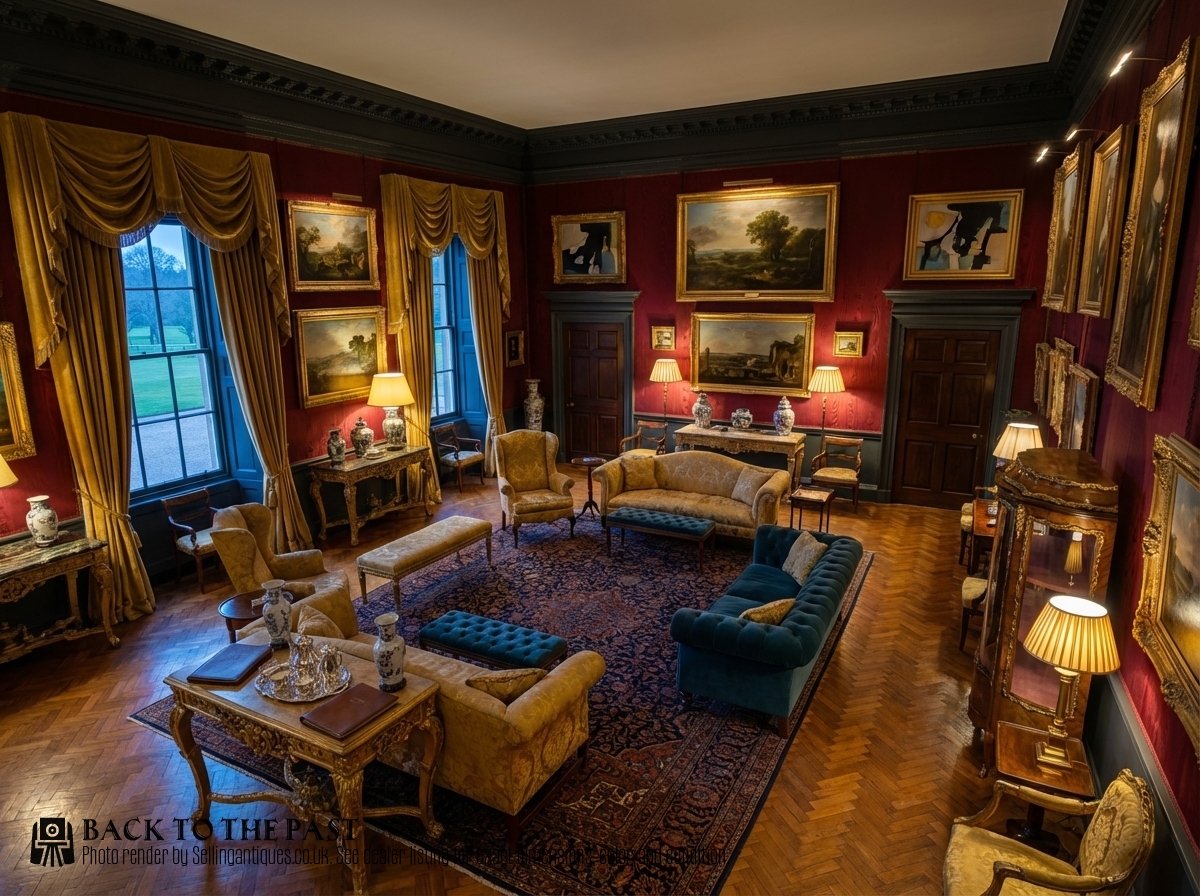
French Marquetry Display Cabinet
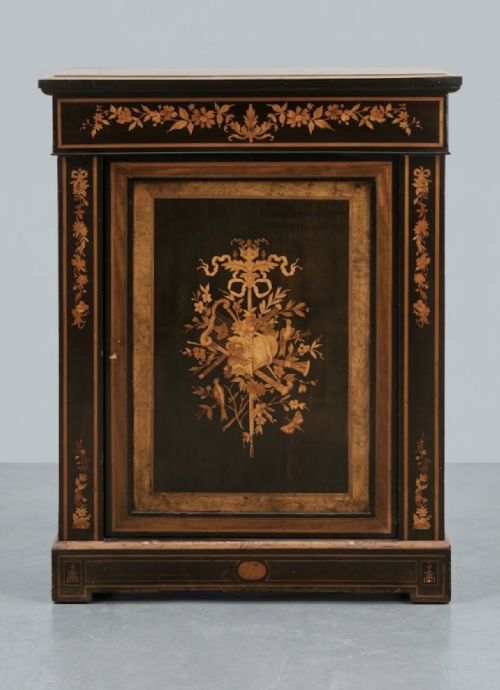
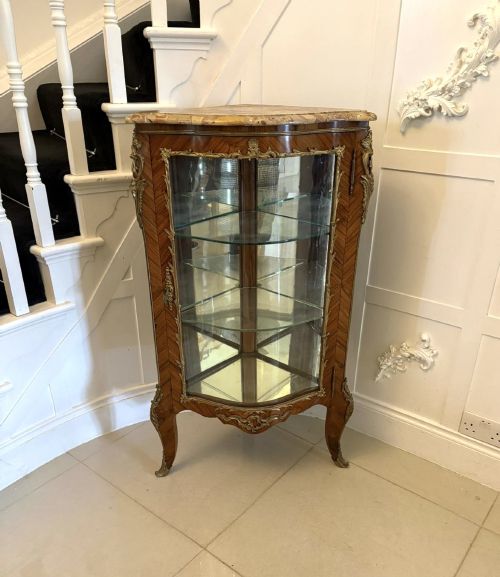
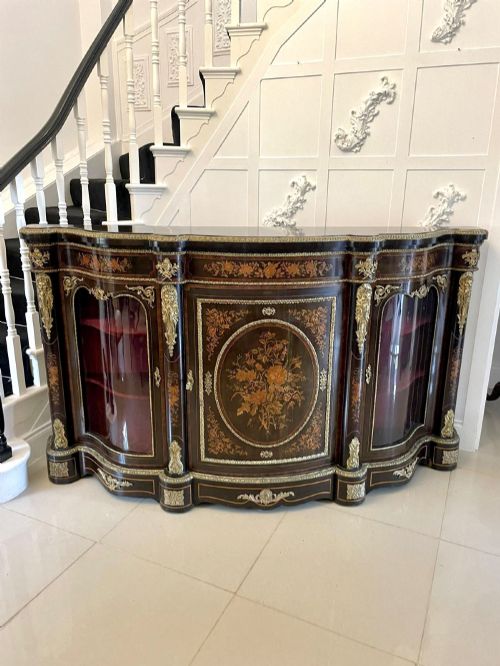
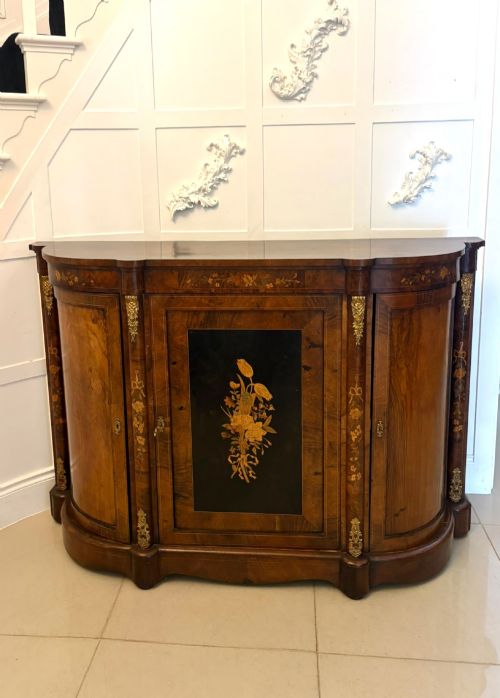
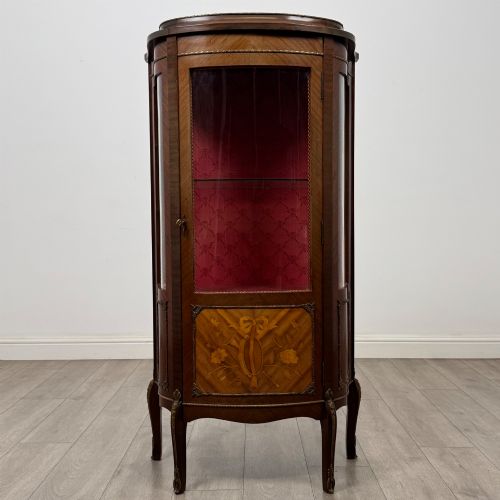
When you search for a french marquetry display cabinet, you encounter nineteenth-century pieces spanning the Victorian, Edwardian, and Napoleon III periods. These items appear in forms such as credenzas, sideboards, vitrines, and pier cabinets designed to hold and display objects. Walnut, burr walnut, kingwood, and mahogany form the carcasses of these cabinets, frequently shaped in serpentine contours.
The aesthetic draws heavily on French Revival, Louis XV Revival, and French Rococo Revival styles. Makers combined glazed doors with intricate wood inlays to create furniture that functioned as both storage and decorative display.
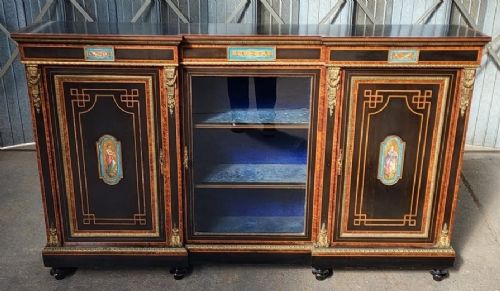
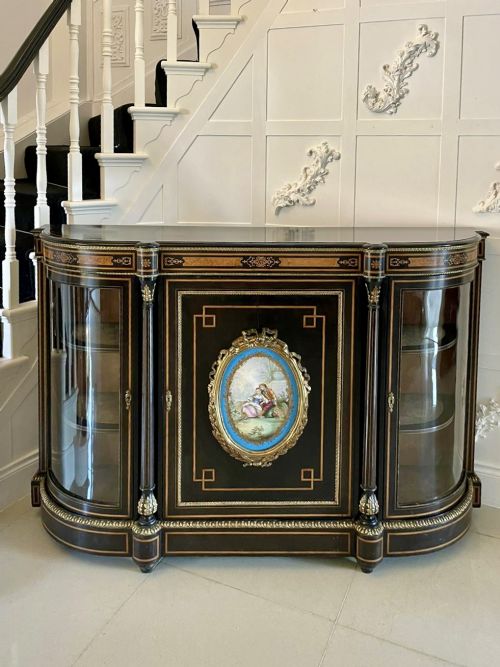
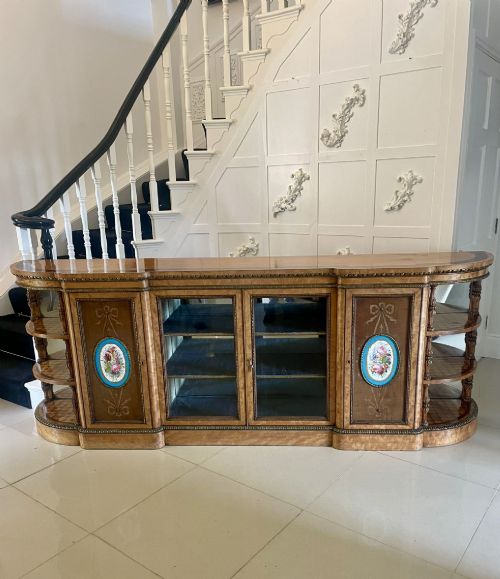
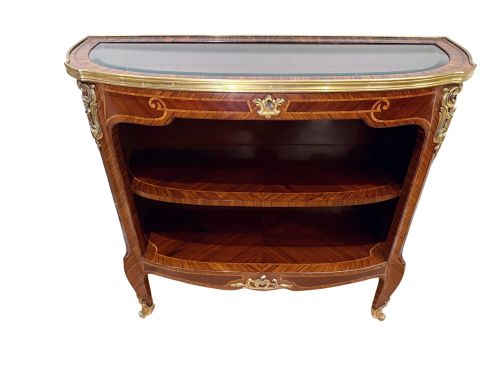
Many examples incorporate marble tops, porcelain plaques, or side cabinets alongside the central display space. The variety ranges from compact pier cabinets to monumental breakfront credenzas.
Materials and construction
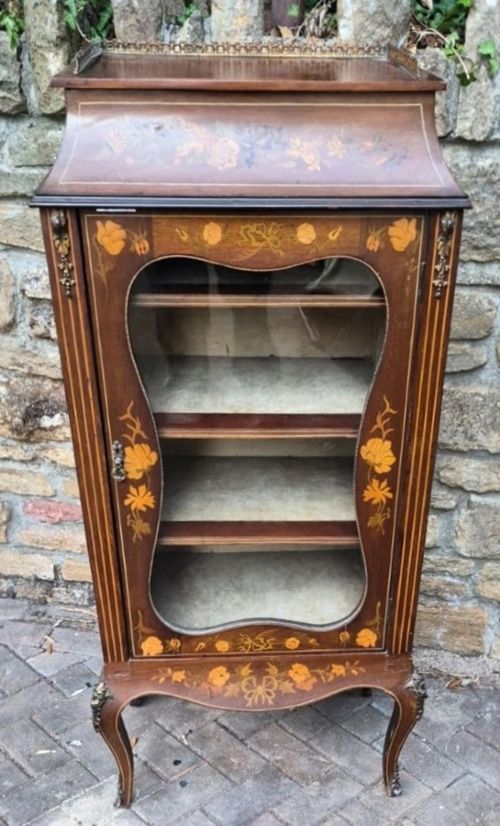
Cabinet makers utilised hardwoods like walnut, burr walnut, kingwood, satinwood, and ebonised wood as the foundation for intricate marquetry patterns. These timber veneers were cut and fitted by hand to form floral and geometric designs across the doors and panels.
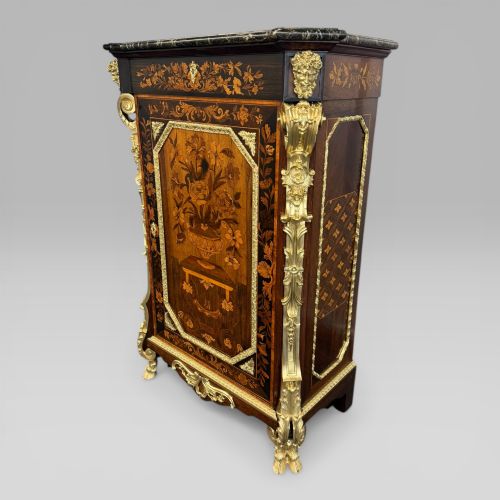
Ormolu mounts, cast in bronze and gilt, frame the glazed doors and accent the corners, feet, and friezes. Marble slabs sit atop many of the cabinet surfaces, while Boulle work incorporates brass and tortoiseshell inlay into the ebonised panels.
Listings feature walnut, burr walnut, kingwood, and mahogany cabinets decorated with brass, ormolu, and marble.
Factors that distinguish the work
The precision and complexity of the marquetry patterns determine the finesse of the piece, with multi-wood floral arrangements requiring higher skill than simple geometric banding. The weight, chiselling, and fire-gilding of the ormolu mounts separate standard production from exhibition pieces.
Structural elements like serpentine shaping, marble top thickness, and the inclusion of original key mechanisms or Sevres porcelain plaques elevate the execution of the cabinet.
Edward Holmes Baldock·Maison Gagneau·François Linke
The French Marquetry Display Cabinet Glossary
- Marquetry
- Decorative veneer work formed by fitting together small pieces of different woods, metals, or shells to create pictorial designs.
- Ormolu
- Gilt bronze mounts used as decorative trim on furniture. It provides a metallic contrast to the dark wood veneers.
- Vitrine
- A glass-fronted cabinet designed for the display of porcelain, glassware, or curiosities. These often feature mirrored backs to reflect light through the contents.
- Credenza
- A low cabinet, frequently featuring central doors flanked by curved side compartments. This form evolved during the nineteenth century to serve as a sideboard and display piece.
- Boulle
- A style of marquetry using tortoiseshell and brass inlay developed in France. It creates a contrasting pattern across ebonised surfaces.
- Pier cabinet
- A narrow cabinet designed to stand against the wall space between windows. These are typically compact and fitted with a single glass door.
French Marquetry Display Cabinet: Frequently Asked Questions
What is a french marquetry display cabinet?
It is a glazed cabinet decorated with patterned wood veneers, originating largely from the nineteenth century. These pieces combine display space with intricate floral or geometric inlays.
They were built in various forms, including vitrines, credenzas, and pier cabinets, often enhanced with ormolu mounts and marble tops.
How were these cabinets used?
Owners utilised them in reception rooms and drawing rooms to display porcelain, silver, and decorative objects behind glass. The enclosed shelves protected items from dust while showing them off to guests.
Surface tops provided additional space for ornaments or lamps.
How do I live with one?
Position the cabinet away from direct sunlight and heat sources to protect the delicate wood veneers and glue. Maintain a stable room temperature to prevent the timber from warping or splitting.
Clean the glass and ormolu gently without harsh chemicals that might damage the gilt finish.
How can I tell periods apart?
Victorian and Napoleon III pieces often feature heavy burr walnut, ebonised wood, and elaborate ormolu mounts in Revival styles. Edwardian cabinets tend to display lighter mahogany or satinwood inlays with more restrained ornamentation.
Construction methods and timber selection help indicate whether a piece dates from the mid or late nineteenth century.