
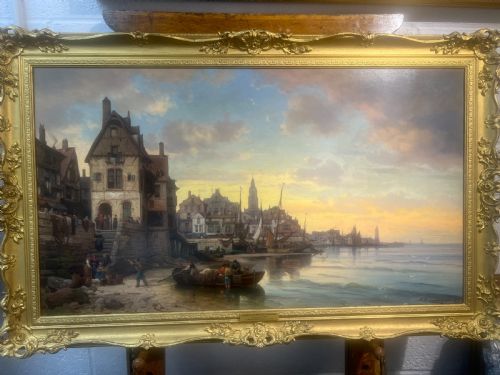
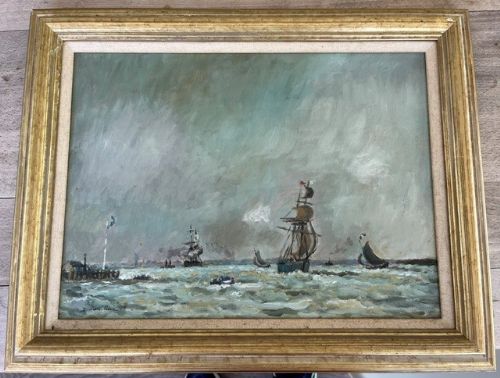


French Marine Oil Painting
A genuine french marine oil painting brings the atmosphere of the Atlantic or Mediterranean coast directly into a room.
How they were made
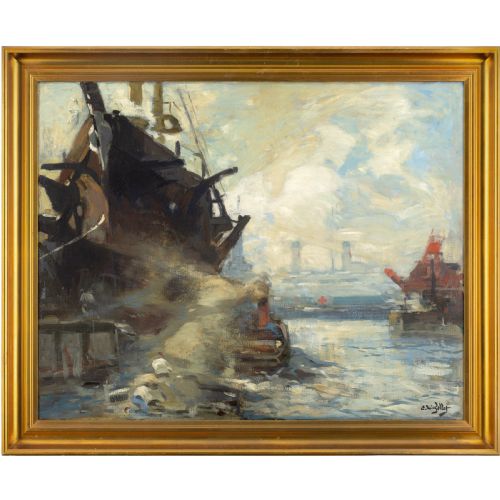
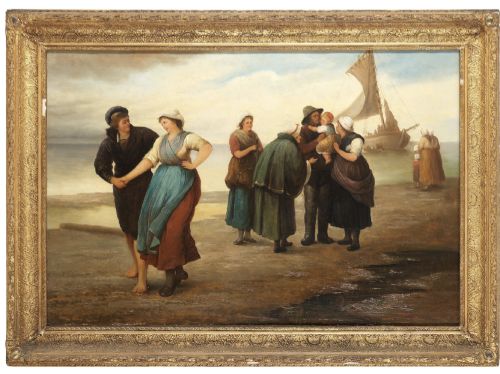
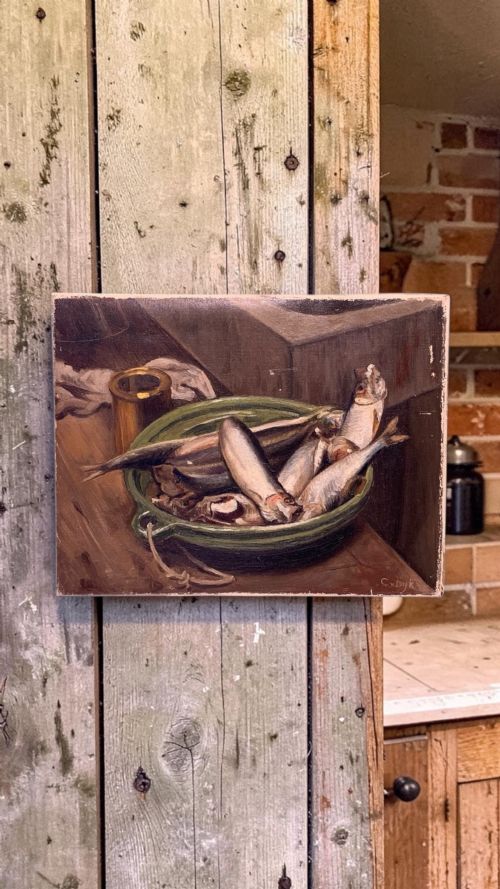
Artists built these compositions primarily using oil paint applied to stretched canvas or wooden boards. Many frames incorporate gilt elements that complement the pigments and protect the edges of the support.
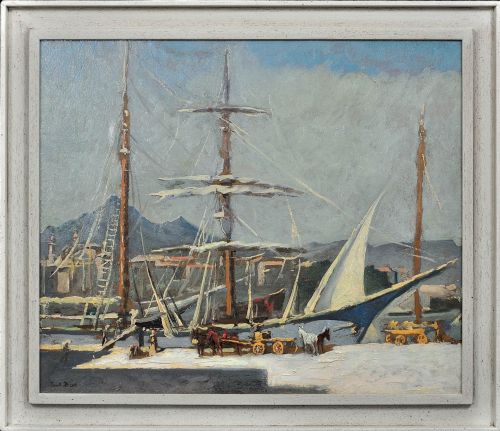
Techniques vary from the fine brushwork of nineteenth-century realism to textured impasto and the expressive colour palettes of post-impressionism. Painters balanced studio finishing with en plein air observation to capture changing coastal light.
What varies in quality
Quality rests in the artist's command of light, atmosphere, and spatial depth across the marine subject. Superior examples demonstrate confident brushwork and a coherent palette that evoke the specific mood of the sea or harbour.
The strength of composition and the handling of pigment distinguish accomplished works from routine topographical records. Original framing and documented provenance further elevate the standing of an individual piece.
Several canvases record seaweed gatherers knee-deep in Breton mud.
Eugène-Louis Gillot·Paul Bret·Charles Euphraisie Kuasseg·Elisabeth Bardon·Louis Suire·Gustave Vidal·Raymond Picque·Fred Pailhes·Charles Malfroy·Roger de la Corbiere·Marc Aldine·Antoine Bouvard Senior·Marie-Edouard Adam·Edward Henry Holder·Charles Euphrasie Kuwasseg·Henri Ottman·Lamotte·Henri Cadiou
The French Marine Oil Painting Glossary
- Impasto
- Oil paint applied in thick layers that stand out visibly from the surface. This technique adds tactile dimension to crashing waves or textured coastal rocks.
- Post-Impressionism
- An art movement extending impressionist methods through heightened emphasis on symbolic content and expressive use of paint. Artists working in this mode prioritized emotional resonance over strict optical realism.
- Seascape
- A painting depicting the sea, coastal views, or maritime activity. These works focus on the interaction between water, sky, and shore.
- Gilt
- A thin layer of gold applied to wood or plaster picture frames. This finish provides a reflective border that frames the dark tones of the canvas.
French Marine Oil Painting: Frequently Asked Questions
What periods do these paintings cover?
The available works span from the nineteenth century through the mid-twentieth century, capturing shifts in artistic style over decades of French maritime painting.
Early pieces reflect nineteenth-century realism and academic traditions, while later works embrace impressionist and modernist developments.
Where were these coastal scenes painted?
Subjects range widely across the French coastline, including the rugged cliffs of Normandy and Brittany, and the sunlit waters of the Côte d'Azur and Provence.
Some compositions also record international harbours and ports visited by French vessels during their voyages.
How should I frame and display a canvas?
Many works retain their period frames, often featuring gilt mouldings that suit the tonal balance of oil paintings.
Display these pieces away from direct sunlight and fluctuating humidity to protect the oil paint and canvas over time.
What distinguishes marine paintings from standard landscapes?
Marine paintings focus specifically on the ocean, tidal shores, shipping, and harbour infrastructure rather than inland topography.
They require the artist to render the movement of water, shifting atmospheric conditions, and maritime vessels.