


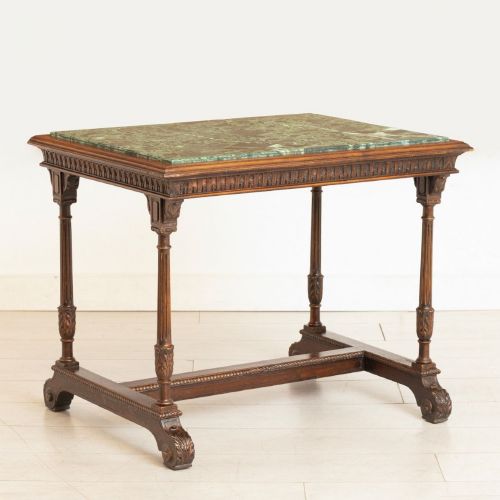
French Marble Top Desk
A french marble top desk brings substantial weight and refined continental workspace into a room through heavy stone surfaces and figured timbers.
French Marble Top Desk
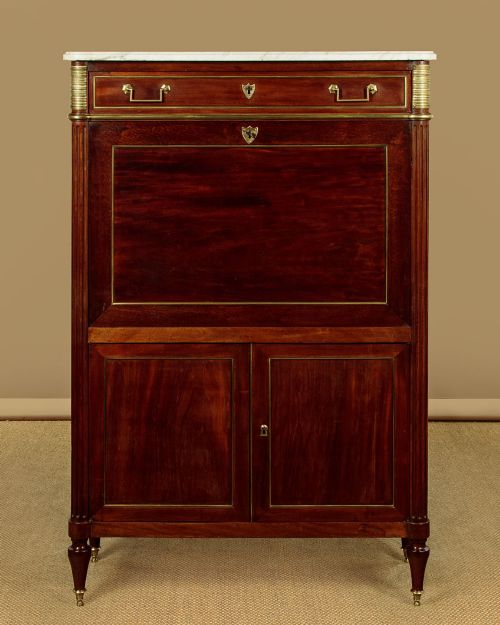
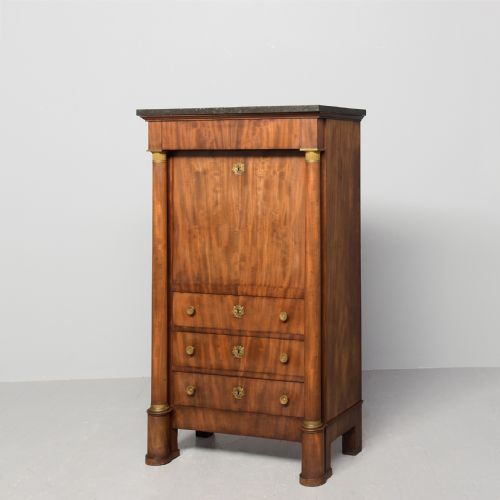
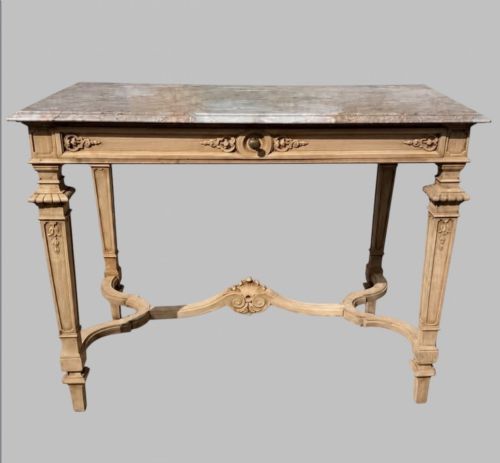
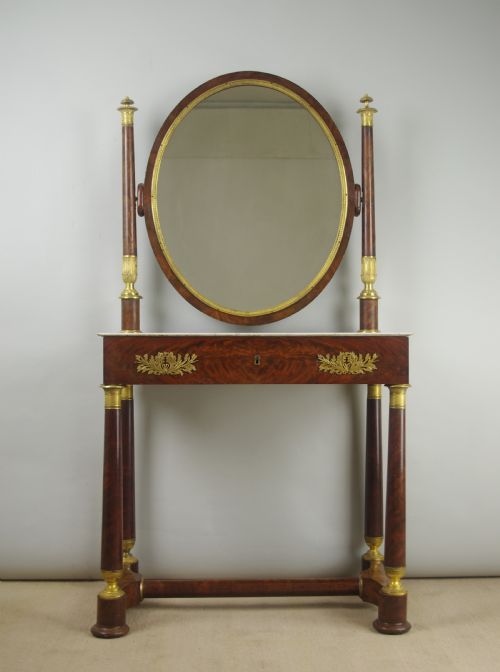
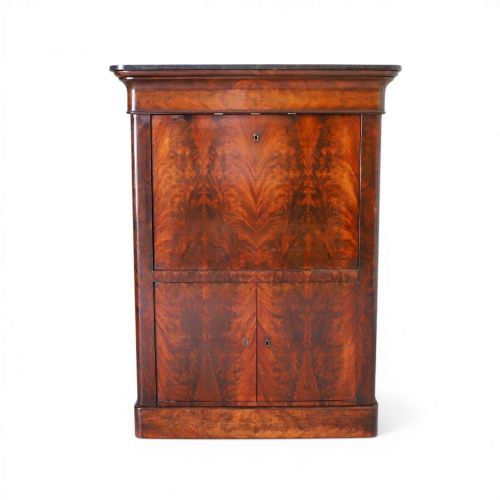
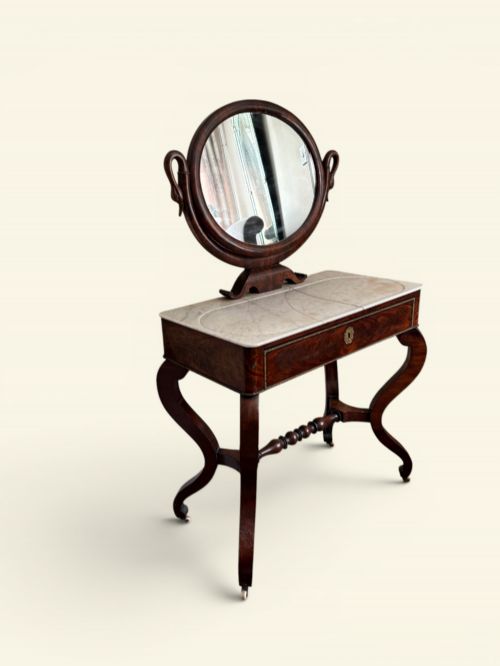
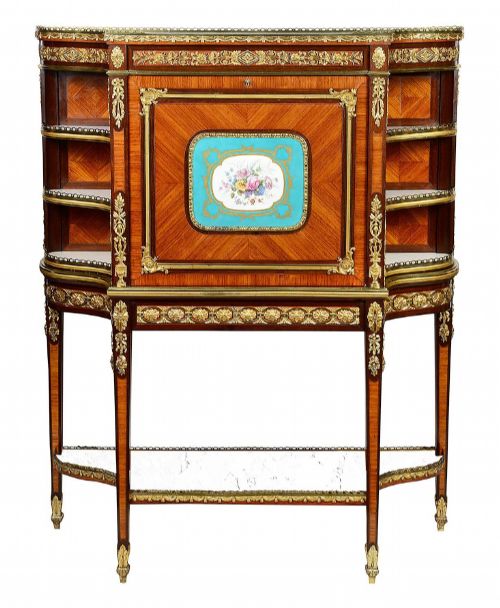
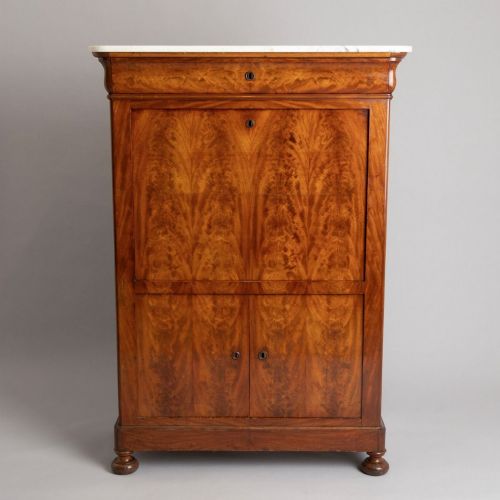
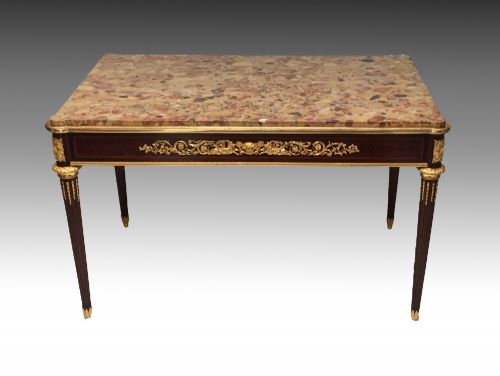
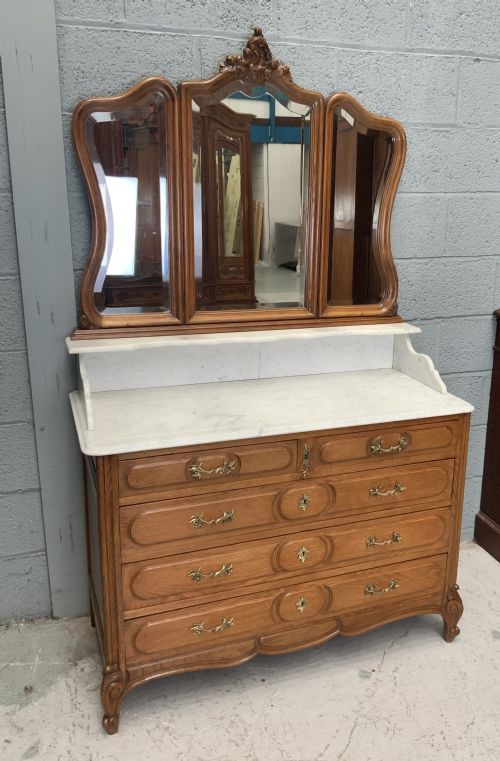
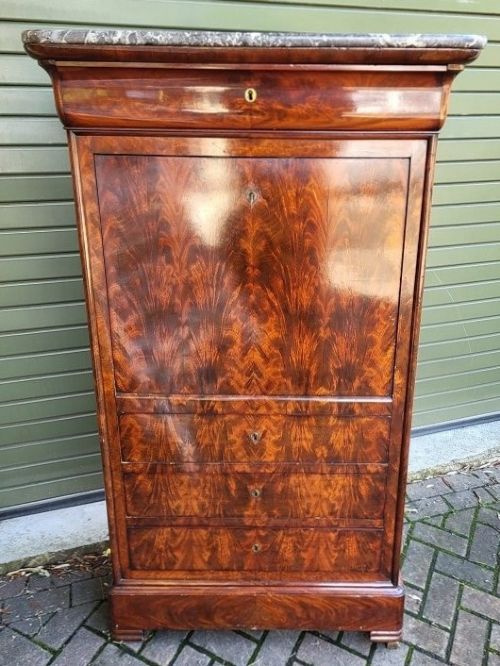
A french marble top desk covers a range of writing forms, from drop-front cabinets to cylinder desks and freestanding writing tables. You will most frequently encounter the tall secretaire abattant configuration, alongside side tables and dressing tables adapted for writing.
The objects span periods from the eighteenth century through the nineteenth century, including revival expressions of Louis XV and Louis XVI alongside Empire and Restoration pieces. These variations demonstrate changing tastes in domestic study furniture across different decades.
Materials and construction
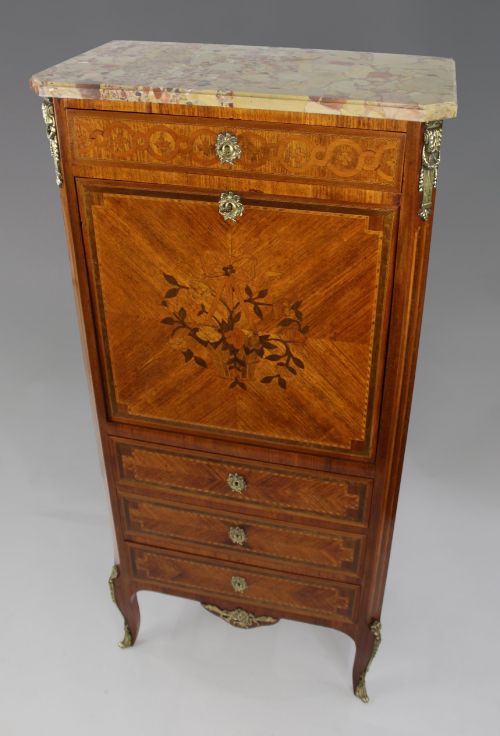
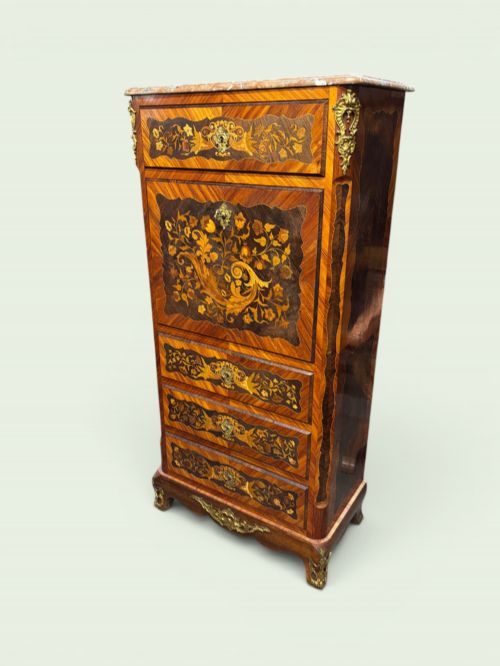
Construction relies heavily on dense timbers such as mahogany, walnut, rosewood, kingwood, and satinwood, frequently laid as veneers or intricate marquetry and parquetry patterns over secondary woods. Heavier structural elements utilise oak.
Finished surfaces incorporate heavy slabs of marble, secured atop cabinets and tables, alongside cast or chased ormolu, brass, and gilt bronze mounts that frame drawers and corners.
The listings show mahogany as the dominant structural timber, frequently paired with white or fossil marble and gilt bronze ormolu mounts.
Assessing construction standards
Quality separates through the precision of the timber matching and the depth of the marquetry work, where finer pieces display continuous grain patterns and intricate inlay across curved surfaces. The thickness and figuring of the stone slab also signal higher workshops.
Gilt bronze and ormolu mounts reveal the tier of the piece through the crispness of their chasing and the security of their seating against the wood and marble. Lesser examples rely on repetitive cast detail with softer definition.
Blake·Paul Sormani·Lefebvre
The French Marble Top Desk Glossary
- Secretaire abattant
- A tall vertical cabinet featuring a drop-down writing flap that conceals fitted small drawers and compartments inside. This form protects private correspondence while maintaining a minimal floor footprint.
- Ormolu
- Gilded bronze mounts applied to furniture corners, feet, and friezes for decorative contrast. The technique involves applying a mercury and gold amalgam to cast bronze.
- Marquetry
- Decorative veneer patterns assembled from various coloured wood veneers to form pictorial or geometric designs. Craftsmen cut these thin timber pieces together to ensure tight joints.
- Parquetry
- Geometric wood inlay arranged in repetitive patterns such as cubes, chequers, or herringbone. It provides texture across flat drawer fronts and cabinet tops without pictorial distraction.
- Cylinder desk
- A writing desk featuring a rotating quarter-cylinder shutter that rolls back to reveal the writing surface and pigeonholes. The mechanism operates on internal tracks.
French Marble Top Desk: Frequently Asked Questions
How do I clean the marble top?
Wipe the stone surface using a damp cloth with mild soap, avoiding acidic cleaning liquids that etch polished stone.
Dry thoroughly with a soft cloth to maintain the natural sheen without damaging the surrounding timber or ormolu mounts.
Are the marble slabs removable?
Most marble tops rest freely on the timber framing or secure with simple gravity and weight rather than permanent adhesives.
Lift the stone carefully during transport to prevent chipping the edges against the surrounding woodwork.
How do I date a secretaire abattant?
Examine the secondary woods inside the hidden drawers and the style of the exterior veneer and bronze mounts.
Earlier nineteenth-century pieces show denser flame mahogany and simpler Empire lines, while later revivals incorporate heavier marquetry.
Can I use it as a daily writing desk?
Drop-front secretaires provide sturdy pull-down writing surfaces supported by internal hinges or structural side pulls.
Protect the antique timber writing surface with a modern blotter or leather pad to prevent ink and scratch damage during daily use.