






French Chateau Writing Table
These French chateau writing tables bring architectural grandeur and refined writing surfaces into the home, prized for their elegant cabriole legs and rich marquetry.
French Chateau Writing Table
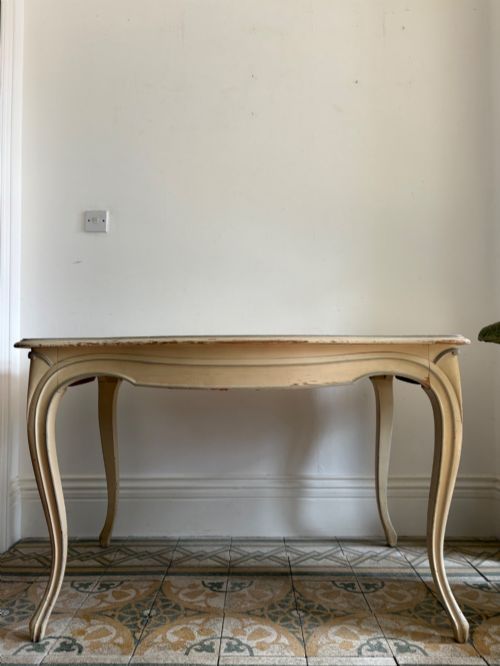
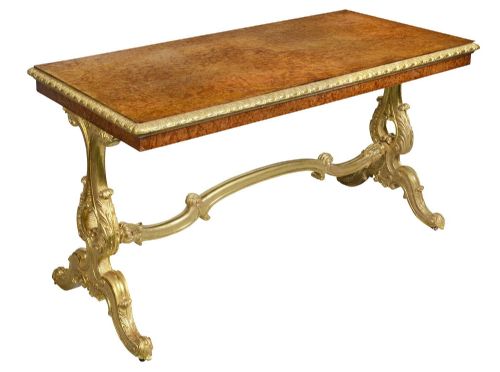
When you search for a french chateau writing table, you encounter pieces designed for grand reception rooms and private chambers, encompassing forms such as freestanding centre tables, side tables, and ladies desks. The examples appearing here span the nineteenth century and the early twentieth century, reflecting revivals of Louis XV and Louis XVI styles alongside Victorian interpretations.
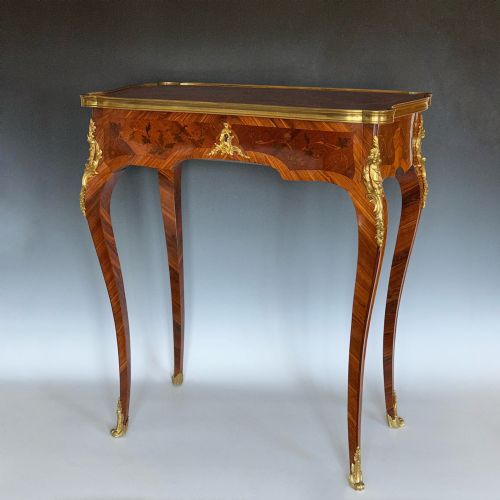
You are most likely to meet walnut, mahogany, and kingwood timbers, frequently embellished with painted finishes, ormolu mounts, and inlaid marquetry. These tables serve practical writing and display functions while projecting the ornate aesthetic associated with French provincial and chateau interiors.
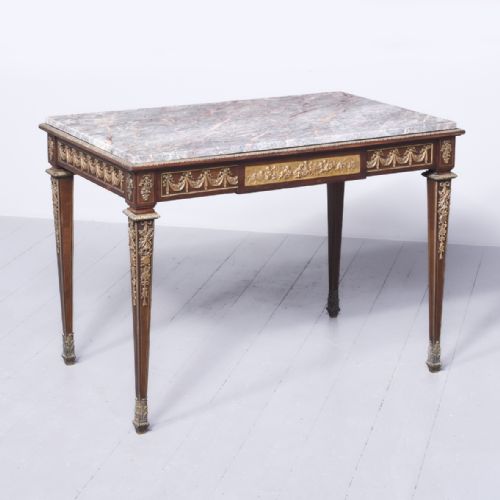
The construction ranges from large nineteenth century bureau de plat forms to serpentine front side tables and inset suede top console tables. Each piece demonstrates the stylistic vocabulary of Napoleon III and Victorian Rococo revival periods, adapting historical French design for later drawing rooms.
Materials and construction methods
Cabinet makers utilised fine hardwoods including walnut, mahogany, and kingwood as foundations for marquetry and polished surfaces. These timbers were shaped into serpentine fronts and supported by characteristic cabriole legs.
Metalwork played a defining role in the ornamentation, with cast ormolu and brass mounts fixed to corners, aprons, and legs. Painted wood finishes and inset leather or suede writing surfaces completed the construction of desks and centre tables.
Some tables hide their writing purpose entirely behind elaborate floral marquetry until you lift the suede.
Distinctions in quality
The standard of a piece rests upon the precision of its marquetry inlay and the crispness of its cast ormolu mounts. Finer examples display meticulous attention to timber selection and fluent carving along the cabriole legs.
The integrity of the structural joinery and the treatment of secondary timbers separate standard production from exceptional cabinet work. Pieces bearing workshop attributions or advanced revival styling demonstrate superior execution in every visible detail.
Millet·Holland and Son·Francoise Linke
The French Chateau Writing Table Glossary
- Ormolu
- Gilded bronze mounts used extensively to decorate the corners, handles, and legs of French revival furniture. This decorative technique added metallic brilliance to wood surfaces.
- Marquetry
- Elaborate patterns of wood veneers applied to the surface of a table to create pictorial or geometric designs. Craftsmen carefully cut and fitted contrasting timbers together.
- Cabriole leg
- A furniture leg that curves outward and then tapers inward, finishing in a graceful foot. This form is characteristic of Louis XV and Rococo revival design.
- Bureau de plat
- A large freestanding writing table finished on all sides for placement in the centre of a room. These desks typically feature wide writing surfaces above a frieze with drawers.
- Kingwood
- A dense, richly figured exotic timber prized by cabinet makers for its contrasting dark and golden brown tones. It frequently appears in nineteenth century marquetry.
French Chateau Writing Table: Frequently Asked Questions
What is a bureau de plat?
A bureau de plat is a large freestanding writing table finished on all sides so it can stand in the middle of a room rather than against a wall. These tables typically feature a wide top and drawers integrated into the frieze.
Cabinet makers designed them for formal studies and grand saloons, making them both functional desks and decorative centerpieces.
How do I identify Louis XV style?
Louis XV style furniture is characterised by asymmetrical curves, flowing lines, and the absence of straight angles. You will frequently see cabriole legs, floral marquetry, and scrolling ormolu mounts.
This aesthetic experienced major revivals throughout the nineteenth century, influencing the design of many side tables and desks.
Where should I place a centre table?
Centre tables are designed to be viewed from all angles, making them ideal for the middle of a reception room, a large hallway, or an open drawing room space. Because they are finished on every side, they do not need to anchor against a wall.
They function well as display surfaces for lamps and decorative objects or as occasional writing spaces.
How do I care for leather or suede tops?
Inset leather and suede writing surfaces require gentle maintenance to prevent drying and cracking over time. Keep them away from direct sunlight and excessive heat sources that can discolour the material.
Dust them regularly with a dry, soft cloth and avoid using harsh liquid cleaners or chemical polishes.