


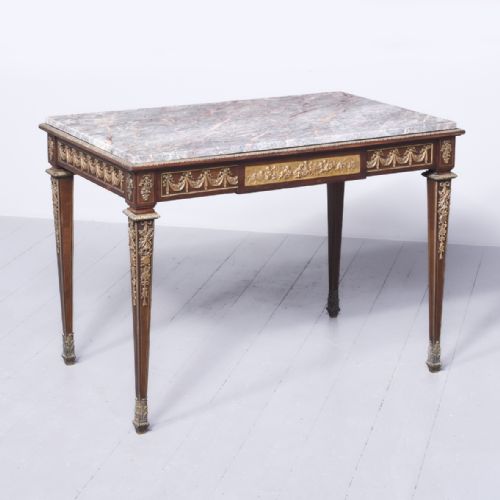


French Freestanding Desk
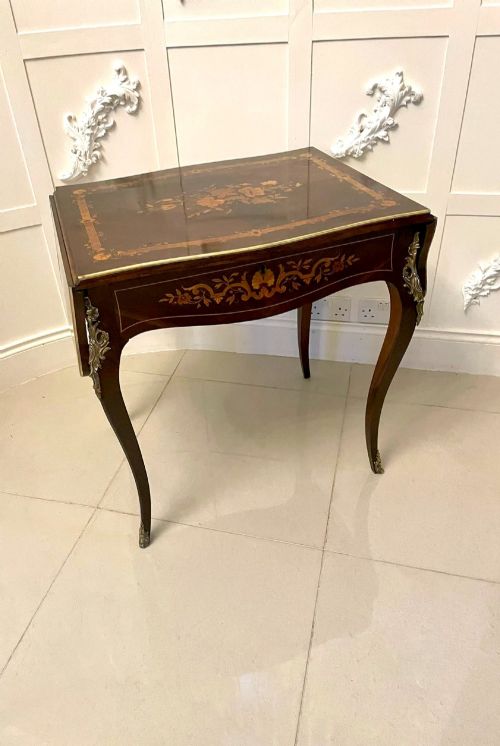
A french freestanding desk is an exceptional piece designed to sit proudly in the middle of a room, combining fine marquetry and rich timber.
French Freestanding Desk
A french freestanding desk is built to be viewed from all sides, unlike standard writing tables that sit against a wall. The pieces seen here include bureau plat designs, kidney writing tables, and partners desks intended for central placement in a room.
Makers designed these items during the Victorian era and the mid nineteenth century, utilising revival styles such as Louis XV and Renaissance motifs. Walnut, rosewood, burr walnut, and kingwood dominate the forms found in this collection.
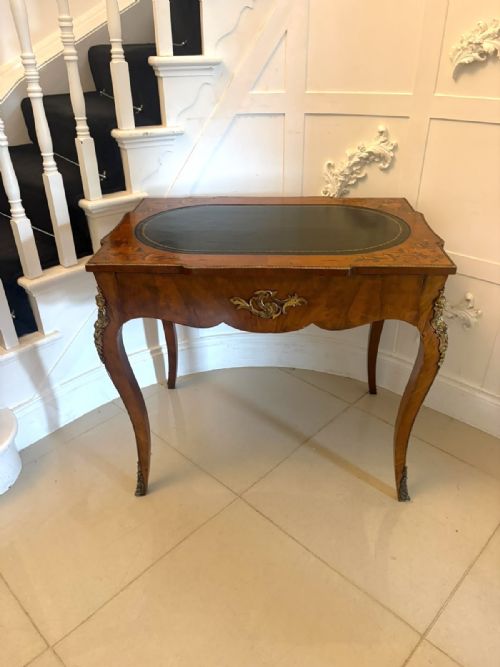
Buyers will encounter refined marquetry and parquetry patterns alongside leather writing surfaces. These furnishings served as functional writing spaces and decorative centrepieces for studies and reception rooms.
How a french freestanding desk was made
Craftsmen built carcasses from solid timbers like oak or walnut, applying veneers of rosewood, kingwood, and burr walnut in intricate marquetry and parquetry patterns. Ormolu mounts and brass details were cast and applied to accentuate curves and corners.
Writing surfaces frequently incorporated inset leather tops, often tooled with gilt borders. Joinery relied on traditional techniques to ensure stability across complex serpentine and kidney shapes.
Listings for a french freestanding desk span the Victorian era, 1850, 1860, and 1880, utilising walnut, rosewood, and ormolu.
What varies in quality
The precision and complexity of the wood veneers set pieces apart, with multi-timber marquetry and geometric parquetry representing superior craftsmanship. Heavier, finely chased ormolu mounts indicate a higher standard of manufacture compared to simpler cast brass fittings.
Construction details such as finished backs and fully detailed drawer linings distinguish pieces meant to be seen from every angle in an open room. The choice of underlying timber and the depth of the carved or inlaid details define the upper tier of these desks.
Louis Auguste Moreau
The French Freestanding Desk Glossary
- Bureau plat
- A table desk without a superstructure, typically featuring drawers beneath the writing surface and finished on all sides for central placement. This form is central to the french freestanding desk category.
- Marquetry
- Decorative patterns formed by fitting together thin slices of wood veneer and other materials onto a structural carcass. It creates pictorial or abstract designs across the top and sides.
- Ormolu
- Gilded bronze used for decorative mounts and accents on furniture. It provides bright metallic contrast against dark woods like rosewood and walnut.
- Parquetry
- Geometric mosaic woodwork used for floors and furniture panels. It relies on contrasting wood grains to form patterns such as cubes or chequers.
French Freestanding Desk: Frequently Asked Questions
Can a french freestanding desk float in the middle of a room?
Yes, these pieces are finished on the back as well as the front, making them suitable for placement in the centre of a study or library.
They do not require a wall for support and look correct from any viewing angle.
What is a bureau plat?
A bureau plat is an open table desk with drawers in the frieze, designed specifically to stand away from walls.
It forms one of the main styles found among nineteenth century french freestanding desk examples.
How do I identify the wood used?
Makers typically utilised exotic hardwoods such as rosewood, kingwood, and walnut for surface veneers. Burr walnut provides a swirling grain pattern, while parquetry employs geometric wood arrangements.
Closer inspection reveals the natural grain beneath polished finishes.
Are these desks suitable for daily writing?
Most feature original or replacement leather inserts that provide a smooth writing surface. Their robust construction supports everyday use in a modern home office.