

French Marble Side Cabinet
A French marble side cabinet brings substantial stone tops and rich timber veneers together, offering sturdy utility and distinct continental presence.
French Marble Side Cabinet
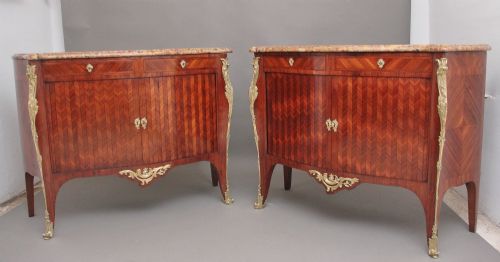
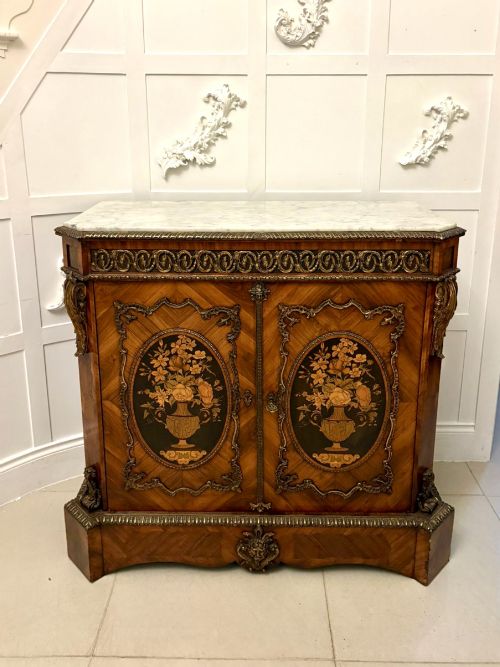
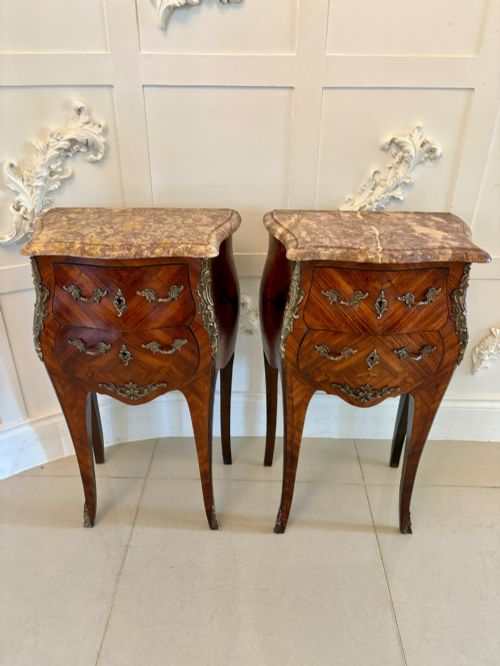
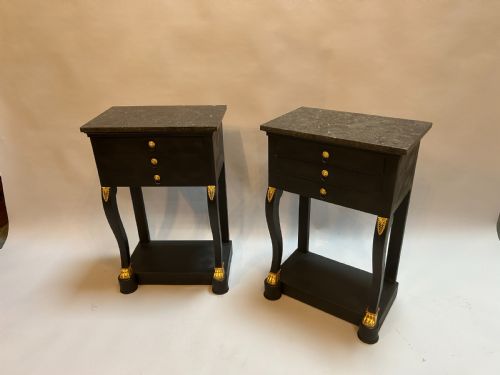
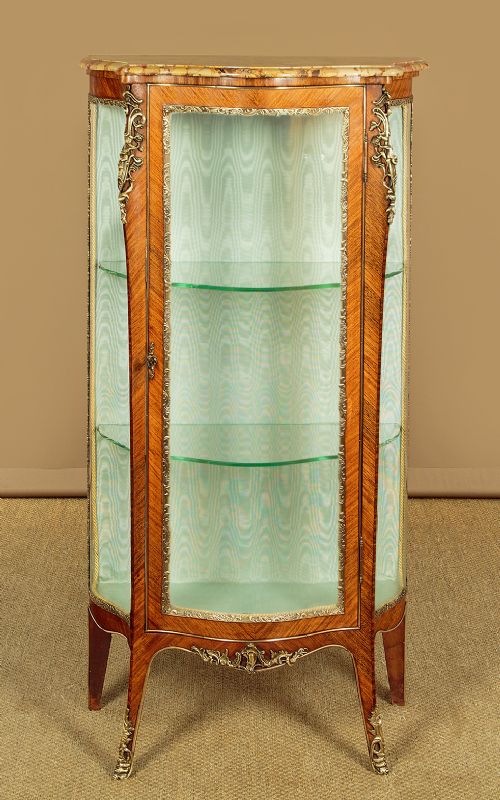
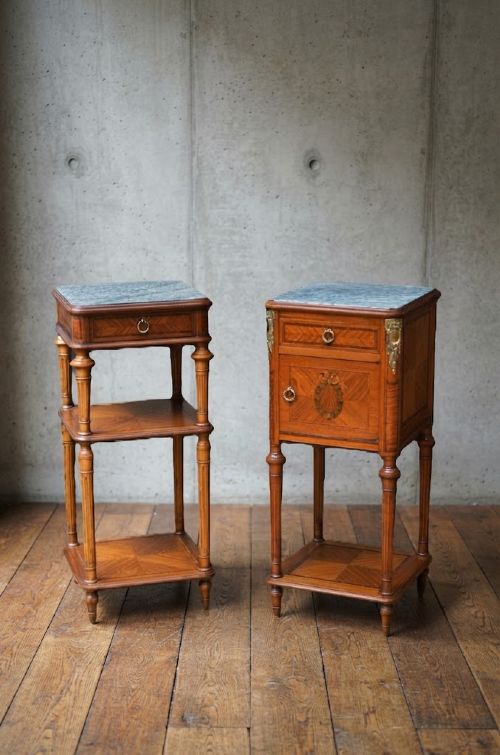
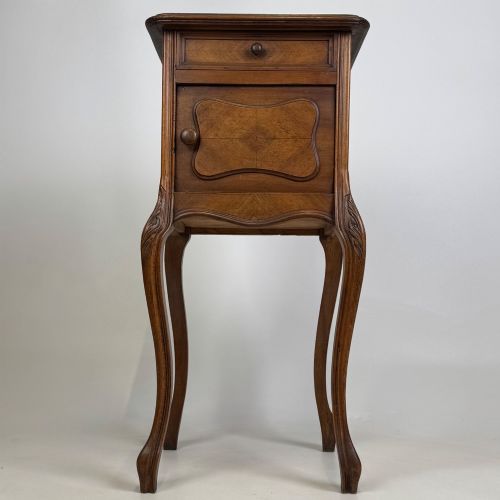
A French marble side cabinet encompasses bedside tables, commodes, and smaller pier cabinets produced across the nineteenth and early twentieth centuries. These forms serve domestic storage needs whilst displaying decorative stone surfaces suited to bedrooms and reception rooms.
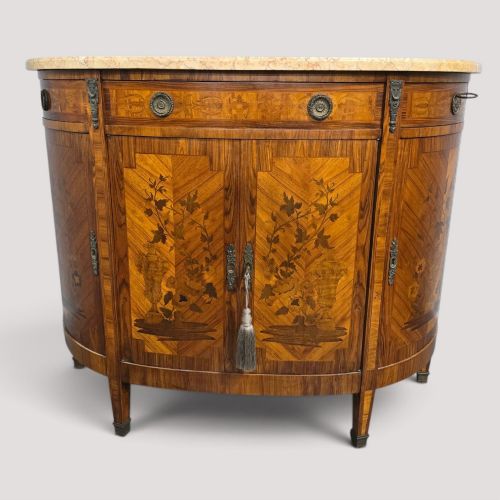
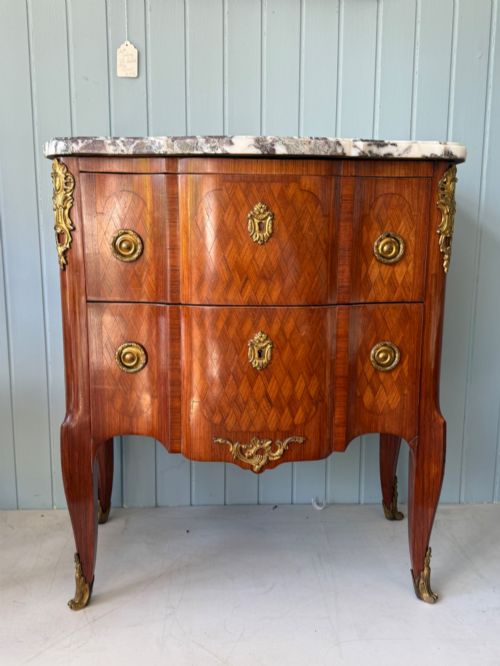
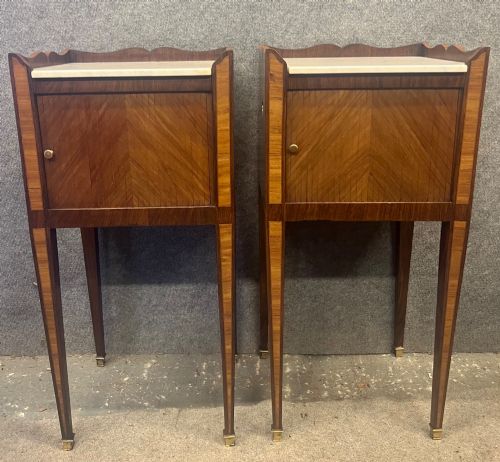
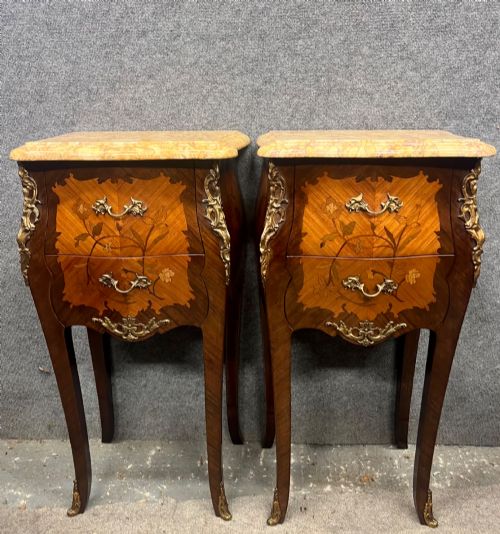
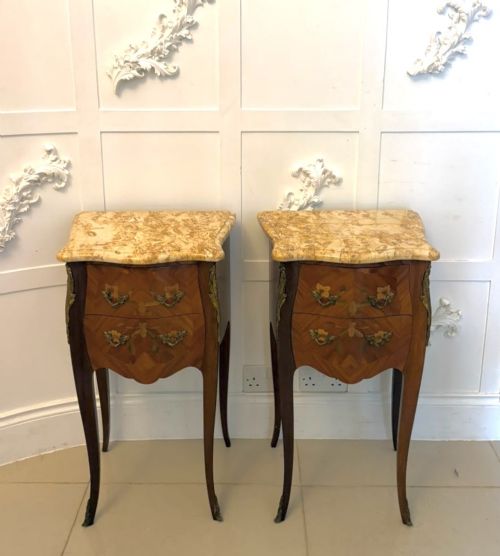
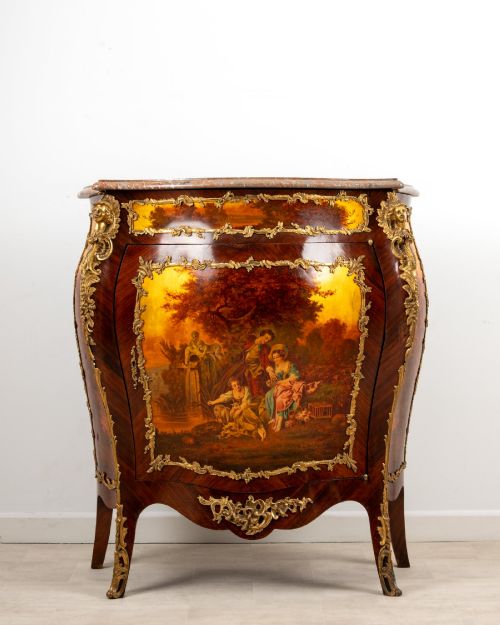
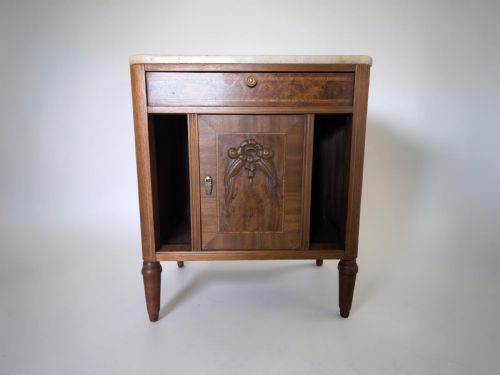
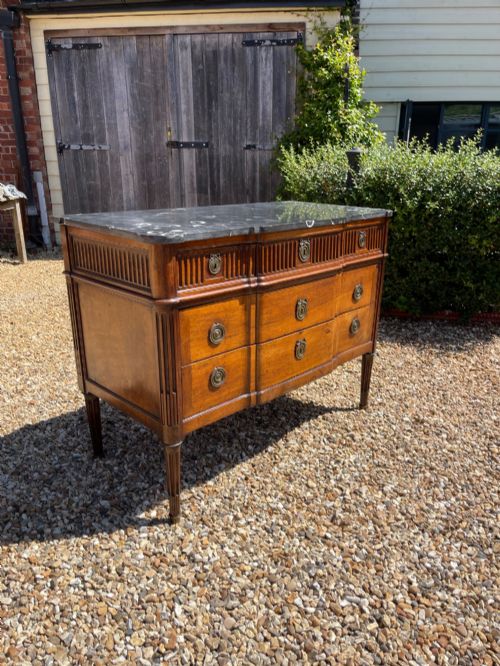
The pieces appearing on this page range from compact bedside chests in kingwood and walnut to larger commodes and console tables carrying heavy grey or white marble slabs. Revival aesthetics such as Louis XV and Louis XVI predominate, alongside Empire and Art Deco iterations.
How they were made
Cabinetmakers utilised dense native and exotic timbers including walnut, kingwood, mahogany, and rosewood, frequently applying intricate marquetry inlays or burr veneers over pine or oak carcases. Ormolu and gilt bronze mounts decorate corners and feet, securing structural joints while adding metallic contrast.
The defining feature rests in the fitted marble top, cut and polished to follow straight, serpentine, or demi-lune profiles. Skilled stonemasons shaped these thick mineral slabs to match the exact contours of each wooden base.
Design revivals span Louis XV, Louis XVI, Empire, and Art Deco aesthetics.
What varies in quality
Quality reveals itself in the crispness of the bronze or ormolu mounts and the precision of the marquetry cutting. Heavy, well-chased metalwork and tightly fitted timber veneers distinguish finer workshop output from simpler commercial production.
The thickness and selection of the marble top also dictate grade, with finely bevelled edges and harmonious mineral veining separating standard iterations from superior examples.
Edward Holmes Baldock·E. Kahn
The French Marble Side Cabinet Glossary
- Ormolu
- Gilded bronze mounts applied to cabinet corners, handles, and feet for decorative contrast. This technique involved mercury amalgamation on cast bronze during earlier periods.
- Marquetry
- Decorative veneer patterns assembled from thin slices of diverse coloured woods to form floral or geometric pictures. Craftsmen glued these detailed sheets onto the main carcase.
- Commode
- A low freestanding chest of drawers featuring legs and a flat top. These pieces originated in France as fashionable bedroom and salon storage.
- Demi-lune
- A half-moon shape used for console tables and small cabinets designed to sit flush against a wall. This profile requires curved woodwork and matching marble cutting.
- Vernis Martin
- A simulated Japanese lacquer technique developed in France, using multiple translucent resin layers to achieve deep gloss finishes on panels.
French Marble Side Cabinet: Frequently Asked Questions
What rooms suit a French marble side cabinet?
These pieces function well as bedside tables, lamp tables, or hallway console surfaces where the stone top provides a durable resting place for water pitchers or decorative objects.
Their compact footprints and enclosed storage make them practical for smaller spaces requiring distinctive timber grain and continental character.
How do I care for the marble top?
Marble requires simple wiping with a damp cloth and mild soap, avoiding acidic cleaning agents that etch polished mineral surfaces.
Using coasters and mats protects the stone from staining and preserves the historical sheen of the polished top.
How can I tell revival periods apart?
Louis XV revival pieces display sweeping serpentine curves and asymmetric rococo ormolu mounts, whereas Louis XVI styles favour restrained symmetry, fluted legs, and neoclassical straight lines.
Art Deco examples shift toward geometric silhouettes and simplified veneers without traditional scrolling mounts.
Were these cabinets originally used as bedside tables?
Many smaller forms served specifically as nightstands or commodes to hold washing basins and chamber pots before modern plumbing became standard.
Today, buyers repurpose these compact cupboards for modern bedside storage while retaining their historical function as low lamp tables.