




Walnut Marble Credenza
A walnut marble credenza combines rich, figured timbers with a cool stone surface, offering a substantial focal point for a formal interior.
Walnut Marble Credenza
A walnut marble credenza typically appears as a low, freestanding cabinet designed for storage and display in domestic interiors. These pieces span the Victorian era through the early twentieth century, incorporating French and British stylistic influences.
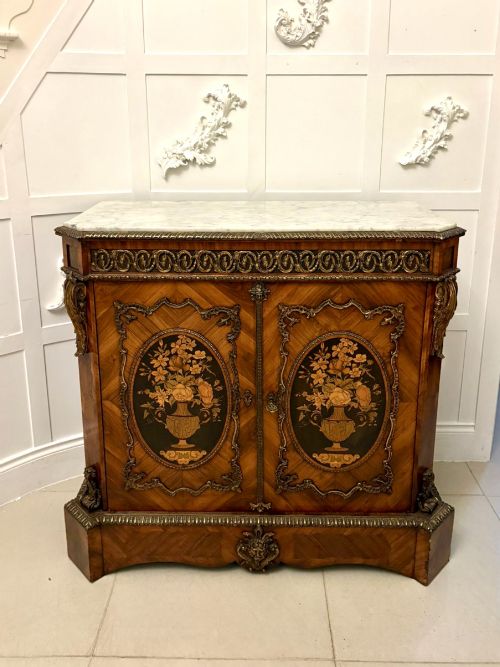
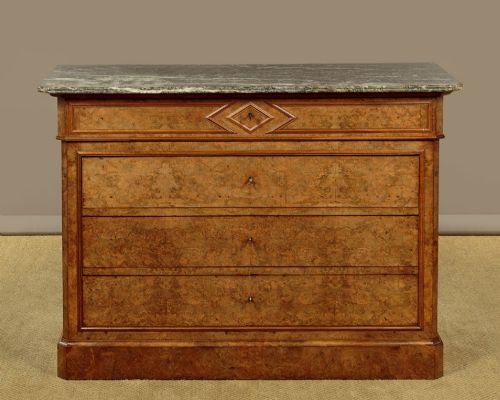
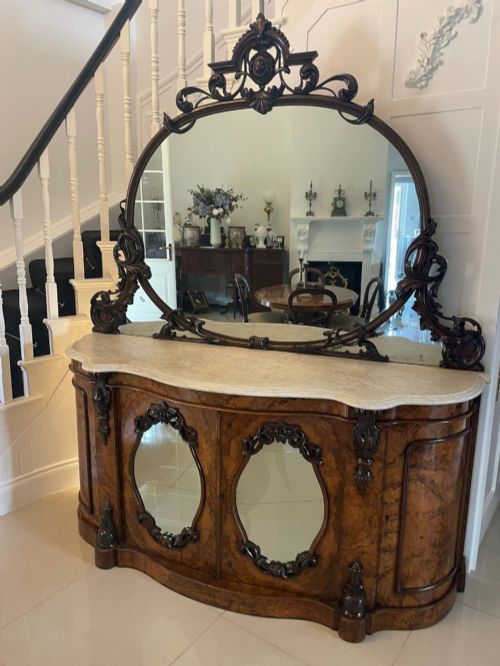
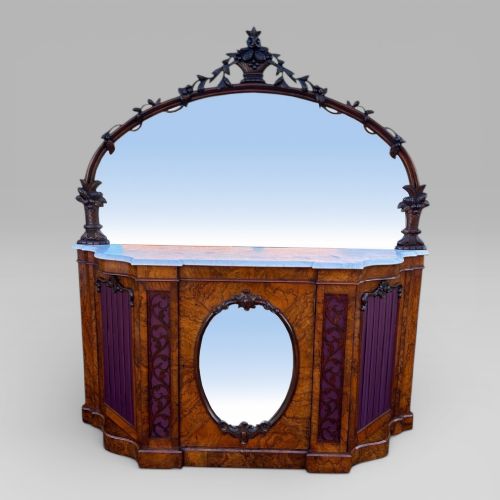
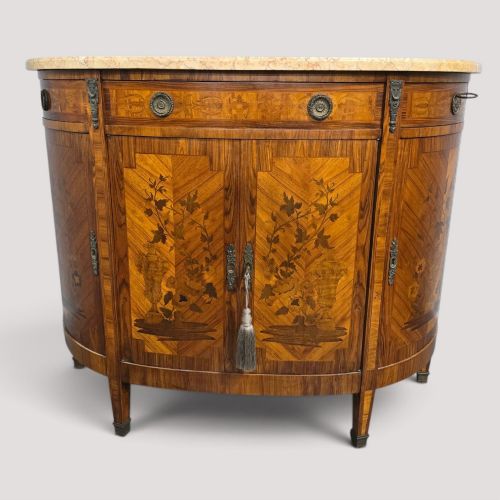
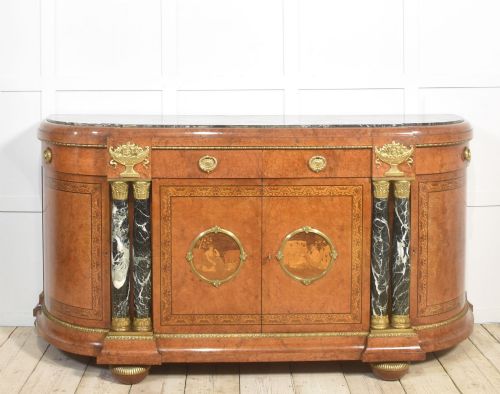
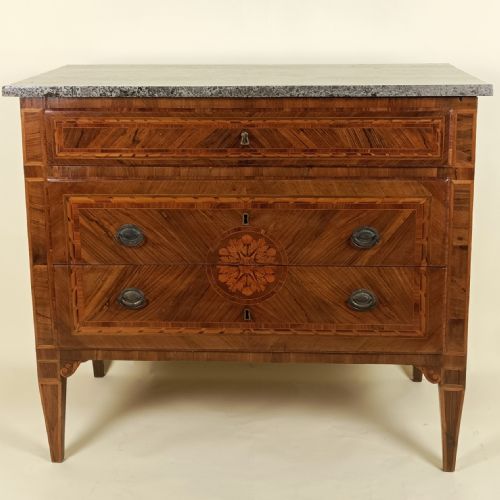
The most common form on this page pairs a figured walnut carcase with a fitted marble top, often featuring mirrored backs or intricate marquetry inlay. Cabinets range from serpentine fronts to straight-sided sideboards and commodes.
Makers utilised these statement furnishings in principal rooms to display decorative objects while concealing household items behind panelled or glazed doors. The pairing of polished timber and stone creates a heavy, architectural presence.
How they were made
Carpenters constructed these cabinets using solid timbers and decorative veneers, selecting burr walnut for its complex, swirling grain patterns. Marquetry inlay of contrasting woods and brass detailing frequently embellish the main body.
Slabs of marble, often shaped to match serpentine or breakfront contours, form the upper surface, resting directly on the wooden carcase. Ormolu mounts and gilt bronze accents complete the decorative scheme on French-influenced examples.
One remarkably honest French display cabinet carries later hand-painted inscriptions advertising the Rhone valley vineyards of Chateauneuf-du-Pape.
What varies in quality
Quality reveals itself in the selection of the timber veneer, where dense burr walnut and balanced marquetry indicate superior cabinet-making. The thickness and figuring of the marble top also distinguish finer examples from standard production.
The precision of the joinery in curved doors and the weight of cast brass or ormolu mounts dictate the overall standing of a piece. Carved wooden elements and mirror-back framing show the level of artisan effort dedicated to the construction.
The Walnut Marble Credenza Glossary
- Burr walnut
- A specialised timber cut from the growth warts of walnut trees, yielding intricate, swirling grain patterns highly prized for veneer work. This wood forms the primary visual draw on Victorian credenzas.
- Marquetry
- The art of applying small pieces of veneer to a structure to form decorative patterns or pictures. Craftsmen used various coloured woods to create floral or geometric designs across the cabinet doors.
- Ormolu
- Gilded bronze mounts applied to furniture for decorative enrichment, common on French-influenced pieces from the nineteenth century. These metal details accent the corners, feet, and friezes.
- Serpentine front
- A furniture front characterised by a concave central section flanked by two convex ends, or the reverse. This undulating shape requires advanced woodworking skill to match the marble top precisely.
- Credenza
- A low dining-room sideboard or standing cabinet without high legs, often featuring glass-fronted display compartments. The form evolved to house porcelain, silver, and other valuables.
Walnut Marble Credenza: Frequently Asked Questions
Where should I place a walnut marble credenza?
These low cabinets suit principal living spaces or dining rooms where their length can be appreciated against a blank wall. They provide a stable surface for lamps or ornaments while offering enclosed storage underneath.
Because the heavy stone top adds significant weight, positioning requires careful consideration of floor strength and clearance for opening doors.
How do I care for the marble top?
Wipe the stone surface regularly with a damp cloth and mild soap, avoiding acidic cleaning agents that etch polished marble. Protect the material from moisture rings by using coasters beneath glasses.
Periodic application of specialist stone wax helps maintain the sheen and guards against minor staining from daily use.
What is the difference between a credenza and a sideboard?
A credenza typically denotes a lower, more decorative cabinet with enclosed cupboards, frequently featuring glass panels for display. Sideboards often incorporate drawers and open serving surfaces intended for dining utility.
In nineteenth-century usage, the terms often overlapped, particularly when makers added mirror backs or marble slabs to the design.
How do I identify a Victorian piece from a later one?
Victorian examples often rely on heavy burr walnut veneers, elaborate carved mirror backs, and serpentine wooden carcases. Later twentieth-century pieces lean towards simplified French styling with marquetry and ormolu mounts.
Examining the interior timbers and construction fixings helps establish whether a cabinet originates from the mid-nineteenth century or the subsequent Edwardian period.