
French Marble Hall Table
A French marble hall table brings weight and surface into an entrance, combining stone slabs with timber frames.
French Marble Hall Table
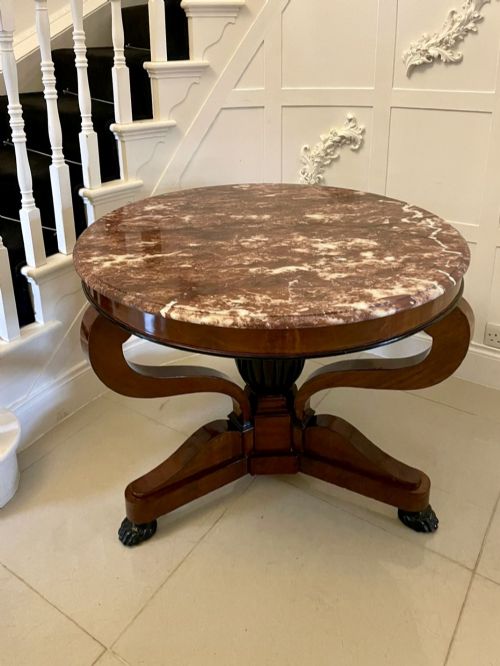
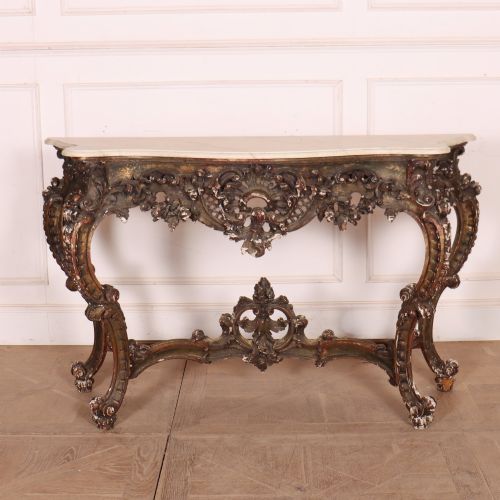
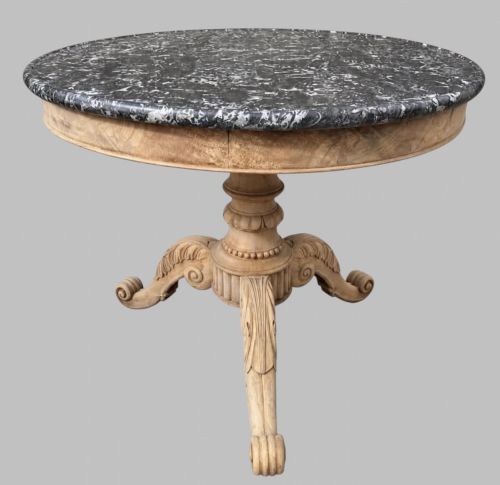
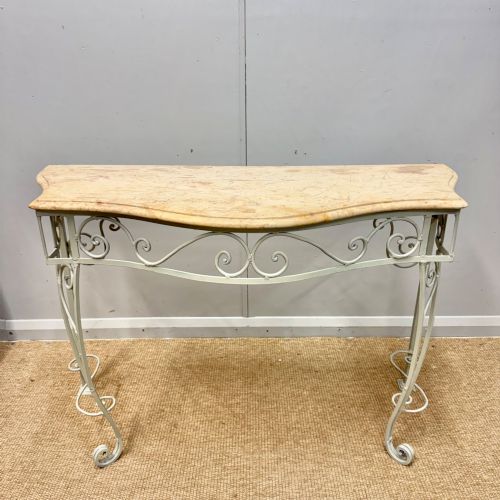
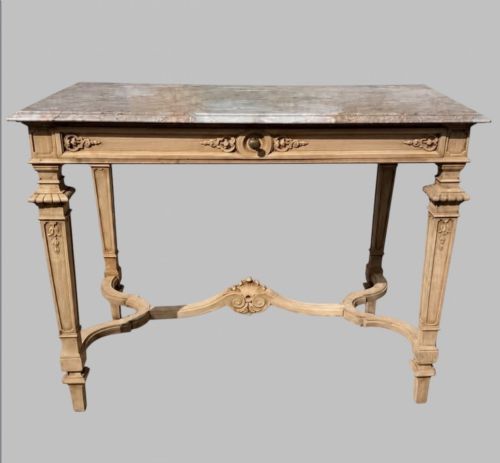
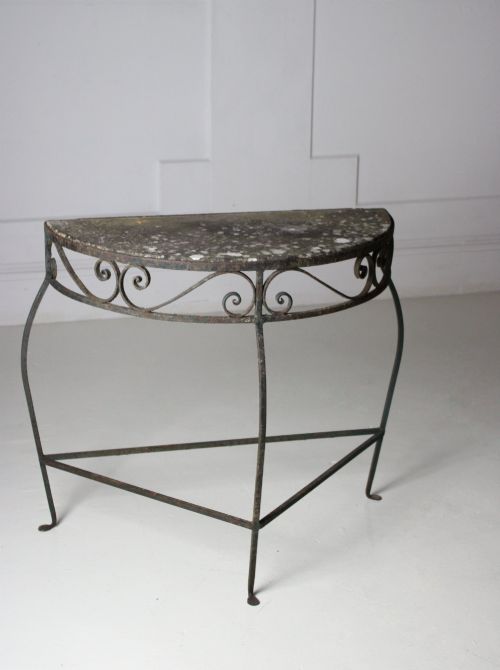
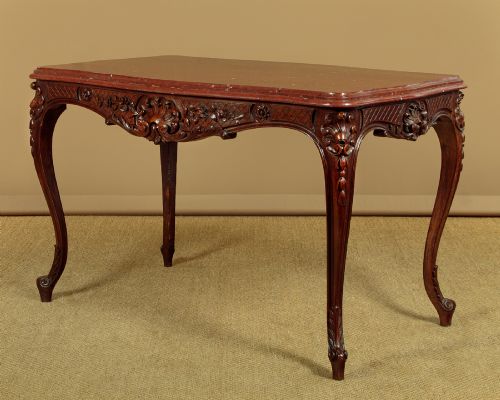
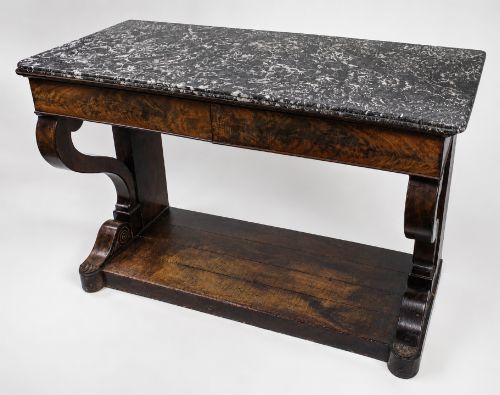
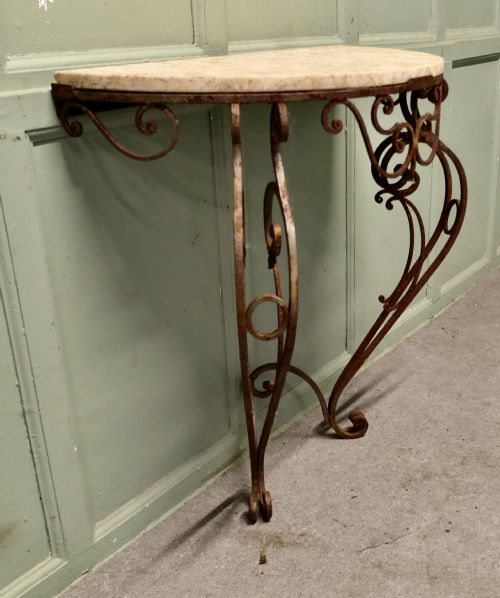
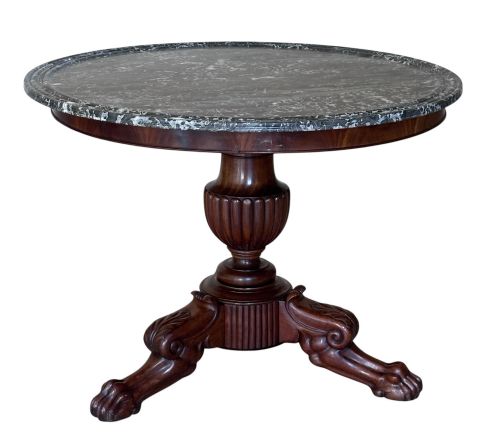
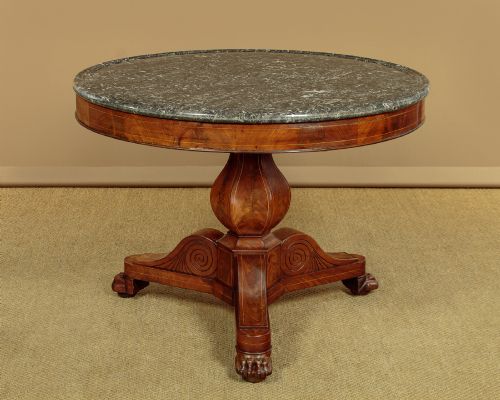
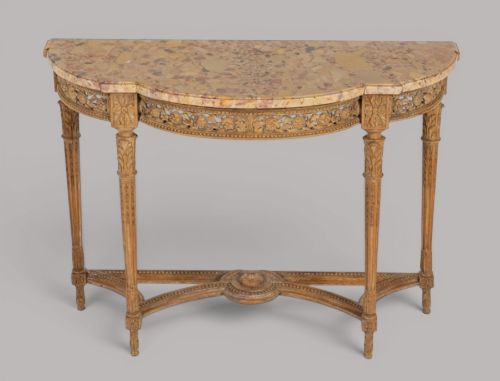
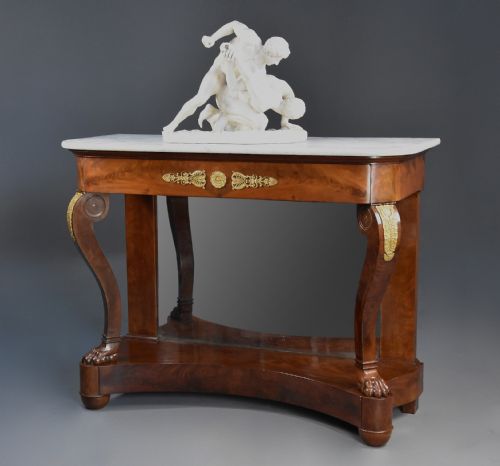
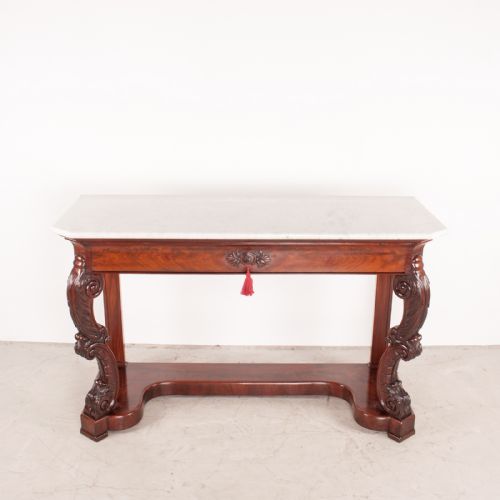
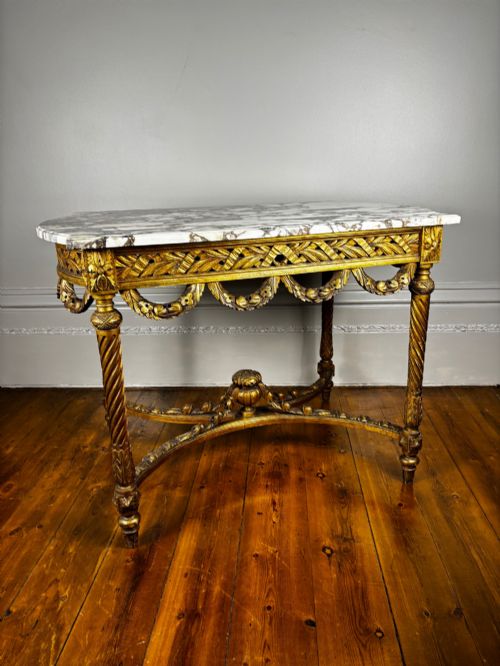
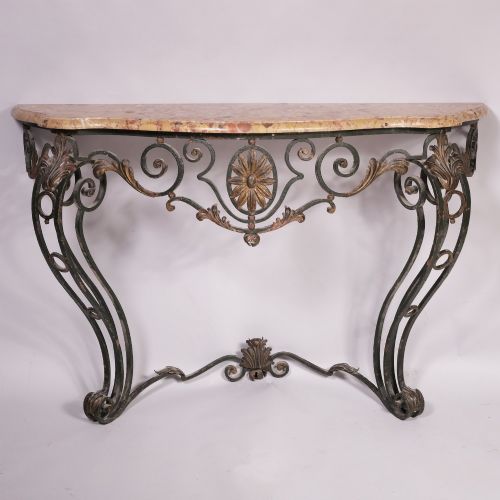
A French marble hall table is encountered primarily as a console or side table designed to stand against a wall, though freestanding centre tables and gueridons also appear in these listings. The selection spans the eighteenth century through to the early twentieth century, taking in Louis periods, Empire designs, and rustic country interpretations.
Makers and designers worked within distinct stylistic revivals, producing serpentine fronts, straight architectural forms, and giltwood frames paired with inset marble slabs. These pieces function as narrow display surfaces in hallways and corridors, utilising compact footprints alongside heavy stone tops.
Judging the work
Quality reveals itself in the crispness of the timber carving and the thickness of the marble slab, where older and finer examples demonstrate integrated structural joinery rather than applied ornamentation. The integration between the stone top and the wooden or gilded base dictates the structural integrity of each console.
The choice of timber grain, particularly in flame mahogany and figured walnut, separates standard regional pieces from sophisticated urban commissions. Ormolu mounts and original gilding show varying degrees of hand-chasing and depth, distinguishing standard production from exceptional workshops.
Several tables doubling as washstands suggest early nineteenth-century guests washed their hands immediately upon arrival in the hall.
The French Marble Hall Table Glossary
- Console table
- A table designed to stand against a wall, frequently secured to it with brackets due to a narrow footprint.
- Gueridon
- A round freestanding pedestal table originating in seventeenth-century France, frequently topped with marble.
- Ormolu
- Gilded bronze mounts applied to furniture for decorative enrichment.
- Serpentine
- A curved line that undulates inward and outward, characteristic of advanced cabinet work.
- Fossil marble
- Limestone containing distinct organic fossils, polished to provide a patterned decorative surface.
French Marble Hall Table: Frequently Asked Questions
Where should I place a console table?
These tables suit narrow entrance halls and corridors where floor space is limited yet a surface for keys or lamps is required. Their shallow depth allows them to sit flush against walls without obstructing movement.
Paring a console with a matching wall mirror creates a traditional focal point upon entering a home.
How do I care for a marble top?
Marble requires protection from acidic substances such as wine, citrus, and vinegar, which can etch the polished surface. Regular dusting with a soft cloth keeps the stone clean without chemical interference.
Applying a neutral stone sealer helps guard against staining while preserving the natural finish of the material.
Are these tables freestanding?
Console tables are traditionally designed to stand against a wall and may require attachment for complete stability due to the heavy weight of the stone top. Centre tables and gueridons are engineered to stand alone in the middle of a room.
Checking the base construction reveals whether a piece was intended for perimeter placement or central display.
How do I identify the period?
Stylistic markers such as neoclassical symmetry, rococo curves, or empire proportions point toward specific historical design movements. Timber selection and construction methods further clarify whether a piece dates to the eighteenth or early twentieth century.
Comparing the hand-carved details against documented regional furniture traditions confirms the likely era of manufacture.