

French Mahogany Chest
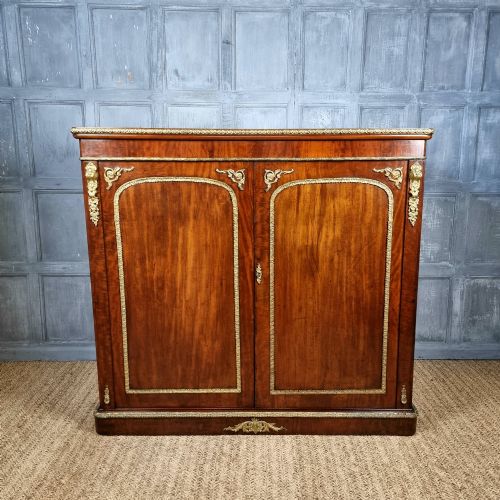
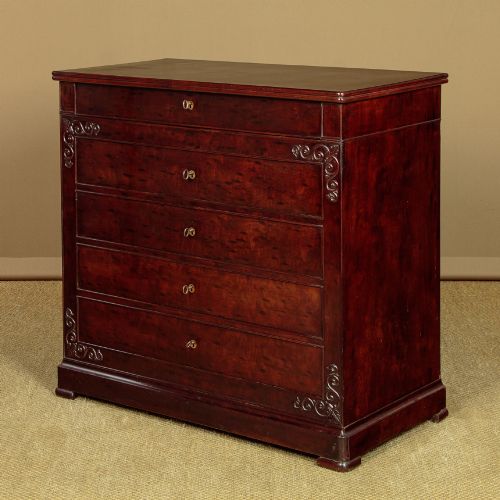
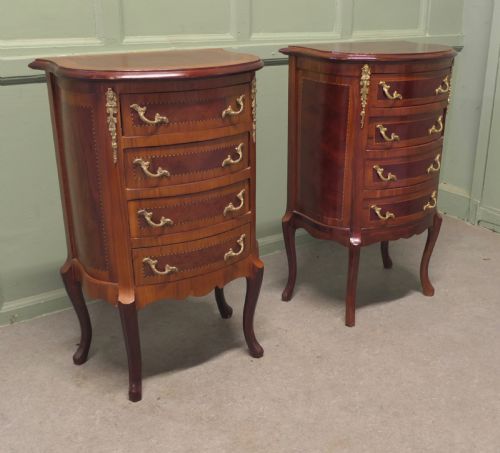
A french mahogany chest brings refined timber grain, classical mounts and substantial storage to a room.

French Mahogany Chest
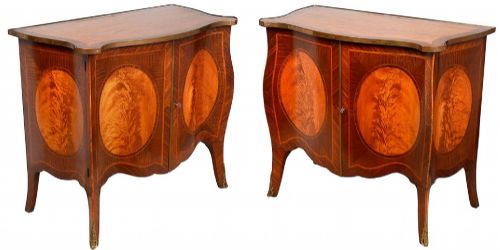
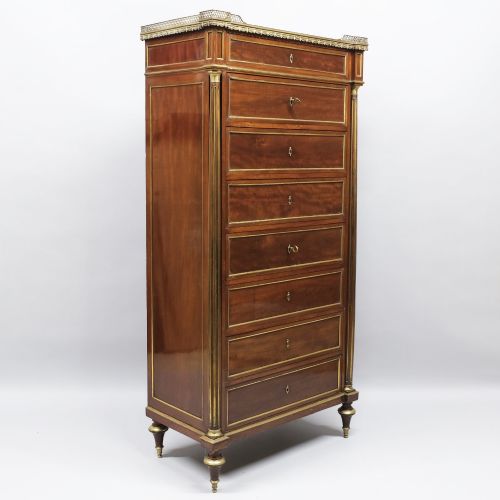
A french mahogany chest encompasses a range of traditional storage furniture originating from continental workshops, predominantly taking the form of commodes, tall semainiers and bedside cabinets. These pieces span periods from the eighteenth century through to the early twentieth century, showing influences from the French Empire, Louis XVI and Louis Philippe styles.
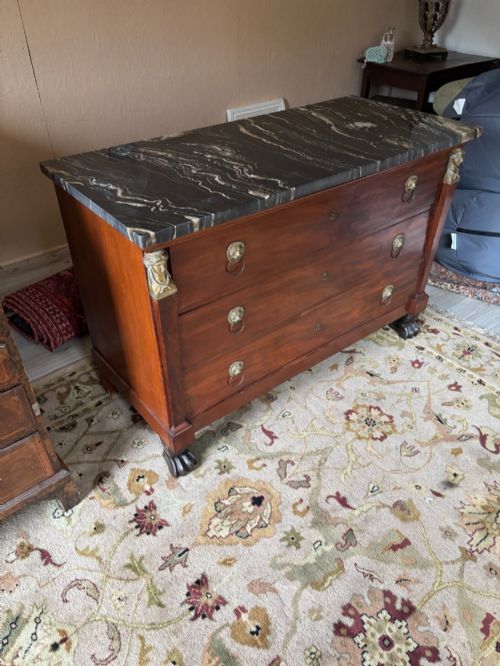
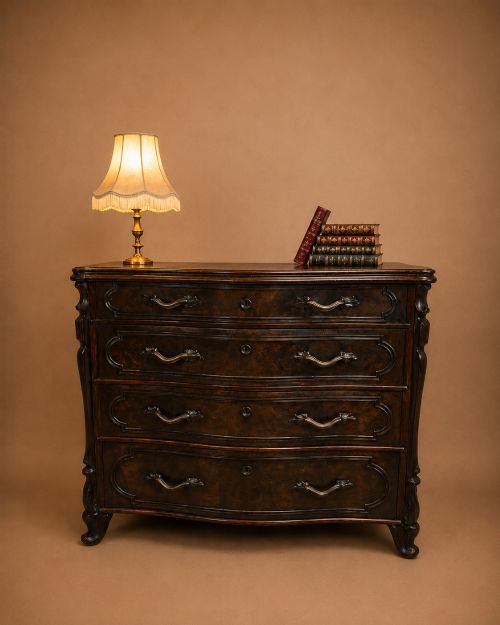
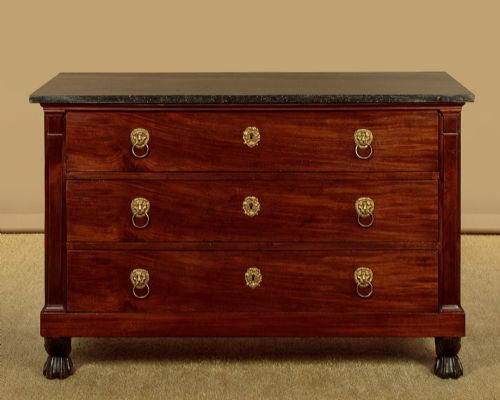
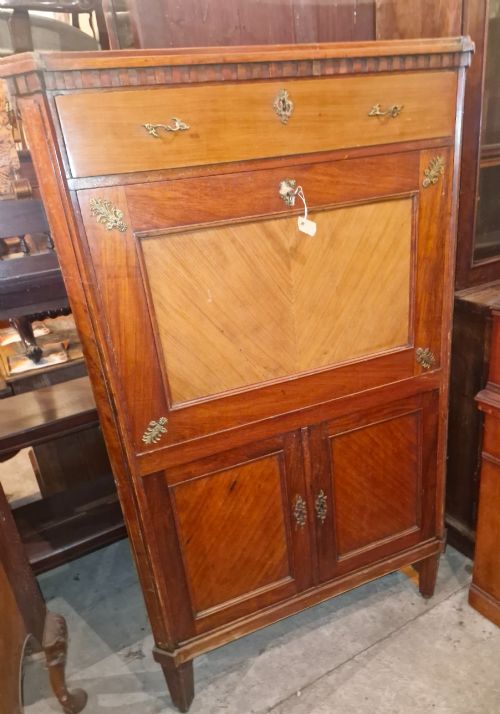
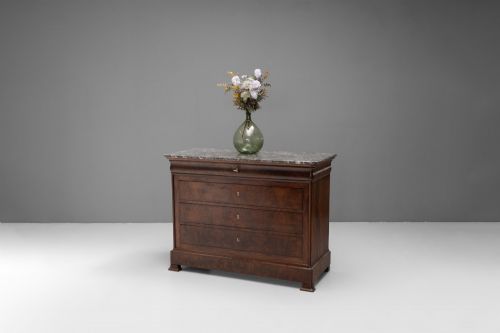
The most common version met on this page is the nineteenth-century commode featuring a marble top and multiple long drawers, often displaying figured or flame mahogany veneers. Alongside these standard commodes, buyers frequently encounter narrower tall chests, bedside tables and specialised storage forms such as secretaire cabinets.
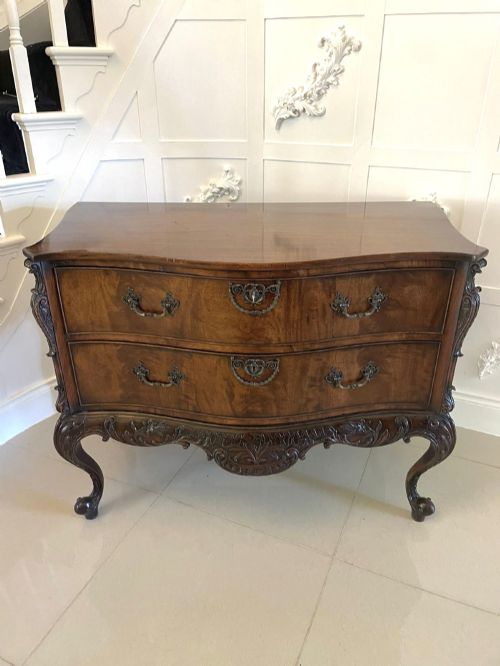
Regional and stylistic variations include serpentine fronts, bow fronts and upright vertical cabinets designed for specific domestic uses. Whether constructed as part of a bedroom suite or as an individual salon piece, each item reflects the distinct cabinet-making traditions of its era.
Markers of Distinction
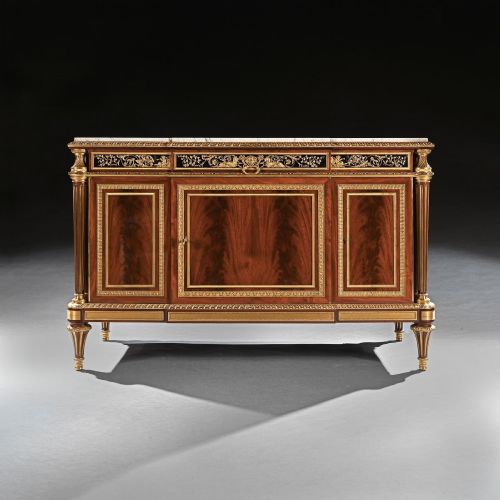
The degree of refinement in the timber veneer selection distinguishes standard production from exceptional work, particularly where flame mahogany is matched symmetrically across drawer banks. Superior examples display thoughtful grain continuity and precise hand-cut joinery throughout the internal carcase.
The integration and execution of secondary materials also set pieces apart, from the weight and detail of cast bronze or ormolu mounts to the thickness and polish of fitted marble slabs. Master makers applied cast metal hardware that fitted the drawer contours seamlessly rather than relying on generic cast elements.
French Mahogany Chest Retail Price Guide 2026
Typical asking prices for french mahogany chest among the pieces listed under this phrase on Sellingantiques today, from the lower quarter to the upper quarter. They describe what is for sale here now, not the wider market.
Secret drawers hidden within secretaire sections allow modern owners to continue the centuries-old tradition of concealing private notes.
Henry Dasson·Weisweiler·Gillows·Mon Krieger
The French Mahogany Chest Glossary
- Commode
- A low chest of drawers, typically featuring multiple deep tiers and standing on short legs or a plinth base. In French cabinet-making, it served as a primary storage form for principal rooms.
- Semainier
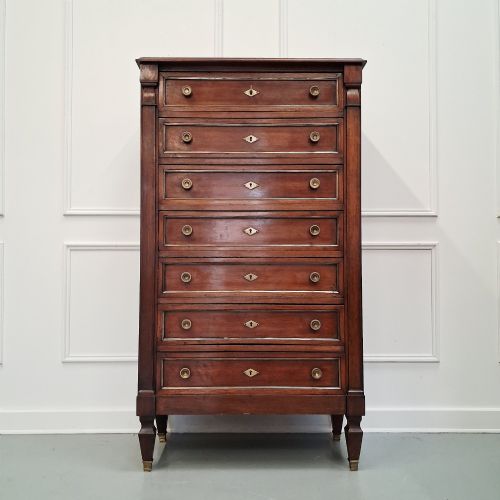
- A tall, narrow chest of drawers traditionally built with seven tiers, one for each day of the week. This vertical form maximises storage while occupying minimal floor space.
- Ormolu
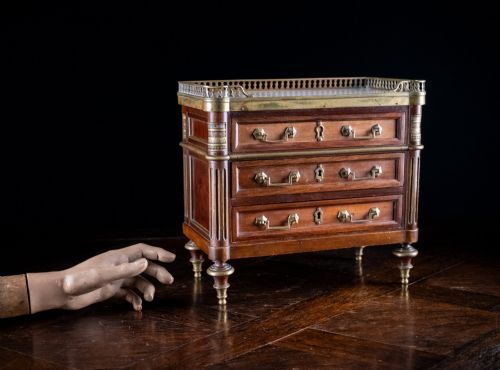
- Gilded bronze ornamentation applied to furniture mounts, corners and handles. It provides a bright metallic contrast against dark mahogany timber.
- Flame mahogany
- A veneer cut from the fork of the mahogany tree where the branches join the trunk, producing a distinctive flickering flame pattern. It was widely utilised for grand nineteenth-century facade panels.
- Serpentine
- A front profile shaped with a central convex curve flanked by concave sweeps. This undulating contour requires advanced woodworking skill to execute cleanly on solid timber and drawers.
French Mahogany Chest: Frequently Asked Questions
How do I identify a semainier?
A semainier is identified by its notably tall and narrow proportions, containing a vertical stack of drawers designed to hold a week's worth of personal items. These pieces conserve floor space while offering substantial depth.
They frequently appear in nineteenth-century French listings alongside lower, wider commodes and bedside cabinets.
What is flame mahogany?
Flame mahogany is a highly figured veneer timber harvested from the junction where branches meet the main tree trunk. It yields a distinctive, rippling pattern that resembles flickering flames.
Cabinet-makers utilised this veneer on prominent drawer fronts to create decorative symmetry and visual depth across the piece.
How should I care for marble tops?
Marble tops on these chests require gentle cleaning with damp cloths and neutral soaps, avoiding acidic substances that can etch the polished stone surface. Placing felt pads beneath heavy objects prevents scratching.
Regular light dusting preserves the natural lustre of the marble alongside the polished mahogany frame.