
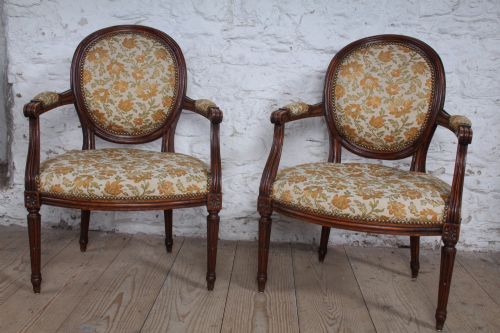

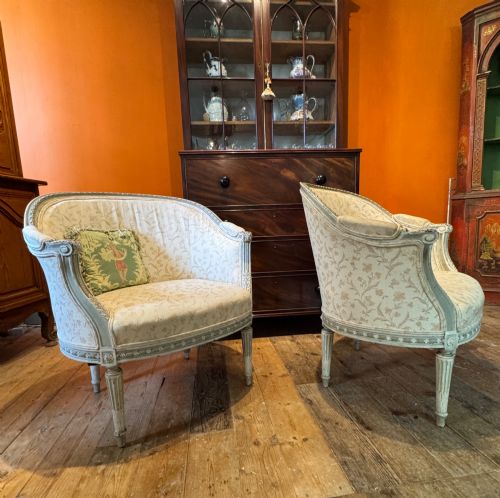
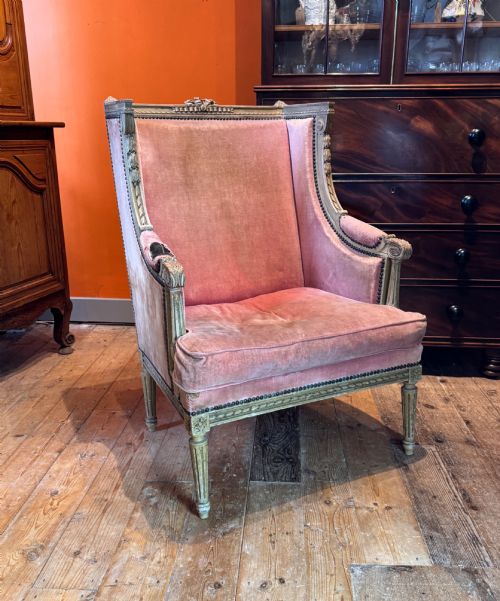
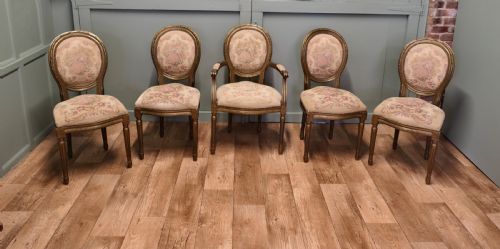
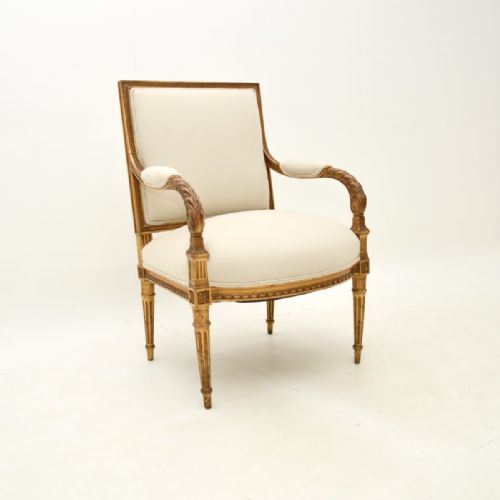
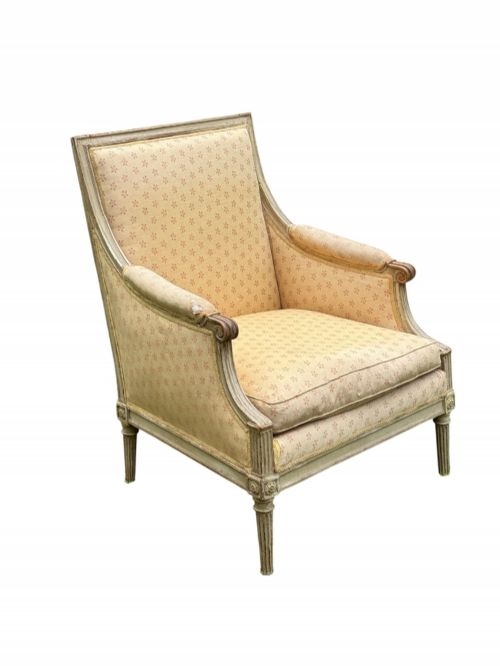
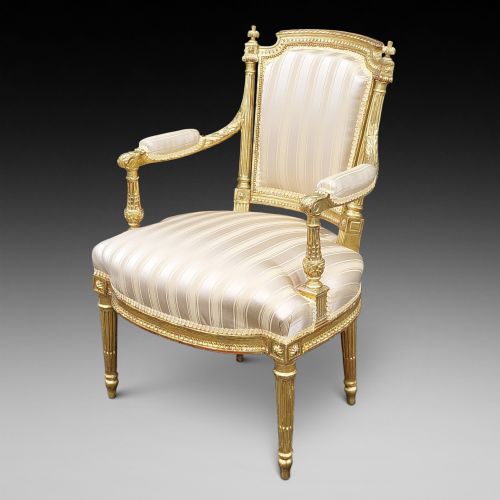
French Louis XVI Chairs
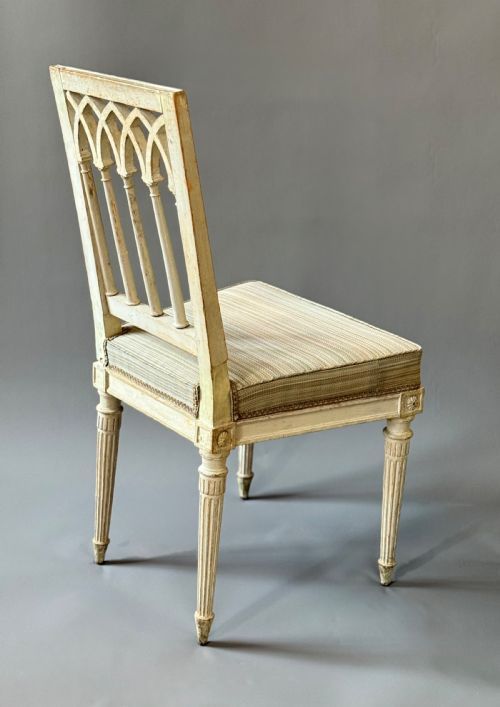
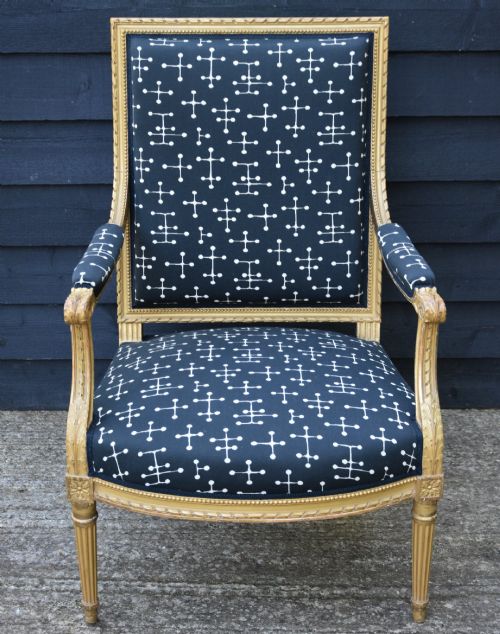
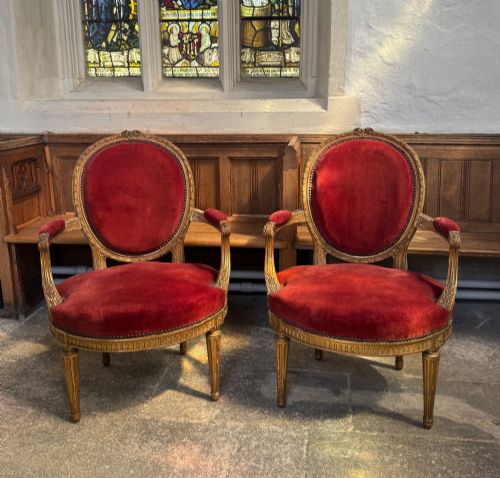
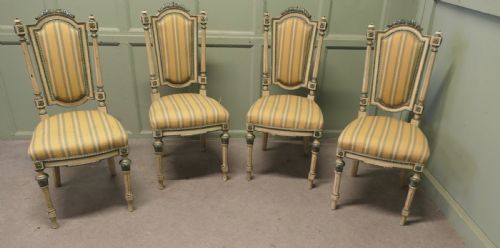
When buyers seek french louis xvi chairs, they discover seating defined by neoclassical symmetry, painted frames, and giltwood finishes.
How they were made
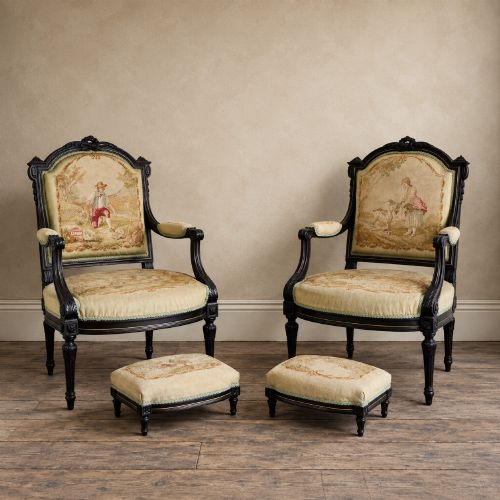
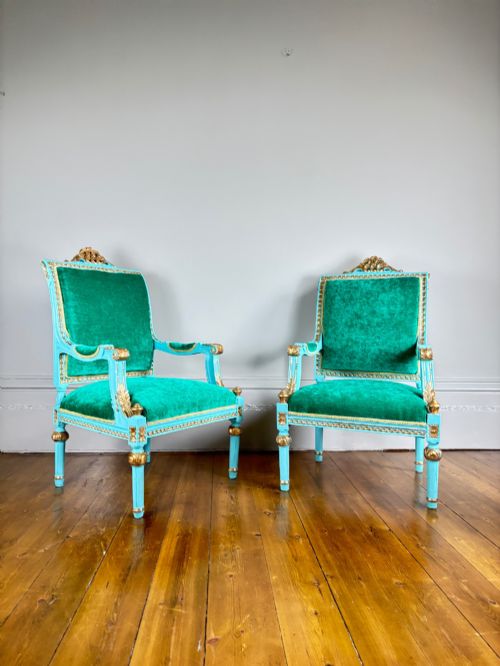
Frames rely primarily on carved beech, walnut, and other timbers, finished with paint, original pigments, or heavy gilding. Giltwood surfaces combine gold leaf applied over preparation layers on wood.
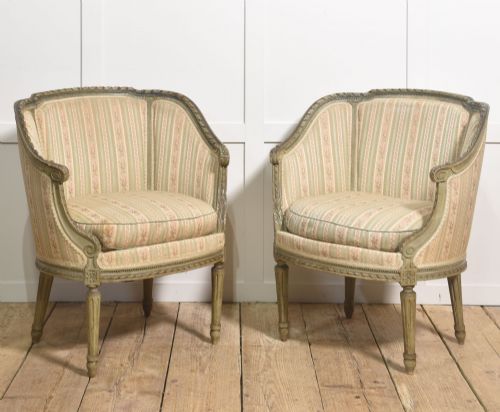
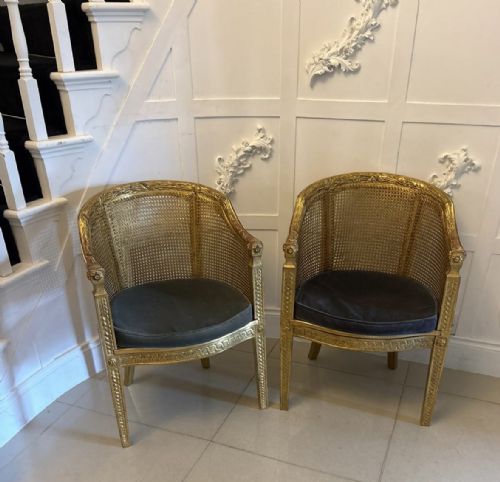
Upholstery techniques utilise traditional padding secured beneath fabrics such as velvet, silk damask, needlepoint tapestry, and caning. Joinery incorporates hand-carved decorative motifs including fluted legs and classical ornamentation.
What varies in quality
Quality rests upon the crispness of the hand-carved wood ornamentation and the depth of the gilding or original paint surfaces. Superior examples retain untouched period finishes rather than later repainting.
The integrity of the structural frame and the execution of classical details such as fluted legs distinguish standard production from exceptional pieces. Fabric selection and the survival of original needlepoint or tapestry panels further elevate the status of individual chairs.
Henri Jacob
The French Louis XVI Chairs Glossary
- Bergère
- An enclosed upholstered armchair with solid upholstered sides resting on a wooden frame. This form offers deep seating comfort.
- Fauteuil
- An open-framed upholstered armchair with exposed wooden arms and padded elbow rests. The style is typical of French formal seating.
- Giltwood
- Timber coated with gold leaf or metallic powder. It provides a reflective surface that catches light in formal interiors.
- Caning
- Woven rattan material stretched across chair backs or seats. It introduces texture and lightness to wooden furniture frames.
- Neoclassical
- A design movement reviving classical Roman and Greek motifs. Straight lines and symmetrical proportions replace curved rococo excess.
French Louis XVI Chairs: Frequently Asked Questions
What is a French Louis XVI chair?
These are seating items characterised by straight fluted legs, geometric shapes, and classical restraint. They originate from eighteenth-century France or later nineteenth-century revival periods.
The design departs from curving rococo forms by embracing rectangles, ovals, and symmetry. Frames typically feature carved wood, paint, or gilt finishes.
How do I identify the period?
Dating relies on timber treatment, wear patterns, and construction methods. Pieces from the original eighteenth-century period show distinct age in the wood joinery and hand-carved details.
Nineteenth-century revival examples utilise similar classical motifs but often exhibit different tool marks and secondary woods. Comparing upholstery webbing and frame fasteners clarifies the era of manufacture.
Where were these chairs used?
Original pieces furnished French chateaux, salons, and formal drawing rooms. They served as movable seating for guests during social gatherings.
Today, these chairs function effectively in modern bedrooms, studies, and dining spaces. Their restrained neoclassical proportions suit both contemporary and traditional room schemes.
Are painted and gilt finishes original?
Many items retain their initial painted surfaces or gold leaf application, while others have undergone subsequent decoration over the decades. Original paint often shows subtle craquelure and organic wear consistent with age.
Examining the layers around joints helps determine whether the finish dates to the original construction. Preserved patinas add historical depth to the furniture.