

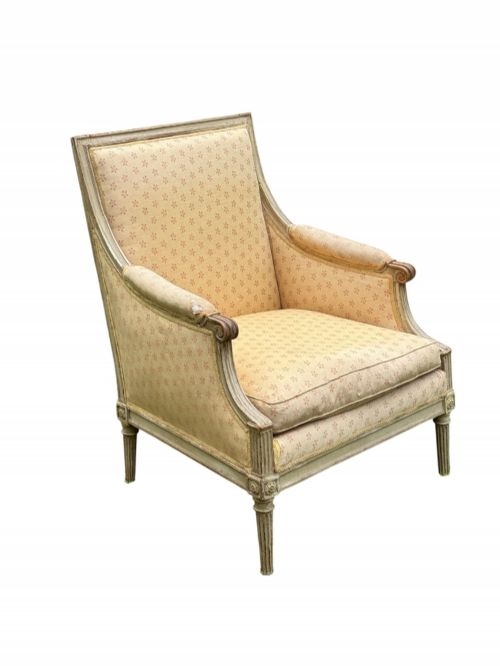
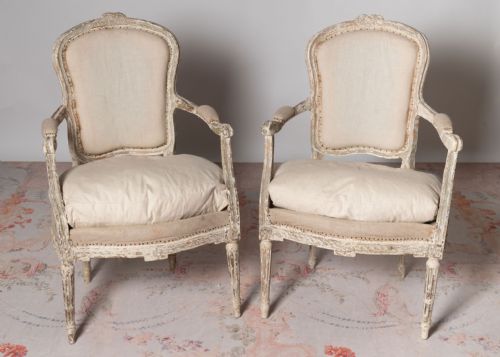


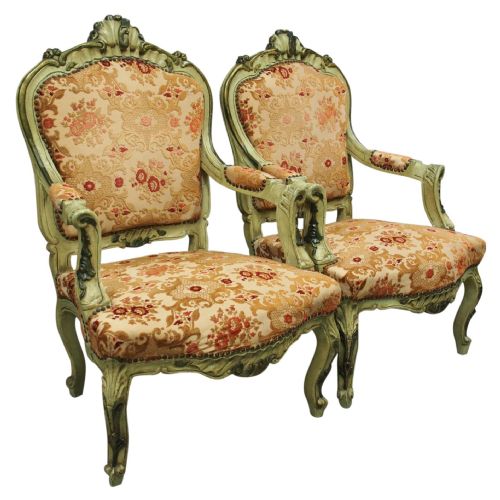


Cream Painted Wood Armchairs
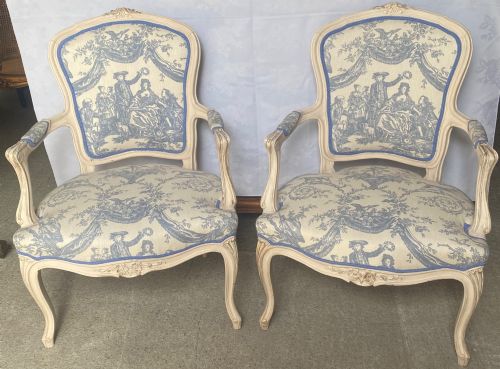
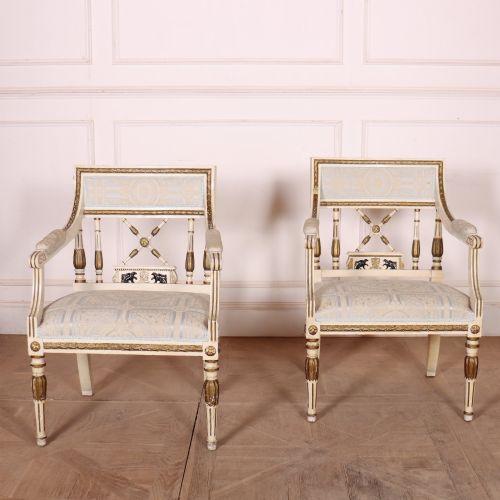
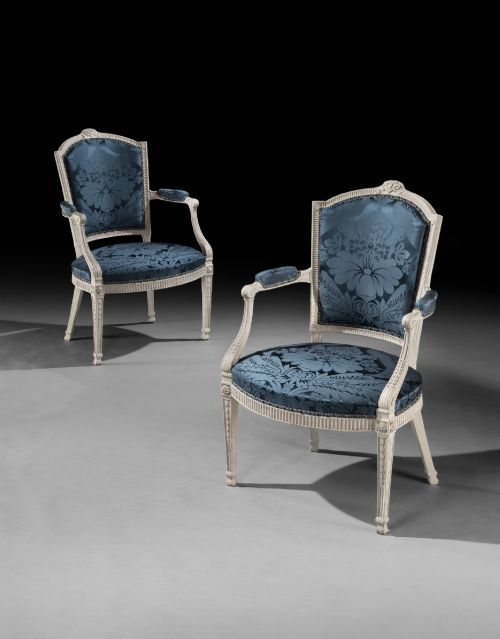
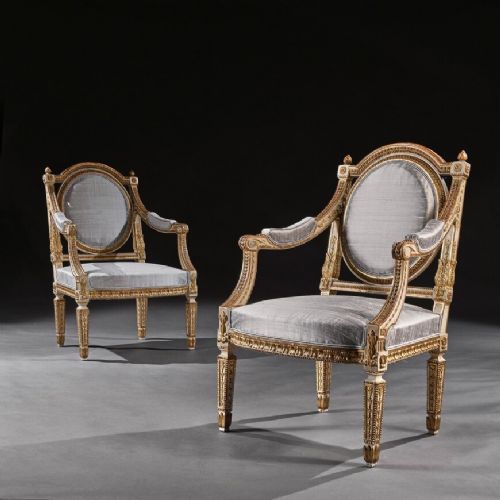
These cream painted wood armchairs bring continental elegance and refined structure to a room.
Cream Painted Wood Armchairs
Cream painted wood armchairs are seating options defined by light surface finishes over timber frames, frequently taking inspiration from French and continental classical design traditions. The selection spans periods from the eighteenth century through to the mid-twentieth century, capturing shifts in aesthetic preference from ornate revivalism to restrained neoclassical lines.
Buyers encounter numerous regional interpretations within this category, including French provincial models, Swedish Empire examples, and Italian carved pieces. Frames often arrive paired, offering symmetrical placement possibilities for formal reception rooms, salons, or bedrooms.
Alongside standard armchairs, related seating forms such as bergere chairs and two-seat settees appear within the inventory, upholstered in fabrics like linen and needlework. These variations share the characteristic pale painted or parcel gilt surface treatment that defines the group.
Materials and construction
Makers constructed these frames from solid woods including beech and walnut, carving structural elements by hand before applying layers of paint. Surface decoration frequently incorporates giltwood or parcel gilt details to highlight carved mouldings and fluted legs.
Upholstery techniques rely on traditional textile applications, using durable materials such as linen and needlework to cover padded seats and backrests. The original paint finishes often show subtle craquelure and wear accumulated over decades of use.
Cream Painted Wood Armchairs Retail Price Guide 2026
Typical asking prices for cream painted wood armchairs among the pieces listed under this phrase on Sellingantiques today, from the lower quarter to the upper quarter. They describe what is for sale here now, not the wider market.
Materials documented across the inventory include beech, walnut, giltwood, and woven needlework upholstery.
Quality and craftsmanship
Quality rests primarily in the crispness of the wood carving and the integrity of the underlying timber frame. Finer examples display deeply carved floral motifs, acanthus leaves, or classical fluting executed with precision, whereas simpler pieces rely entirely on the painted surface for visual impact.
The condition and history of the painted surface dictate much of the character, with original undisturbed paint holding greater appeal than later overpainting. Surviving upholstery or period needlework further distinguishes exceptional examples from standard production.
Henri Jacob
The Cream Painted Wood Armchairs Glossary
- Bergere
- An enclosed upholstered armchair with wooden framing around the sides and back. These seats originated in France and typically feature loose seat cushions.
- Parcel Gilt
- A decorative technique where specific carved details receive a thin application of gold leaf over the underlying paint or wood. This method highlights architectural elements of the frame.
- Needlework
- Hand-stitched textile upholstery created using wool or silk threads on a canvas ground. Such covers often display floral or geometric patterns characteristic of eighteenth and nineteenth-century textiles.
- Neoclassical
- A decorative style drawing inspiration from the classical art and architecture of ancient Greece and Rome. Characteristics include straight tapered legs, urn motifs, and symmetrical balance.
Cream Painted Wood Armchairs: Frequently Asked Questions
Are these armchairs comfortable for daily sitting?
Most pieces offer supportive seating through upholstered backs and padded armrests, though nineteenth-century springing differs from modern foam construction.
Buyers often add supportive cushions if intended for daily lounging rather than occasional sitting.
How do I care for antique painted wood?
Maintain the finish by dusting gently with a dry, soft cloth and avoiding harsh chemical cleaning agents or excessive moisture.
Keep pieces away from direct sunlight and strong heat sources to prevent the painted timber from drying and cracking.
Can I reupholster these antique chairs?
Many examples accommodate new fabric choices provided the internal webbing and padding remain structurally sound and capable of holding tacks.
Traditional upholstery methods preserve the historic integrity of older frames better than modern staples.
How do I distinguish eighteenth-century frames from later revivals?
Early pieces display hand-carved tool marks, pegged joinery, and aged timber beneath the paint layers that differ from nineteenth-century revival methods.
Stylistic proportions also shift, with revival models often adopting heavier scaling typical of later decorative periods.