


Painted Fauteuil Armchairs
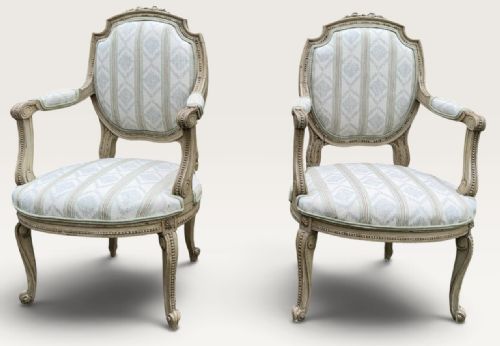
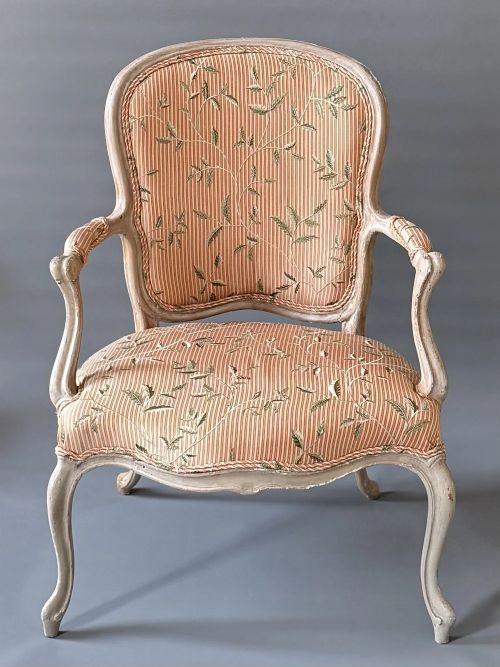
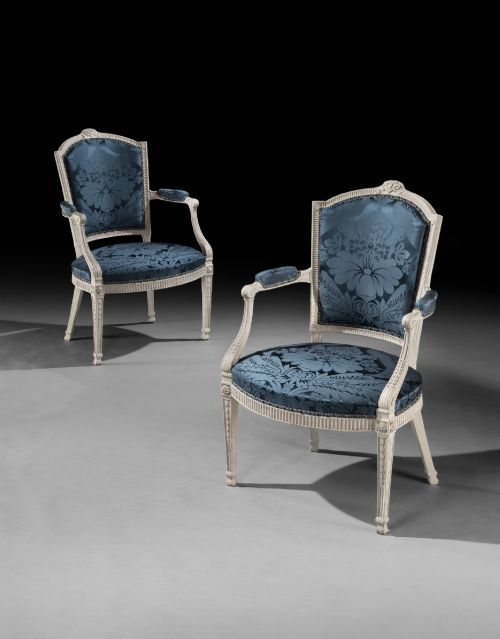
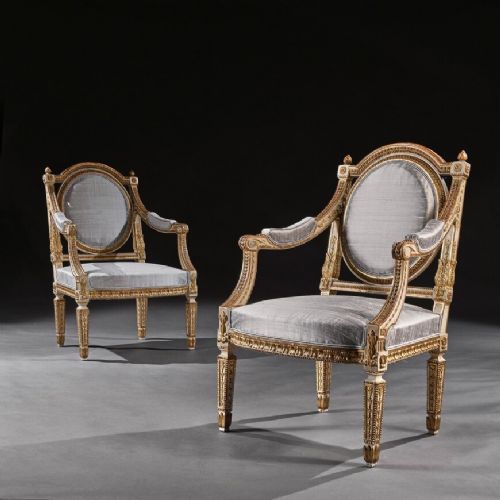
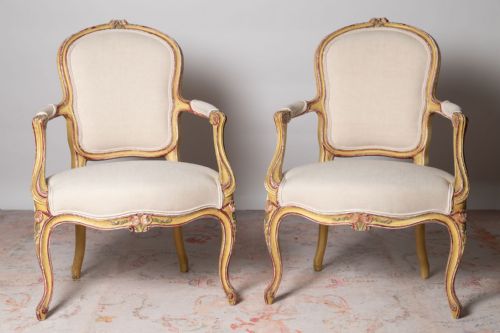
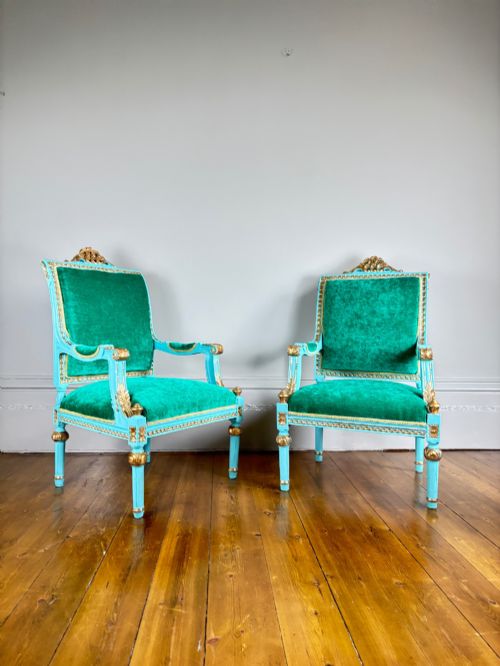
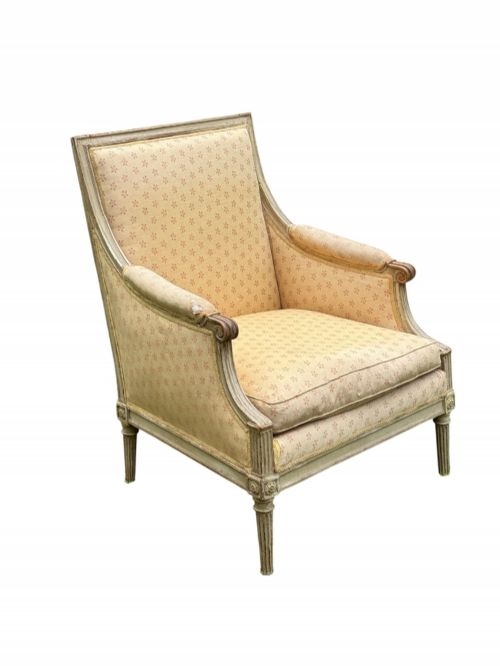
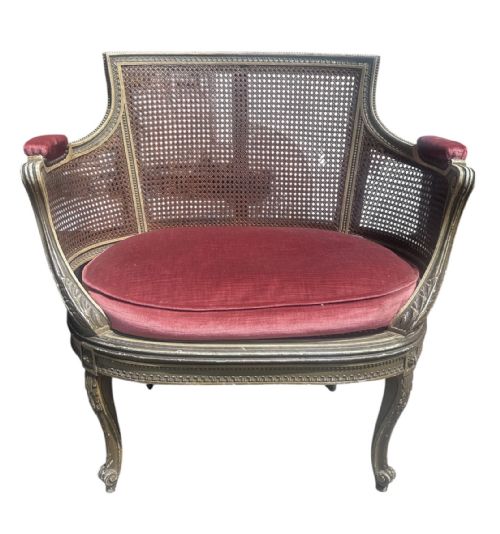
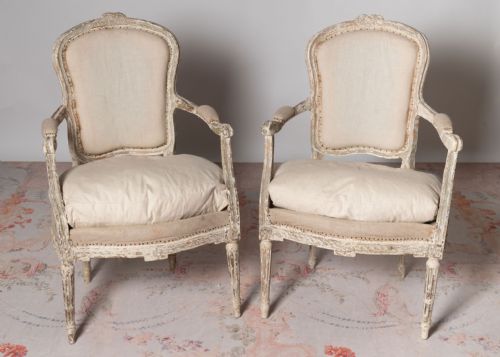
These painted fauteuil armchairs bring French and continental seating into the room, offering open arms and carved wooden frames.
Painted Fauteuil Armchairs
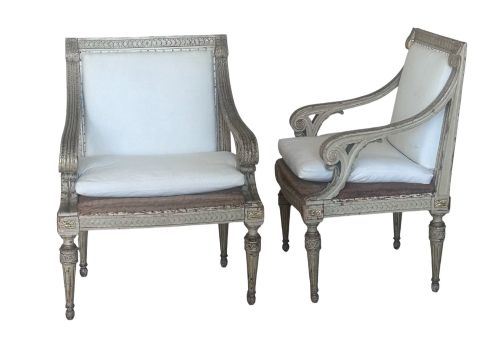
When you search for painted fauteuil armchairs, you find open-armed wooden seating spanning the eighteenth, nineteenth, and early twentieth centuries. Most examples on this page hail from France or Italy, reflecting regional interpretations of classic court designs.
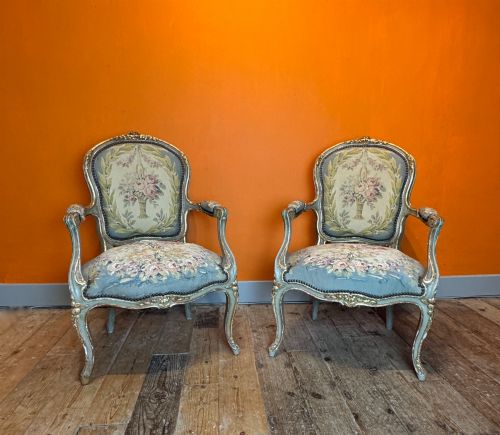
Upholstery ranges from plain fabric and velvet to period tapestry and needlepoint panels. Certain pieces incorporate cane work within the frame, balancing solid timber with lighter textural elements.
How they were made
Carpenters shaped beech and other native timbers to form the curved rails and exposed frames of these open armchairs. Gesso was frequently applied beneath the paint and gold leaf to create a smooth base for detailed carving.
Surface decoration relied on layered paint finishes, sometimes combined with parcel gilding to accentuate mouldings and floral motifs. Traditional upholstery techniques secured webbing, stuffing, and outer fabric directly to the frame.
Several miniature salon chairs appear here, built small enough for children or grand dollhouses.
What varies in quality
The distinction between ordinary and superior seating lies in the crispness of the wood carving and the integrity of the painted finish. Pieces retaining original paint layers command greater attention from collectors than later repainted surfaces.
Proportion and balance define the finer examples, where the curve of the arm matches the sweep of the back leg. The choice and execution of the upholstery, whether needlepoint or silk velvet, further mark the tier of the piece.
Henri Jacob
The Painted Fauteuil Armchairs Glossary
- Fauteuil
- An open-armed wooden armchair with upholstered seat, back, and arm pads, originating in France during the seventeenth century.
- Parcel Gilt
- A method of applying gold leaf to specific raised portions of a carved wooden frame while leaving the rest painted.
- Gesso
- A plaster mixture applied to wood to create a prepared surface for gilding and painting.
- Needlepoint
- A type of canvas embroidery used historically to cover the seats and backs of salon chairs.
- Cane
- Plant material woven into an open mesh pattern to form the back or seat panels of light chairs.
Painted Fauteuil Armchairs: Frequently Asked Questions
How do I spot original paint?
Original paint shows natural wear, craquelure, and subtle fading consistent with age rather than flat, uniform modern coverage.
Under magnification, older surfaces reveal multiple thin layers and micro-abraded edges where handling occurred over generations.
Are these chairs comfortable for daily use?
Most of these open armchairs were built for formal salons rather than deep lounging, offering an upright and supportive seat.
Their open wooden arms restrict sprawling, though traditional sprung or stuffed cushions provide adequate support for reading.
What is the difference between Louis XV and Louis XVI styles?
Louis XV seating is characterised by asymmetrical curves, cabriole legs, and flowing rococo shell or floral carvings.
Louis XVI pieces introduce straight lines, symmetry, fluted columns, and neoclassical motifs like ribbons and acanthus leaves.
Can I mix these with modern furniture?
The distressed painted finishes and neutral upholstery tones allow these chairs to sit comfortably alongside contemporary minimalist interiors.
Placing a single painted armchair in a hallway or bedroom creates a focal point without overwhelming the surrounding space.