

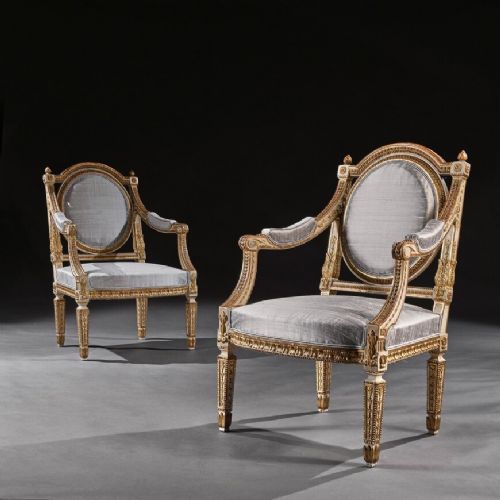
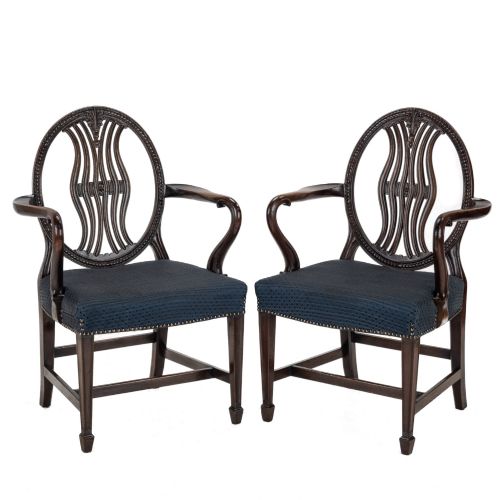
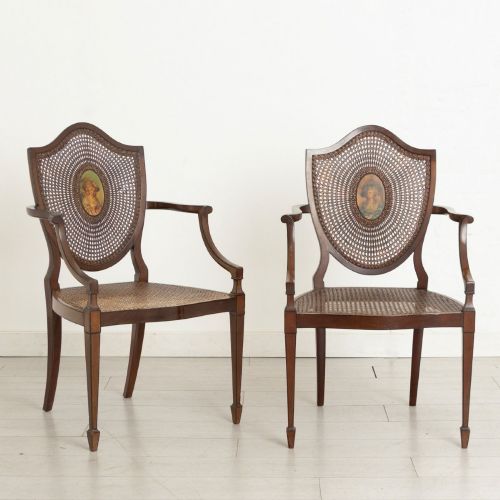


Neoclassical Oval Armchairs
Neoclassical oval armchairs bring disciplined symmetry and classic restraint into a room, offering both formal elegance and steady comfort for daily sitting.
How they were made
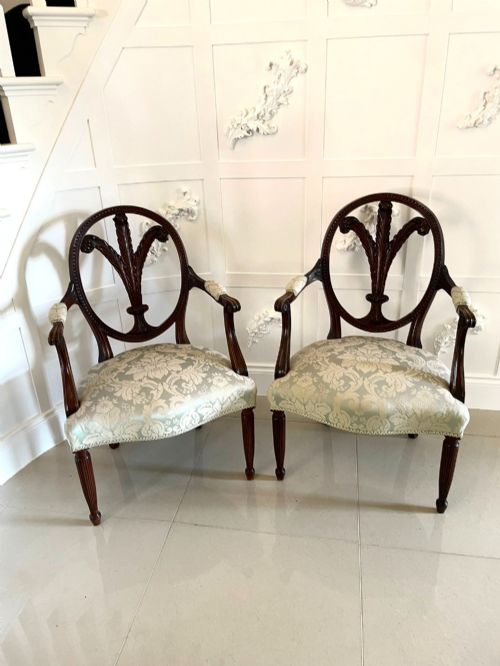
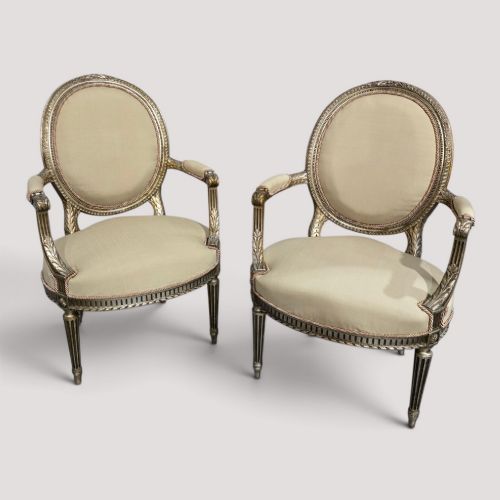
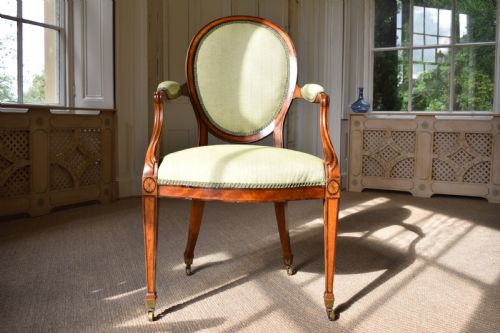
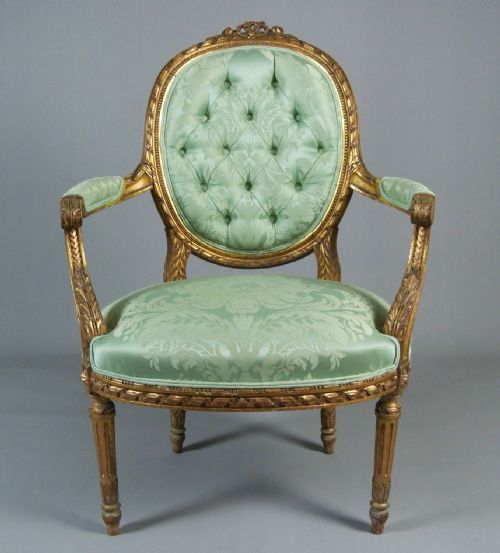
Cabinetmakers shaped these frames primarily from solid timbers like mahogany, beech, satinwood, walnut, and painted wood. Artisans applied parcel gilt highlights and detailed carvings directly onto the show frames to accentuate the classical vocabulary.
Upholstery completed the construction, utilising traditional textiles such as silk damask, red damask, fabric, and tapestry panels. Many examples feature split cane backs or intricate needlepoint panels inset within the wooden structure.
What varies in quality
Quality rests upon the crispness of the carved ornamentation and the integrity of the timber frame. Finer examples display deeply undercut carvings in giltwood or mahogany rather than shallow surface shaping.
The selection of secondary woods and the precision of joinery separate standard production from superior craftsmanship. Original upholstery methods and well-preserved surface patinas elevate individual pieces within the broader group.
Neoclassical Oval Armchairs Retail Price Guide 2026
Typical asking prices for neoclassical oval armchairs among the pieces listed under this phrase on Sellingantiques today, from the lower quarter to the upper quarter. They describe what is for sale here now, not the wider market.
Listings feature mahogany, beech, and giltwood frames paired with silk damask and tapestry upholstery across eighteenth and nineteenth-century periods.
Thomas Chippendale·John Linnell
The Neoclassical Oval Armchairs Glossary
- Medallion chair
- An armchair featuring a circular or oval upholstered backrest framed in wood. This form emerged prominently during the Louis XVI period.
- Show frame
- A wooden structural framework left visible around the upholstered portions of an armchair. Carvers often decorated these exposed areas with gilt or paint.
- Parcel gilt
- A technique where selective areas of a wooden frame receive a thin application of gold leaf while other surfaces remain painted or polished wood. This highlights specific carved details.
- Fauteuil
- A French open-arm chair featuring upholstered arms and an exposed wooden frame. These chairs typically date from the seventeenth century onwards.
- Damask
- A reversible figured fabric traditionally woven from silk, wool, or cotton. It provides a patterned background frequently used for period upholstery.
Neoclassical Oval Armchairs: Frequently Asked Questions
How do I spot a true eighteenth-century frame?
Examine the construction joints and tool marks visible on the underside and interior frame members. Period pieces rely on traditional hand-cut joinery rather than modern mechanical fasteners.
Look closely at the timber ageing and the wear patterns around the armrests and feet. Genuine examples show consistent handling marks accumulated over centuries of use.
Where should I place these chairs at home?
These seating pieces work well in reception rooms, libraries, and formal drawing rooms as accent seating. Their open frames maintain visual space while offering functional seating around a fireplace or desk.
Pairing them with appropriate side tables creates a balanced focal point in larger living areas. Ensure they sit away from direct heat sources to protect the wooden frames and textiles.
How do I care for the silk upholstery?
Protect delicate fabrics by keeping the chairs out of direct sunlight to prevent colour fading and textile degradation. Gentle vacuuming with a soft brush attachment removes surface dust without damaging the weave.
Professional textile conservators should handle any deep cleaning or structural repairs to the covering materials. Avoid using chemical sprays or standard household cleaners on historic fabrics.
What defines the Sheraton style here?
Sheraton design elements in these chairs include straight tapered legs and refined inlay work on the mahogany frames. The aesthetic emphasises clean geometric lines over heavy ornamentation.
These pieces reflect the lighter proportions favoured toward the end of the eighteenth century. They contrast with the heavier carved forms found in earlier Georgian furniture.