


French Louis XV Bed
A french louis xv bed brings fluid curves and naturalistic carving into a bedroom, offering a romantic centrepiece grounded in historical style.
French Louis XV Bed
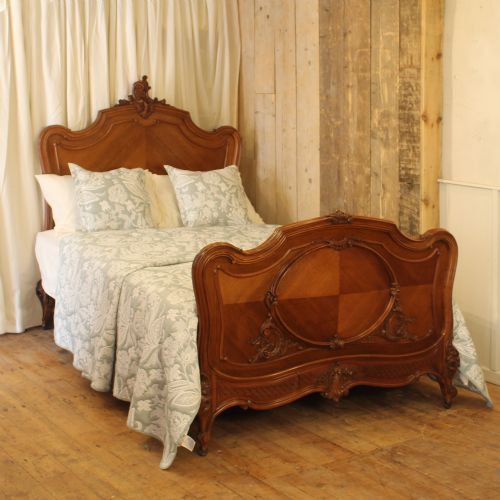
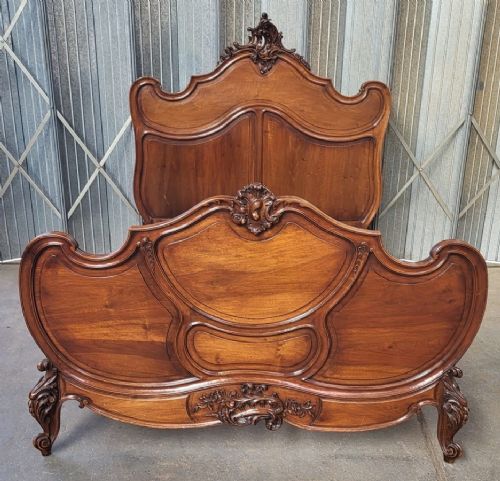
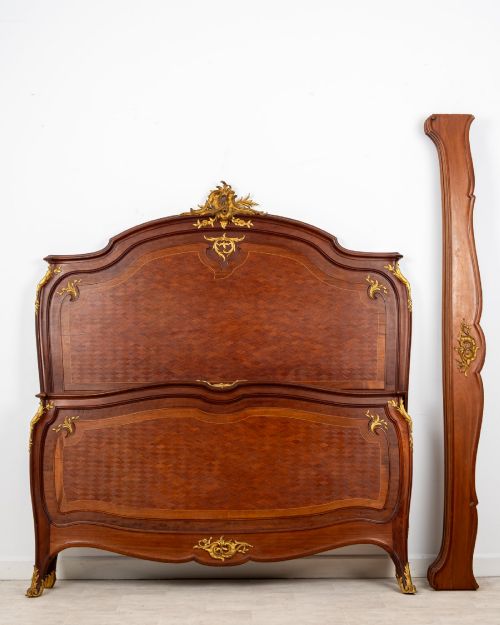
When searching for a french louis xv bed, collectors encounter pieces spanning the nineteenth and early twentieth centuries, drawing heavily upon eighteenth-century rococo aesthetics. The designs typically feature sweeping cabriole legs, asymmetrical cartouches, and intricate floral or foliate carvings executed in rich hardwoods.
Most examples available on the market date from revival periods between 1870 and 1930 rather than the reign of Louis XV itself. These later interpretations range from grand walnut and marquetry bedsteads to simpler painted wood frames and upholstered daybeds designed for domestic comfort.
Materials and construction
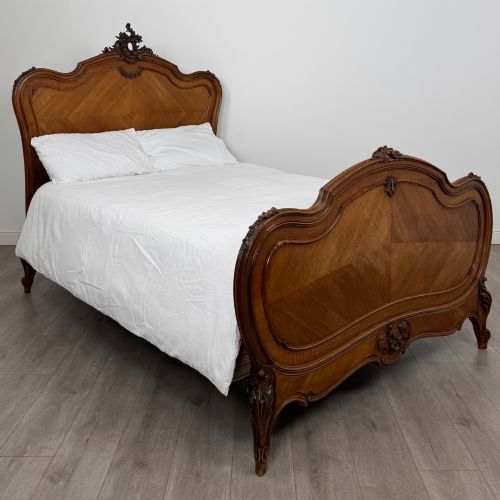
Cabinetmakers relied primarily on walnut, oak, and kingwood, often employing marquetry and parquetry veneers to create geometric or floral patterns across the headboards and footboards. Solid timbers were heavily hand-carved to achieve the characteristic undulating lines and scrollwork associated with the style.
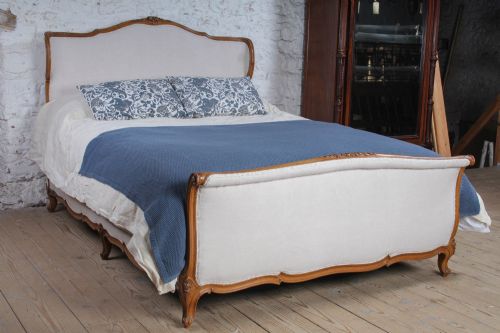
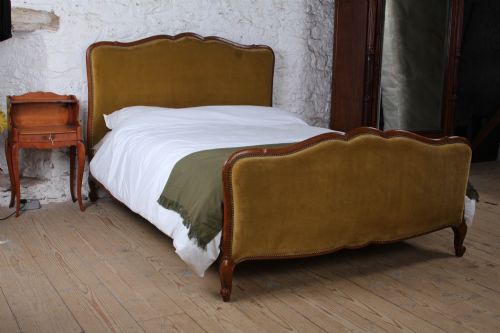
Many frames incorporate fabric upholstery, ranging from newly applied textiles to older coverings paired with exposed wooden rails. Details such as ormolu mounts, brass hardware, and painted finishes further define the construction methods recorded in the evidence.
One notable bedstead arrived directly from the film set of The Great, bringing royal television drama straight into the bedroom.
Markers of distinction
The standard of carving sets the baseline for quality, separating deeply undercut, spirited hand-carving from shallower, mechanical shaping. Crisp execution in the floral motifs and scrollwork indicates a more skilled hand in the workshop.
Choice of materials also dictates value, with figured walnut, intricate marquetry, and matching bedroom suites representing higher tiers of craftsmanship compared to plain painted or simpler wood frames.
The French Louis XV Bed Glossary
- Cabriole leg
- A furniture leg that bends outward in a convex curve and tapers inward in a concave curve, ending in a pad or scroll foot. This shape mimics the leaping legs of an animal and defines Louis XV seating and bed frames.
- Ormolu
- Gilt bronze mounts applied to furniture to accent corners and borders. It provides a bright metallic contrast to dark woods like walnut and kingwood.
- Marquetry
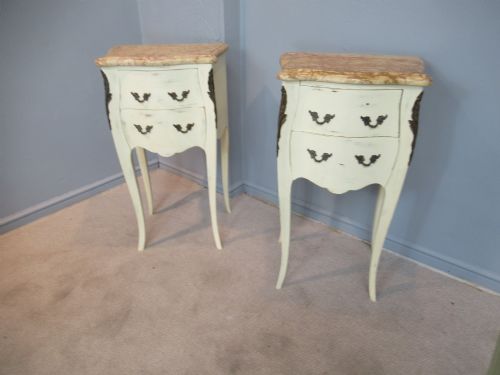
- Decorative patterns created by fitting thin pieces of wood veneer onto a structural surface. It allows for complex pictorial or geometric designs across headboards and bedside cabinets.
- Rococo
- An artistic style characterised by ornate detail, asymmetry, and curves derived from nature. It forms the core visual language of Louis XV furniture.
- Daybed
- A long seat or couch that can be used for reclining or sleeping. These pieces share the carved wooden frames and upholstered backs of larger bedsteads.
French Louis XV Bed: Frequently Asked Questions
How do I choose the right size?
Many historical French frames differ from modern mattress dimensions, often requiring custom or adapted bases to fit standard contemporary sizes safely.
Checking the internal measurements of the rails before purchasing ensures that modern slats and mattresses will sit securely within the antique structure.
Can I mix these beds with modern furniture?
The expressive woodwork and organic curves blend well with minimalist or contemporary interiors by acting as a strong focal point.
Pairing the bed with simpler bedside cabinets or neutral walls allows the intricate carving and warm timber tones to stand out without overwhelming the room.
How do I care for the wood finish?
Regular dusting with a soft, dry cloth prevents the buildup of particles that can dull polished walnut and painted surfaces over time.
Applying a quality wax occasionally helps nourish older timber and maintains the natural lustre of the carved details without damaging the finish.
Are these beds comfortable for daily use?
Most surviving bedsteads are built from sturdy hardwoods like walnut and oak, providing a robust frame for modern support systems.
Many examples have been updated with new upholstery and internal slats to ensure they function comfortably as primary beds.