




French Carved Headboard
A french carved headboard brings continental grandeur to a bedroom, offering a sculptural wooden centrepiece that anchors the entire room with period character.
French Carved Headboard
When you search for a french carved headboard, you encounter architectural woodwork and bed frames originating primarily from the nineteenth and early twentieth centuries. These pieces emerge from periods spanning the Victorian and Edwardian eras up to the 1930s, reflecting classical continental design traditions.
The selections available here range from full wooden bedsteads and complete bedroom suites down to dedicated upholstered headboards. Walnut, oak and mahogany form the structural backbone of these items, frequently paired with painted finishes, cane panels and fabric upholstery.
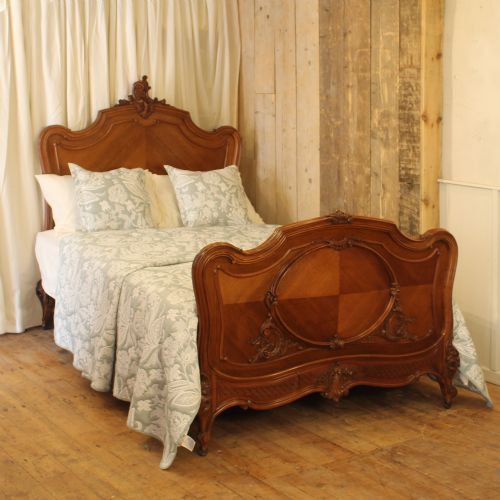
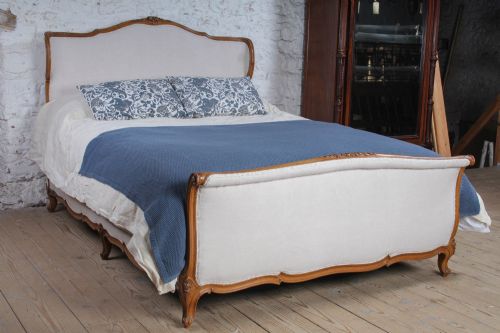
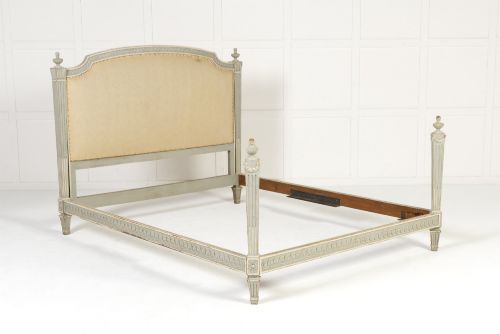
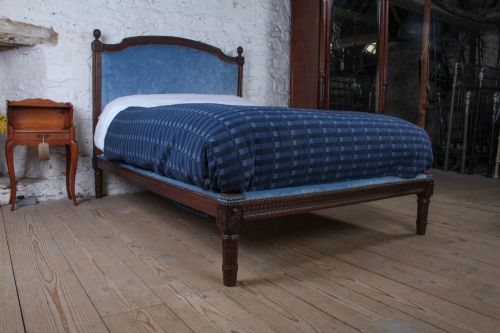
Stylistic influences lean heavily toward the continental mainstream, encompassing French Chateau, Louis XV and Louis XVI styles, alongside French Rococo Revival and Neoclassical designs. Pieces take the form of double beds, king sized frames, and single beds designed to make a dramatic visual statement.
How they were made
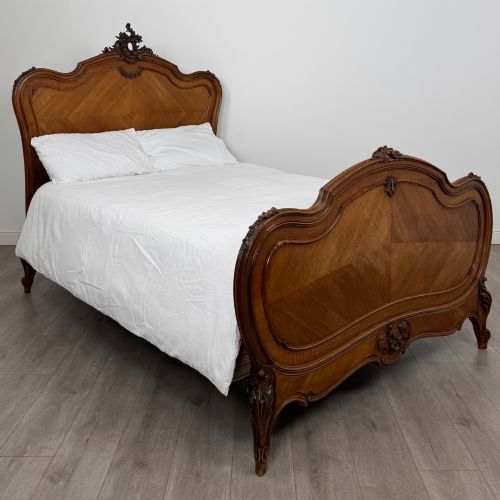
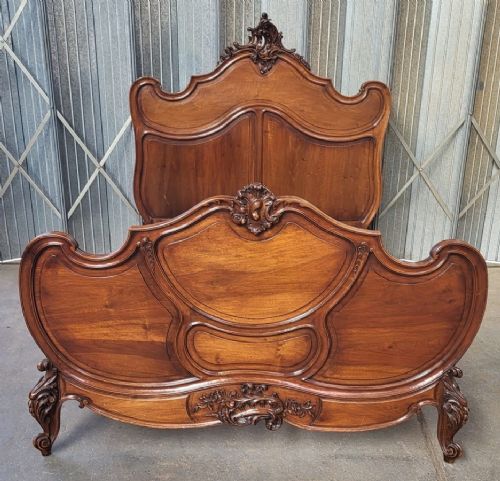
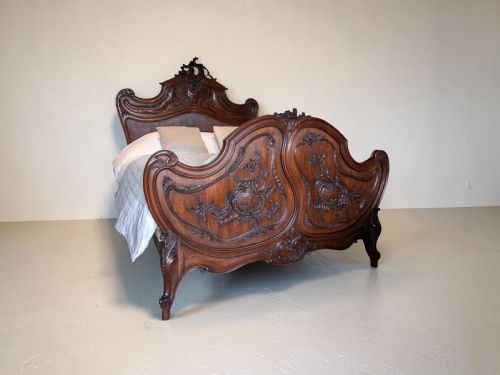
Craftsmen utilised solid timbers such as walnut, oak and mahogany, carving floral motifs, scrolls and crests directly into the wood grain by hand. Quarter veneering and brass detailing added refined textural contrast to large wooden surfaces.
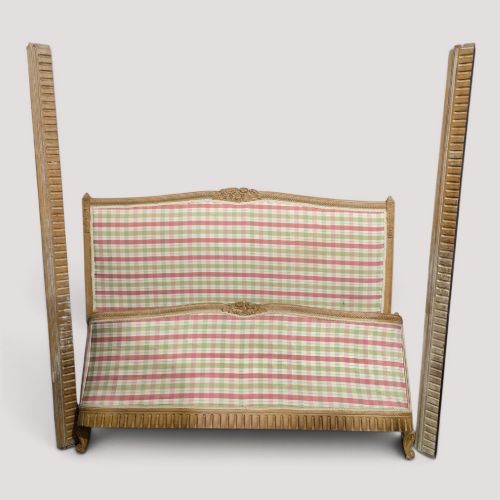
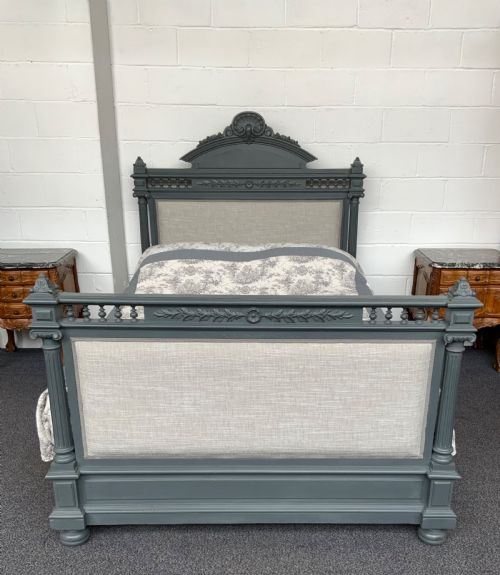
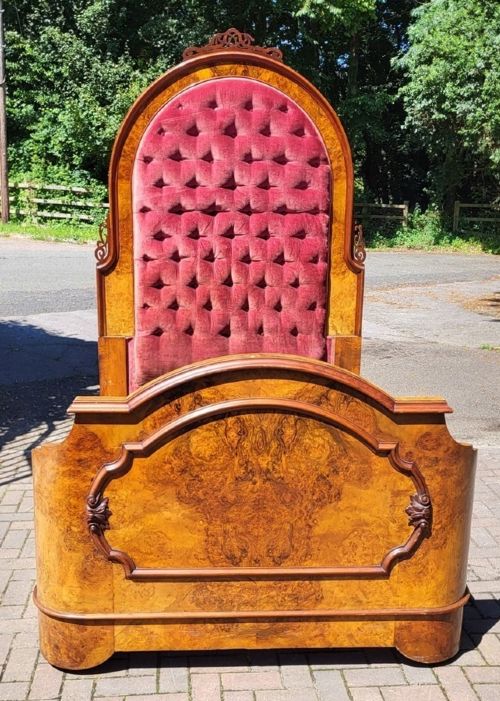
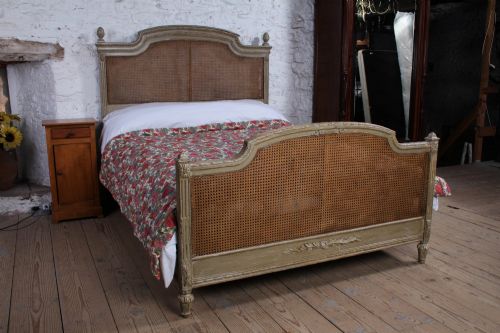
Surface treatments included limed, bleached or painted finishes, alongside traditional upholstery techniques featuring button backs and fabric panels. Caned inserts were woven tightly into wooden frames to provide lightweight ventilation and patterned contrast.
Materials recorded across the inventory include walnut, oak, mahogany, painted timber, fabric, brass, and woven cane.
What varies in quality
The depth and clarity of the hand carving separate standard production frames from exceptional sculptural examples. Crisp relief work on crests and rails demonstrates superior woodworking skill.
The choice of primary timber and veneer selection dictates the underlying richness of the piece, with figured walnut and quartered mahogany sitting at the upper end of the scale. Integrated brass mounts and fine cane work further distinguish the finer examples.
The French Carved Headboard Glossary
- Louis XV Style
- A design movement characterised by asymmetrical curves, organic scrollwork and floral motifs. This aesthetic dominated mid-eighteenth-century France and saw widespread revival during the nineteenth century.
- Louis XVI Style
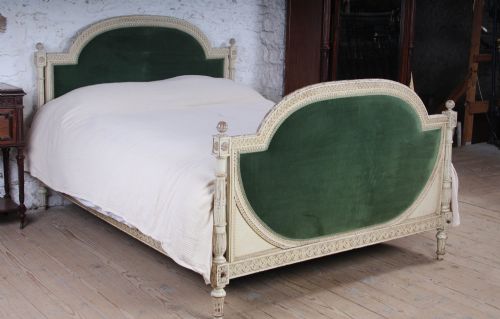
- A neoclassical design approach featuring straight lines, symmetry, fluted columns and classical architectural details. It provides a more restrained contrast to earlier Rococo curves.
- Caning
- A woven lattice pattern made from peeled rattan plant material, utilised in headboards and footboards for decorative texture. It creates a semi-transparent panel within a solid wooden frame.
- Quarter Veneer
- A method of slicing timber logs into thin sheets and arranging four symmetrical pieces together to create a geometric grain pattern. This technique enhances the visual movement on large headboard panels.
- Button Back
- An upholstery style where depressions are formed in the padding by pulling twine tightly through the fabric and securing it with buttons. This creates a tufted texture across the headboard.
French Carved Headboard: Frequently Asked Questions
Are these headboards freestanding or wall mounted?
Most items listed under this description form part of complete bed frames or bedsteads rather than standalone wall panels. They attach directly to side rails or footboards as integrated architectural units.
Buyers intending to use just the headboard portion should verify the mounting hardware and structural support points with the individual listing.
How do I care for carved wooden headboards?
Routine maintenance involves dusting with a soft, dry cloth to prevent particulate buildup within the carved recesses and mouldings. Avoid harsh chemical cleaners that can strip historic painted or polished finishes.
Applying a traditional beeswax polish periodically helps nourish timber surfaces like walnut and oak while preserving their natural sheen.
How do I identify Louis XV and XVI styles?
Louis XV style pieces display flowing, asymmetrical curves, C-scrolls and naturalistic floral carvings without rigid symmetry. They feel organic and exuberant in their shaping.
Can antique fabric upholstery be easily cleaned?
Upholstery treatment depends on whether the fabric is original to the piece or a recent renewal. Many items feature newly upholstered panels that respond well to standard textile care.
Historical fabric requires specialist dry cleaning or gentle surface vacuuming with a low-suction brush attachment to protect delicate threads.