

French Kingwood Commode
When you select a french kingwood commode, you choose a practical statement piece defined by figured veneers and elaborate metal mounts.

French Kingwood Commode
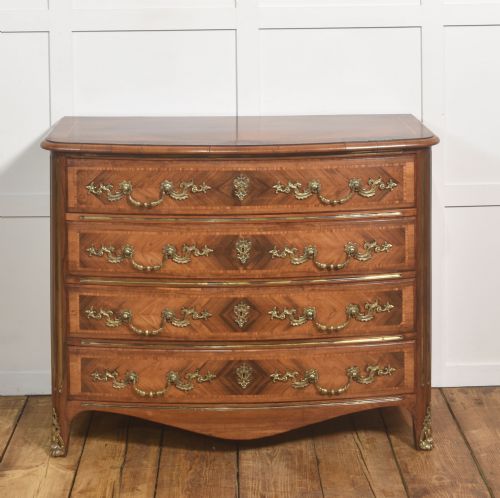
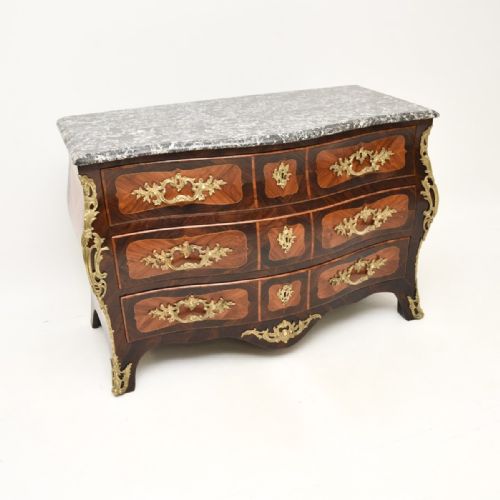
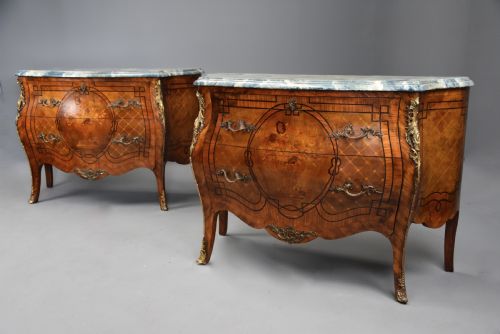
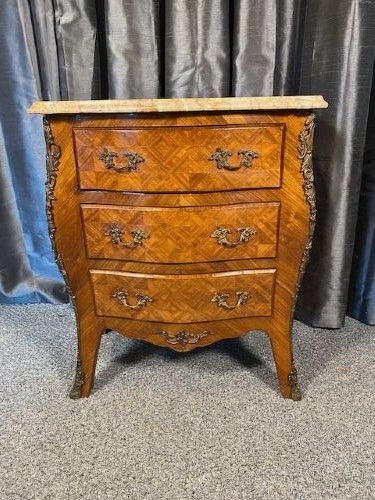
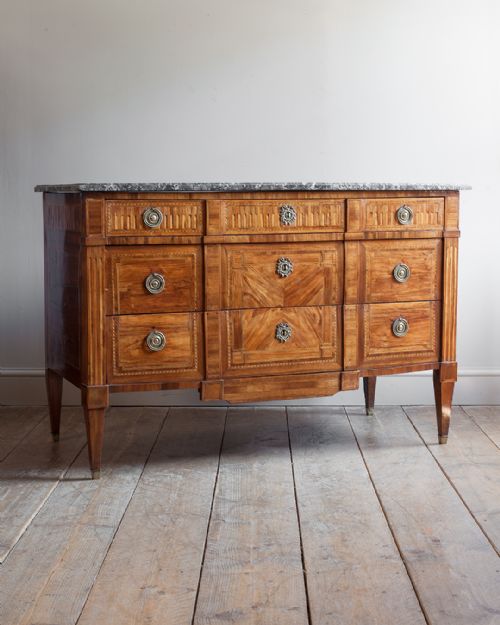
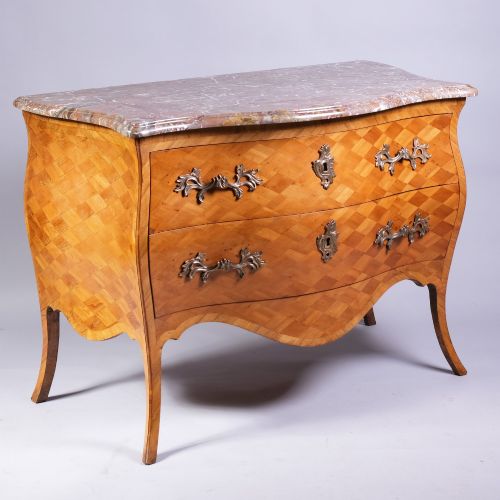
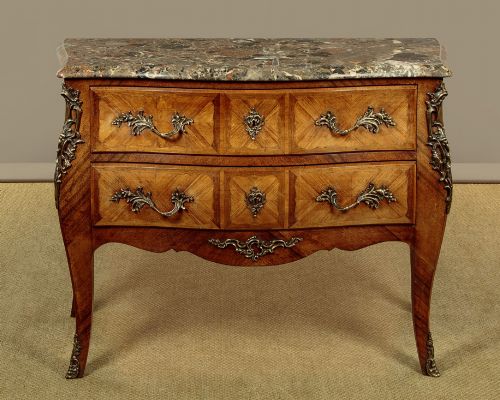
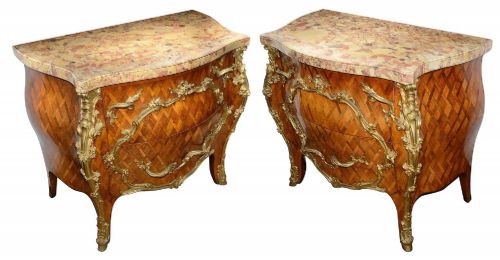
A french kingwood commode is a low storage chest designed for domestic chambers, appearing primarily in serpentine, bombe or straight-fronted configurations. These pieces originate predominantly from French cabinet-making traditions spanning the eighteenth, nineteenth and early twentieth centuries.
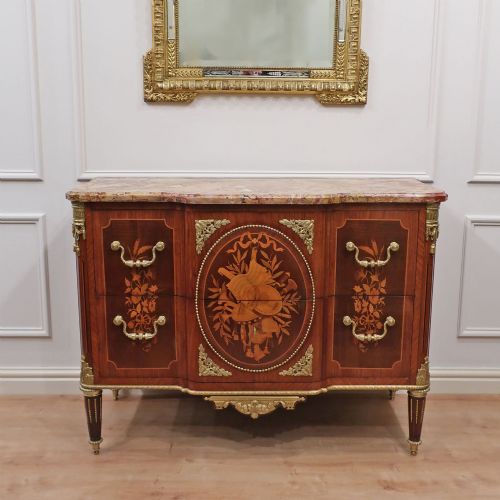
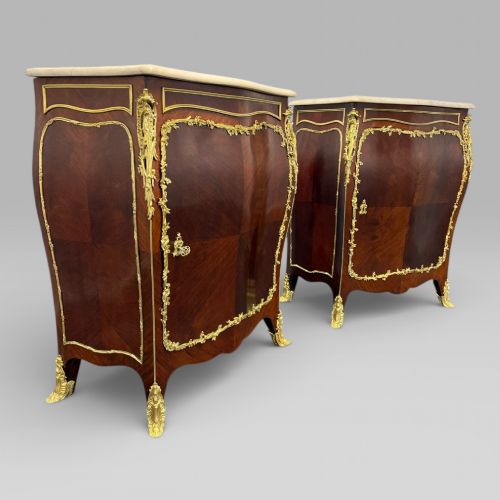
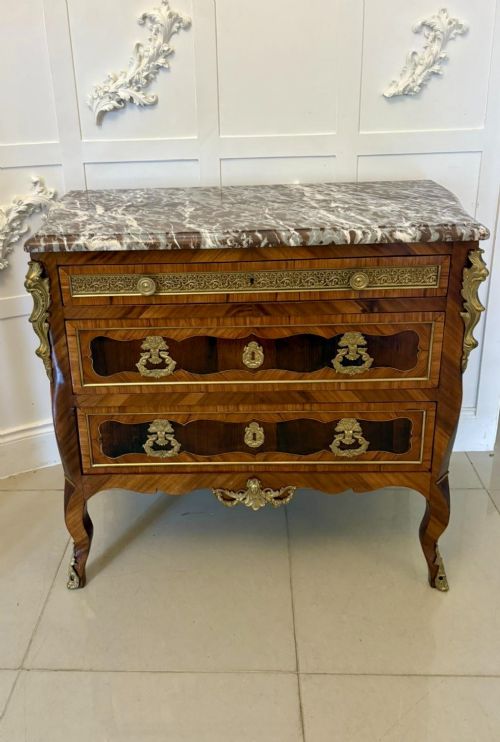
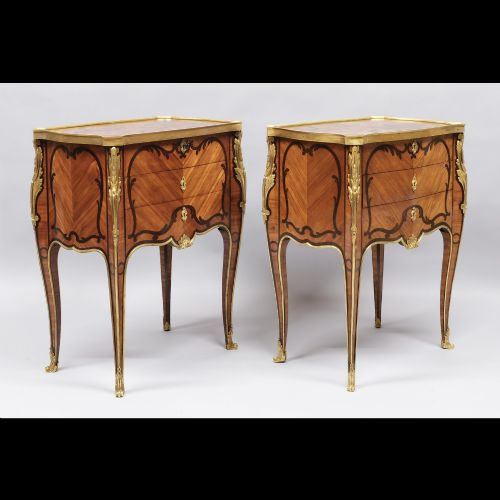
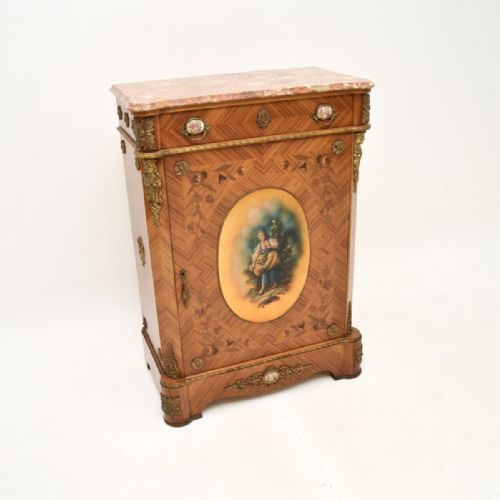
The inventory demonstrates a strong representation of Louis XV and Louis XVI revival styles alongside eighteenth-century originals. Buyers frequently encounter marble-topped chests of drawers, bedside cabinets and side cupboards featuring distinct parquetry or floral marquetry patterns.
The scale ranges from neat bedside tables to large living-room cabinets fitted with doors or multiple drawers. Most surviving examples rely on walnut or oak carcases covered in decorative kingwood veneers.
Materials and Technique
Cabinet-makers constructed these items using dense native timbers for the structural carcase, overlaid with thin veneers of kingwood and sometimes rosewood or tulipwood arranged in geometric parquetry or floral marquetry designs. Slabs of polished marble, frequently shaped to follow the serpentine or bombe contours of the chest, form the upper surface.
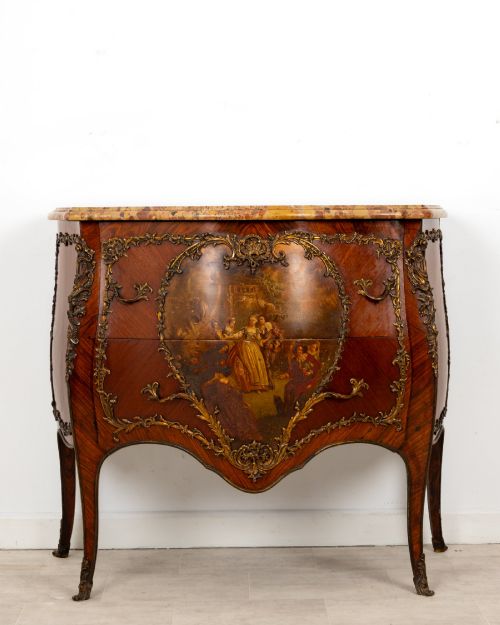
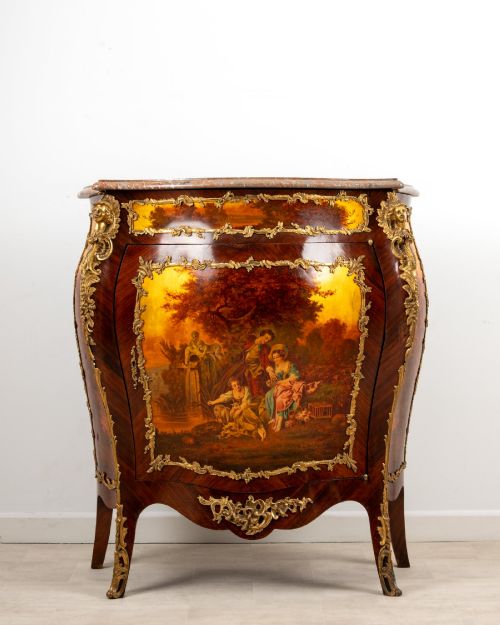
Gilt bronze and ormolu mounts are pinned or screwed to the corners, feet and drawer edges to accentuate the curving outlines. Selected models incorporate Vernis Martin panels decorated with painted scenes in imitation of Japanese lacquer.
French Kingwood Commode Retail Price Guide 2026
Typical asking prices for french kingwood commode among the pieces listed under this phrase on Sellingantiques today, from the lower quarter to the upper quarter. They describe what is for sale here now, not the wider market.
The archive records pieces attributed to Parisian workshops alongside nineteenth-century English interpretations.
Craftsmanship and Construction
Quality depends upon the precision of the veneer work and the crispness of the cast metal mounts. Finer examples display continuous grain alignment across drawer fronts and hand-chased ormolu details rather than mass-produced brass stampings.
The integrity of the structural carcase and the weight of the fitted marble top distinguish workshop standards. Master makers signed their work on the woodwork or bronze mounts, indicating superior joinery and materials.
Jacques Bircklé·E. Kahn·Sormani·Maison Millet·Bruneau
The French Kingwood Commode Glossary
- Kingwood
- A dense, durable timber native to Brazil displaying rich brown colour with darker streaks. It was widely utilised by elite European cabinet-makers for decorative veneer work.
- Ormolu
- Gilded bronze used for decorative mounts and handles on furniture. The technique involves applying a gold amalgam to bronze before heating.
- Bombe
- A swollen, outward-curving furniture shape popular in eighteenth-century and revival pieces. This bulging profile requires advanced woodworking skill to veneer accurately.
- Marquetry
- Inlaid wood pieces arranged to form decorative pictures or patterns. Artisans cut different coloured veneers to fit precisely within a background panel.
- Vernis Martin
- A type of simulated Japanese lacquer developed in France during the eighteenth century. It employs multiple layers of varnish to create a glossy painted surface.
French Kingwood Commode: Frequently Asked Questions
How do I identify a revival piece from an 18th-century original?
Eighteenth-century originals display hand-cut dovetails and timber seasoning specific to that era. Revival pieces often utilise nineteenth-century mechanical fixings and machine-sawn internal elements.
Examination of the secondary woods inside the drawers provides clear clues regarding the date of manufacture.
Where should I place a marble top commode in my home?
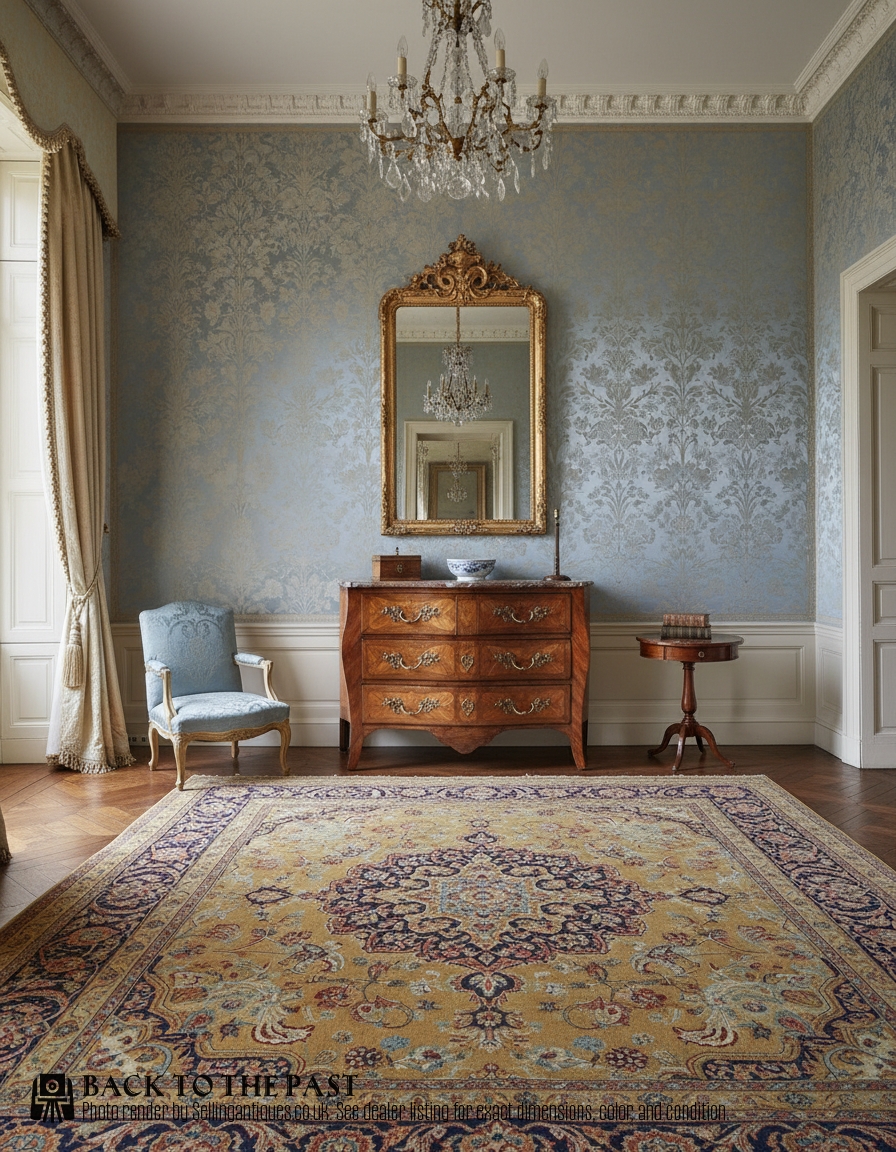
These cabinets function effectively in entrance halls, living rooms or bedrooms as primary storage surfaces. The stone top tolerates lamps and decorative objects while providing a durable horizontal finish.
Ensure the piece rests on a level floor to prevent distortion of the wooden carcase and marble slab.
What is the difference between parquetry and marquetry?
Parquetry consists of geometric wood patterns such as cubes, chevrons or squares. Marquetry forms pictorial compositions including floral sprays or architectural scenes.
Both techniques involve cutting thin veneers by hand and gluing them to the structural carcase.
How do I care for kingwood veneer?
Keep the wood away from direct sunlight and artificial heat sources to prevent the veneer from drying and lifting. Dust regularly with a dry cloth and apply specialist wax sparingly.
Avoid using water or liquid polishes on antique polished surfaces.