


French Kingwood China Display
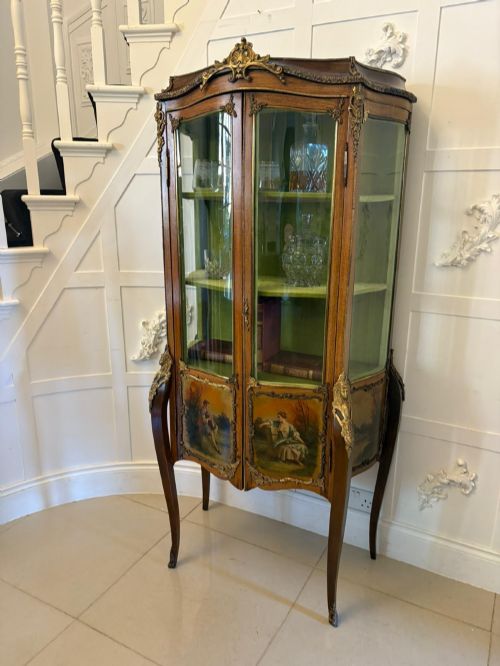
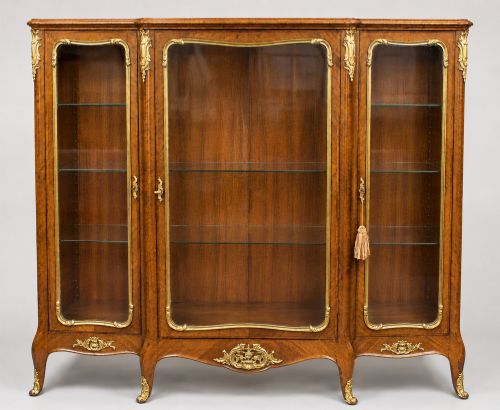
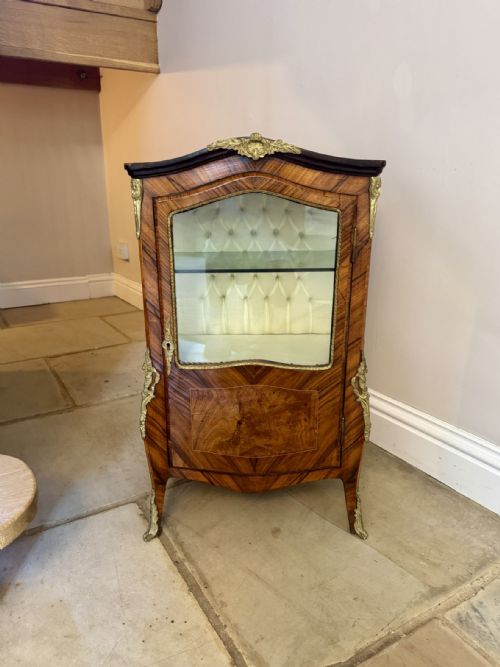
These pieces of French kingwood china display are cabinetwork designed to house precious porcelain behind glazed doors.
French Kingwood China Display
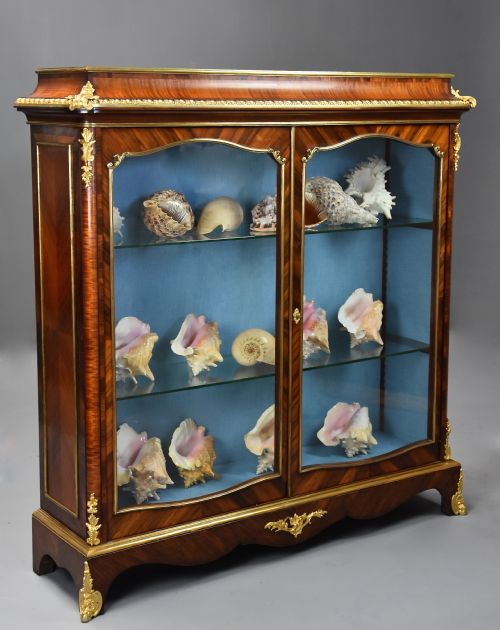
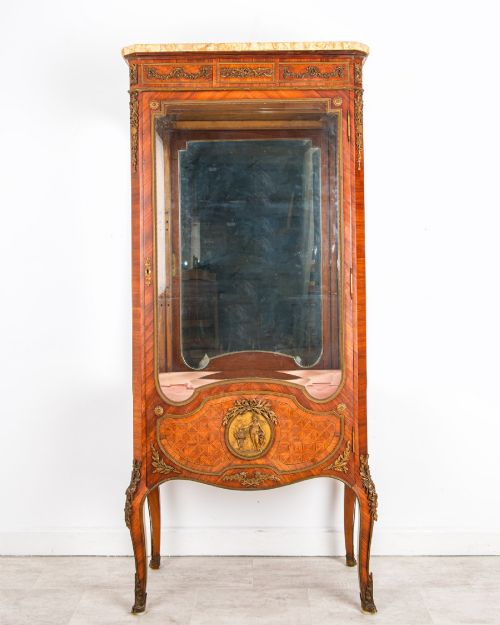
A french kingwood china display generally takes the form of a vitrine or display cabinet intended to showcase porcelain and decorative objects within a reception room or salon. Most examples date from the nineteenth century, spanning periods from the eighteen-sixties through the Edwardian era, with strong representation from the eighteen-eighties and eighteen-nineties. Forms include serpentine fronts, bombé shapes, and cabinets on stands built in Louis XV and Louis XVI revival styles.
The objects derive from French cabinet-making traditions of the nineteenth century, reflecting revivals of rococo and transitional tastes. Vitrines on this page pair glazed display space with enclosed lower sections or open stands, often topped with marble or surrounded by parquetry and marquetry work.
How they were made
Cabinetmakers construct these pieces using kingwood veneers applied over structural timbers, often incorporating walnut and detailed marquetry or parquetry patterns. Surfaces receive ornamentation from cast ormolu and gilt bronze mounts pinned or screwed around the glass panels, cornices, and feet.
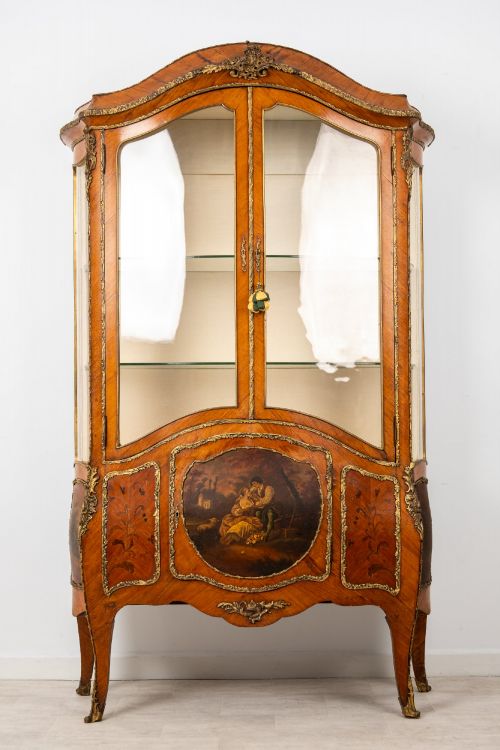
Painted panels executed in the Vernis Martin technique appear on selected vitrines, providing decorative pastoral or mythological scenes on the lower cupboard doors. Interiors frequently feature fabric linings behind glass shelves housed within hinged or curved doors.
Several cabinets on this page hide painted pastoral scenes on their lower panels, offering miniature landscapes locked beneath glossy varnish.
What varies in quality
The standard of a french kingwood china display depends upon the crispness of the gilt bronze or ormolu mounts and the precision of the parquetry inlay. Heavy, finely chased metalwork and complex serpentine or bombé carcass shaping distinguish more ambitious examples from simpler rectilinear cabinets.
Hand-painted Vernis Martin panels executed with artistic skill elevate specific vitrines above standard veneered pieces. The weight and finish of the marble top and the integration of the glazed door frames further separate standard production from exhibition pieces.
G. Durand·François Linke
The French Kingwood China Display Glossary
- Kingwood
- A dense, heavily figured Brazilian timber utilised for cabinet veneers during the eighteenth and nineteenth centuries. It displays rich dark brown and golden grain patterns.
- Ormolu
- Gilded bronze mounts applied to furniture for decorative enrichment. The metal is cast and chased to produce crisp architectural and organic detailing.
- Vernis Martin
- A simulated Japanese lacquer technique developed in eighteenth-century France and revived later. It employs translucent varnishes over painted decorations.
- Vitrine
- A glass-fronted cabinet designed for the display of porcelain and small artefacts. These pieces protect objects while offering all-round visibility.
- Marquetry
- The art of applying small pieces of veneer to a structure to form decorative patterns. Cabinetmakers use diverse tinted woods to build pictorial or geometric designs.
French Kingwood China Display: Frequently Asked Questions
What is a vitrine used for?
A vitrine is designed to display delicate porcelain, glassware, and small ornaments behind glass panels. The enclosed space protects items from dust while allowing them to be viewed from the room.
Interior fabric linings and glass shelves help present collection pieces effectively under domestic lighting.
How do I clean kingwood and ormolu?
Dust kingwood surfaces gently with a dry, soft cloth and avoid chemical polishes that can degrade nineteenth-century finishes. Ormolu mounts require careful dusting without abrasive cleaners to preserve the original gilding.
Maintain stable humidity levels in the room to prevent timber movement and veneer lifting.
What defines the Louis XV style?
The Louis XV style relies on asymmetrical curves, rococo scrolls, and naturalistic plant motifs. Furniture from this revival period avoids straight lines in favour of flowing serpentine contours.
Cabinets built in this manner often feature bombé lower sections and elaborate gilt bronze mounts.
Are the marble tops original?
Nineteenth-century display cabinets frequently incorporated fitted marble slabs, particularly on pieces with serpentine or straight tops. The stone was selected to complement the tone of the kingwood veneer.
Inspect the edges and underside of the marble to understand how it sits within the wooden frame.