




Rococo Revival Glazed Cabinet
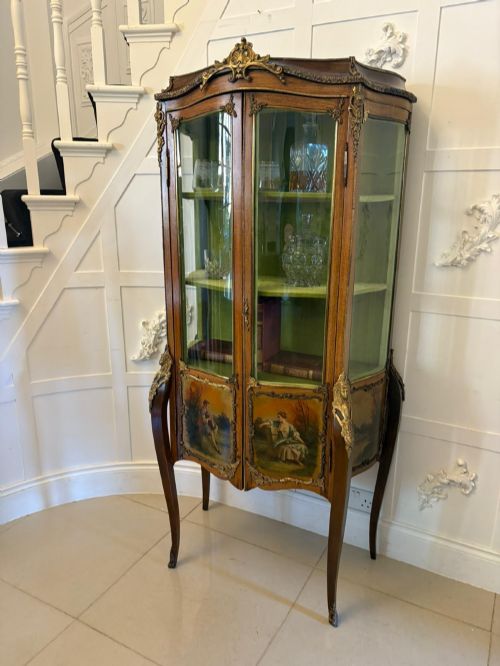
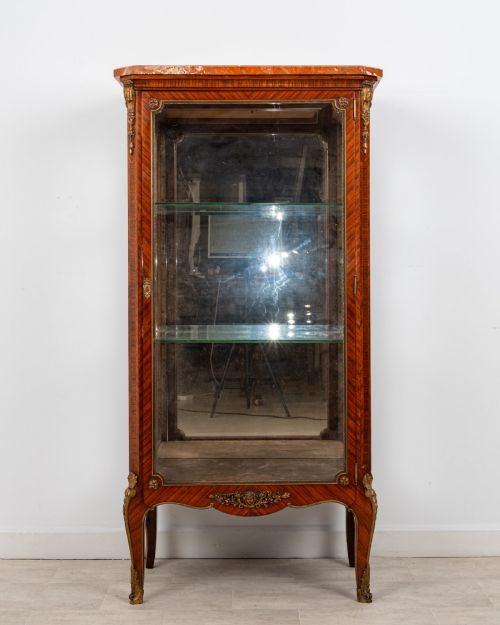
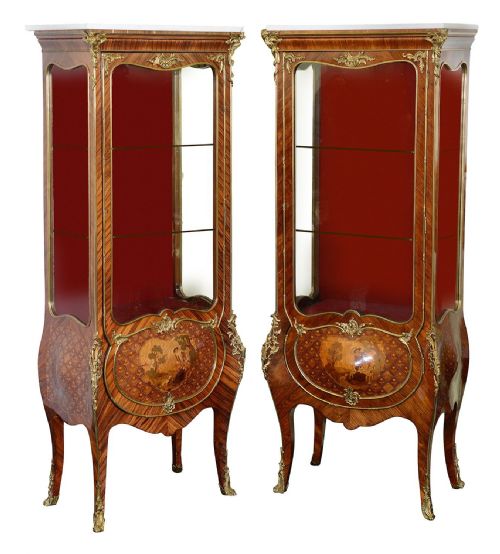
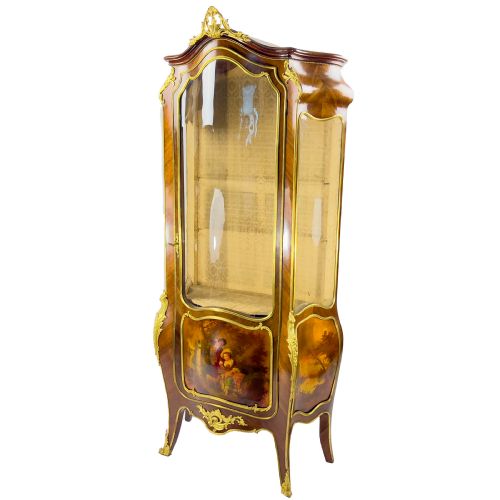
These rococo revival glazed cabinets bring nineteenth-century French elegance into a room, offering grand display space for treasured collections through curved glass and gilt mounts.
Rococo Revival Glazed Cabinet
A rococo revival glazed cabinet combines nineteenth-century display furniture with the curving, asymmetric ornamentation inspired by the reign of Louis XV. These pieces appear primarily as vitrines, display cabinets, and side cabinets originating from the Victorian era and the broader nineteenth century.
The form relies on glazed doors and sides to showcase porcelain, glass, and small objects of vertu within domestic interiors. Makers of the period drew heavily on French Louis XV revival styles, producing serpentine-fronted carcasses and bomb-shaped cabinets that prioritise visual lightness despite their substantial timber frames.
Examples on this page span several decades of the nineteenth century and stretch into the early twentieth century, incorporating related forms such as bookcases, bureaus, and credenzas. Each variation serves the core purpose of display, framed by characteristic revival styling.
Materials and construction methods
Cabinetmakers constructed these pieces using dense foundational timbers such as mahogany and rosewood, frequently overlaying them with kingwood veneers arranged in intricate marquetry and parquetry patterns. Vernis Martin painted panels often decorate the lower sections, introducing pastoral scenes rendered in specialised translucent varnishes.
Cast ormolu mounts accentuate the curved contours, framing glass panels and protecting vulnerable corners with chased gilt-bronze enrichment. Marble tops, selected for colour and figure, cap the timber carcasses to provide a durable and decorative upper surface.
Many a Victorian parlour cat found an unexpected warm sleeping spot atop the sun-warmed marble slabs of these grand vitrines.
Indicators of superior execution
Quality rests in the precision of the cabinetmaker's joinery, particularly where serpentine fronts and curved glass require meticulous alignment. The crispness of the ormolu chasing and the depth of the kingwood grain distinguish workshop production from standard commercial output.
Attribution to documented makers such as François Linke or Gillows elevates the standing of a piece, reflecting superior mastery of proportion and decorative harmony. The subtlety of the painted Vernis Martin panels and the integration of marble tops further separate exceptional examples from simpler counterparts.
François Linke·Gillows
The Rococo Revival Glazed Cabinet Glossary
- Vitrine
- A glass-fronted display cabinet designed specifically for showing porcelain and small decorative objects. These pieces often feature glazed sides to maximise interior light.
- Ormolu
- Gilded bronze mounts applied to furniture to highlight structural lines and enrich decorative surfaces. The technique involves a mercury-gilding process common in nineteenth-century French workshops.
- Kingwood
- A dense, heavily figured Brazilian timber prized for its rich brown colour and contrasting dark grain. It frequently forms the primary veneer on nineteenth-century revival furniture.
- Vernis Martin
- A simulated Japanese lacquer technique developed by the Martin brothers in eighteenth-century France and revived during the Victorian era. It uses multiple layers of varnish over painted scenes.
- Marquetry
- The art of applying decorative pieces of veneer to a structure to form intricate pictorial or geometric patterns. Cabinetmakers utilised various exotic woods to achieve tonal contrast.
Rococo Revival Glazed Cabinet: Frequently Asked Questions
What is a rococo revival glazed cabinet?
A rococo revival glazed cabinet is a nineteenth-century display piece featuring curved glass doors, ormolu mounts, and decorative veneers inspired by eighteenth-century French design.
These cabinets served as elegant furniture for drawing rooms, designed to exhibit porcelain and collectibles while introducing fluid, asymmetric lines to the interior.
Where were these cabinets made?
The majority of these cabinets originate from nineteenth-century French workshops, alongside contributions from British cabinetmakers working in the French taste.
Many pieces reflect the Victorian appetite for continental styles, often drawing on Parisian design traditions and specialised marquetry techniques.
How do I clean the glass and ormolu?
Clean the glass panels gently with a mild glass cleaner applied to a cloth rather than sprayed directly onto the surface, protecting adjacent wood and metal.
Dust the ormolu mounts with a soft, dry brush, avoiding abrasive polishes that can strip the original gilding.
Are the marble tops original?
Marble tops on these cabinets are generally original to the piece, cut to follow the serpentine or bomb contours of the timber carcass.
Inspect the seating of the marble where it meets the wood frame to ensure it rests evenly without modern replacement mortar or shims.