
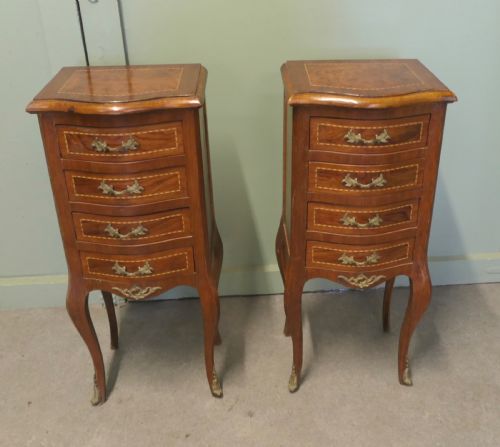
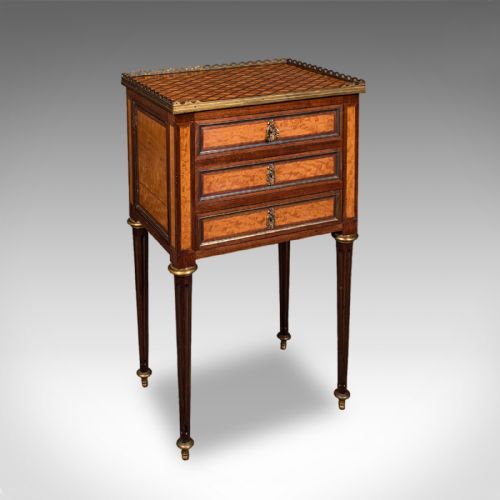
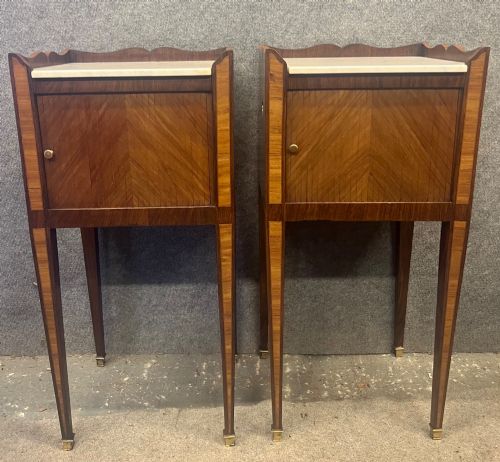
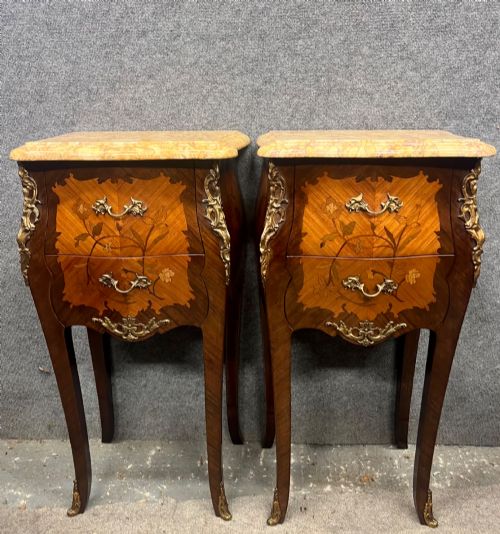
French Inlaid Side Cabinets
French inlaid side cabinets bring continental warmth to a room, offering practical storage through decorative marquetry and fine timber work.
How They Were Made
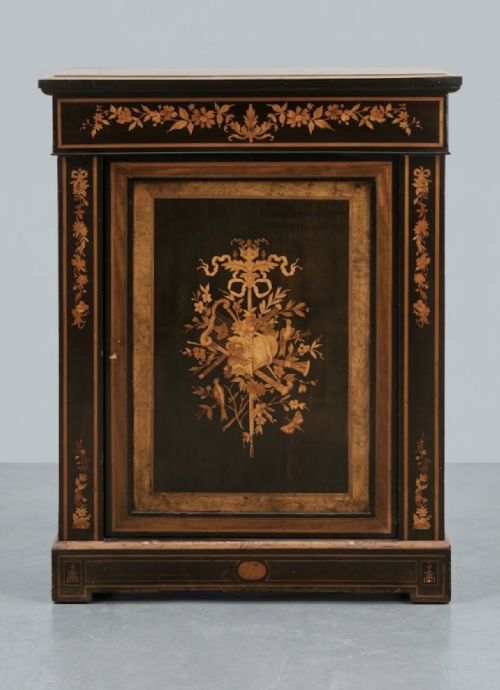
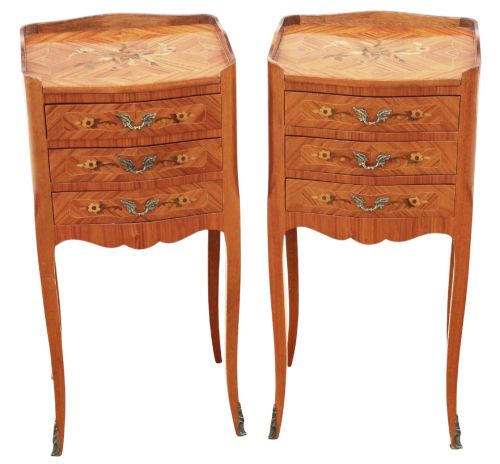
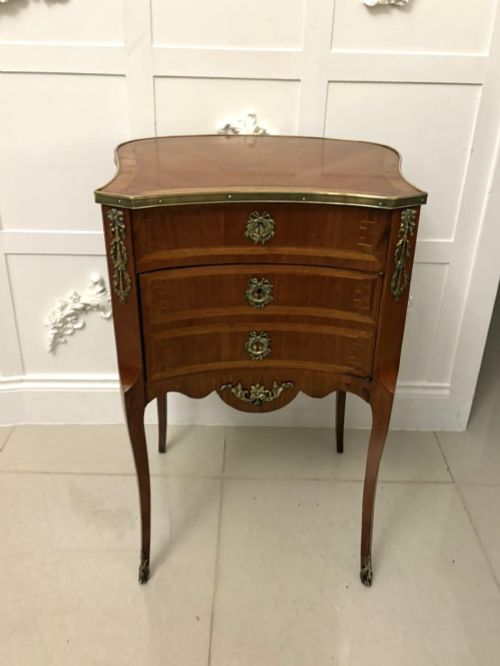
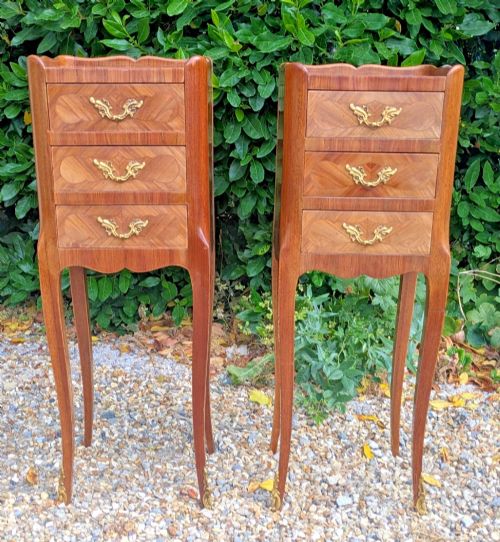
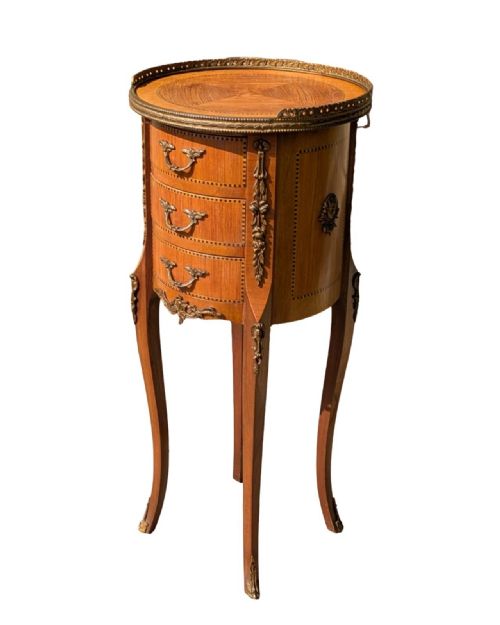
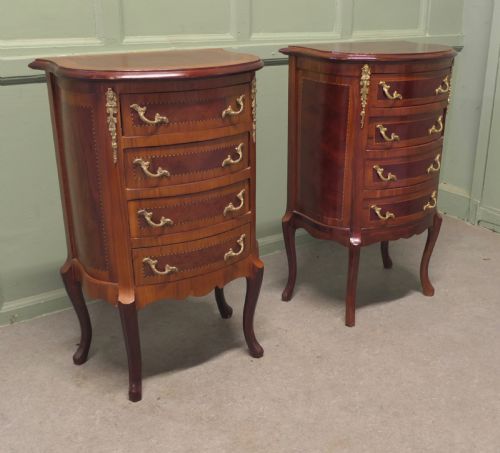
Construction relies heavily on sturdy carcass timbers such as walnut, mahogany, and fruitwood, providing a stable foundation for decorative veneers. Kingwood and rosewood are frequently sliced thin to create contrasting patterns across drawer fronts and cabinet doors.
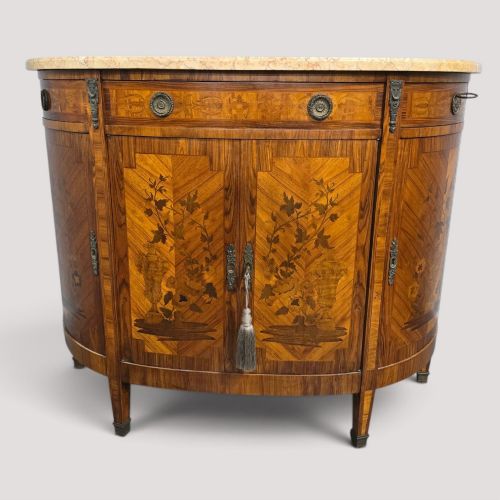
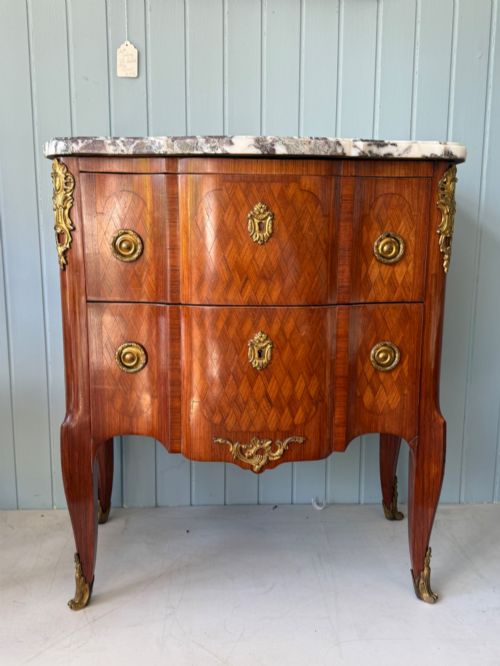
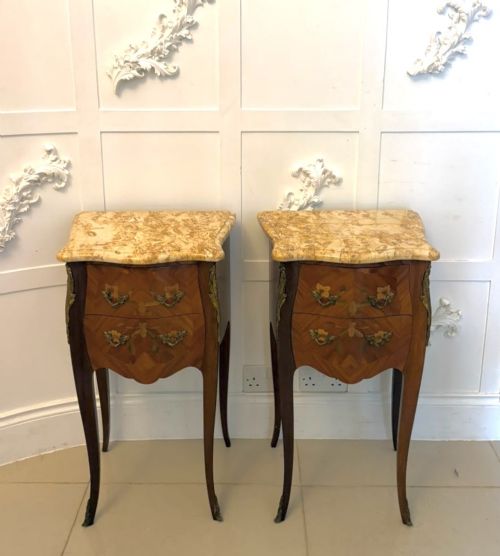
Marquetry and parquetry techniques involve cutting various coloured woods to form intricate pictures or geometric arrays, complemented by brass stringing. Ormolu mounts, cast in bronze and gilt, accent the corners and feet, while inset marble slabs provide durable upper surfaces.
What Varies In Quality
The refinement of the marquetry and the precision of the veneer matching dictate the visual appeal of an individual cabinet. Superior examples demonstrate tight joints, seamless timber transitions, and hand-chased ormolu mounts rather than mass-cast metal.
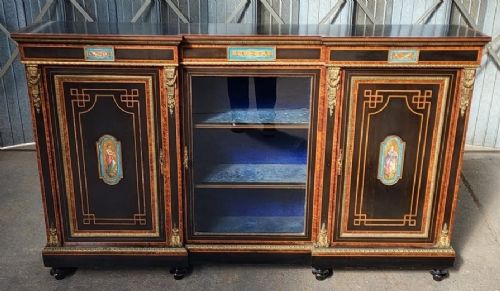
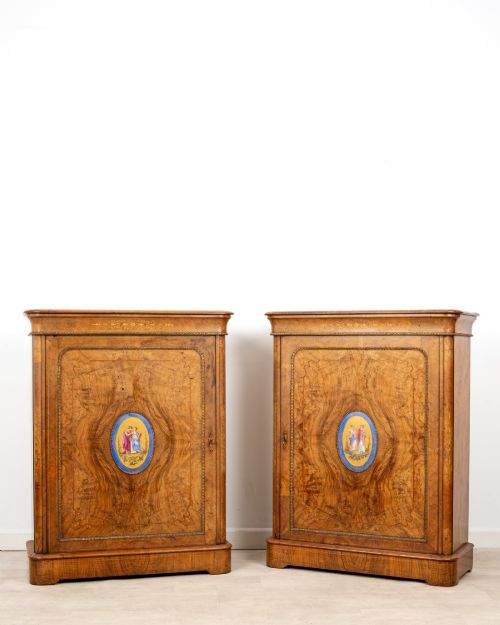
Internal construction, such as the use of solid secondary timbers in drawer linings and the survival of original locks and keys, distinguishes workshop standards. The inclusion of decorative porcelain plaques or inset malachite further separates standard production from exceptional commissions.
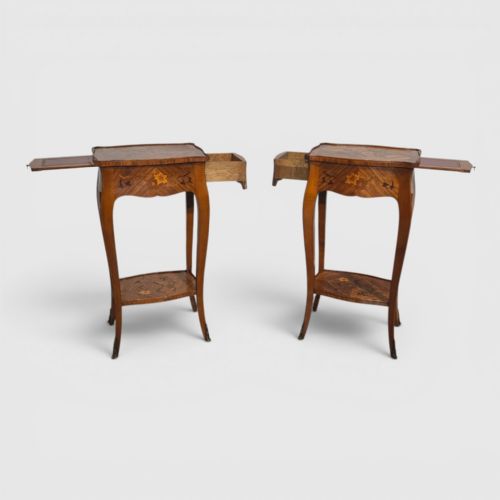
Some bedside tables conceal tiny pull-out slides once used for holding a pocket watch or a midnight candle.
The French Inlaid Side Cabinets Glossary
- Marquetry
- The art of applying small pieces of veneer to a structure to form decorative patterns. Artisans cut contrasting timbers to create pictorial scenes or floral motifs.
- Ormolu
- Gilded bronze mounts applied to the edges and corners of furniture. This technique adds metallic highlights to wood surfaces.
- Credenza
- A sideboard or display cabinet originating as a side table for holding food or valuables. Victorian and French variations often feature glass doors and elaborate mounts.
- Parquetry
- Geometric mosaic woodwork used for flooring or cabinet surfaces. It relies on repeating shapes like cubes or squares.
- Boulle
- A type of marquetry using brass and tortoiseshell developed in France. It creates a rich metallic and dark shell contrast.
French Inlaid Side Cabinets: Frequently Asked Questions
Where should I place a side cabinet?
These cabinets suit living rooms as lamp tables or bedrooms as bedside chests. Their finished backs and detailed fronts allow placement against walls or beside seating.
Smaller formats fit narrow hallways or alcoves where surface space is useful. Larger credenzas anchor dining rooms or spacious entryways.
How do I care for marble tops?
Marble surfaces require wiping with a damp cloth and mild soap to remove dust and spills. Avoid acidic liquids which etch the polished stone finish.
Applying wax or stone sealers helps protect the porous surface from stains over time. Lifting rather than sliding items across the stone prevents scratching.
What is the difference between marquetry and parquetry?
Marquetry involves pictorial or curved designs made from various veneers to depict flowers, birds, or scenes. It requires careful hand-cutting of diverse timbers.
Parquetry uses strictly geometric patterns such as cubes, chevrons, or triangles. This technique creates repeating structured designs across panels.
How do I identify French revival styles?
Revival furniture copies earlier monarchical designs, particularly Louis XV and Louis XVI aesthetics. Look for serpentine fronts, cabriole legs, and classical bronze mounts.
Nineteenth-century makers often reinterpreted these classical French motifs with Victorian timber choices. This blending creates distinct hybrid characteristics.