



French Neoclassical Side Cabinets
French neoclassical side cabinets bring structural symmetry and classical restraint to a room, offering practical storage topped with fine marble.
French Neoclassical Side Cabinets
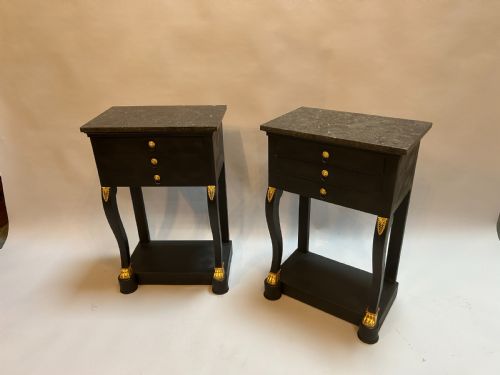
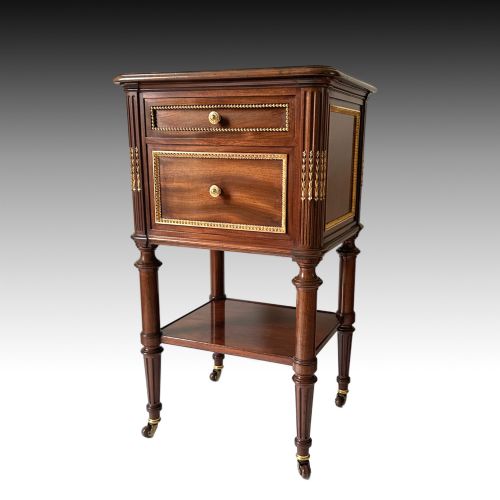
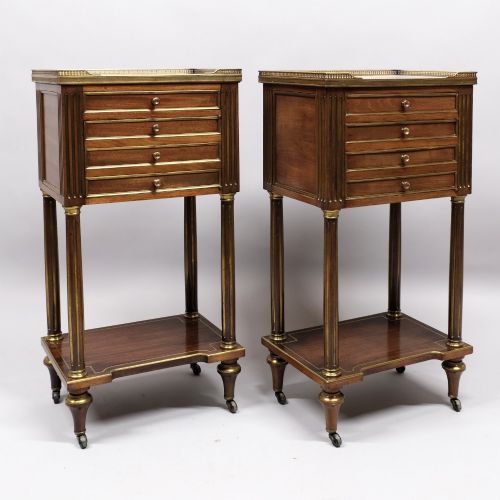
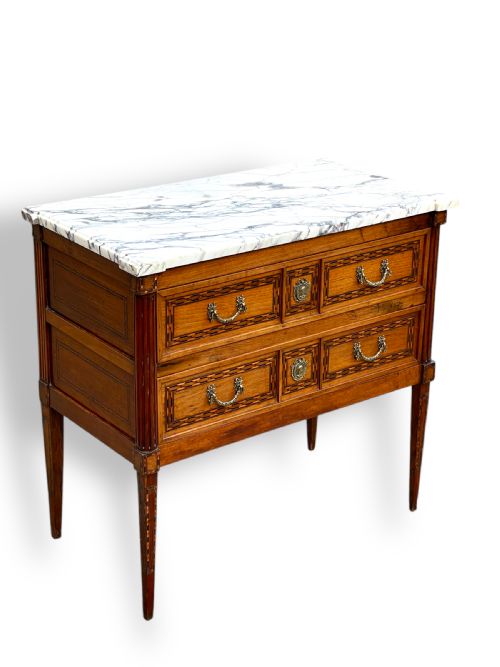
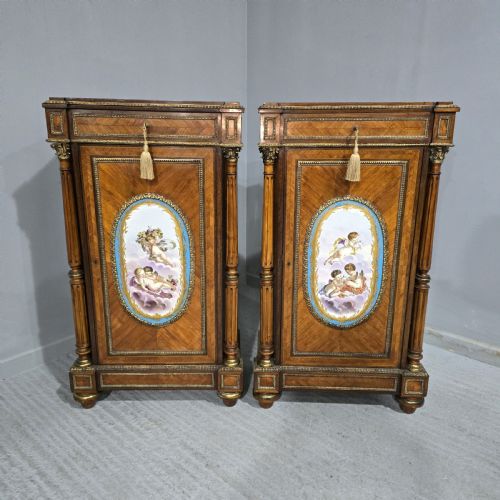
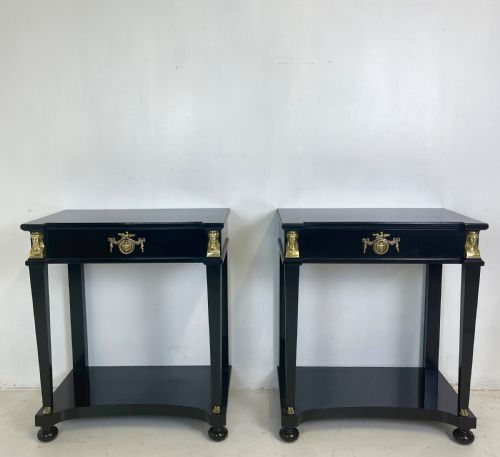
When you search for french neoclassical side cabinets, you encounter forms that span side cabinets, bedside chests, and commodes rooted in Louis XVI and French Empire styles. These pieces draw upon eighteenth-century proportions, featuring rectilinear carcases and balanced ornamentation that reflect classical architectural ideals.
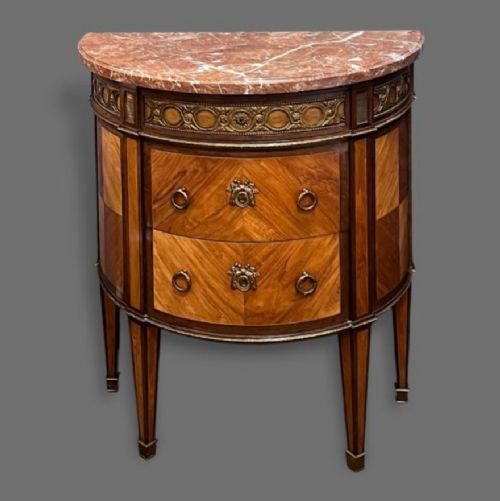
The selections on this page reach from the late eighteenth century through various nineteenth-century revivals up to the 1930s. You find bedside cabinets, demi-lune chests of drawers, and open bookcases constructed in mahogany, walnut, and satinwood, frequently paired with marble surfaces.
Materials and construction methods
Cabinetmakers utilised hardwoods including mahogany, walnut, and satinwood, often laying them as veneers over secondary timbers to achieve stable, figured surfaces. Inlaid decoration and painted details appear alongside structural elements of wood.
Mounts in ormolu, gilt bronze, and brass provide structural accent and edge protection, while inset marble tops in white or fossil varieties offer durable and cool upper surfaces. These components are joined using period cabinetmaking techniques appropriate to each decade.
The listings on this page span the 18th century, 19th century, and early 20th century, incorporating mahogany, satinwood, marble, and ormolu.
Judging the quality of execution
Superior examples reveal themselves in the crispness of the ormolu mounts and the precision of the brass or gilt bronze detailing, where chisel work remains sharp. The integration of marble tops, whether standard or fossil, sits flush with the surrounding timber framework.
The choice of timber grain, such as figured mahogany or patterned satinwood, dictates the visual depth of the facade. Drawer construction, internal lining materials, and the subtlety of painted or inlaid decoration separate standard production from masterwork execution.
The French Neoclassical Side Cabinets Glossary
- Ormolu
- Gilt bronze mounted on furniture pieces to provide decorative highlights and protect corners. This technique involves applying a gold amalgam to bronze.
- Demi-lune
- A half-moon shape characteristic of consoles and chests designed to sit flat against a wall. This profile became popular in neoclassical interior design.
- Commode
- A low chest of drawers or cabinet with doors, originating in France. They typically feature marble tops and decorative mounts.
- Fossil marble
- A limestone variety containing distinct ancient shell and crinoid fragments. It is polished smooth to create patterned surfaces for tabletops.
- Satinwood
- A durable timber possessing a natural golden lustre and smooth grain. Cabinetmakers use it for veneers and detailed surface inlay.
French Neoclassical Side Cabinets: Frequently Asked Questions
What defines French neoclassical style?
French neoclassical design emerged in the eighteenth century as a reaction against Rococo asymmetry, embracing straight lines, geometric forms, and classical motifs derived from antiquity.
Furniture from this movement relies on symmetry, column supports, and restrained ornamental mounts rather than extravagant curves.
How do I care for marble tops?
Marble surfaces require prompt wiping of acidic liquids like wine or citrus juice to prevent etching into the polished stone.
Use a damp cloth and mild soap for routine cleaning, avoiding harsh chemical cleaners that strip the original polish.
Where should I place a side cabinet?
These cabinets suit hallways, living rooms, and bedrooms, functioning as surfaces for lamps or decorative objects while concealing storage.
Their compact footprints allow them to anchor wall spaces without dominating smaller rooms.