

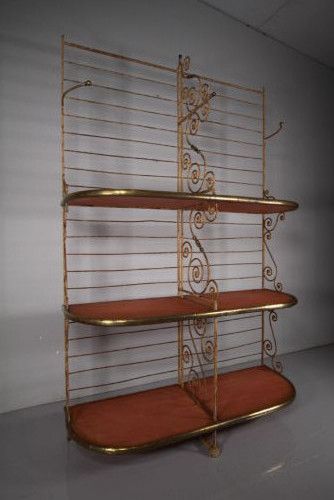


French Industrial Shelves
French industrial shelves bring hard-wearing utility into domestic rooms, offering open metal storage shaped by nineteenth-century commercial life.
French Industrial Shelves
When you search for french industrial shelves, you encounter robust upright storage units originating from nineteenth-century commercial spaces. The pieces listed on this page span baker's racks, patisserie racks, and shop display stands created to hold bread, pastries, and merchandise.
Most examples belong to the nineteenth century, including specific dates such as eighteen-sixty and nineteen-hundred, alongside Victorian and Art Deco iterations. Forms range from tall baker's racks to coat racks with shelves and field kitchen dressers.
Originating largely from France and Paris, these items bear the marks of heavy-duty utility rather than polite parlor use. A buyer is most likely to meet large wrought iron or cast iron frames paired with pine or glass components.
How they were made
Construction relies heavily on structural metals such as wrought iron, cast iron, steel, and sheet metal, forged to bear heavy loads. Workshops combined these rigid metallic frames with timber elements like pine or fitted them with glass.
Makers utilised stamping techniques to mark their ironwork, visible in stamped workshop details on Parisian pieces. Distressed metal finishes and patinated surfaces arose from actual commercial service in bakeries, patisseries, and field kitchens.
Listings feature pieces spanning the nineteenth century, eighteen-sixty, nineteen-hundred, and the Art Deco period, utilising wrought iron, pine, and brass.
What varies in quality
Quality rests upon the structural integrity of the heavy iron or steel framework and the retention of original surface patination. Pieces that retain their stamped maker marks or original brass and glass components hold greater documentary interest.
The refinement of the iron scrollwork and the balance between robust metal uprights and integrated elements like mirrors or draining shelves separate standard utility items from finer workshop output.
Dubois of Lyon
The French Industrial Shelves Glossary
- Baker's rack
- A tall open shelving unit originally utilised by commercial bakers for cooling bread and pastries. These pieces feature sturdy metal frames and timber or wire shelves.
- Patisserie rack
- A specialised storage stand designed for pastry display and storage within French shops. They often exhibit lighter ironwork than heavy bread racks.
- Boulangerie
- The French term for a bakery, frequently associated with the large iron and pine racks sourced from nineteenth-century premises. These units formed the backbone of daily bread storage.
- Wrought iron
- A tough, malleable form of iron that can be heated and forged into decorative yet load-bearing scrollwork. It characterises the primary framework of nineteenth-century French shelving.
- Field kitchen dresser
- A portable or camp-style storage unit utilised for food preparation and utensil storage in military or temporary settings. They incorporate sheet metal and integrated drainers.
French Industrial Shelves: Frequently Asked Questions
What were french industrial shelves originally used for?
These pieces served practical roles in nineteenth-century French commercial spaces, functioning primarily as bakers' racks, patisserie stands, and shop display units. Bakers utilised them to cool bread and pastries, while shopkeepers used the sturdy iron frames to display merchandise.
Over time, similar heavy-duty metal furniture found a place in field kitchens and domestic halls. Their commercial origins dictate their open structure and heavy load-bearing capacity.
How do I date an antique baker's rack?
Dating relies on examining the specific metal fabrication techniques, material combinations, and stylistic markers present in the piece. Listings span the nineteenth century, eighteen-sixty, nineteen-hundred, and later Art Deco periods.
Stamped workshop marks, such as those from Parisian makers, help establish provenance. Additionally, the transition from hand-forged wrought iron to mass-produced steel indicates the chronological shift across decades.
Are these shelves suitable for modern kitchens?
Their original commercial strength makes them exceptionally well-suited for modern kitchen storage, holding heavy cookware, ceramics, and dry goods with ease. The open shelving design provides visible access to everyday items.
Living with these pieces involves embracing their industrial character and patinated metal surfaces. They function effectively as standalone storage units without requiring built-in cabinetry.
What materials should I expect to find?
Construction primarily involves structural metals including wrought iron, cast iron, steel, and sheet metal. These are frequently paired with pine shelving, glass, or brass elements depending on the specific shop or kitchen function.
Surfaces often display the original distressed metal finish accumulated from decades of commercial use. This combination of heavy iron and timber gives each shelving unit its distinct utilitarian weight.