

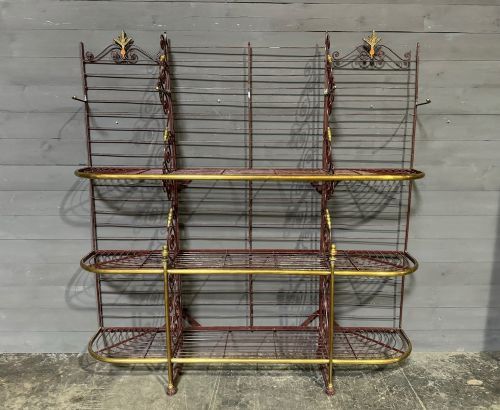

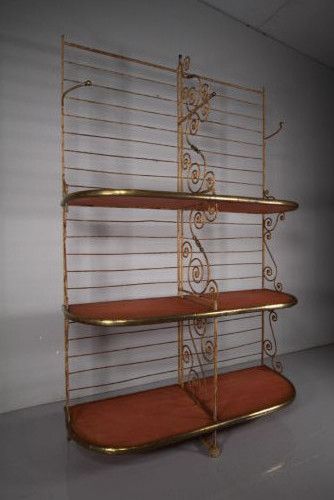


Brass French Bakers Rack
A brass french bakers rack brings industrial utility and refined continental style into a modern room with open metal shelving.
Brass French Bakers Rack
A brass french bakers rack serves as a substantial shelving unit or display stand, rooted in nineteenth-century French provincial and industrial design. These pieces combine utilitarian origins with decorative metalwork to suit domestic spaces.
Buyers are most likely to encounter nineteenth-century pieces alongside examples from around nineteen-hundred, incorporating materials such as wrought iron, steel, and cast iron alongside brass elements.
The architectural forms range from Parisian boulangerie racks and patisserie shelving to Victorian shop display stands, often featuring pine surfaces or accents.
How they were made
The construction relies on heavy structural metals like wrought iron, steel, and cast iron to support the open framework and shelves. Workshops shaped these robust metals by hand, ensuring durability for commercial bread and pastry storage.
Brass components provide decorative contrast and structural trim, while pine elements appear in the construction of supporting surfaces and boards. Metalwork was frequently stamped by the maker or foundry upon completion.
Brass French Bakers Rack Retail Price Guide 2026
Typical asking prices for brass french bakers rack among the pieces listed under this phrase on Sellingantiques today, from the lower quarter to the upper quarter. They describe what is for sale here now, not the wider market.
The listings show pieces spanning the nineteenth century, the year nineteen hundred, and the Victorian era, constructed from wrought iron, brass, steel, cast iron, and pine.
What varies in quality
Quality depends on the structural integrity of the metal framework and the proportional balance between the iron structure and brass decorative elements. Workshop stamps and maker signatures elevate specific pieces above anonymous production.
The distinction between standard commercial bakery shelving and grander Parisian exhibition pieces lies in the complexity of the ironwork and the scale of the structure, such as large nine-foot formats.
Dubois of Lyon
The Brass French Bakers Rack Glossary
- Bakers rack
- A tall open shelving unit originally utilised in French patisseries and bakeries for cooling bread and pastries. These pieces now function as kitchen and display storage.
- Boulangerie rack
- A French commercial shelving unit designed for a bread shop or bakery. They utilise robust iron and steel frames to hold heavy loads.
- Patisserie rack
- A specialised display shelving unit originating in French pastry shops. These often exhibit lighter decorative metalwork than heavier industrial bread racks.
- Wrought iron
- A tough, malleable iron alloy beaten into shape by hand. It forms the primary structural skeleton for nineteenth-century French shelving units.
- Cast iron
- Molten iron poured into a mould to create rigid structural components. This material adds weight and decorative detail to the base and uprights.
Brass French Bakers Rack: Frequently Asked Questions
What is a brass french bakers rack?
A brass french bakers rack is a heavy metal shelving unit originating from nineteenth-century France, built for commercial bakeries and patisseries.
These utilitarian pieces combine open iron or steel frameworks with brass details and pine elements to create functional display furniture.
How were bakers racks used originally?
In nineteenth-century French bakeries and patisseries, these racks held freshly baked bread and pastries to cool. The open metal shelves allowed air circulation around the loaves.
Commercial shops also utilised similar stands as display shelving to present goods directly to customers.
Where should I place a bakers rack?
These tall shelving units suit kitchens, dining rooms, and living spaces as open storage for tableware, books, or plants. Their architectural presence anchors a room without blocking light.
Ensure adequate floor space and wall clearance, particularly with large nineteenth-century or Parisian examples.
How do I identify a nineteenth-century piece?
Nineteenth-century pieces typically feature hand-wrought iron or steel construction, patinated brass elements, and occasional maker stamps. Forms often align with traditional French provincial, industrial, or Victorian shop display styles.
Construction methods reflect historical metalworking techniques prior to twentieth-century mass production.