




French Country Shelving Unit
A french country shelving unit brings practical storage and provincial character to a room, spanning open bookcases to baker's racks.
French Country Shelving Unit
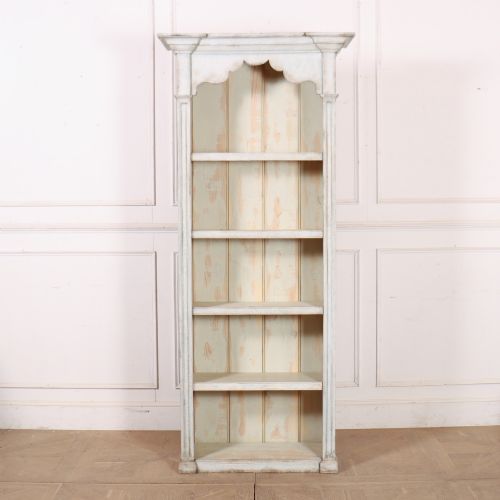
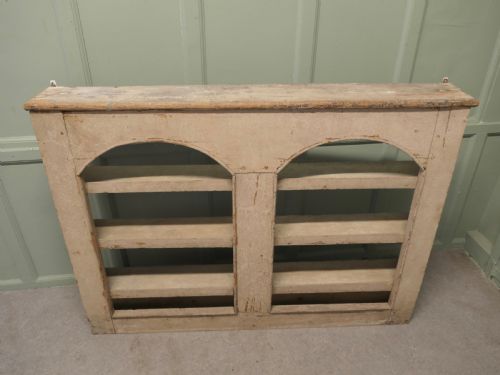
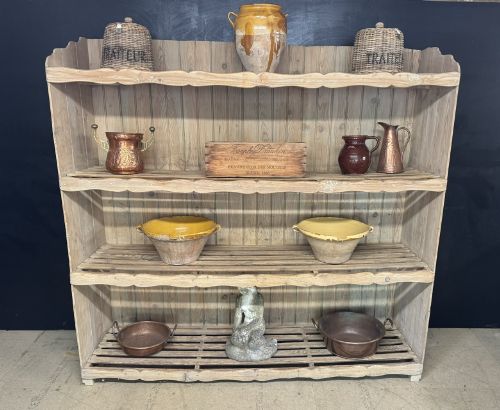
A french country shelving unit encompasses practical storage forms such as bookcases, wall shelves, baker's racks, alcove cupboards, and hanging shelves. These pieces serve domestic spaces with robust timber construction or metal framing designed for daily use.
The selections available range from eighteenth-century provincial pieces in oak to nineteenth-century painted bookcases, dwarf bookcases, and patisserie racks. Origins span regional workshops and Parisian settings, capturing both rustic utility and decorative refinement.
Buyers encountering this search phrase will most frequently meet nineteenth-century painted wood, pine, and oak examples, alongside wrought iron racks. These items bridge formal cabinetry and straightforward storage.
Materials and construction
Construction relies heavily on solid timbers including oak, pine, cherry wood, and walnut, shaped by hand carving and traditional joinery. Painted wood surfaces display layered finishes that reflect period decoration.
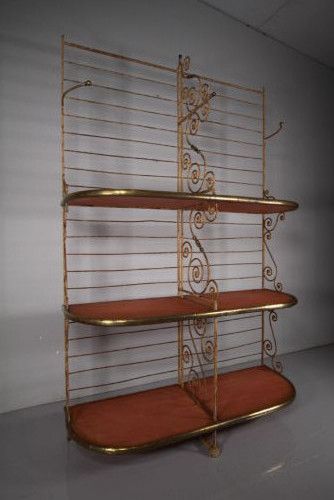
Metal elements incorporate wrought iron and steel, utilised in baker's racks and patisserie racks for structural load-bearing strength. Brass details occasionally appear as supplementary hardware or decorative accents.
Surfaces show varying treatments from bleached oak to applied paint and natural patination developed through sustained domestic use. Structural framing balances open display tiers with enclosed cupboard storage beneath.
French Country Shelving Unit Retail Price Guide 2026
Typical asking prices for french country shelving unit among the pieces listed under this phrase on Sellingantiques today, from the lower quarter to the upper quarter. They describe what is for sale here now, not the wider market.
Several heavy iron racks carry workshop stamps, reminding us these graceful kitchen tiers once bore the weight of hot Parisian baguettes.
Distinctions in craftsmanship
Quality rests in the integrity of the timber selection, such as dense seventeenth or eighteenth-century oak versus softer nineteenth-century pine. Hand-carved details and stamped metal elements elevate individual examples above standard utility pieces.
The longevity of a shelving unit depends on the original joinery and the survival of its primary surfaces, whether bleached wood or historic paint. Proportion and scale dictate whether a piece commands a room or functions as subtle background storage.
The French Country Shelving Unit Glossary
- Baker's rack
- A metal or iron shelving structure originally utilised for cooling baked goods, now valued for open kitchen or living room display. These typically feature durable wrought iron frames.
- Alcove cupboard
- A fitted or freestanding storage unit designed to occupy a wall recess, often combining upper shelves with lower cabinet doors. These maximise awkward room dimensions.
- Dwarf bookcase
- A low-height shelving unit that keeps books and decorative objects at waist level. This form suits rooms with restricted vertical space.
- Patisserie rack
- A commercial metal shelving unit originating from French bakeries, characterised by robust iron frameworks and multiple open tiers. They provide utilitarian display capacity.
- Bleached oak
- Timber treated to lighten its natural tone, a finish seen on provincial furniture that softens the visual weight of heavy wood.
French Country Shelving Unit: Frequently Asked Questions
What is a french country shelving unit?
A french country shelving unit is a practical storage piece originating from France, spanning wooden bookcases, painted display shelves, and iron baker's racks.
These items combine utilitarian storage with regional decorative styles, using materials like oak, pine, and wrought iron.
How were these shelves used originally?
These units served multiple domestic and commercial purposes, from storing provisions and books to displaying household wares in provincial homes.
Iron racks functioned primarily in bakeries for cooling bread and pastries before entering domestic interiors as decorative storage.
How do I date an antique shelving unit?
Dating relies on examining construction methods, tool marks, timber species, and surface patination such as historic paint or bleached finishes.
Eighteenth-century examples often feature heavy provincial oak, while nineteenth-century pieces introduce diverse painted finishes and industrial ironwork.
Are these units suitable for modern kitchens?
Iron baker's racks and open wooden bookcases integrate well into modern kitchens for holding cookware, ceramics, and provisions.
Their open tiers provide accessible storage while introducing historical character to contemporary domestic spaces.
What woods were used in these pieces?
Cabinet makers utilised regional hardwoods and softwoods including oak, pine, cherry wood, and walnut for structural stability.
Selection depended on the piece's origin, with provincial makers using local timber and urban workshops employing more varied woods.