



Turn of Century Shelving
Turn of century shelving encompasses practical multi-tiered display pieces and wall units that bring timeless utility to any interior.
Turn of Century Shelving
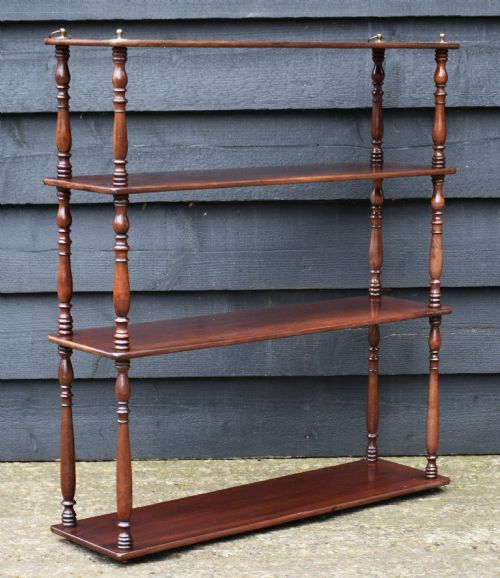
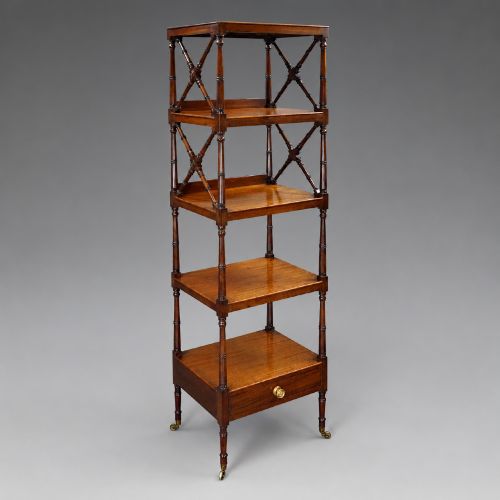
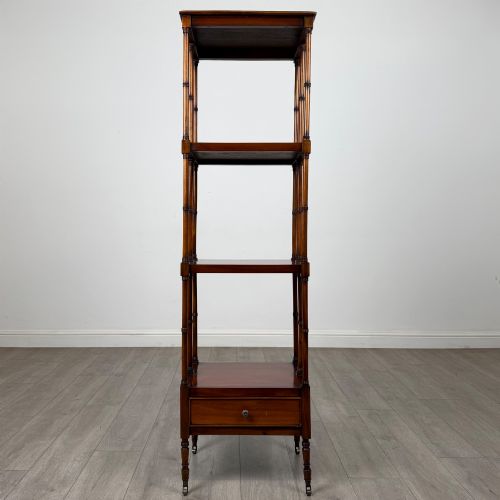
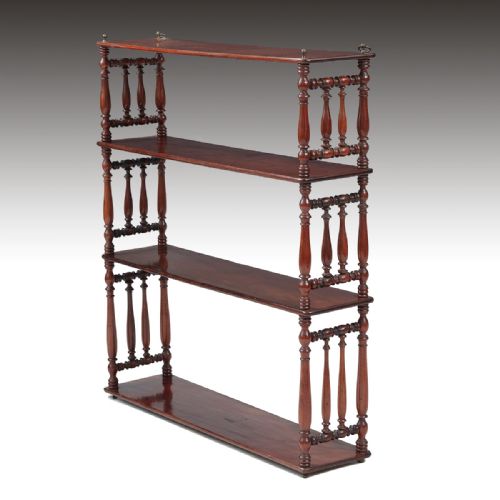
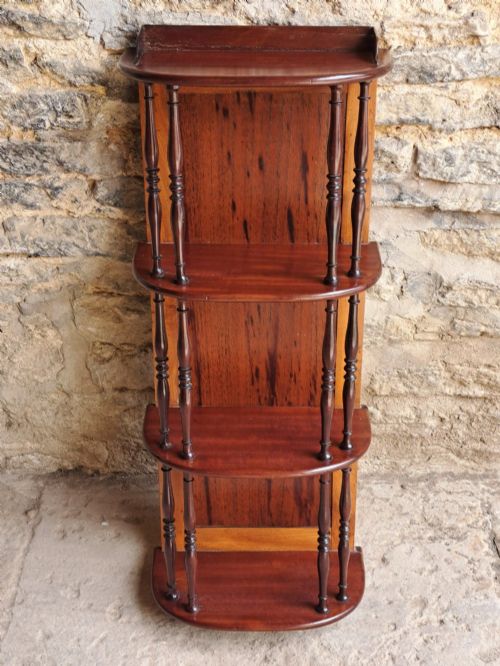
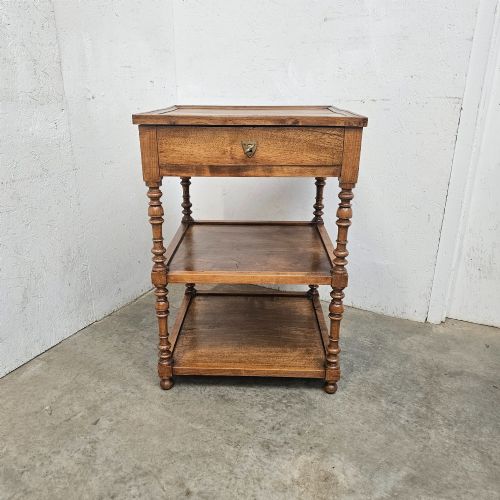
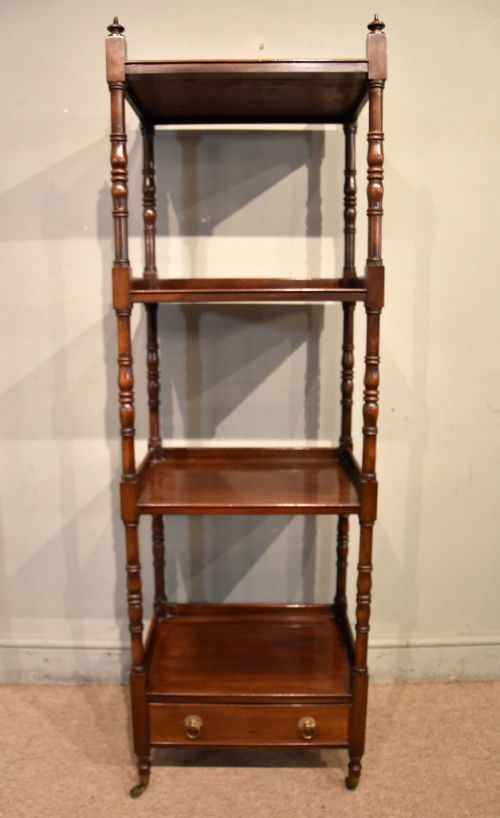
Turn of century shelving covers multi-tiered whatnots, etageres, and wall-hanging units originating from the Victorian, Regency, and Georgian periods alongside pieces from around nineteen hundred. Buyers seeking turn of century shelving encounter timber frameworks designed for books, ornaments, and display.
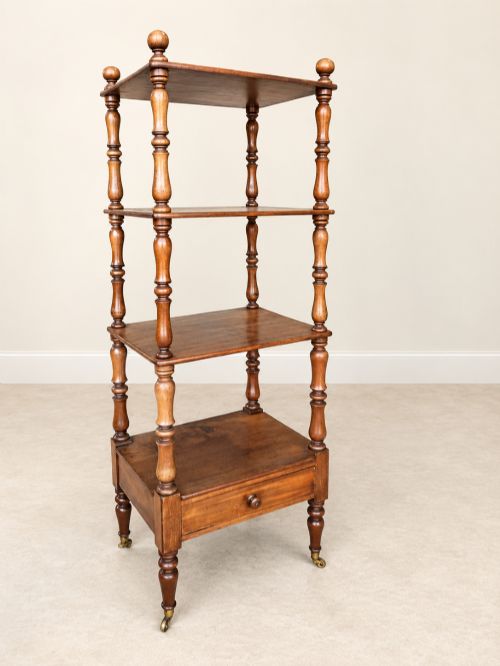
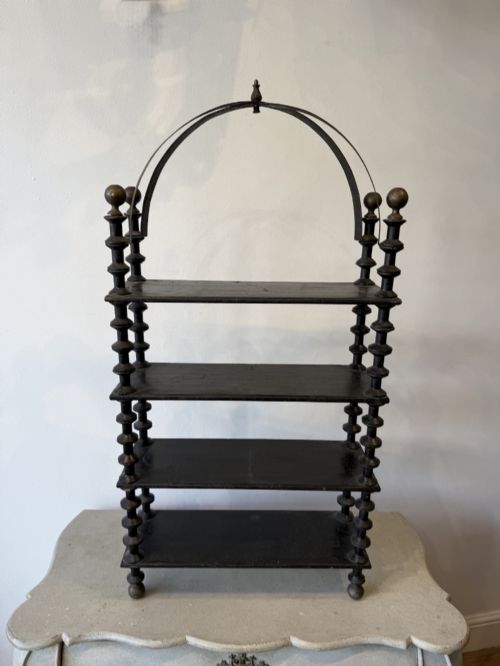
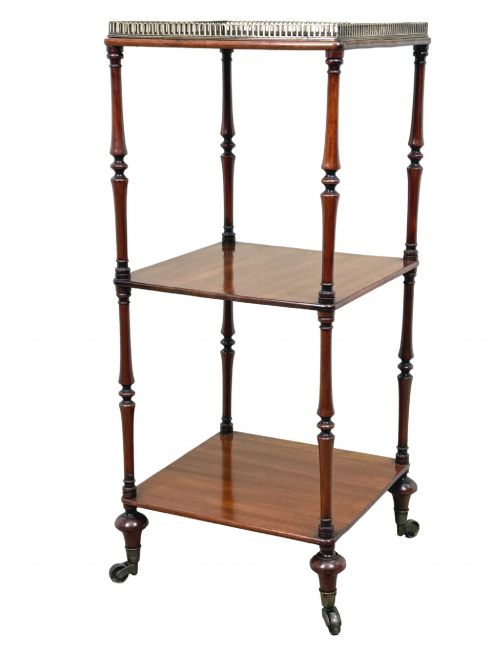
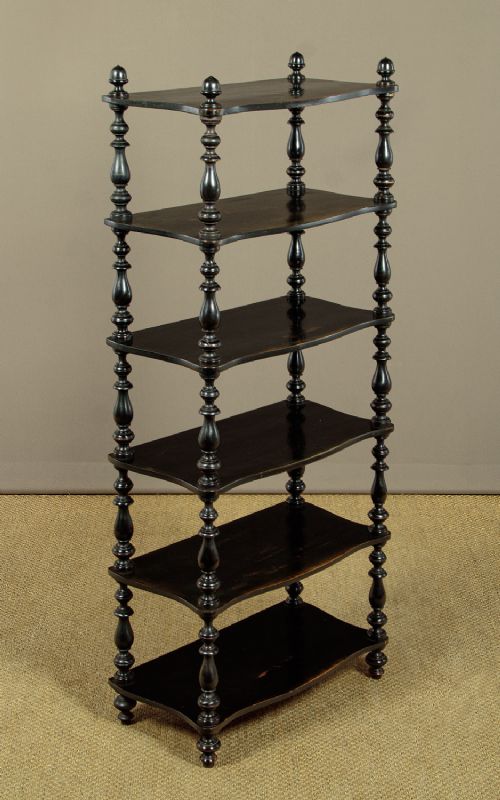
Mahogany dominates the available forms, accompanied by walnut, satin birch, and ebonised wood. Pieces range from compact hanging wall shelves to tall tiered shelving units standing on turned feet with castors.
How they were made
Cabinetmakers utilised dense hardwoods such as mahogany and walnut, frequently selecting turned supports and bobbin turnings for upright pillars. Joinery relied on traditional framing methods to support multiple tiers of open shelving.
Detailing often included delicate wood inlay, brass fittings, and original castors on floor-standing units. French baker's racks introduced wrought iron and steel into the mix for robust industrial utility.
Materials range from traditional hardwoods like walnut and satin birch to industrial wrought iron.
What varies in quality
The degree of refinement in timber selection and turning determines the standing of a piece. Figures in mahogany and carefully matched veneers separate standard utilitarian items from finer display pieces.
Originality of components, including castors, supports, and brass fixtures, dictates the structural integrity and historical character of the shelving.
Dubois of Lyon
The Turn of Century Shelving Glossary
- Whatnot
- An open multi-tiered piece of furniture designed for displaying ornaments or books. These typically feature three or more levels supported by slender columns.
- Etagere
- A French term for a set of tiered open shelves used for display. These pieces mirror the function of whatnots with decorative flair.
- Bobbin shelves
- Shelving supported by turned uprights resembling reels or bobbins of thread. This decorative turning style appears frequently in nineteenth-century pieces.
- Dumb waiter
- A tiered shelving stand historically used in dining rooms for serving dishes. Surviving examples function effectively as multi-tier display units.
Turn of Century Shelving: Frequently Asked Questions
What is a whatnot?
A whatnot is an open piece of furniture featuring multiple tiers supported by upright posts. It was originally designed to hold small ornaments and decorative items.
These pieces transitioned easily between drawing rooms and parlours to provide vertical storage without blocking light.
How do I style hanging shelves?
Hanging wall shelves suit smaller spaces by utilising vertical wall areas for books and ceramics. They anchor neatly above desks or sideboards.
Ensure secure wall fixings are used to bear the weight of solid timber structures.
What wood types are common?
Mahogany appears most frequently across these listings in various rich tones. Walnut, satin birch, and cherry wood also feature prominently.
Ebonised wood and mixed metals like wrought iron provide alternative aesthetic choices from industrial and revival periods.
Are these pieces stable?
Floor-standing tiers and corner units distribute weight across multiple levels on sturdy turned feet. Many larger units include original castors for repositioning.
Heavier items benefit from placement against solid walls to ensure complete everyday stability.