



French Gilt Stool
A French gilt stool brings gilded elegance and practical seating to a room, ranging from small footstools to long benches.
French Gilt Stool
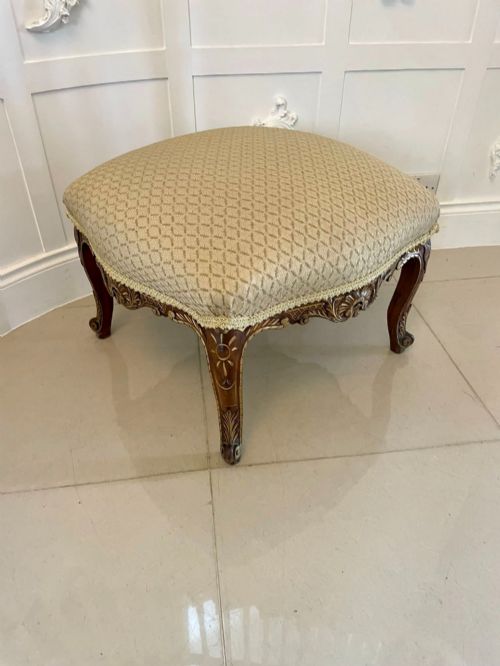
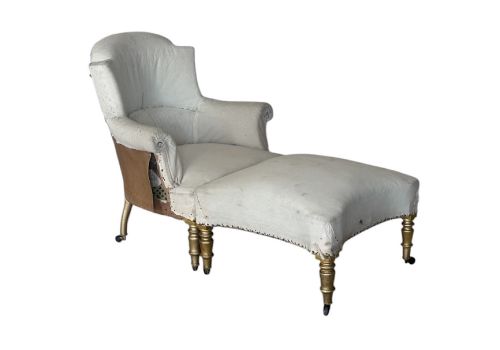
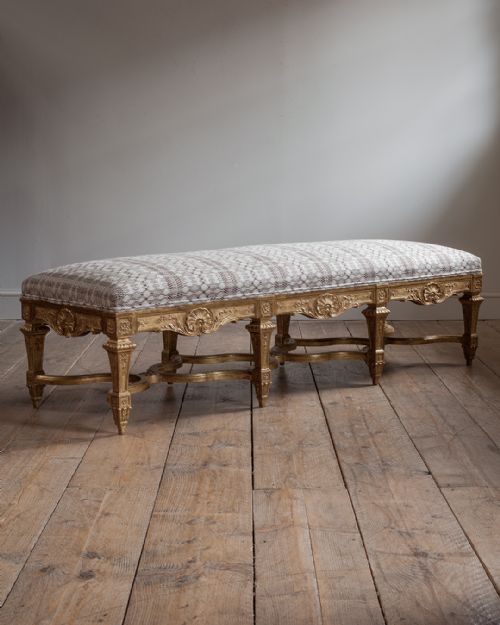
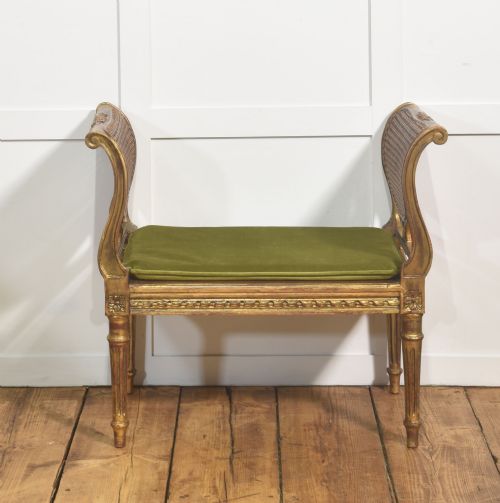
A french gilt stool encompasses low footstools, window seats, duet stools, and long benches designed for salons and drawing rooms. These pieces originate predominantly from the nineteenth century, including Victorian periods and various revival styles.
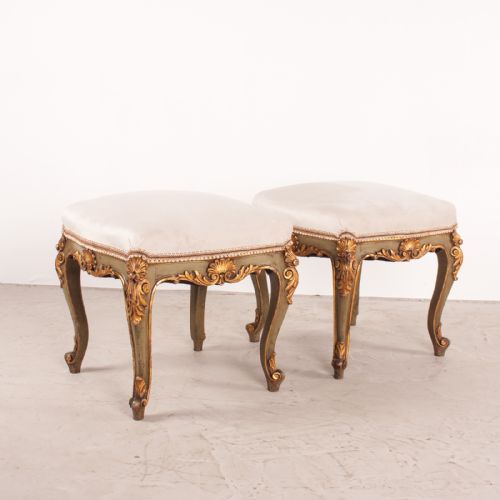
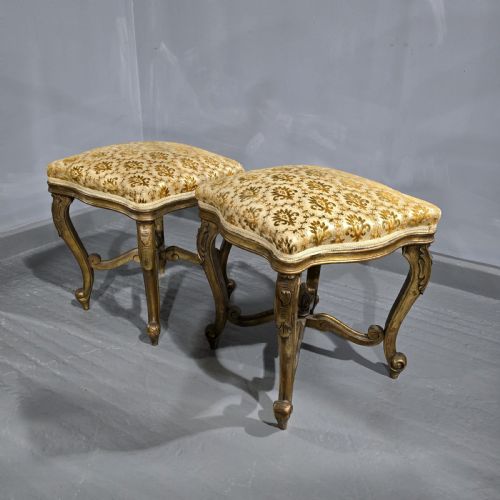
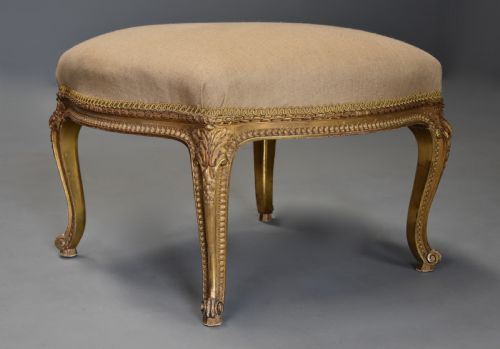
The pieces on this page appear in forms such as X-frame stools, window seats, and carved giltwood footstools upholstered in velvet, silk, or tapestry. Many pieces reflect design influences from Louis periods and Empire styles.
Buyers encounter single seating items alongside matched pairs, ranging from compact footstools to large serpentine lounge stools and adjustable piano seats.
Materials and Techniques
Maker workshops utilised solid woods such as walnut, mahogany, and carved timber substrates to build the foundational frames of these seats. Surface decoration relied heavily on applied gold leaf, water gilding, or painted and parcel-gilt finishes.
Upholstery techniques combined traditional webbing and stuffing with coverings in silk, velvet, tapestry, and textured textiles. Metal elements such as brass, ormolu mounts, and adjustable screw mechanisms also appear on select piano and footstools.
Recorded styles span the Victorian era, Louis XV and XVI revivals, Empire designs, and French Neoclassical forms.
Craftsmanship and Detail
Depth and crispness of hand-carved ornamentation separate standard production from superior examples. Skilled makers executed intricate floral motifs, acanthus scrolls, and fluted legs with sharp definition in the giltwood.
The original quality of the gilding and the preservation of the surface finish dictate the visual appeal of each piece. Superior items retain their original gold leaf or aged parcel-gilt layers without heavy modern repainting.
LOIDRAULT FRERES PARIS·A.M.E. Fournier
The French Gilt Stool Glossary
- Giltwood
- Wood that has been treated with gold leaf or a gold-coloured metallic finish. This surface treatment provides the characteristic metallic sheen seen on nineteenth-century frames.
- Parcel-gilt
- A decorative technique where only specific portions of a wooden or painted object are highlighted with gold leaf. This method creates contrast against a painted or darker wood background.
- X-frame
- A seating structure formed by intersecting diagonal legs shaped like the letter X. This classical form supports folding or rigid stools dating from the nineteenth century.
- Duet stool
- An elongated seat designed to accommodate two people at once, frequently utilised alongside musical instruments or at the foot of a bed.
French Gilt Stool: Frequently Asked Questions
What rooms suit these stools?
These versatile seats function well at the foot of a bed, beside a fireplace, or beneath a window as a low seat.
Compact footstools fit easily into smaller spaces while larger benches provide substantial decorative presence in a hallway or drawing room.
How do I identify nineteenth-century pieces?
Nineteenth-century examples display period construction methods, traditional joinery, and wear patterns consistent with age on the gilt surfaces.
Stylistic cues such as Empire proportions or Louis XV revival curves help anchor pieces within the eighteen-hundreds.
Were these seats used for music?
Specific forms such as piano stools and duet stools were engineered for musicians practicing keyboard instruments in Victorian parlours.
Adjustable screw mechanisms allowed players to alter their seating height while performing.
What fabrics cover these frames?
Upholstery materials range from deep buttoned silk and velvet to woven tapestry and standard decorative textiles.
Many surviving pieces retain later reupholstery while keeping their original nineteenth-century wooden frames intact.