
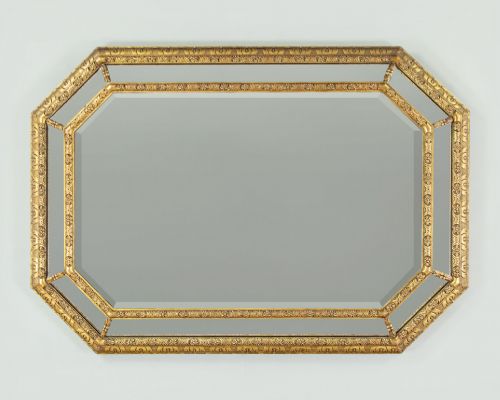


French Gilt Cushion Mirror
A french gilt cushion mirror brings deep decorative presence and reflecting light into a room through its characteristic convex, sloping frame.
French Gilt Cushion Mirror
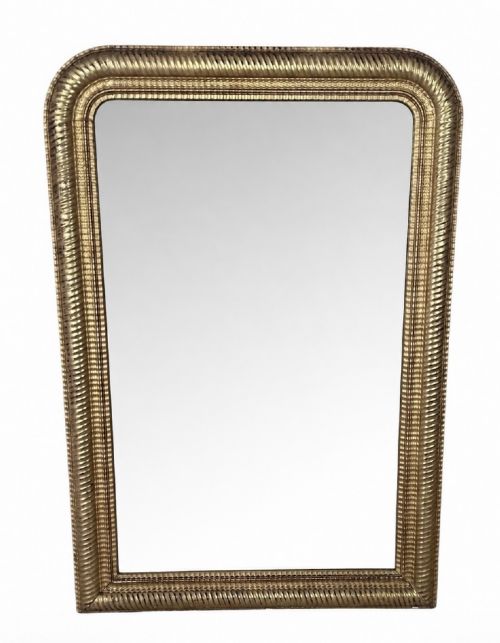
A french gilt cushion mirror is defined by its rounded, sloping frame profile that swells outwards towards the edge before meeting the wall. This distinctive form projects light differently than flat-framed alternatives, creating considerable visual depth.
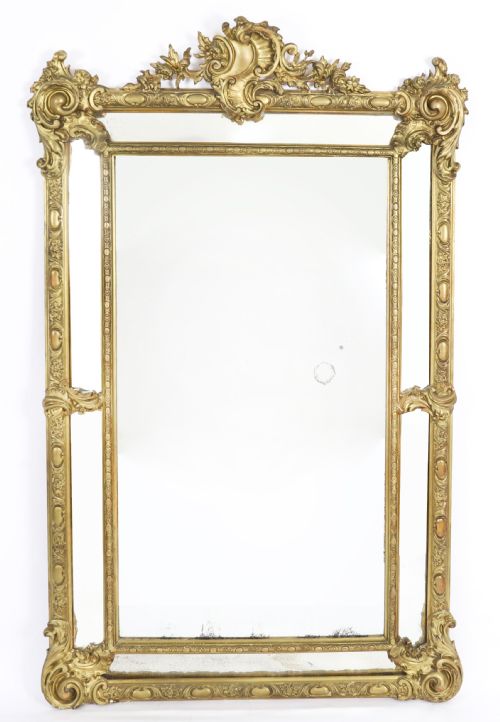
The pieces appearing on this page originate predominantly from the nineteenth century, encompassing styles from Louis Philippe and Napoleon III through to the broader French Revival movements. These wall-hanging and overmantel mirrors often incorporate crests, decorative corners, or margin plates.
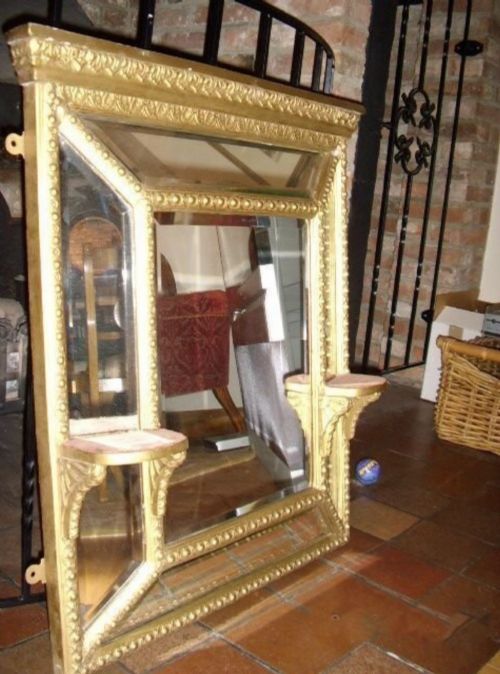
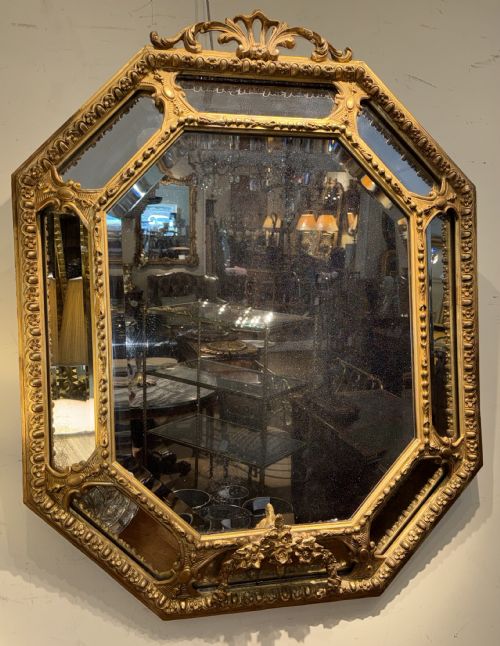
Buyers will encounter various incarnations, including rectangular, arched, and shaped tops executed in giltwood, gesso, and ebonised timber. Many examples display the characteristic convex cushion slope paired with traditional silvered or mercury glass plates.
What varies in quality
Quality rests primarily in the crispness of the hand-carved wooden ornament beneath the gesso and the preservation of the original gilt surface. Pieces retaining their untouched, patinated gold leaf or authentic silver-gilt layers exhibit a depth that later refinishing obscures.
The integrity of the frame construction and the originality of the mirror plate heavily influence the standing of an individual piece. Heavily compromised gesso or replaced mirror glass alter the character significantly when compared to examples surviving in undisturbed state.
Several mirrors include dragons and crests guarding the reflection.
The French Gilt Cushion Mirror Glossary
- Cushion mirror
- A wall-hanging glass featuring a convex, sloping frame that swells outward toward the perimeter. This profile creates multiple angles for reflecting interior light.
- Gesso
- A plaster-like mixture applied to the carved wooden frame to build up smooth surfaces for gilding. It allows artisans to model intricate relief details.
- Giltwood
- Timber that has been coated with gold leaf or metal leaf applied over a prepared bole and size base. It provides a warm, reflective metallic sheen.
- Mercury glass
- An early type of mirror plate produced by pouring a mercury-and-tin amalgam behind the glass. It yields a characteristic mottled, deep reflection.
- Margin plate
- Smaller secondary mirror segments fitted around the central plate within the frame border. They introduce extra faceted planes to the reflection.
- Overmantel
- A large mirror designed specifically to hang above a fireplace mantelpiece. These pieces frequently scale wider and taller than standard wall mirrors.
French Gilt Cushion Mirror: Frequently Asked Questions
How do I hang a heavy cushion mirror?
These pieces require secure fixing directly into wall studs or masonry using heavy-duty brackets suited to the substantial weight of carved wood and gesso frames.
Consult a professional installer to ensure the wall structure supports the specific dimensions and load of the mirror safely.
Are mercury glass plates original?
Nineteenth-century pieces frequently retain their original mercury glass plates, identifiable by characteristic clouding and dark speckling behind the glass.
Such optical irregularities distinguish period glass from later replacements and contribute to the authentic appearance of the piece.
How should I clean a gilt frame?
Dust the carved and gilded surfaces gently with a soft, dry brush to prevent any disturbance to fragile gesso and gold leaf.
Avoid commercial liquid cleaners or moisture entirely, as water and chemical solvents damage historic gilding irreversibly.
What defines Louis Philippe style?
Louis Philippe mirrors typically feature restrained, elegant curves with rounded upper corners and simple architectural lines rather than heavy ornamentation.
This mid-nineteenth-century aesthetic balances decorative warmth with a clean silhouette suited to diverse interior settings.