

French Gilt Console
A french gilt console brings brilliant reflection and heavy stone surfaces together, adding an undeniable focal point to a hallway or drawing room.
French Gilt Console
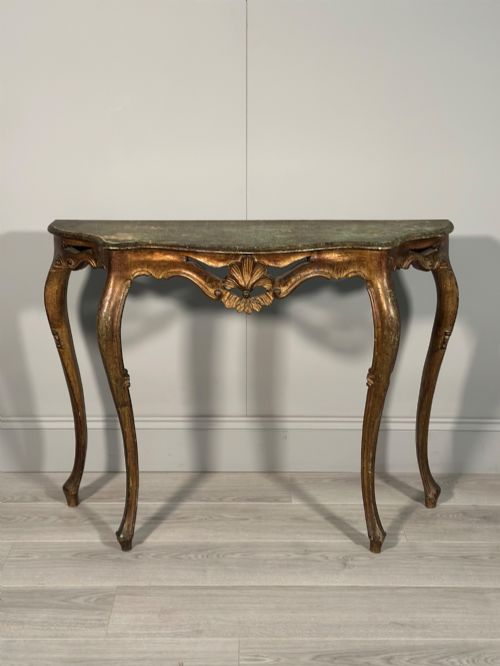
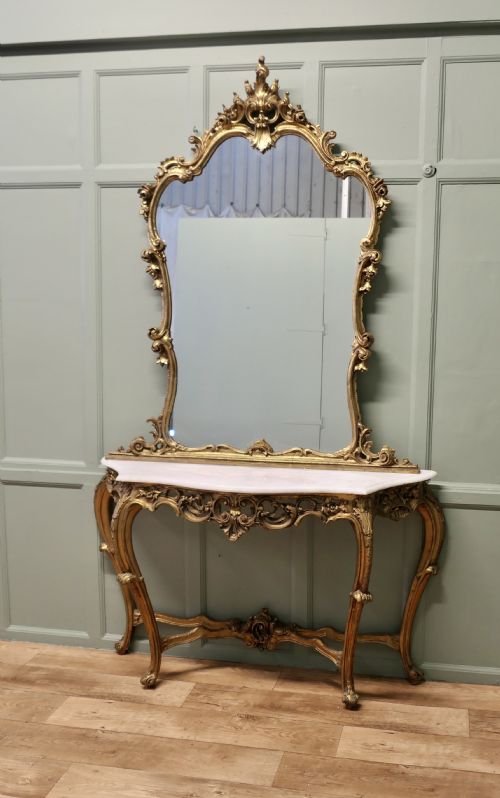
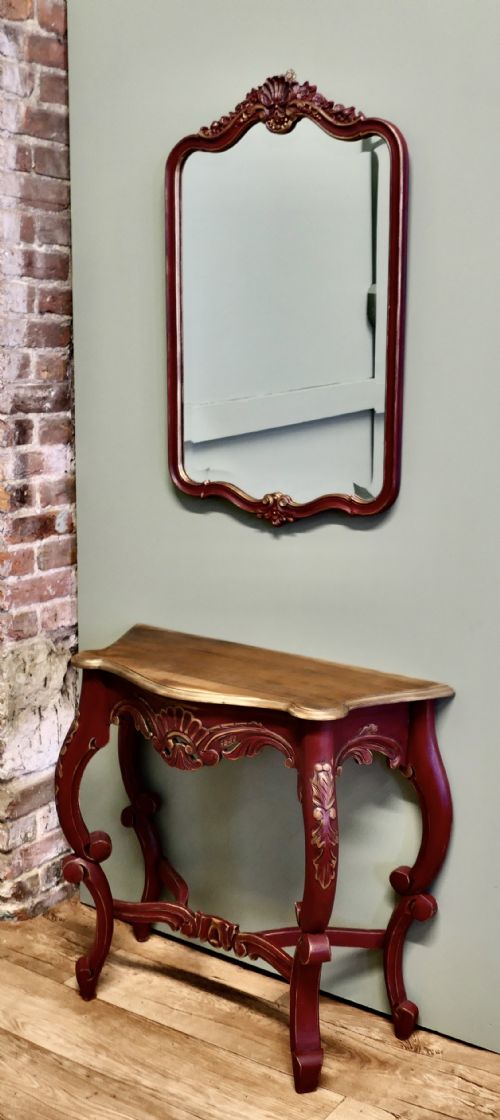
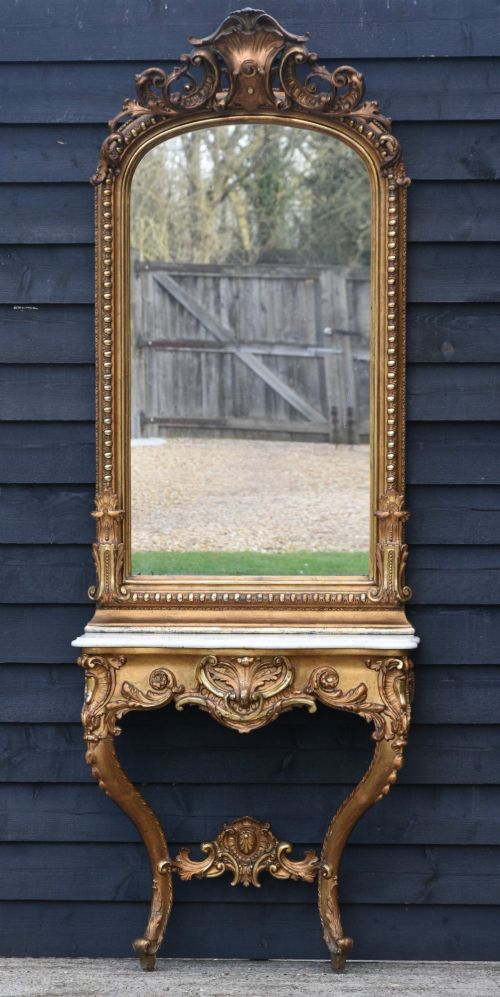
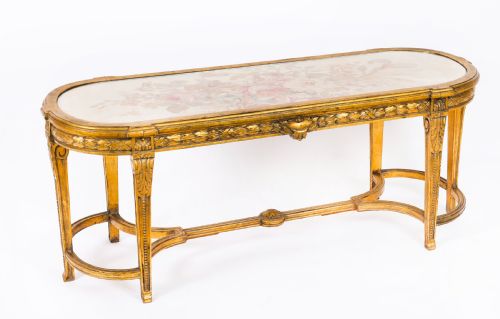
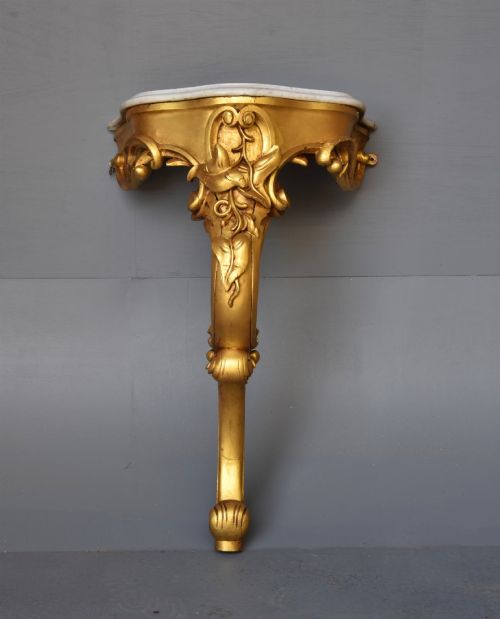
A french gilt console is typically a wall-mounted or freestanding table designed to sit flat against a vertical surface, often paired with a matching mirror. These pieces span the eighteenth, nineteenth, and early twentieth centuries, drawing heavily on Louis XV and Louis XVI revivals.
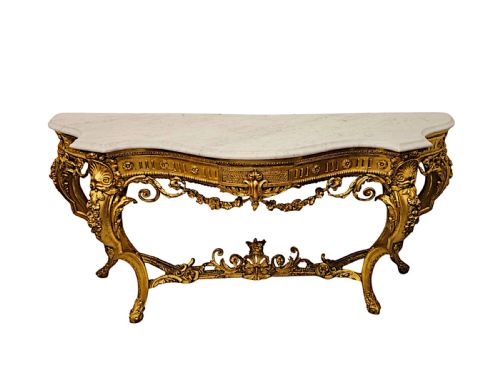
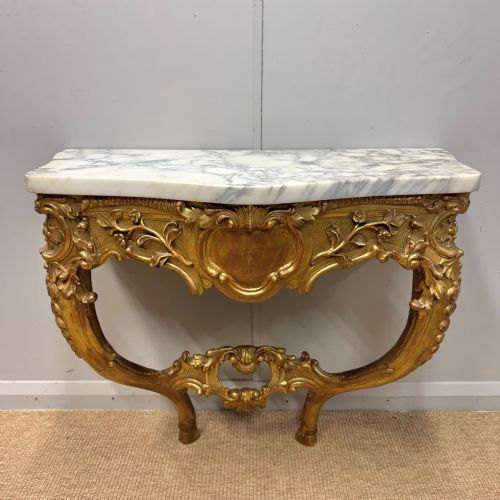
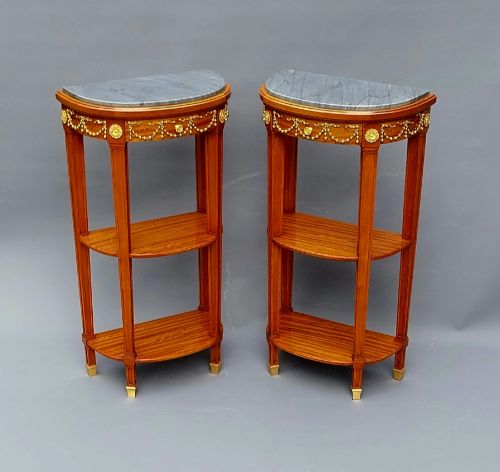
The form appears frequently as a demilune or serpentine shape, carrying a heavy marble top above a carved wooden frame. Alongside traditional console tables, buyers will encounter related wall brackets, pier mirrors, and games tables sharing the same gilt surface treatment.
Materials and construction
Carved wood frameworks receive layers of gesso before being finished with gold leaf or liquid gilding, creating a bright reflective surface that catches natural light. Heavy marble slabs, including varieties like sienna and breche d'alep, rest directly upon the wooden bases.
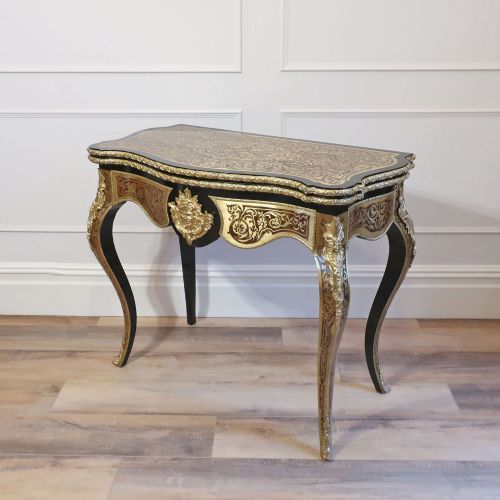
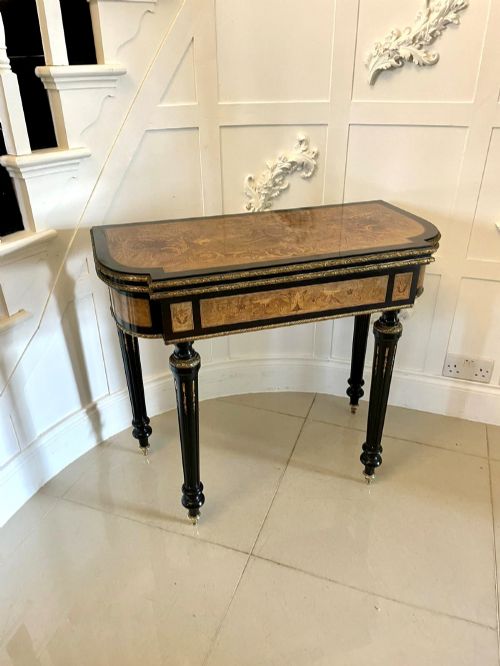
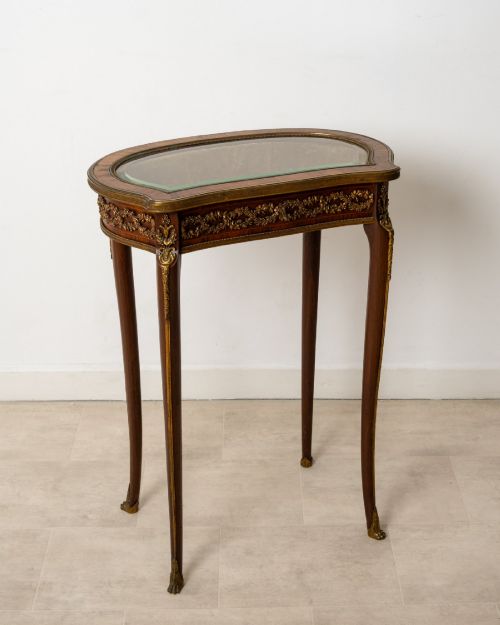
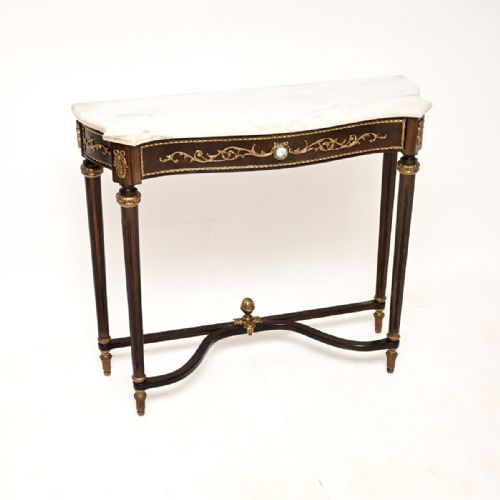
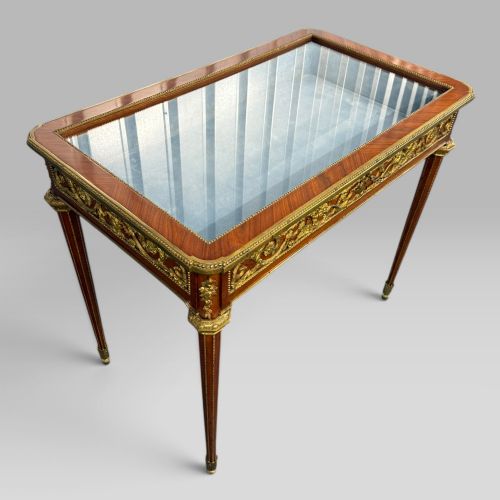
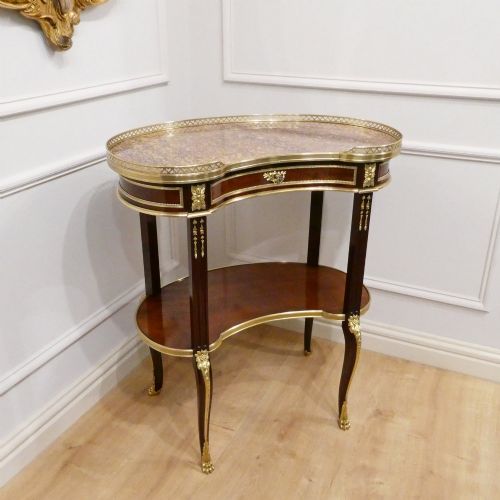
Ormolu and gilt-bronze mounts are frequently secured to mahogany, walnut, or kingwood structures, often highlighting the corners and apron centres. Parquetry and marquetry inlay techniques appear on panel surfaces alongside simpler painted finishes.
French Gilt Console Retail Price Guide 2026
Typical asking prices for french gilt console among the pieces listed under this phrase on Sellingantiques today, from the lower quarter to the upper quarter. They describe what is for sale here now, not the wider market.
Some nineteenth-century tables cleverly double as card and games tables, hiding green baize beneath their polished tops.
Assessing craftsmanship and execution
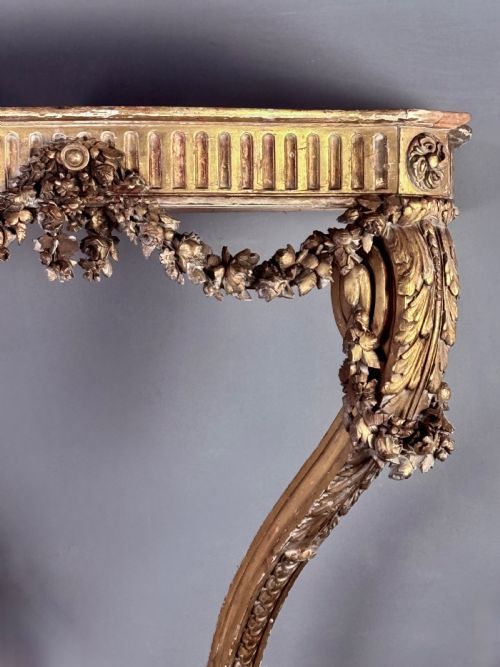
The depth and crispness of the wood carving separate standard production items from workshop pieces with finer detail. Hand-chased ormolu mounts and substantial, well-figured marble slabs indicate a higher tier of manufacture.
Proportion and structural balance dictate the success of the silhouette, particularly where serpentine or demilune curves meet the wall. The integrity of the original gilding and the tightness of veneer joints further distinguish superior examples.
Felix-Alfred Ternisien·Maison Millet·François Linke·Krieger Paris·Joseph-Emmanuel Zwiener
The French Gilt Console Glossary
- Giltwood
- Wood that has been coated with gold leaf or gilt powder over a prepared gesso ground. This finish provides the characteristic metallic sheen seen on period frames and tables.
- Ormolu
- Gilded bronze used for decorative mounts and accents on furniture. The technique involves applying a mercury and gold amalgam to cast bronze.
- Demilune
- Half-moon shape used for console tables and commodes designed to sit flush against a wall. This profile saves floor space while offering a display surface.
- Marquetry
- Decorative veneer work forming pictorial or geometric patterns using various coloured woods. It requires precise cutting and fitting of thin wood veneers.
- Pier mirror
- A large tall mirror designed to hang on the pier wall between two windows, frequently positioned directly above a matching console table.
French Gilt Console: Frequently Asked Questions
How do I secure a wall-mounted console?
Many console tables rely on the wall for structural stability and must be anchored properly into masonry or studs using brackets.
The weight of thick marble slabs requires secure fixings to prevent tipping, especially on narrow demilune frames.
Are these tables suitable for everyday use?
The gilded surfaces and polished marble tops require careful treatment to avoid scratches, moisture rings, and chemical damage.
Using coasters and placing them out of heavy traffic areas helps preserve the fragile gold leaf and decorative carving.
How do I distinguish Louis XV from Louis XVI style?
Louis XV pieces embrace asymmetrical curves, scrolling foliage, and exuberant Rococo lines without strict symmetry.
Louis XVI furniture introduces neoclassical restraint, straight tapered legs, fluting, and geometric symmetry.
Why do some consoles come with matching mirrors?
Console tables and pier mirrors were designed as unified decorative schemes for nineteenth-century salons and drawing rooms.
Matching the carving style and gilt finish ensures a balanced visual verticality on the wall.