

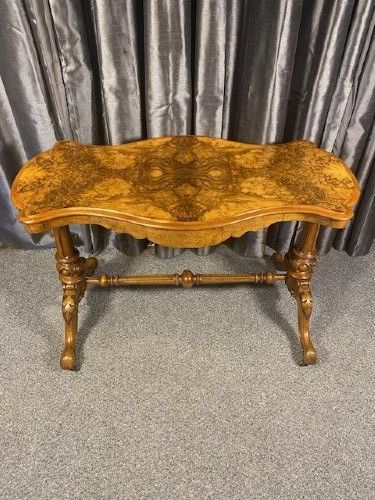
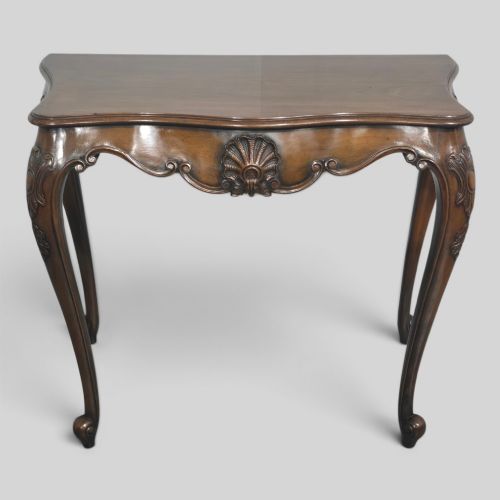
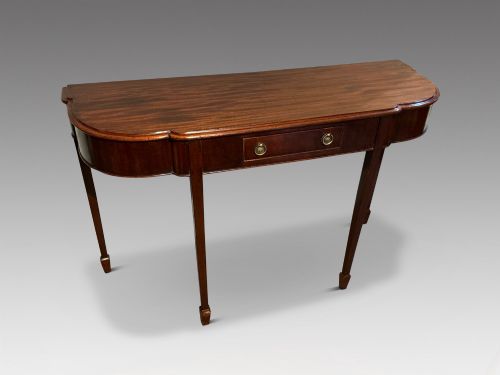
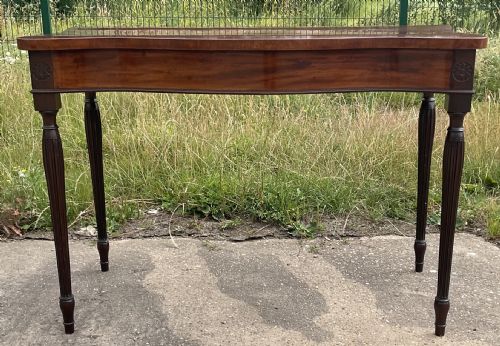

Vintage Serpentine Console
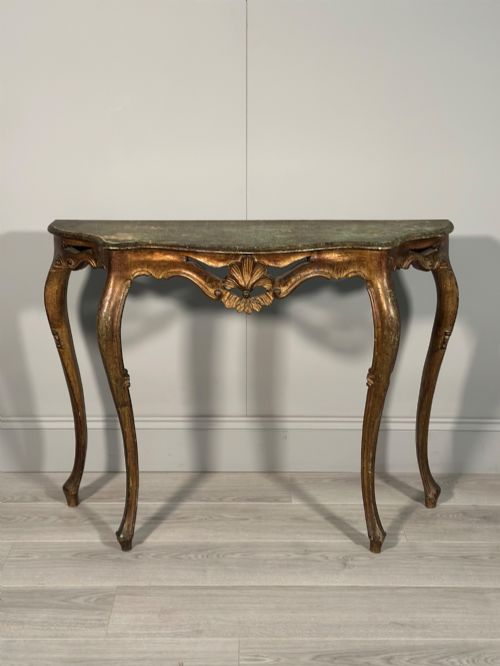
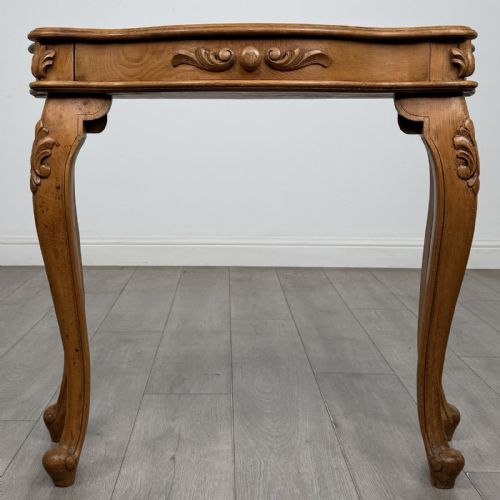
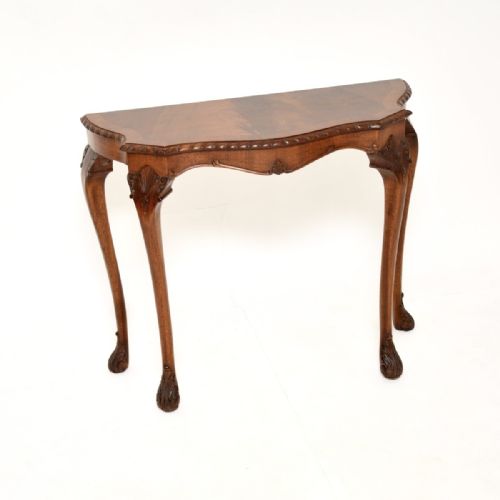
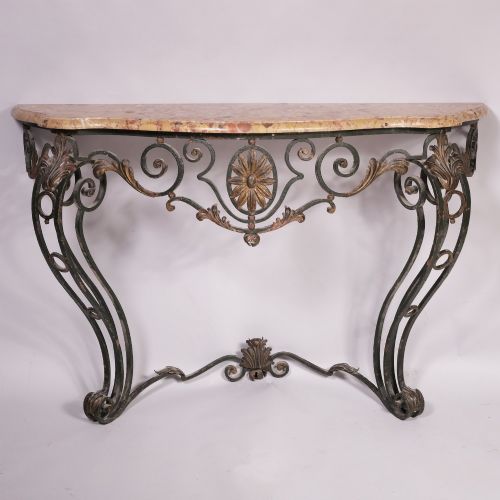
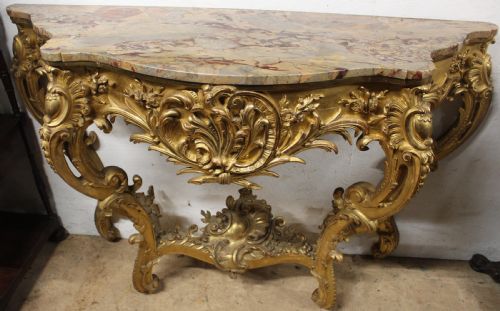
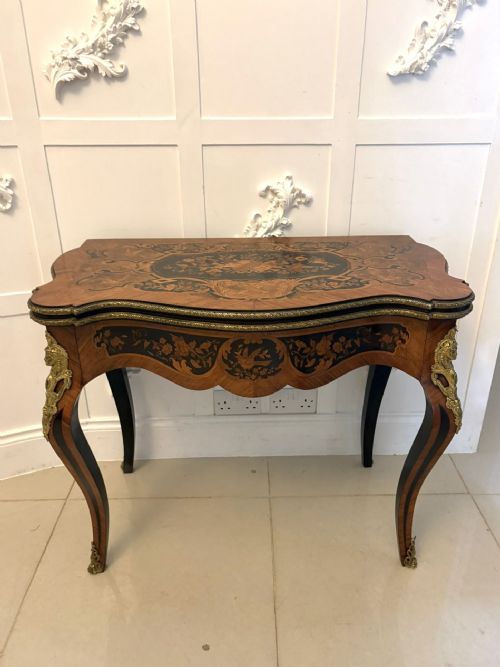
These vintage serpentine console tables bring a distinct curved line and period presence to a hallway or reception room.
Vintage Serpentine Console
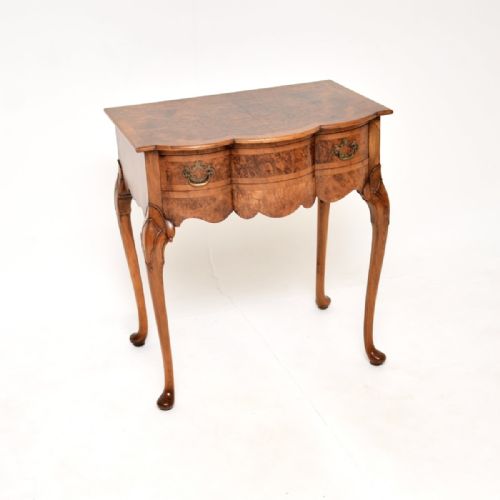
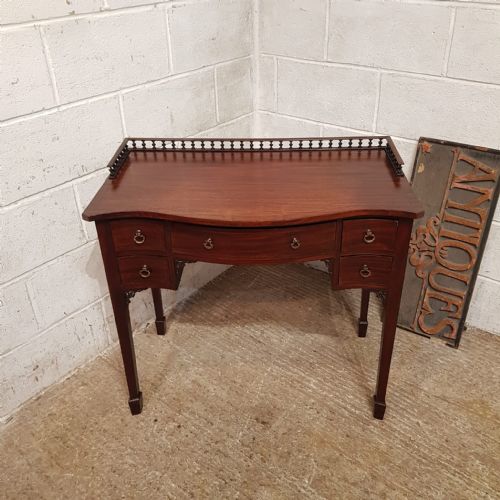
A vintage serpentine console table typically presents a gracefully undulating front edge, appearing across pieces dated from the eighteenth century through to the 1930s. The selection on this page leans heavily toward nineteenth-century French and eighteenth-century inspired revivals, alongside early twentieth-century examples.
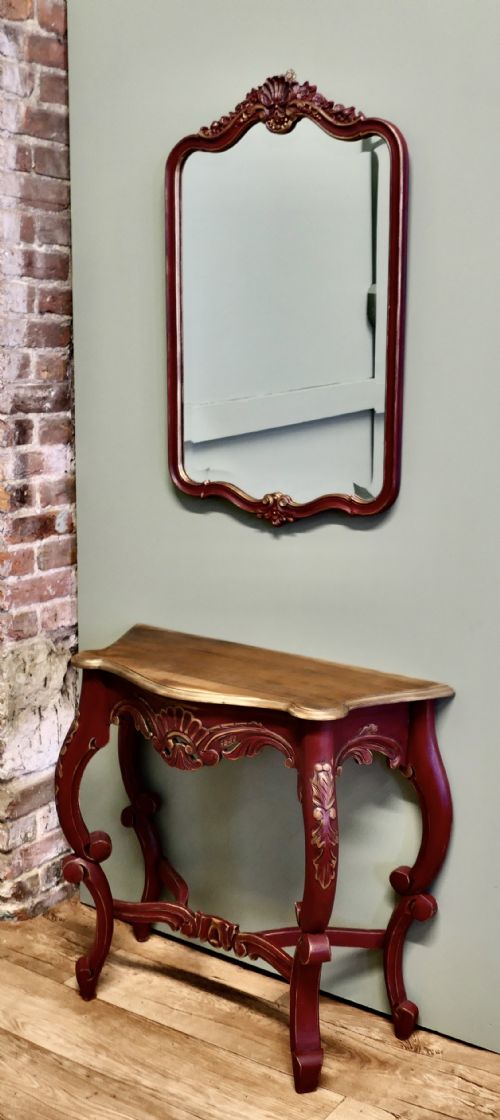
Forms range from dedicated console tables and hall tables to side tables, occasional tables, and writing tables. Many incorporate matching mirrors, marble tops, or foldover card table tops while maintaining the characteristic curved outline.
Origins span English cabinet-making traditions, French provincial and chateau styles, and Italian workshops. Walnut, mahogany, and burr walnut dominate the structural forms, frequently paired with marble slabs or detailed inlays.
Materials and construction methods
Cabinet-makers relied on solid timbers like mahogany and walnut, often applying figured burr walnut or kingwood veneers to create rich grain patterns across the curved drawer fronts and tops. Marquetry work and delicate inlay appear on finer writing and card tables.
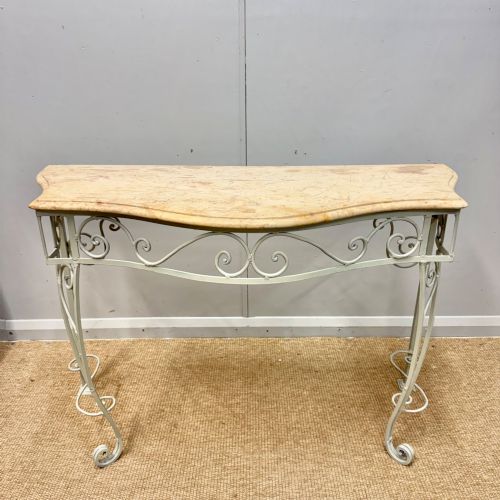
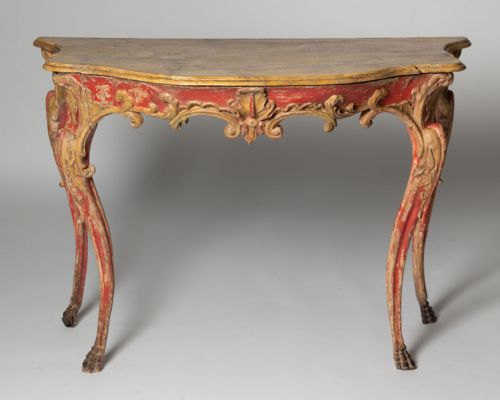
Heavier stone surfaces, particularly marble, provide contrasting tops for giltwood, oak, wrought iron, and painted frames. Ormolu mounts, gesso details, and parcel gilt finishes frequently adorn pieces executed in Louis XV and Rococo revival styles.
Vintage Serpentine Console Retail Price Guide 2026
Typical asking prices for vintage serpentine console among the pieces listed under this phrase on Sellingantiques today, from the lower quarter to the upper quarter. They describe what is for sale here now, not the wider market.
The inventory records walnut, mahogany, and burr walnut as the predominant woods used across these serpentine forms.
Assessing quality in carved and veneered consoles
Quality rests in the precision of the serpentine curve and the harmony of the proportions, particularly where the timber grain follows the undulating front. Superior execution shows in crisp, deep carving on giltwood frames and tight, seamless joints on veneered surfaces.
The integrity of the structural materials sets finer pieces apart, such as thick, well-veined marble tops fitted flush to the timber frame rather than thin replacements. Original or period-appropriate hardware, such as ormolu mounts and working drawer construction, also mark out the better examples.
Epstein and Co
The Vintage Serpentine Console Glossary
- Serpentine
- A curved line that sweeps inward in the centre and flares outward at the ends, forming an 'S' shape when viewed from above. This undulating front edge defines the primary form of these tables.
- Console
- A table designed to stand against a wall, traditionally secured with brackets or resting on distinct front legs. They often function in pairs or beneath matching wall mirrors.
- Ormolu
- Gilded bronze mounts applied to furniture, particularly popular on French revival pieces from the nineteenth century. These decorative elements highlight corners, aprons, and legs.
- Marquetry
- The art of applying pieces of veneer to a structure to form decorative patterns and pictures. It appears frequently on the tops of French writing and card tables.
- Gesso
- A plaster-based material applied to wood frames before gilding with gold leaf. It allows for the intricate, crisp carving seen on Rococo and Louis-style pieces.
Vintage Serpentine Console: Frequently Asked Questions
Where should I place a console table?
These tables suit narrow entrance halls, living room perimeters, or reception spaces where floor space is limited. Their shallow depth allows them to sit flat against a wall without obstructing pathways.
Many examples include matching mirrors designed to hang directly above, creating a cohesive focal point for a room.
How do I care for a marble top?
Marble surfaces require prompt wiping of spills to prevent staining, particularly from acidic liquids like wine or citrus. Use a soft, damp cloth for routine cleaning without harsh chemical detergents.
Heavier marble slabs generally rest unattached on the wooden base, so lift rather than slide the stone if relocation is necessary.
What is the difference between a console and a side table?
Console tables are specifically designed to stand flat against a wall, frequently featuring highly decorative finishing only on the front and sides. Side tables are freestanding pieces finished on all four sides, intended for use anywhere in a room.
Many listings categorise these overlapping forms interchangeably based on their proportions and leg arrangements.
How do I identify a revival style?
Revival pieces draw on earlier design movements, such as the eighteenth-century Louis XV, Rococo, or Queen Anne periods, but were manufactured decades or centuries later. Construction details, timber conditioning, and secondary woods usually reveal whether a piece is an eighteenth-century original or a nineteenth-century interpretation.
Stylistic cues include heavy scrolling, gilt gesso, and elaborate ormolu mounts paired with the distinctive serpentine outline.