


French Style Pier Tables
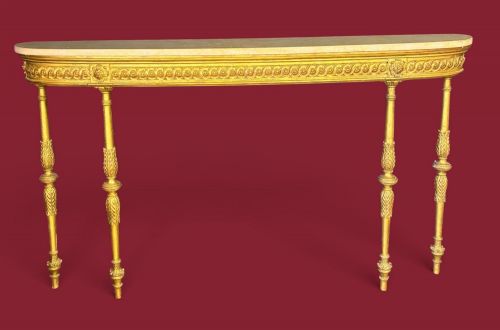
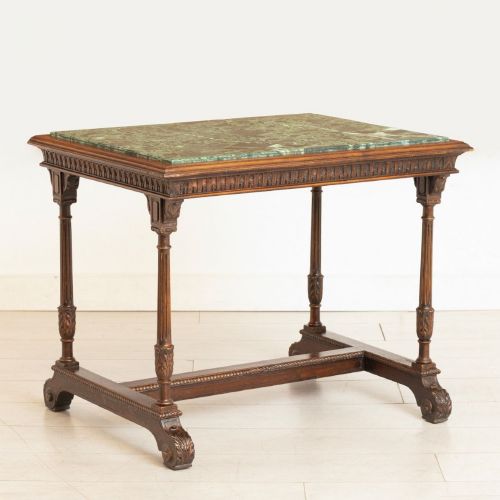
These French style pier tables bring architectural presence to a hall, pairing heavy marble tops with carved frames from the nineteenth and early twentieth centuries.
French Style Pier Tables
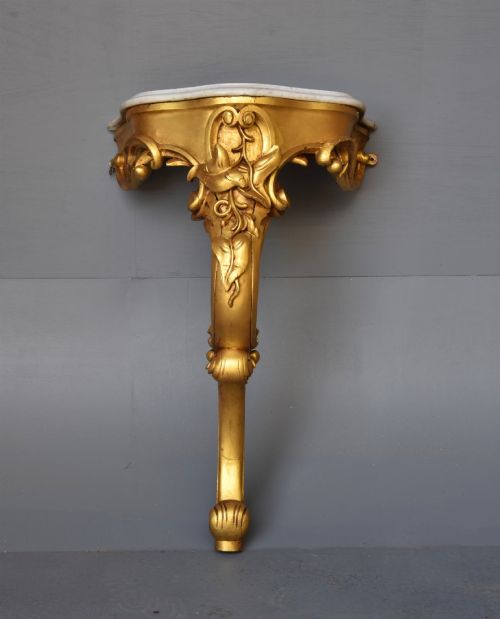
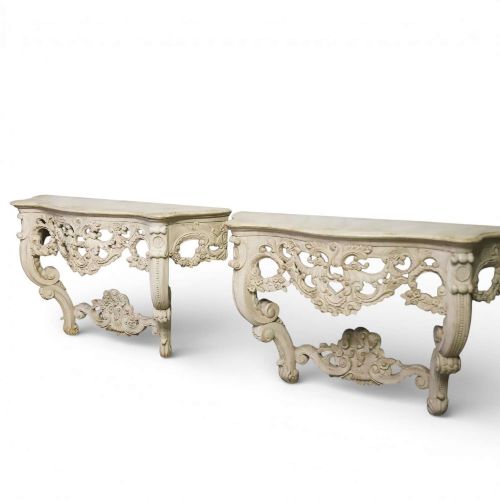
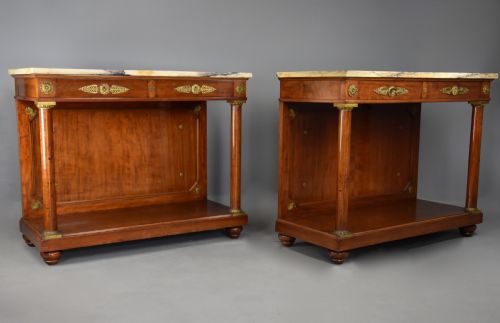
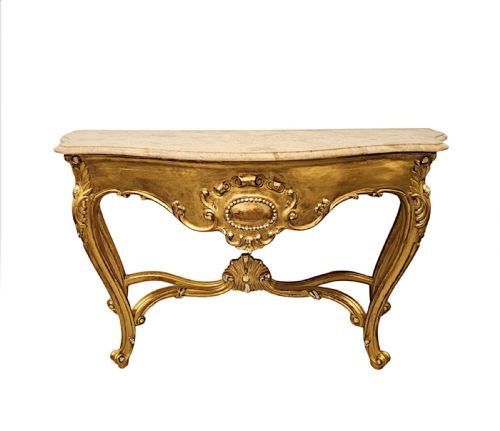
French style pier tables occupy narrow wall spaces, traditionally standing between windows beneath a mirror. These pieces emerge primarily from the nineteenth century and the early twentieth century, spanning styles from Rococo Revival and French Empire to Neoclassical.
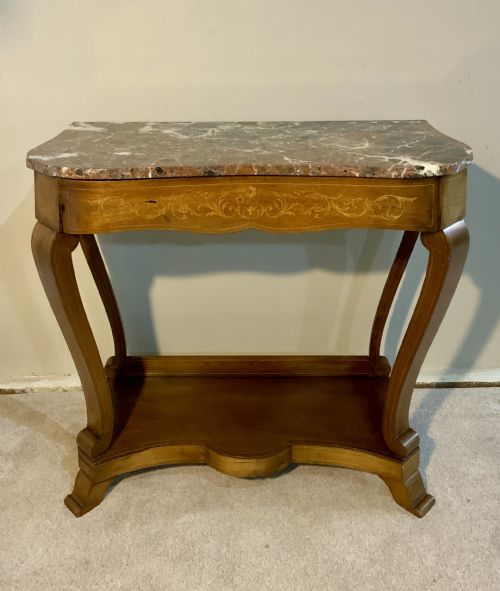
The format is dominated by console tables and console table and mirror sets, alongside occasional side tables and side cabinets. Walnut, mahogany, and oak form the structural foundations, frequently paired with heavy stone surfaces.
Judging the quality of execution
Quality rests upon the crispness of the hand-carved wood or gesso details and the weight and figure of the marble top. Pieces stamped by established workshops demonstrate superior cabinetmaking standards.
Proportion and stability dictate the merit of a console table, particularly given the substantial load of stone slabs upon gilded or polished timber frames.
Current listings span the nineteenth century through the 1930s, featuring walnut, mahogany, oak, and burr birch combined with marble and giltwood.
Krieger Paris
The French Style Pier Tables Glossary
- Console table
- A table designed to be fixed against a wall, often supported by front legs with the rear secured to the masonry. These pieces form the core of the selection.
- Giltwood
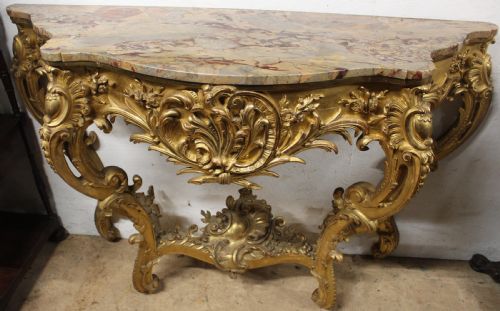
- Timber coated with gold leaf over a prepared gesso ground. This finish defines many Rococo Revival and Neoclassical examples.
- Ormolu
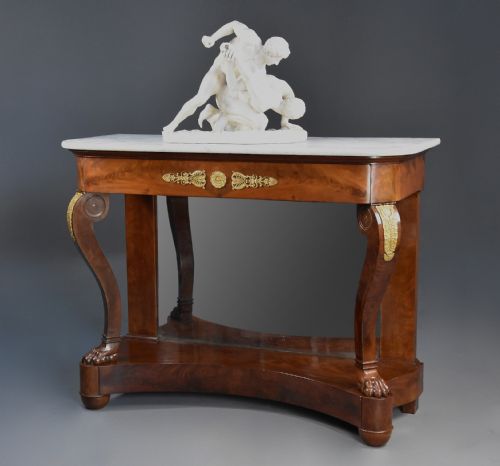
- Gilded bronze mounts applied as decorative ornaments to furniture frameworks. This technique appears on Empire period pieces.
- Serpentine
- A curved line that undulates outward then inward, frequently seen on marble tops and table frames. It creates movement across the front edge.
French Style Pier Tables: Frequently Asked Questions
Where do you put a pier table?
These tables belong against a flat wall space, traditionally positioned between two windows. They suit entrance halls and reception rooms where floor space is limited.
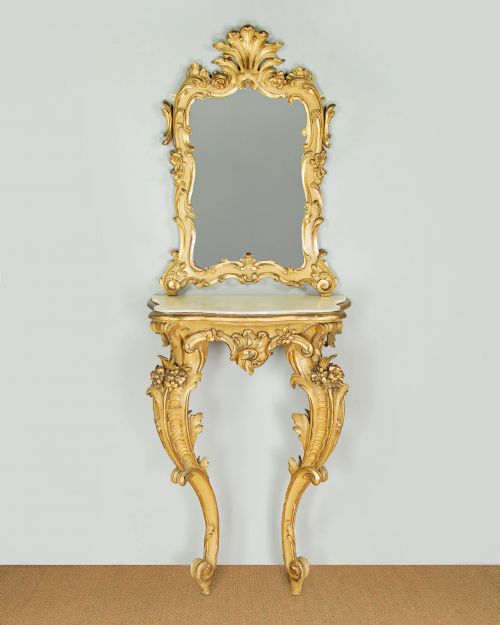
Matching console tables often include a trumeau mirror designed to hang directly above the marble surface, completing the architectural arrangement.
Are the marble tops original?
Many tables retain their heavy Italian or Carrara marble slabs, shaped specifically to follow the serpentine or straight outlines of the wooden frames below.
Because marble is heavy and prone to breakage over centuries, stone replacement is common in the trade while retaining the historic form.
How do I identify French Empire style?
Empire pieces draw upon classical antiquity, utilising dense mahogany timbers and cast ormolu mounts. The lines tend to be architectural and restrained compared to later Rococo Revival curves.
Carved details lean toward military trophies, wreaths, and classical motifs rather than asymmetrical scrollwork and floral cascading.
What is a console table and mirror set?
This grouping pairs a wall-fixed table with a matching mirror designed to mount on the wall immediately above it. The combination maximises light reflection in grand nineteenth century rooms.
Both pieces share identical carved wood frames, gilding styles, and decorative motifs.