
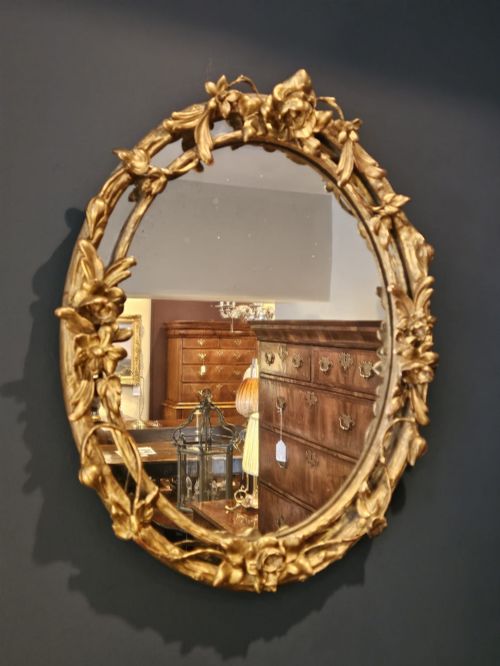
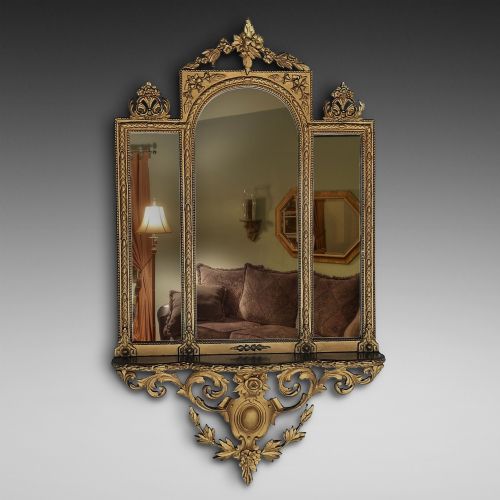
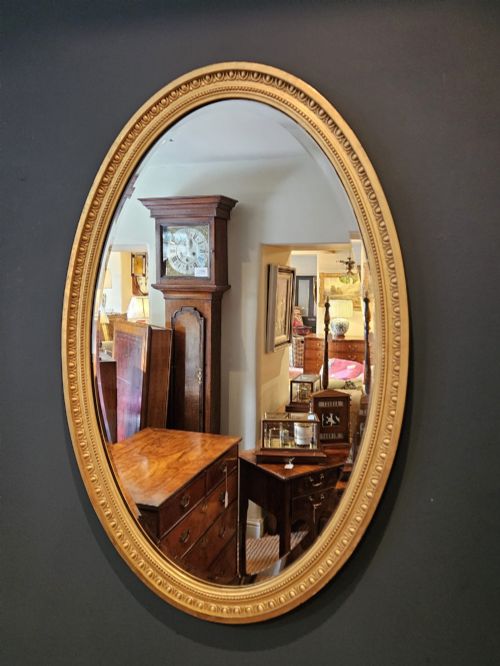
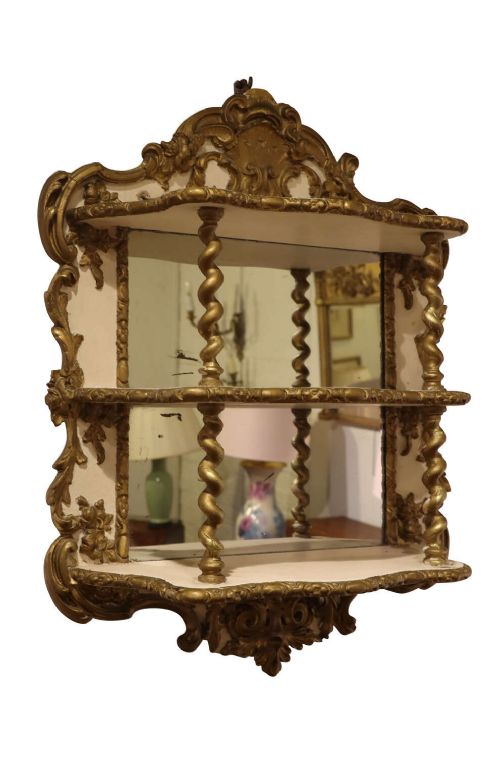
French Gilded Hanging Mirror
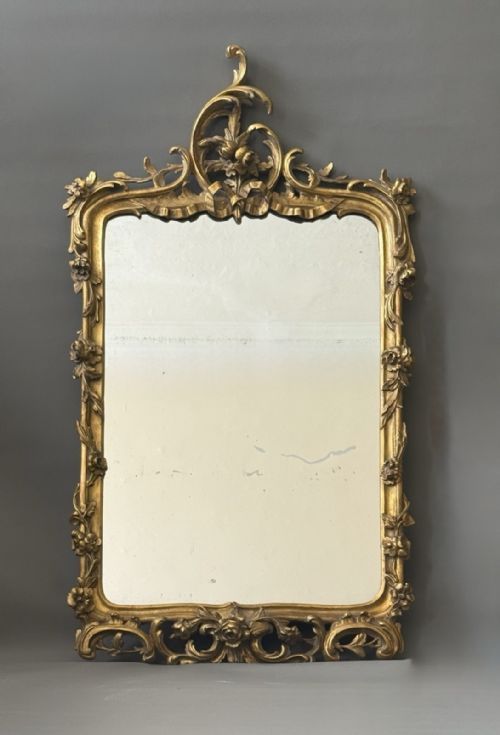
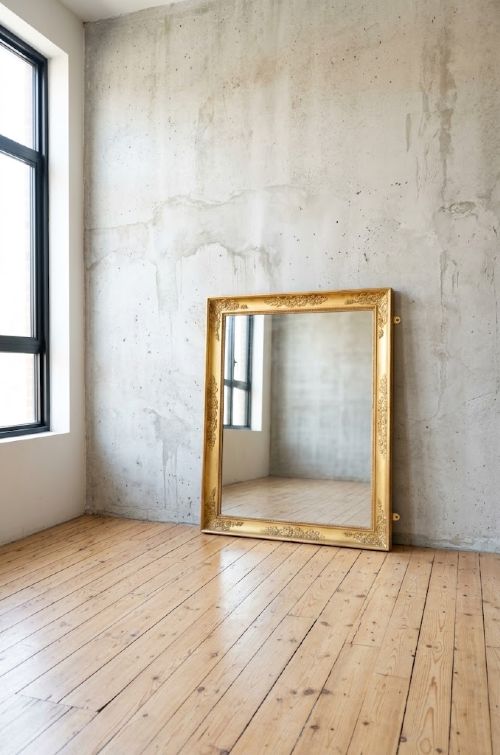
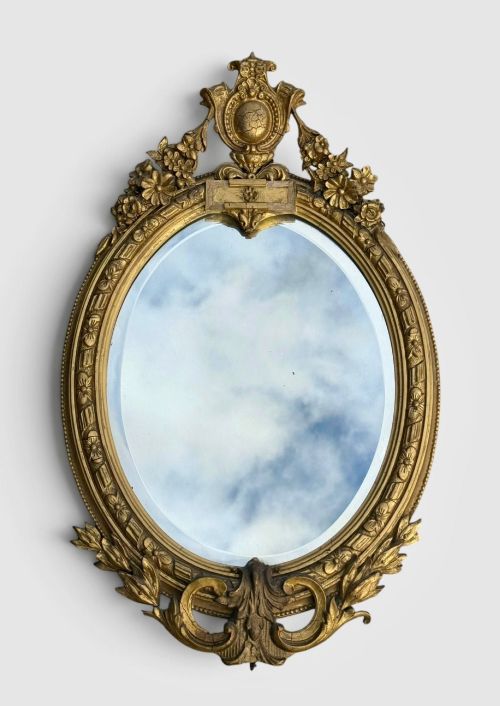
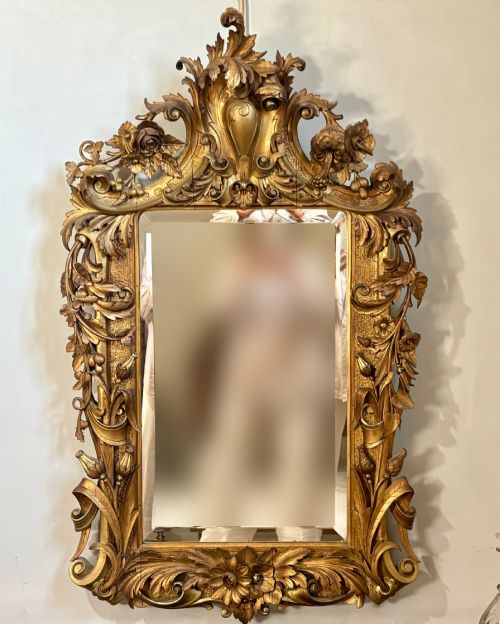
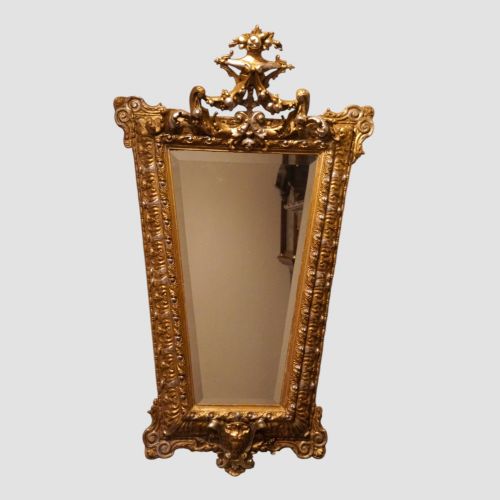
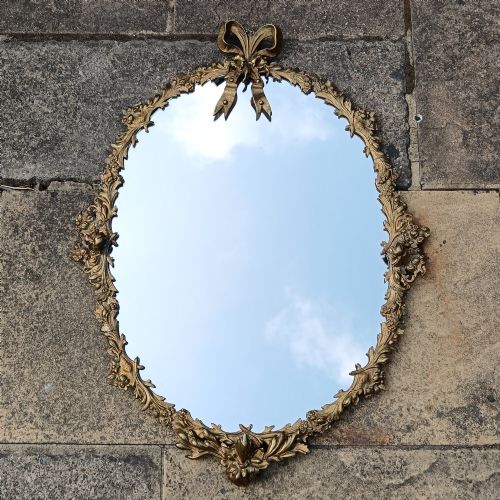
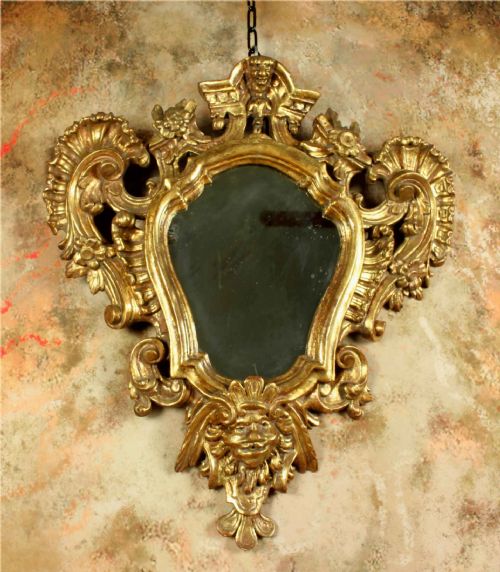
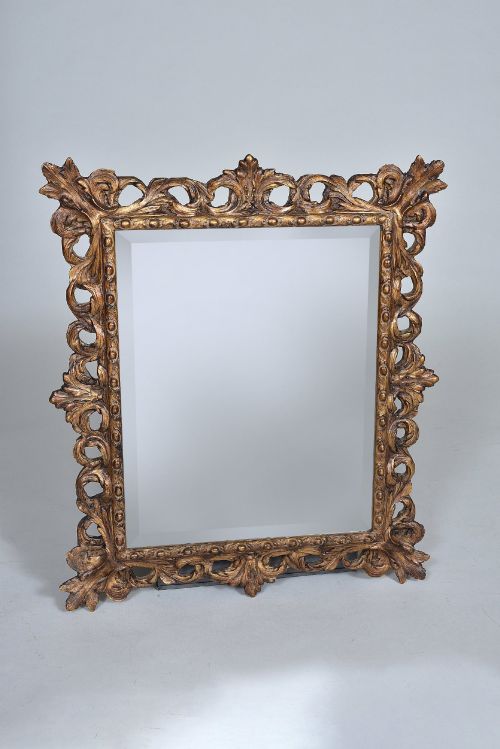
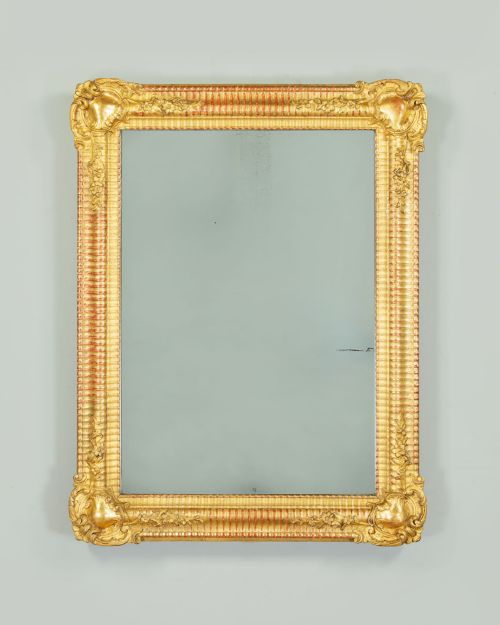
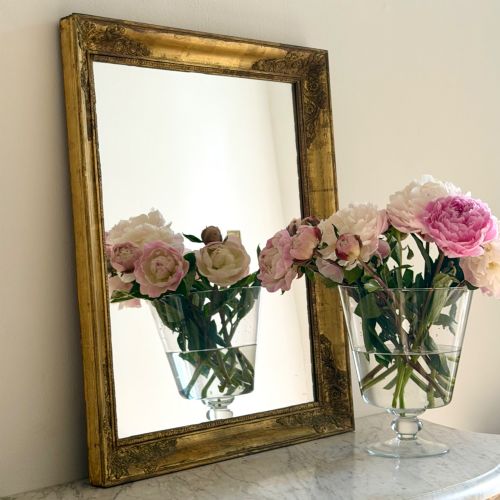
A french gilded hanging mirror brings warmth and reflective depth to a room, drawing the eye with ornate frames shaped in the rococo or neoclassical manner.
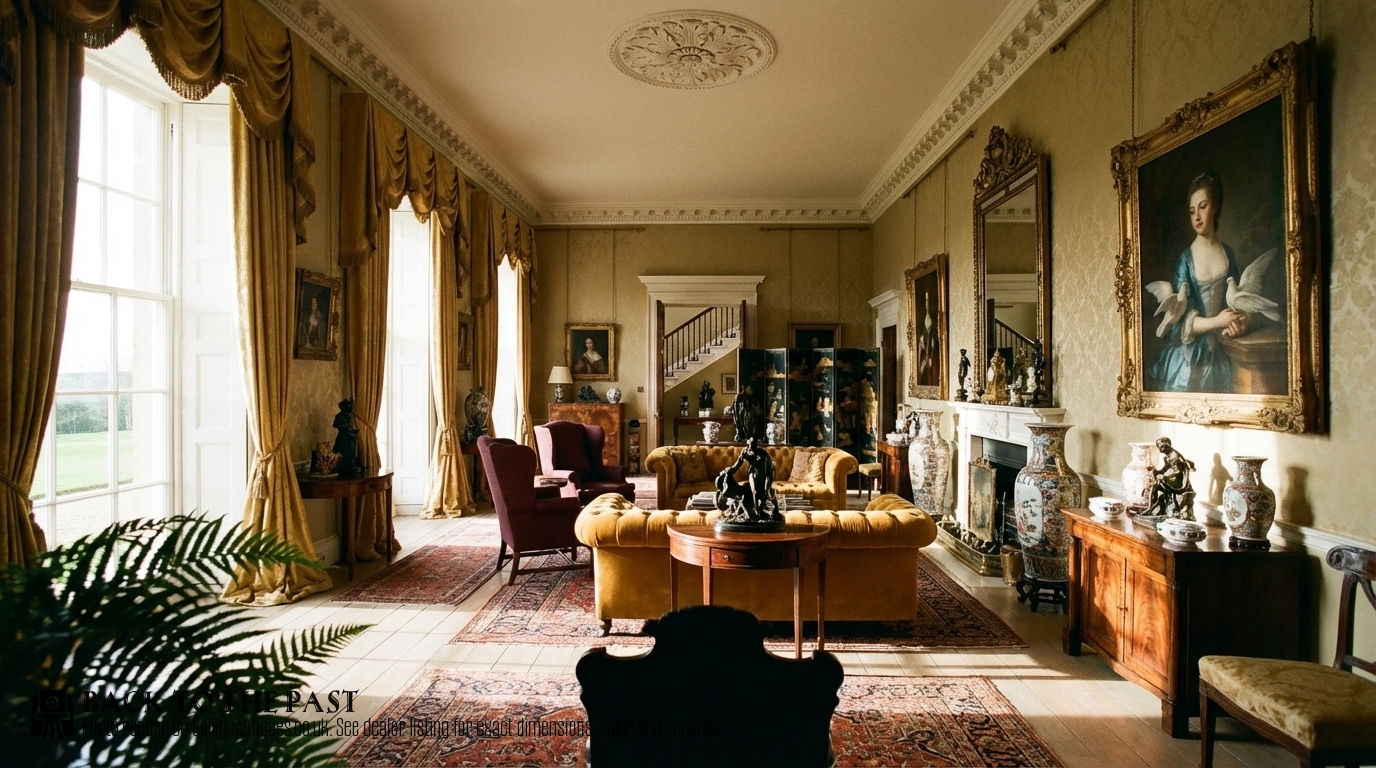
French Gilded Hanging Mirror
A french gilded hanging mirror captures the decorative ambition of past centuries, drawing on designs from the eighteenth century onwards. You encounter wall mirrors most frequently, alongside dressing mirrors, console tables with paired glass, and occasional wall shelves.
The pieces on this page span several distinct periods, including the Victorian era, the nineteenth century, and early twentieth-century revivals. Styles range from French rococo and Louis XVI revival to neoclassical and Victorian interpretations of older continental forms.
Originating largely from French workshops or British makers influenced by continental tastes, these items serve primarily as functional wall pieces. They bring light into darker corners through antique glass plates framed in elaborate wood or plaster.
Materials and Construction
Makers built these frames using timber cores of wood, onto which they applied layers of gesso or plaster to receive intricate relief carvings. Artisans then laid gold leaf or silver-gilt over the prepared surfaces, sometimes combining paint with the gilding for contrast.
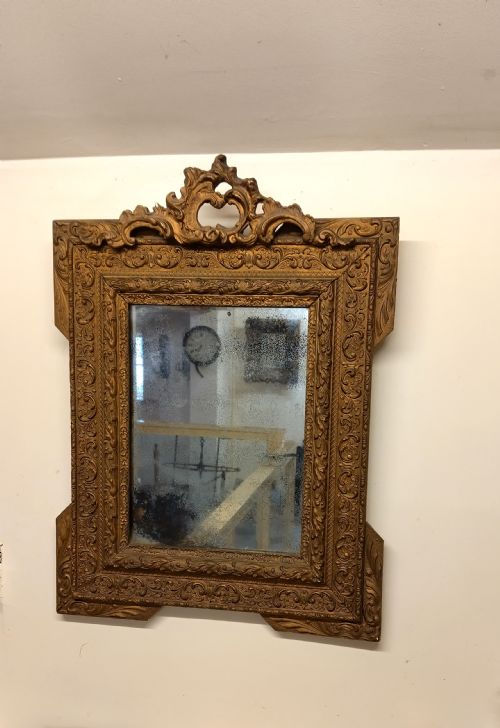
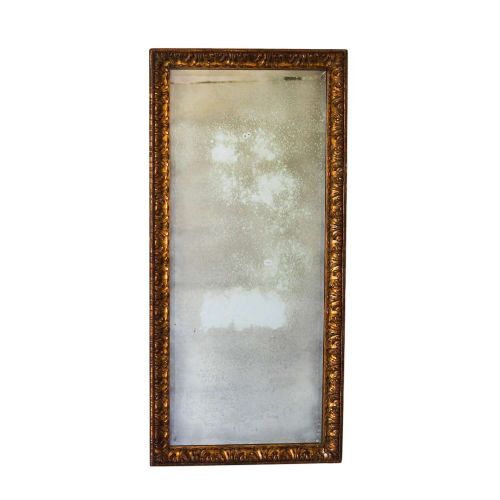
Composition material frequently appears on ornamental mouldings, pressed into matrices to form repetitive floral, scroll, or mask motifs. The resulting frames hold glass plates, some retaining their original antique silvering while others have received replacement mirrors over time.
Listings feature pieces spanning from the 18th century through to 1920, predominantly constructed from glass, giltwood, gesso, and gold leaf.
Craftsmanship and Detail
Quality rests in the crispness of the hand-carved elements within the giltwood and gesso, where deep undercut foliage and distinct facial masks separate finer work from softer moulded pieces. The application of gold leaf shows skill through its burnished finish and how evenly it catches the light across complex curves.
The integrity of the frame construction and the preservation of the original glass plate contribute significantly to the standing of a piece. Finer examples maintain structural stability in their mitred corners despite the weight of heavy timber and plaster ornamentation.
The French Gilded Hanging Mirror Glossary
- Giltwood
- Wood that has been coated with gold leaf or powder. This finish gives the frame a warm, reflective metallic sheen that mellows gently with age.
- Gesso
- A mixture of plaster of Paris and glue binder applied to wooden frames. Artisans carve and mould this substance to create high-relief decorative details before gilding.
- Rococo Revival
- A nineteenth-century design movement mimicking the asymmetrical scrolls, C-curves, and naturalistic shell motifs of the French eighteenth century.
- Composition
- A moulded paste made from whiting, linseed oil, resin, and glue. Makers pressed this mixture into shapes to form quick ornamental details on picture and mirror frames.
- Neoclassical
- A style drawing inspiration from classical antiquity, featuring straight lines, symmetry, urns, and floral swags rather than heavy rococo curves.
French Gilded Hanging Mirror: Frequently Asked Questions
How do I hang a heavy gilded mirror safely?
These frames carry substantial weight due to their dense wooden cores, thick gesso applications, and glass plates. Secure fixings must be mounted directly into wall studs or masonry using appropriate brackets rather than standard picture wire.
Professional wall fixings distribute the load evenly across the structure of the frame. This prevents stress on the upper corners and ensures the mirror hangs securely against the wall.
Are antique mirror plates original?
Many mirrors retain their original antique glass plates, which often display characteristic foxing, minor dark spots, and silvering irregularities. These signs indicate age and authenticity rather than a defect.
Some pieces have received new glass plates over the decades to improve reflection clarity. Inspecting the silver backing and the edge bevel helps determine whether the glass matches the period of the frame.
How should I clean a gilded frame?
Dust the ornate carvings gently with a soft, dry brush to prevent dirt from settling into the crevices of the gesso. Avoid liquid cleaners, polishes, or abrasive cloths, which can strip away delicate gold leaf.
Keep the mirror away from direct sources of moisture and excessive heat to protect the underlying plaster and wood. Gentle maintenance preserves the fragile metallic surface for years to come.
How do I tell an 18th-century mirror from a revival piece?
Eighteenth-century originals generally exhibit hand-carved wooden frames beneath the gilding, showing tool marks and subtle asymmetries in the craftsmanship. The construction methods of the joints and the composition of the gesso also reflect period manufacturing techniques.
Revival pieces from the nineteenth and twentieth centuries often utilise composition mouldings for repetitive ornaments and machine-sawn timbers. Examining the backboards and fixings provides further clues regarding the actual date of manufacture.