
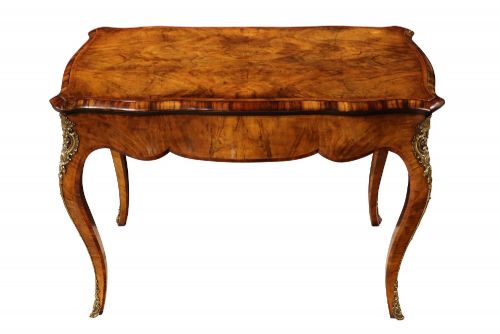
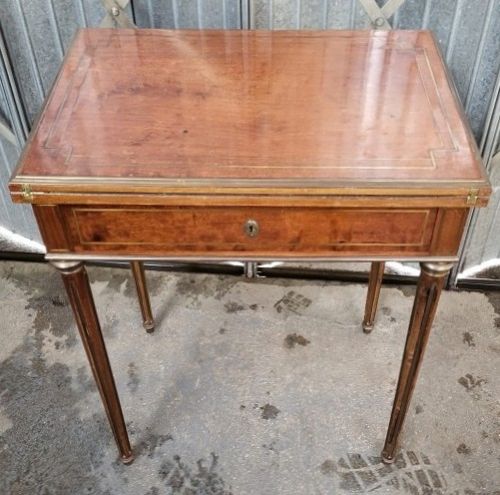


French Folding Card Table
These french folding card table pieces combine clever mechanisms with elaborate marquetry, offering an adaptable surface for parlour games.
French Folding Card Table
A french folding card table serves as both a decorative console and a functional games surface for the home. Most examples encountered here belong to the nineteenth century, spanning various revivals of earlier monarchical styles.
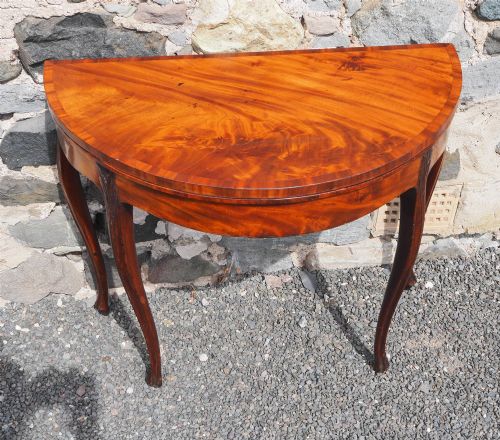
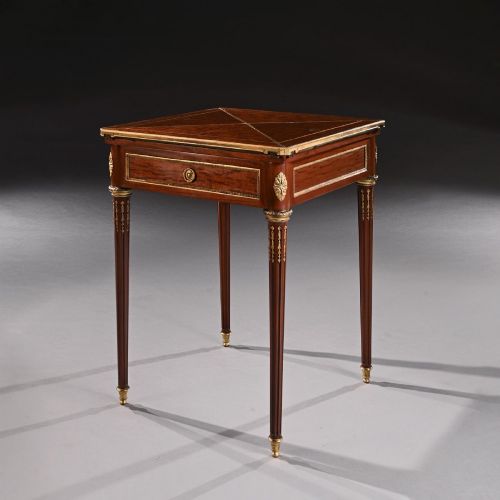
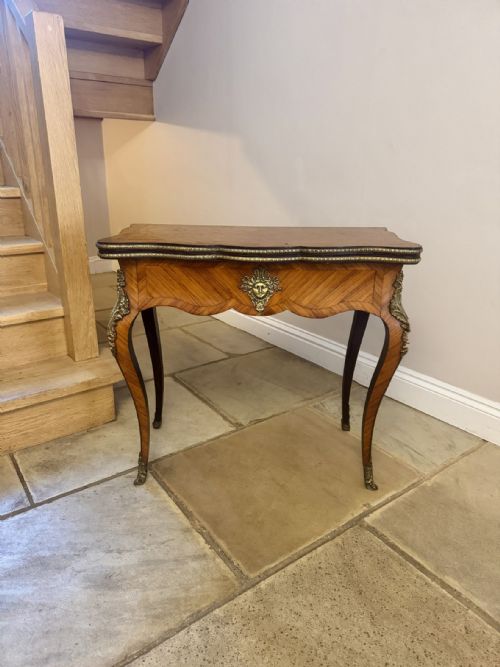
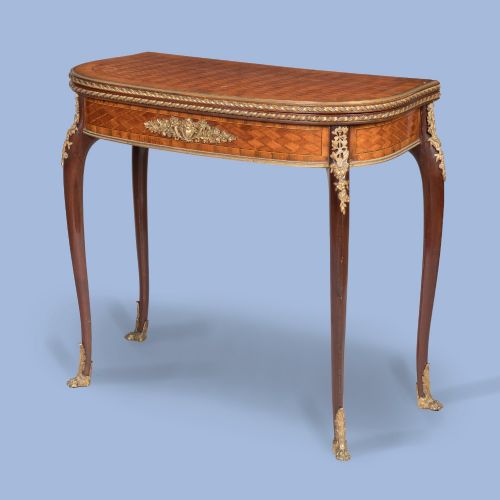
These tables typically open via a fold-over or rotating top to reveal a baize-lined interior designed for cards. Forms range from demi-lune shapes to serpentine and rectangular silhouettes suited for reception rooms.
How they were made
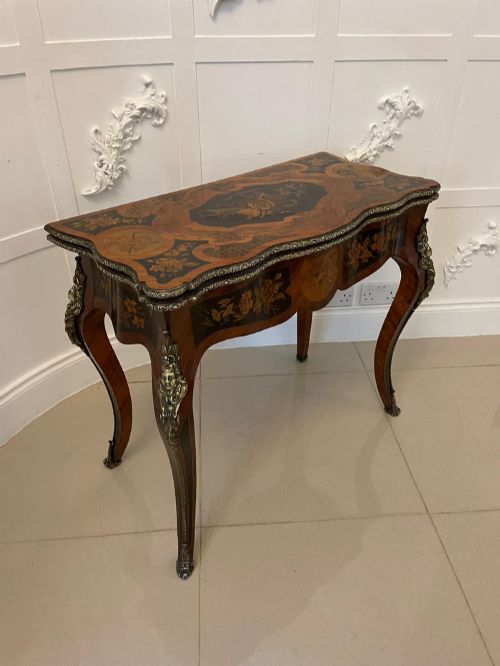
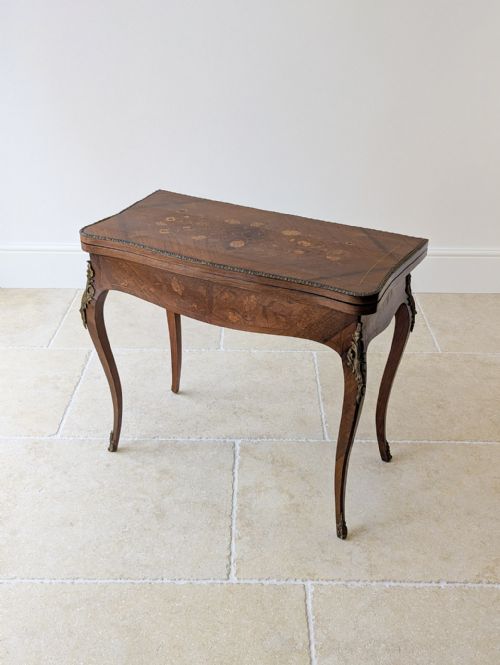
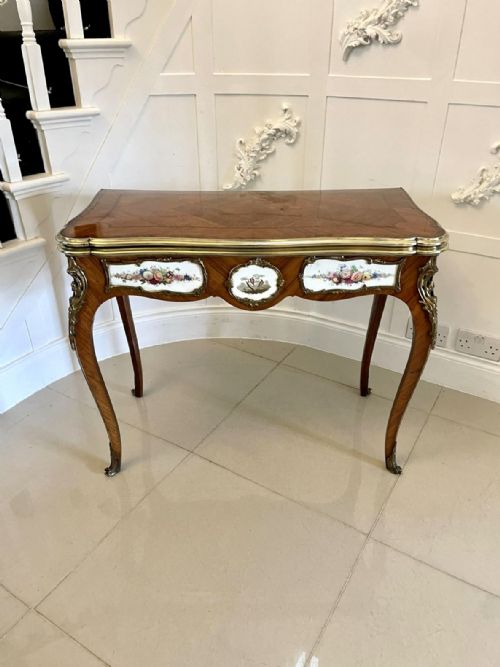
Cabinetmakers constructed these tables using solid foundational timbers like mahogany or walnut, overlaid with decorative veneers such as kingwood, rosewood, and amboyna. Artisans arranged contrasting woods in intricate floral marquetry or geometric parquetry patterns across the surfaces.
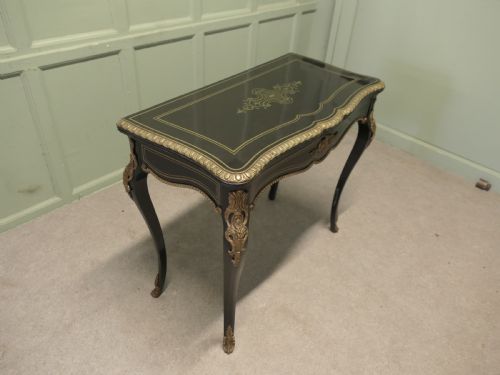
Metal ornamentation played a crucial role in the construction aesthetic, incorporating cast ormolu and gilt bronze mounts along the edges, legs, and apron. Selected pieces also integrated brass inlay, mother-of-pearl detail, or porcelain plaques into the design.
The inventory includes nineteenth-century pieces spanning Louis XV and Louis XVI revival styles, alongside eighteenth-century Hepplewhite examples.
What varies in quality
The sophistication of the timber work dictates much of the distinction between standard pieces and those of higher ambition. Elaborate floral marquetry executed in exotic woods requires considerable skill from the artisan compared to simpler cross banding.
The integration of heavy cast ormolu mounts and the precision of the folding or pivoting mechanism determine the overall execution. Pieces produced by notable cabinetmaking firms display superior joinery and metalwork finish.
Antoine Lampre·G T Morant·François Linke·Maison Mottheau·Edwards & Roberts·Henry Dasson
The French Folding Card Table Glossary
- Ormolu
- Gilded bronze applied as decorative mounts to furniture edges and corners. This technique became prominent in nineteenth-century French cabinetmaking.
- Marquetry
- Inlaid wood veneers forming pictorial or floral designs across a surface. Artisans cut various coloured timbers to fit together precisely.
- Parquetry
- Geometric patterns created by fitting small pieces of wood veneer together. This technique often adorned the tops of games tables.
- Kingwood
- A dense, heavy tropical timber featuring rich brown and violet hues. Makers valued this material for high-status French furniture veneers.
- Demi-lune
- A half-moon shape characteristic of console tables designed to sit flush against a wall. These surfaces doubled as card tables when unfolded.
French Folding Card Table: Frequently Asked Questions
How do French card tables open?
Most models feature a hinged top that folds open to double the surface area, often supported by a swinging rear leg or a pivoting mechanism.
This reveals a baize or felt-lined interior intended for playing cards during Victorian evening gatherings.
Where were these tables used?
They typically stood against a drawing room wall as console or side tables when closed. Owners moved them into the centre of the room when guests gathered for gaming.
Their dual function made them versatile furniture pieces for nineteenth-century entertaining.
How do I identify Louis XV style?
Louis XV revival pieces feature asymmetrical curves, cabriole legs, and elaborate floral marquetry without straight lines. Ormolu mounts accentuate the flowing contours of the aprons and corners.
This aesthetic mimics the ornate tastes of the mid-eighteenth-century French court.
What is parquetry?
Parquetry involves arranging small blocks of contrasting wood veneers into geometric patterns such as cubes or chequers. It differs from marquetry, which portrays organic shapes like flowers.
Cabinetmakers utilised this technique to create striking optical effects on tabletops.