

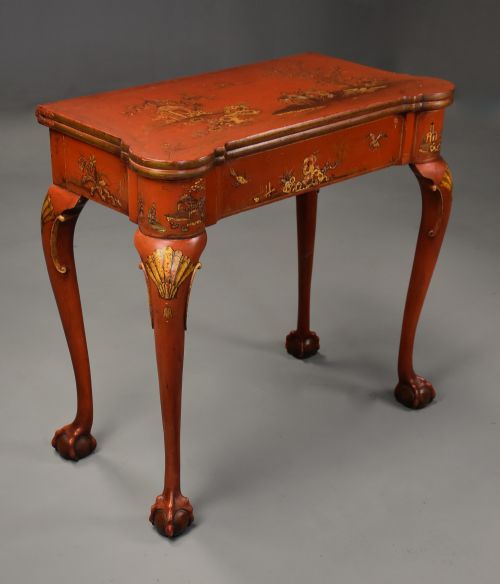


Folding Envelope Table
A folding envelope table unfolds from a compact console into a baize-lined surface for cards or tea, offering clever Victorian and Edwardian ingenuity.
Folding Envelope Table
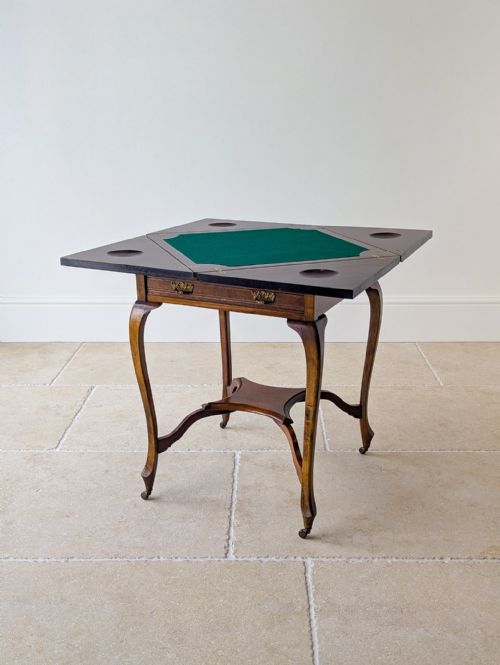
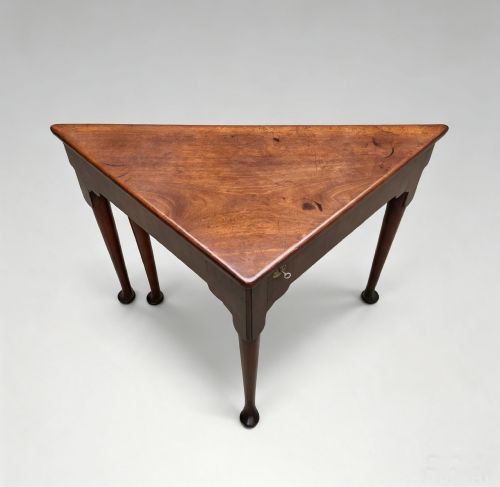
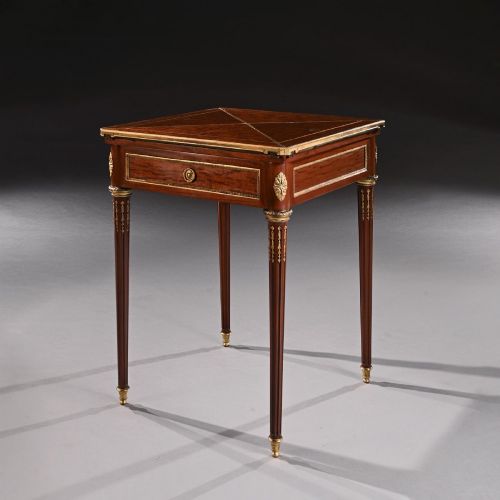
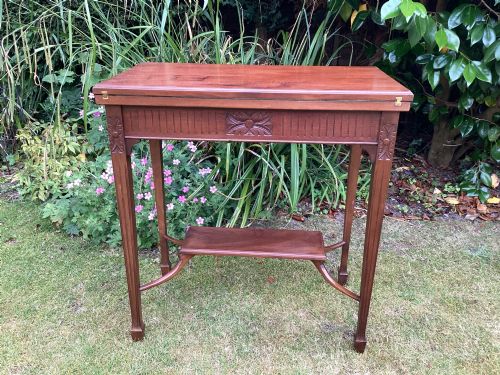
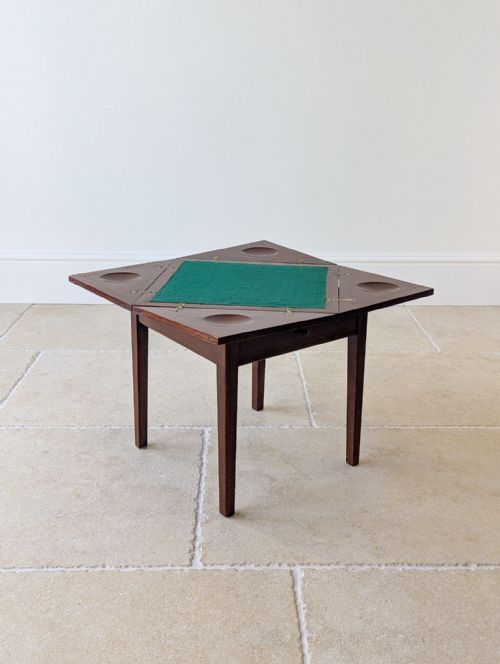
A folding envelope table is primarily designed for cards, games, or tea, transforming from a square top into a generous playing surface through four triangular flaps that fold outwards. When you search for a folding envelope table on this page, you will encounter examples spanning the Victorian and Edwardian periods, alongside earlier 18th century forms and later 20th century interpretations.
While primarily associated with card playing and social evenings, some surviving pieces function as tea tables or occasional side furniture. Their dual nature as decorative console tables and functional games surfaces explains their enduring appeal in period interiors.
Materials and construction
Cabinet makers utilised dense hardwoods such as mahogany, rosewood, and walnut for the structural frames and folding tops. These timbers were often selected for their rich grain, providing a stable foundation for intricate marquetry and fine stringing.
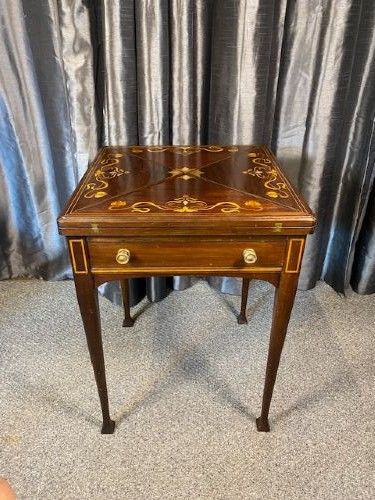
Surfaces were frequently embellished with satinwood, boxwood, and brass inlay, creating delicate geometric or floral motifs across the four pivoting flaps. Inside, the playing area is typically lined with coloured baize or felt to provide a suitable surface for card games.
The clever mechanical action relies on pivoting wooden leaves or rotating swivel tops that reveal hidden wells as the leaves open in sequence. Brass hinges and internal runners ensure the four flaps operate smoothly together when the table is unfolded.
Several tables include secret gaming wells designed to hide stray shillings from losing partners.
Assessing quality and craftsmanship
Quality in a folding envelope table rests heavily on the precision of the mechanical action and the snugness of the four flaps when closed. Superior examples exhibit a seamless fit where the triangular leaves meet at the centre, with no sagging or misalignment in the pivots.
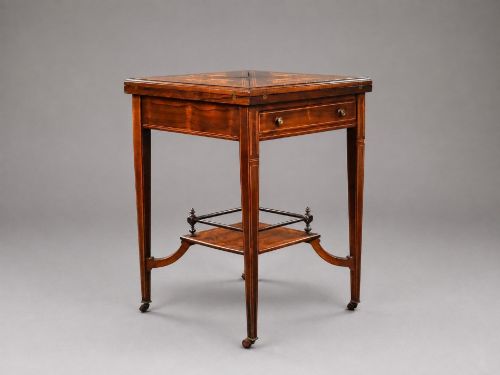
The standard of timber selection and inlay work marks the divide between standard production and exceptional craftsmanship. Finer pieces display crisp, hand-cut satinwood and boxwood marquetry, matched veneers across the top, and robust secondary timbers inside the drawer and framing.
Antoine Lampre·Howard & Sons Ltd·Maple & Co·Francoise Linke
The Folding Envelope Table Glossary
- Baize
- A coarse woollen fabric, traditionally green, used to line the playing surfaces of card and games tables. It provides a soft, non-slip texture that protects both the table timber and the cards.
- Marquetry
- The art of applying decorative veneer pieces to a structural surface to form intricate pictures or patterns. Cabinet makers utilised contrasting woods like satinwood, boxwood, and walnut to create these designs.
- Swivel top
- A table top design where the upper leaf rotates on a pivot to reveal a concealed compartment or to support the unfolding flaps. This mechanism allows the console to double in surface area securely.
- Gaming well
- A recessed compartment built into the table surface or beneath the folding flaps to hold counters, dice, or cards during play. These wells often feature small coin depressions for stakes.
Folding Envelope Table: Frequently Asked Questions
How do the four flaps open?
The mechanism relies on a rotating swivel top or interconnected wooden hinges that cause the opposite triangular flaps to lift and unfold simultaneously.
As one leaf is turned or lifted, the remaining three follow in sequence to form a square playing surface supported by the table frame.
Were these tables used only for cards?
While primarily built as card and games tables featuring baize surfaces and corner coin wells, many versatile examples served other domestic purposes.
Some pieces doubled as tea tables, occasional side tables, or writing desks within the drawing room.
How do I distinguish Edwardian from Victorian examples?
Victorian folding tables often display heavier rosewood or walnut timbers with bolder marquetry and robust turned legs.
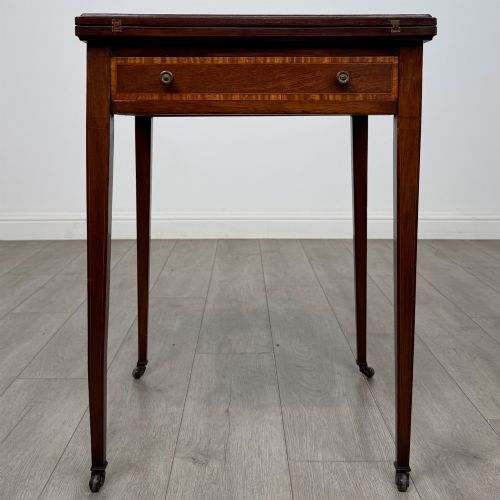
Edwardian pieces tend to be lighter in mahogany or satinwood, featuring refined stringing, slender tapering legs, and delicate Edwardian Chippendale or Sheraton revival motifs.
What is the purpose of the baize lining?
The baize lining provides a durable, tactile playing surface that dampens the sound of dealing cards and rolling dice.
It also protects the polished wooden veneer of the inner leaves from scratches during use.