
French Fauteuil Open Armchairs
French fauteuil open armchairs combine upholstered comfort with exposed wooden frames, offering historic seating designed for formal salons and drawing rooms.
French Fauteuil Open Armchairs
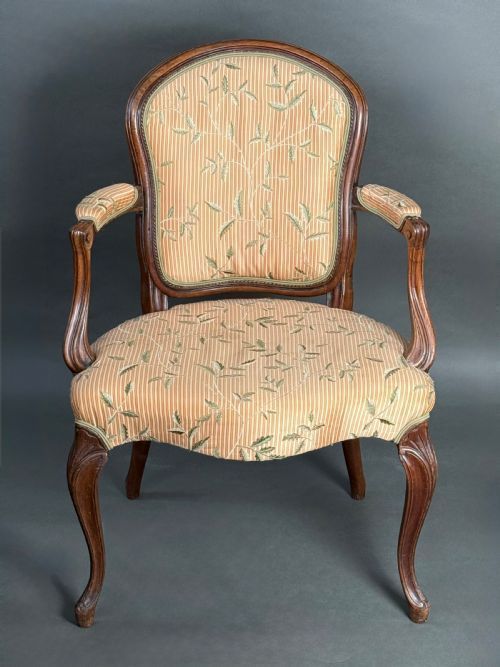
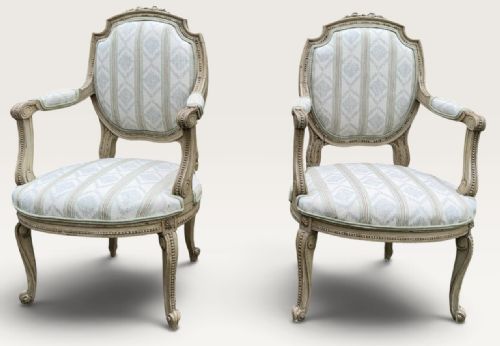
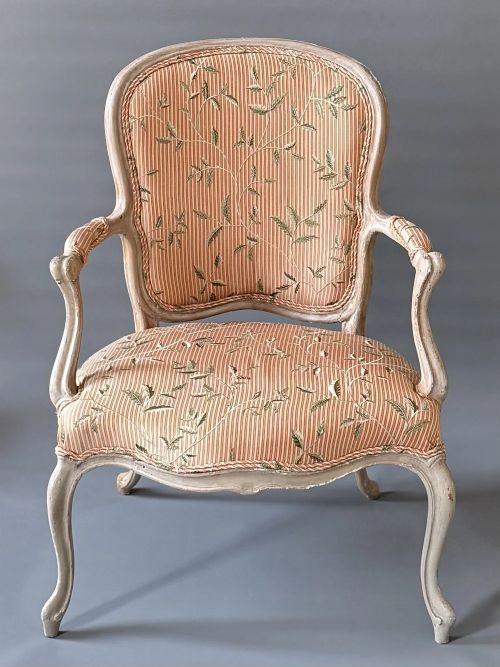
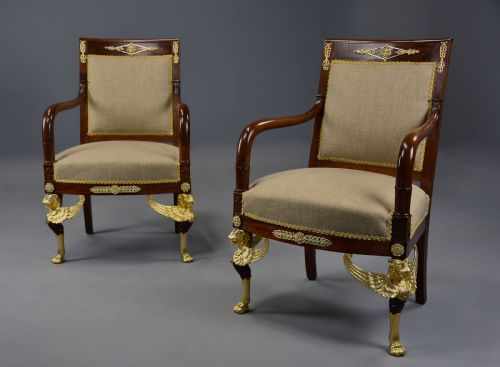
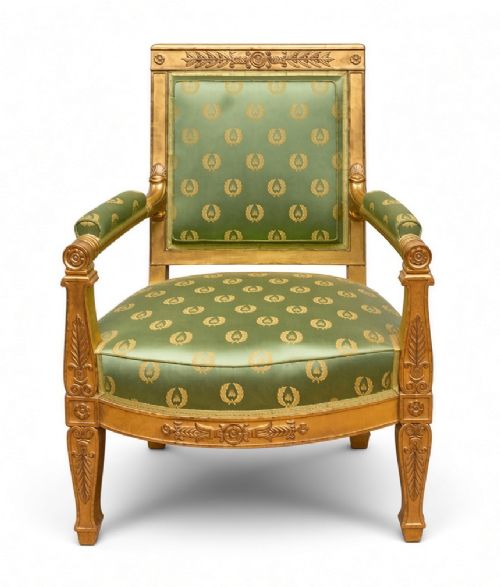
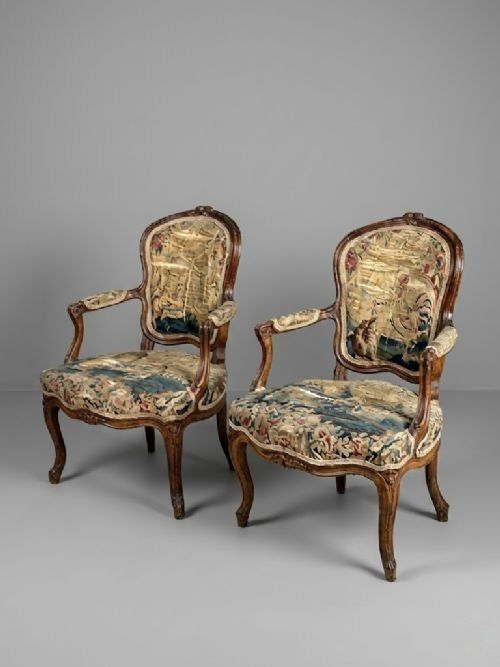
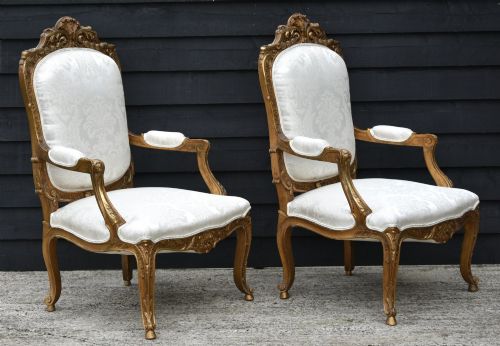
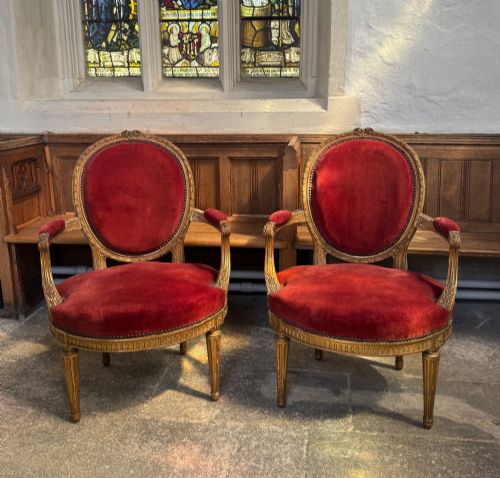
When searching for french fauteuil open armchairs, collectors encounter seating originating primarily from eighteenth- and nineteenth-century workshops, spanning periods from the Louis XV and Louis XVI eras through to later revival styles. These pieces typically feature open wooden arms, padded elbow rests, and fully upholstered seats and backs designed for reception rooms.
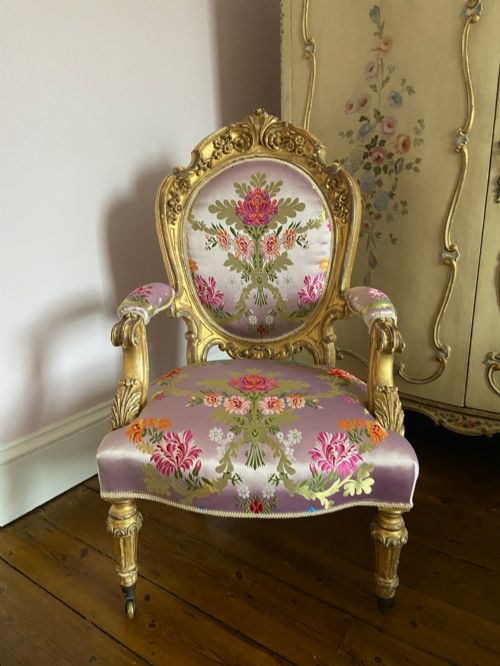
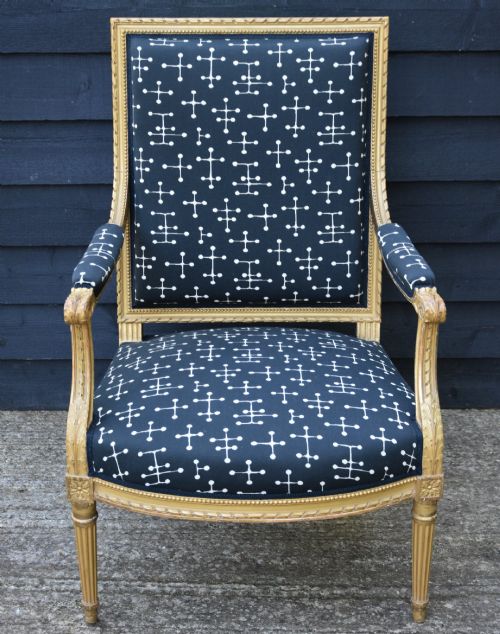
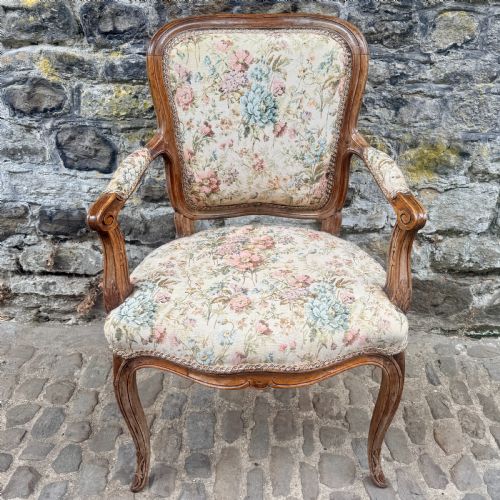
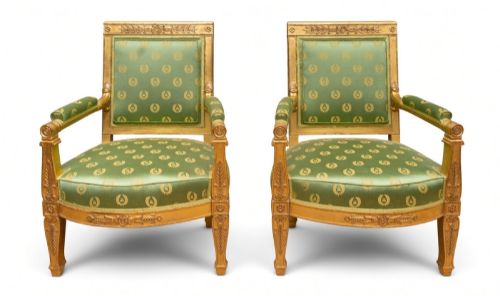
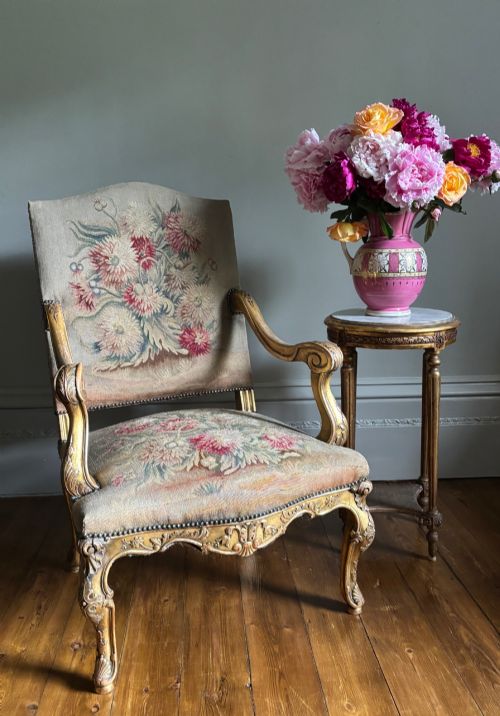
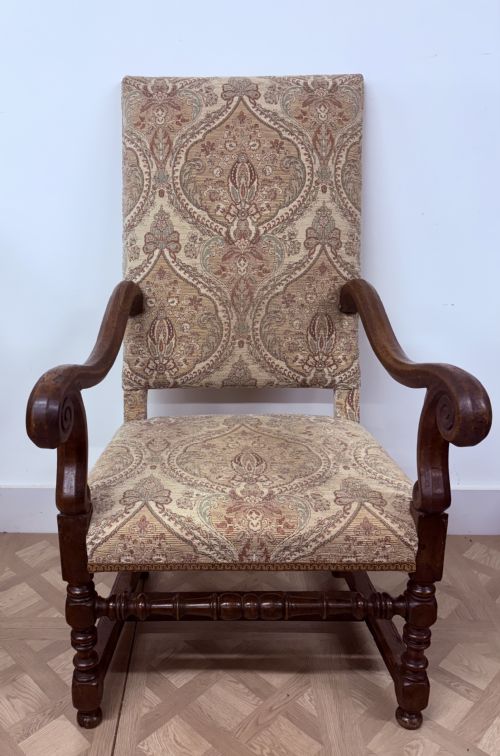
The most common examples on this page date from the nineteenth century, often reflecting earlier stylistic influences such as French Provincial, Rococo Revival, and Empire designs. Walnut and beech frames frequently appear alongside giltwood finishes, reflecting the decorative tastes of their respective periods of production.
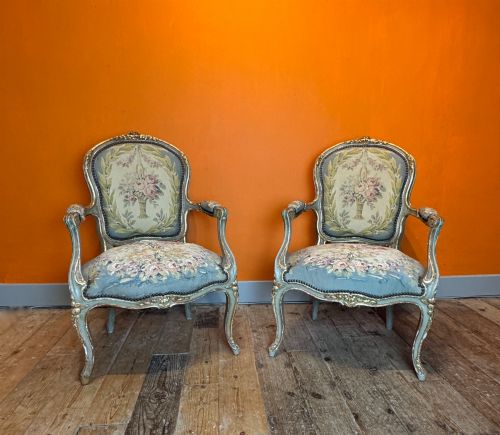
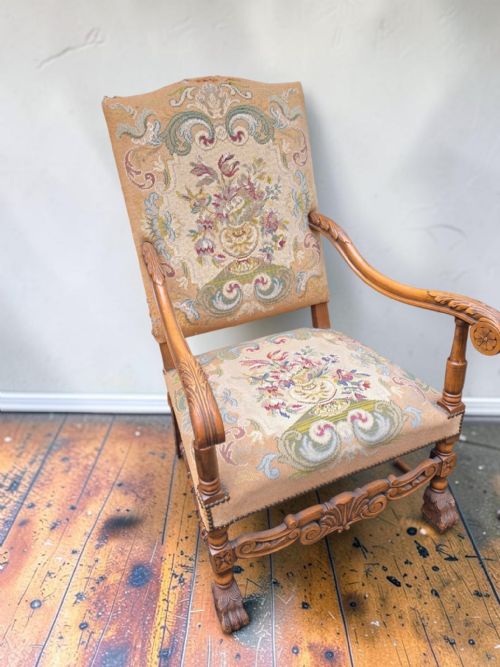
Forms range from intimate salon seating to larger throne-style chairs, occasionally found as pairs or matched sets. Buyers also encounter variations utilising painted finishes, original paint, or parcel gilt highlights alongside traditional textile coverings.
Materials and construction methods
Frames are constructed from hardwoods such as walnut, beech, oak, and mahogany, shaped through carving and joinery techniques suited to supporting open arm structures. Giltwood examples employ layers of gold leaf applied over a prepared gesso and bole ground on a wooden base.
Upholstery relies on traditional stuffing methods contained within textile coverings. Silk, tapestry, leather, and patterned fabrics are secured to the frames using upholstery tacks, often complemented by decorative gimp or braid trim.
Some armchairs retain their original crackle paint, having quietly weathered a century or two of drawing room life.
Distinctions in quality and execution
The crispness and depth of hand-carving on the wooden frame distinguish finer examples from simpler production, particularly in the rendering of floral motifs, scrolls, and acanthus leaves. Timber selection also plays a role, with choice cuts of figured walnut or solid mahogany indicating higher workshop standards.
The integrity of the structural joinery at the arm supports and leg joints dictates the durability of the piece. Additionally, the retention of original gilding, early painted surfaces, or period textile coverings enhances historical authenticity.
Jacob-Desmalter·Thomas Chippendale·Blaise Maucuy
The French Fauteuil Open Armchairs Glossary
- Fauteuil
- An open-arm armchair originating in France, typically featuring an exposed wooden frame and upholstered back and seat. These chairs were developed for domestic comfort during the seventeenth and eighteenth centuries.
- Giltwood
- Wood that has been coated with a thin layer of gold leaf. This finish was widely applied to formal seating frames during the eighteenth and nineteenth centuries.
- Tapestry
- A form of heavy hand-woven textile featuring pictorial designs. Such fabrics frequently serve as durable upholstery coverings for period seats.
- Parcel gilt
- A decorative treatment where specific portions of a wooden or painted surface are highlighted with gold leaf. This technique accentuates carved details on frames.
- Regence
- A transitional stylistic period preceding the full Rococo style. It is characterised by curving lines and early symmetrical ornamentation.
French Fauteuil Open Armchairs: Frequently Asked Questions
What is a fauteuil?
A fauteuil is a traditional French upholstered armchair featuring open sides and exposed wooden armrests. These chairs were designed for formal interior reception spaces.
The open arm construction allowed space for voluminous eighteenth-century garments while providing comfortable support for the arms.
How do I identify a Louis XV style chair?
Louis XV style pieces are defined by asymmetrical curves, cabriole legs, and naturalistic floral carvings. The overall silhouette avoids straight lines in favour of flowing contours.
This aesthetic emerged during the eighteenth century and saw frequent revivals throughout the nineteenth century.
Are these chairs comfortable for daily use?
Most pieces provide upright seating supported by padded backs and upholstered seat cushions. They were originally built for conversational use in drawing rooms rather than lounging.
Modern comfort depends on the internal webbing and padding condition within the historical frame.
What woods were used for the frames?
Frameworks are constructed from hardwoods including walnut, beech, oak, and mahogany. Beech and walnut appear frequently in French production.
Certain frames are surfaced with gesso and giltwood or finished with decorative paint schemes.