
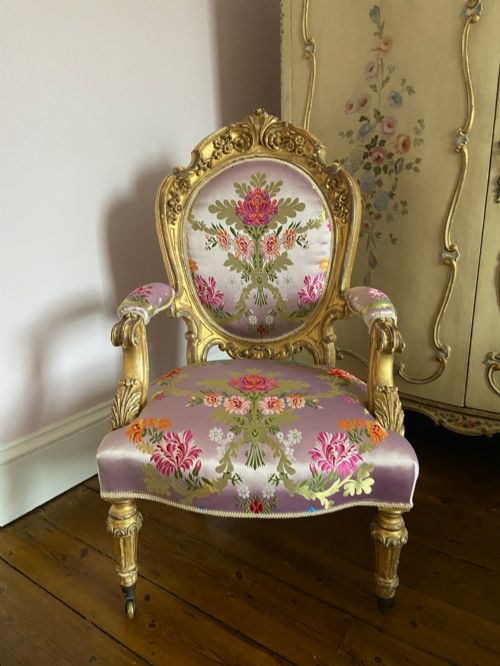
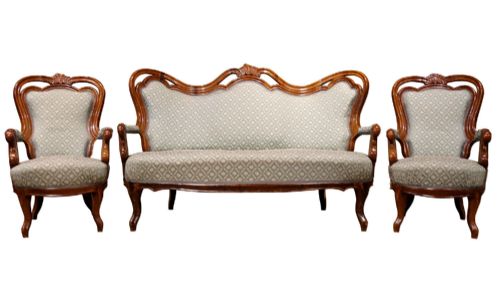
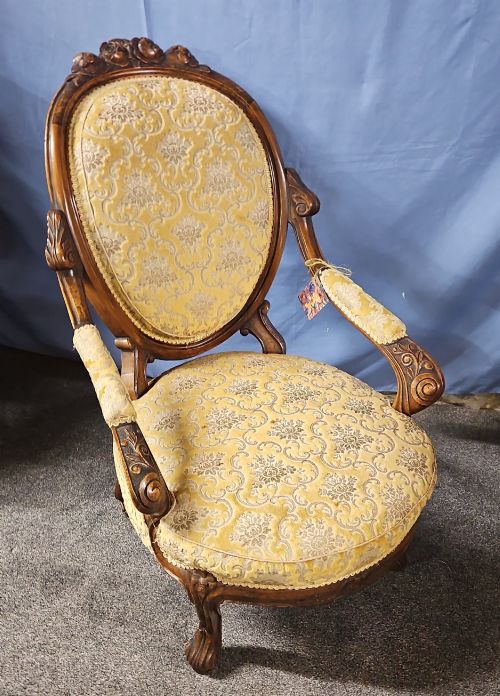
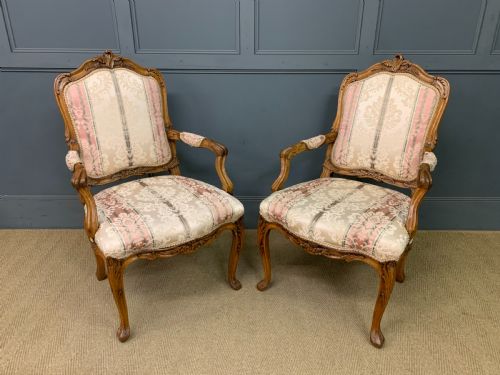
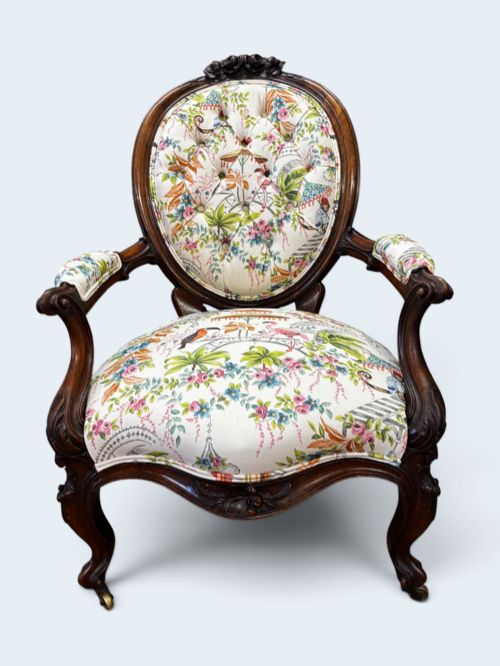
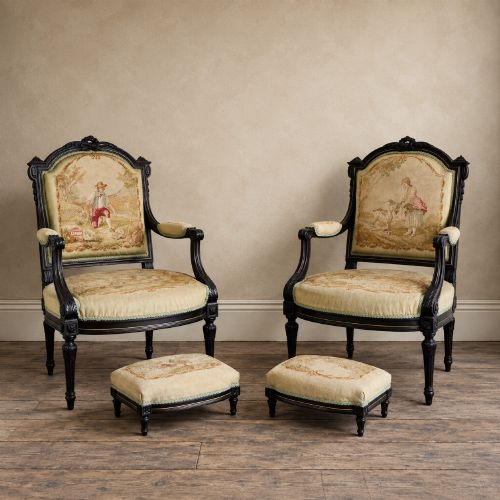
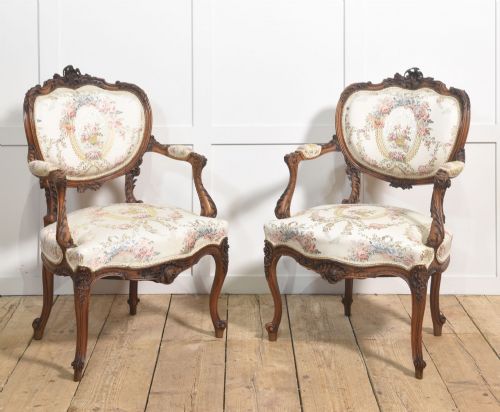
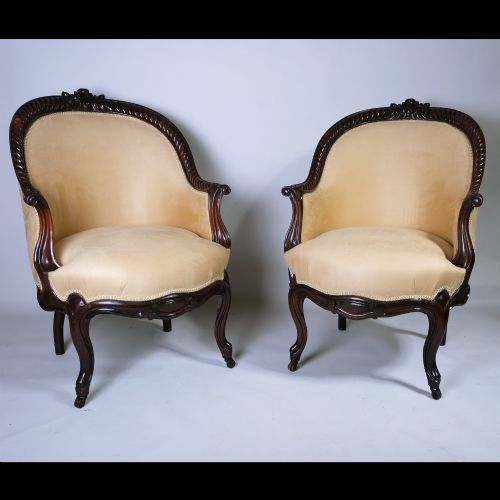


Carved Frame Salon Chairs
Carved frame salon chairs are decorative seating options designed for reception rooms, offering period elegance and carved wooden support.
Carved Frame Salon Chairs
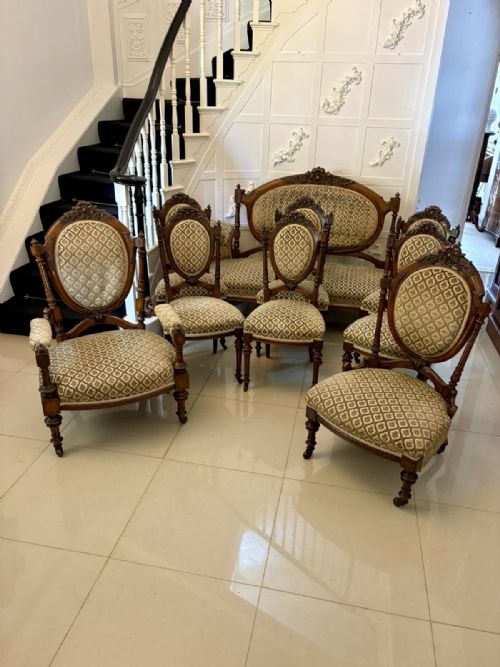
Carved frame salon chairs are seating pieces intended for formal entertaining spaces, drawing rooms, and sitting rooms. When exploring carved frame salon chairs, buyers encounter various forms including open armchairs, side chairs, and full salon suites.
The selections span from the nineteenth century into the early twentieth century, showing influences from Victorian and continental design traditions. Pieces range from single armchairs to matched pairs and larger suites.
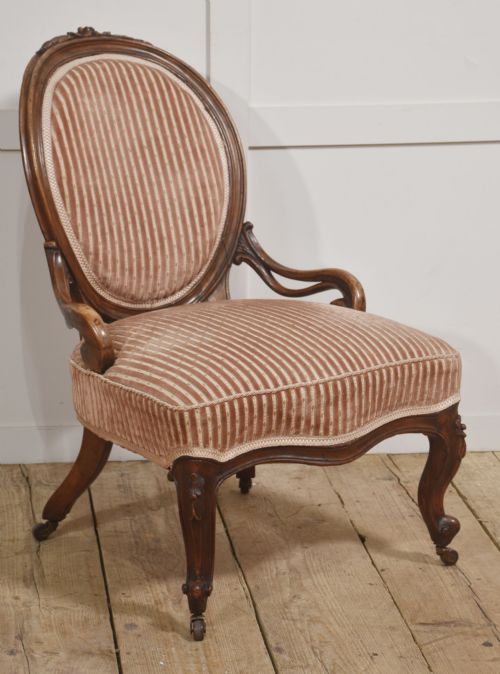
Common regional styles include French Rococo Revival, Louis XV, and Louis XVI revivals alongside English Victorian interpretations. These seating options bring decorative woodwork and upholstered comfort together in a compact footprint.
Materials and construction methods
The frames are constructed predominantly from hardwoods such as walnut, mahogany, rosewood, and oak, chosen for their strength under intricate hand-carving. Giltwood, painted finishes, and ebonised beech also appear across continental and revival pieces.
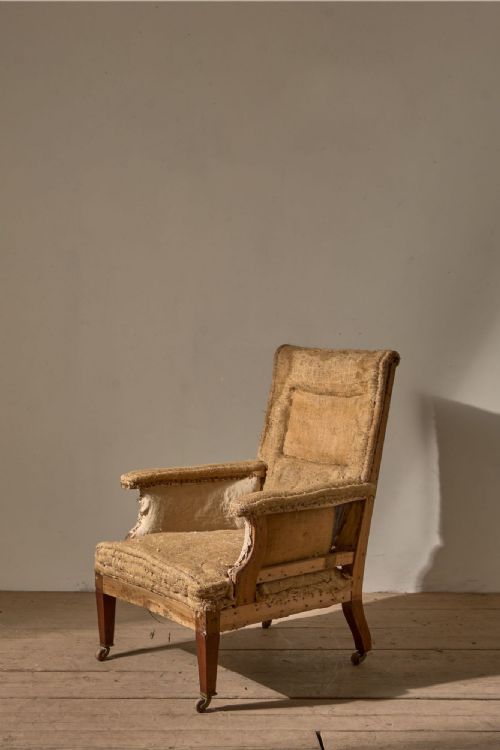
Upholstery materials include silk, velvet, tapestry, and standard upholstery fabric, secured over padded backs and sprung or stuffed seats. Brass details and exposed wooden framing highlight the structural craftsmanship of the period.
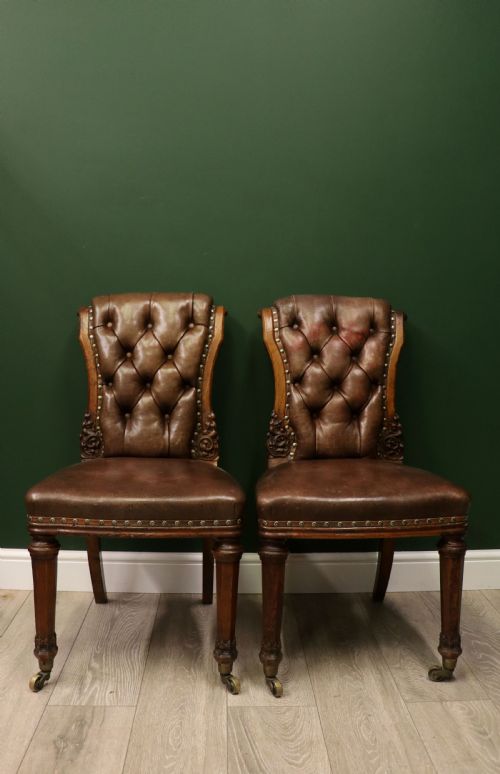
Some nineteenth-century makers included removable backs on dining chairs so owners could transform them into informal salon seating.
Factors of distinction
Quality rests in the crispness and depth of the hand-carving on the wooden frames, where sharper botanical or scroll motifs indicate skilled artisanal work. The choice of primary timber, such as figured walnut or dense mahogany, dictates the baseline substance of the chair.
Proportion and structural harmony separate standard production from exhibition pieces. The integration of the upholstery with the carved wooden outline shows the level of care invested in the original commission.
The Carved Frame Salon Chairs Glossary
- Fauteuil
- An open-armed upholstered armchair with exposed wooden framing, originating in France. These chairs typically feature padded armrests and carved rails.
- Giltwood
- Timber treated with gold leaf or metallic gilt paint to create a lustrous decorative surface. This finish is frequently found on French revival salon furniture.
- Open armchair
- A chair design featuring open sides without upholstered panels beneath the armrests. This allows the carved wooden supports to remain visible.
- Salon suite
- A matched set of seating furniture, often comprising a settee and multiple armchairs or side chairs intended for a drawing room. These suites maintain uniform carving and upholstery themes.
- Rococo Revival
- A nineteenth-century design movement resurrecting the asymmetrical curves, scrolls, and floral motifs of the eighteenth-century French style. It dominates many Victorian and continental carved frames.
Carved Frame Salon Chairs: Frequently Asked Questions
Where should I place a salon chair?
Salon chairs work well in drawing rooms, bedrooms, or hallways as accent seating. Their decorative carved frames allow them to sit away from walls where the back remains visible.
They offer comfortable occasional seating without dominating smaller spaces. Pair them with a matching side table to create a functional conversational corner.
How do I identify the period of a carved frame chair?
Examine the timber species, the style of the carving, and the overall silhouette. Victorian pieces often use walnut or mahogany with deep relief carving, while continental revival pieces show French stylistic influences.
Construction marks, screw types, and upholstery webbing methods also help narrow down the decade of manufacture between the mid-nineteenth and early twentieth centuries.
Are these chairs suitable for daily seating?
Most antique salon chairs are built for formal use rather than heavy daily lounging. Their lighter frames and upright postures suit reading or conversation.
Consider the interior padding and frame stability if you plan to use them frequently. Many retain their original structural integrity but benefit from careful placement.
Can I mix different wood tones in a room?
Mixing woods like walnut, rosewood, and mahogany is historically appropriate for period interiors. The unifying element is often the quality of the carving and the scale of the furniture.
Matching the upholstery fabric or colour palette helps tie disparate wood tones together within the same living space.