



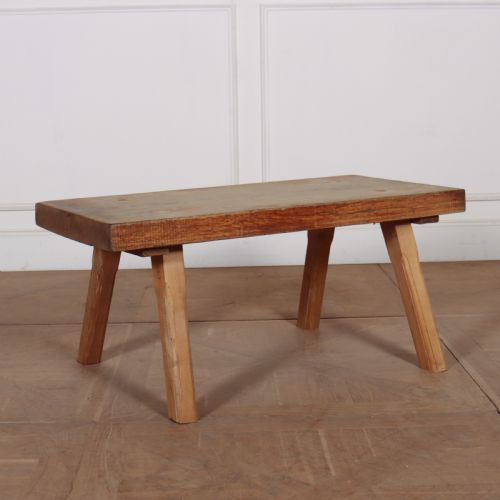
French Farmhouse Coffee Table
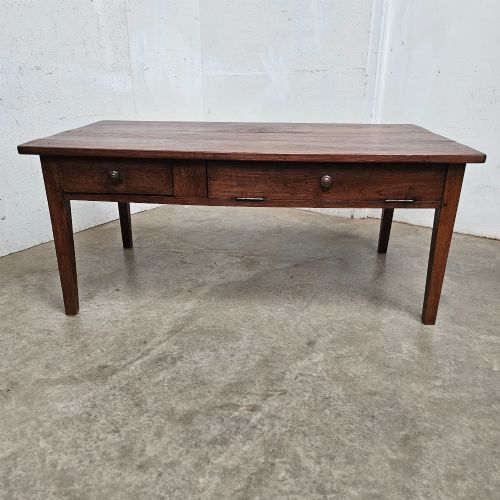
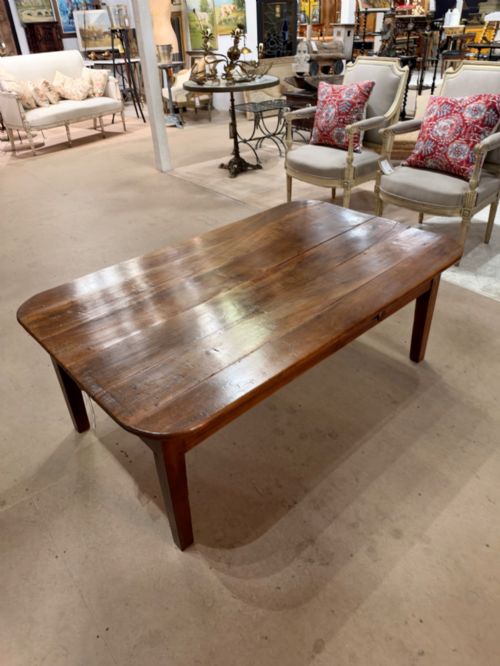
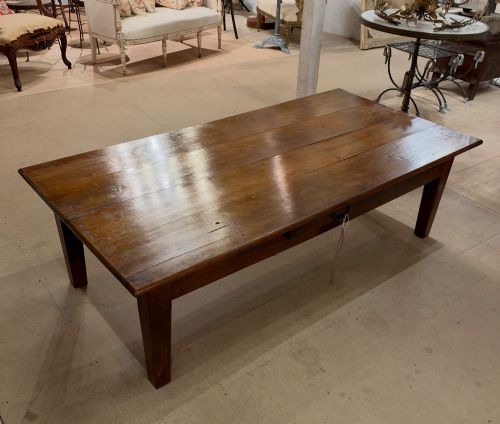
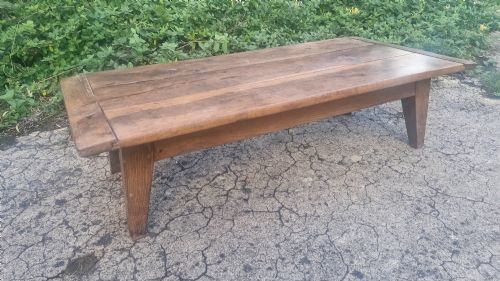
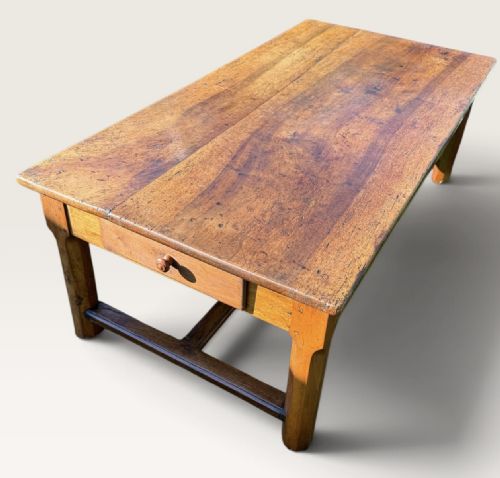
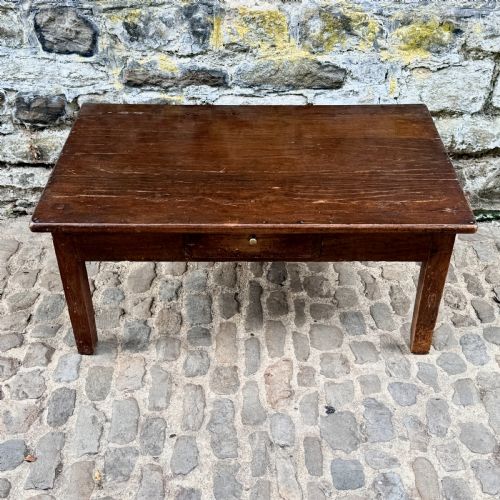
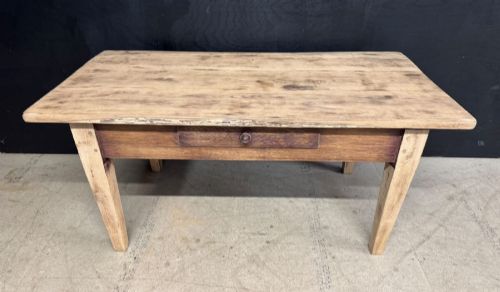
These french farmhouse coffee table examples bring warmth and rustic utility to a room through solid timber construction.
French Farmhouse Coffee Table
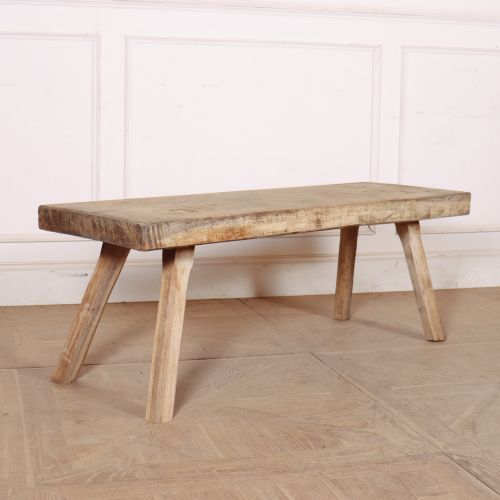
A french farmhouse coffee table originates from provincial domestic spaces where everyday utility shaped the form. The selections here typically present as low tables adapted from earlier dining tables, trestles, dough bins, or pig benches.
Most examples date across the eighteenth and nineteenth centuries, with walnut, oak, cherrywood, and fruitwood appearing frequently. Buyers encounter both low coffee tables and larger adapted formats displaying robust provincial character.
What varies in quality
The distinction lies in the integrity of the timber and the honesty of the proportion. Untouched surface patination and original scrubbed finishes carry greater distinction than heavy modern restoration.
Proportion and scale dictate the visual balance of each piece. Tables retaining original drawers, authentic brass fittings, and untouched hardware sit at the upper end of provincial craftsmanship.
French Farmhouse Coffee Table Retail Price Guide 2026
Typical asking prices for french farmhouse coffee table among the pieces listed under this phrase on Sellingantiques today, from the lower quarter to the upper quarter. They describe what is for sale here now, not the wider market.
Some coffee tables began life as low pig benches before finding a second career holding cups of tea.
The French Farmhouse Coffee Table Glossary
- Fruitwood
- Timber sourced from fruit-bearing trees such as cherry or pear, prized for a warm grain. It ages with a distinct honey tone.
- Trestle table
- A table structure composed of two or more support frames connected by a horizontal beam. This format allows maximum legroom.
- Dough bin
- A deep wooden box with a lid historically used for rising bread dough. Many survive as low coffee tables with hinged tops.
- Scrubbed finish
- A surface repeatedly washed with water and sand to clean the timber. This treatment leaves a pale, matte texture.
- Patina
- The surface sheen and colour acquired by wood through age and use. It develops naturally over generations of handling.
French Farmhouse Coffee Table: Frequently Asked Questions
Are these tables converted from larger items?
Many low tables originate from nineteenth century or earlier dining boards, trestles, or work tables reduced in height for modern seating.
This adaptation preserves the heavy timber and honest joinery of the original domestic furniture while suiting contemporary living spaces.
How do I care for a scrubbed wood surface?
Scrubbed oak, sycamore, and elm benefit from dry dusting and prompt attention to spills to protect the porous grain.
Avoid heavy liquid polishes that darken the pale, matte patination achieved through decades of washing.
What woods were commonly used?
Provincial makers utilised whatever hardwood grew locally in the region, predominantly oak, walnut, cherrywood, and elm.
Secondary timbers like chestnut and fruitwood appear frequently in frames and drawer construction.
How do I identify eighteenth century pieces?
Earlier pieces display hand-cut joinery, pegged tenons, and distinct tool marks left by regional carpenters.
The depth of the timber patination and the wear around the edges also indicate greater age.