
French Empire Urns
French empire urns bring neoclassical gravity to an interior through classical forms and contrasting patinated metals.
French Empire Urns
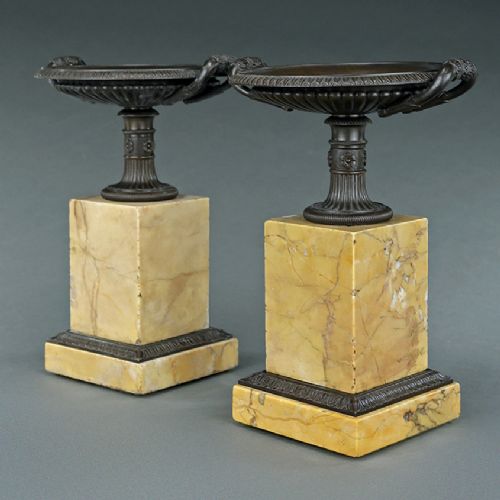
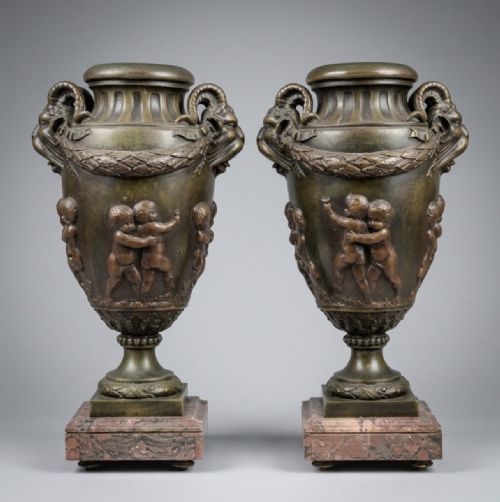
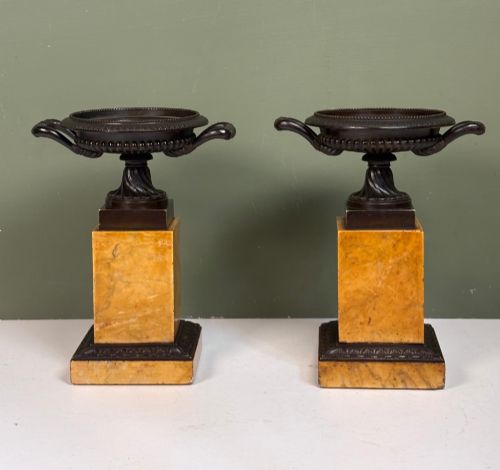
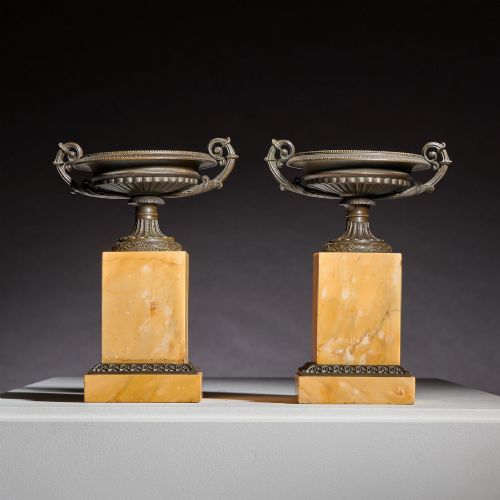
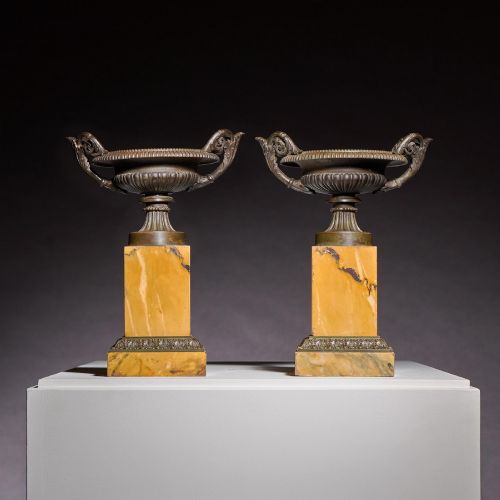
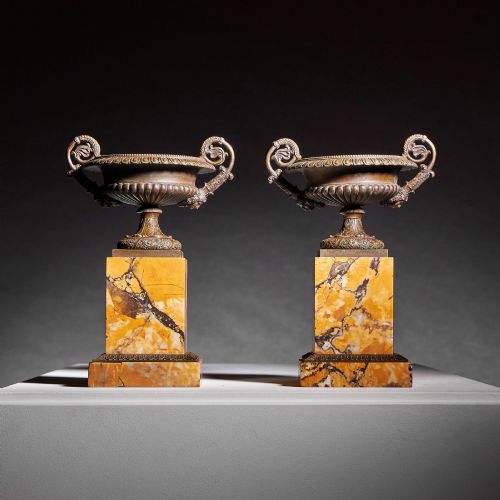
When buyers search for french empire urns, they encounter decorative vessels, tazzas, and amphorae rooted in classical antiquity and nineteenth-century revivals. These objects combine architectural stone bases with sculptural metal bodies.
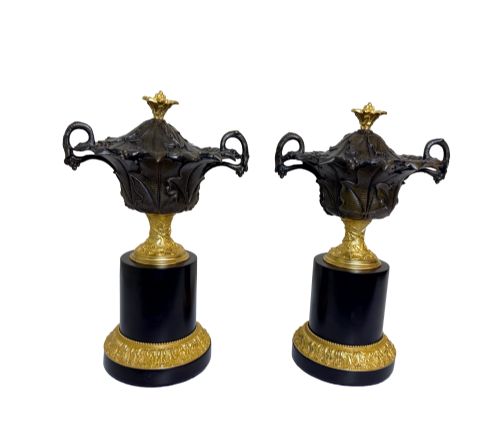
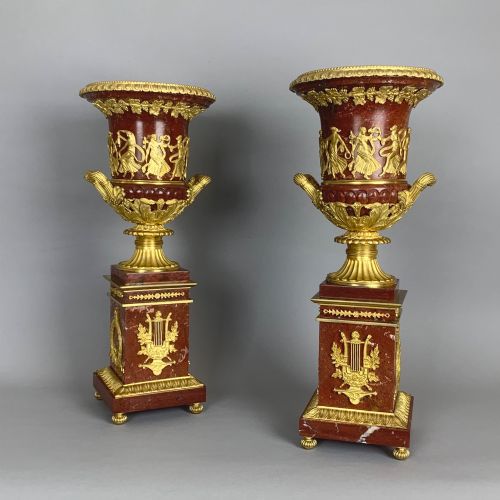
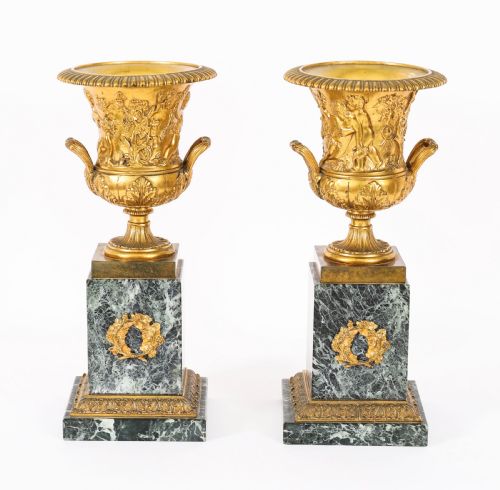
The pieces frequently appear paired as garnitures or mantel ornaments, utilising forms such as campana urns, cassolettes, and covered vases.
Originating predominantly from nineteenth-century France and related Regency contexts, these items reflect enduring neoclassical tastes through classical motifs and disciplined symmetry.
How they were made
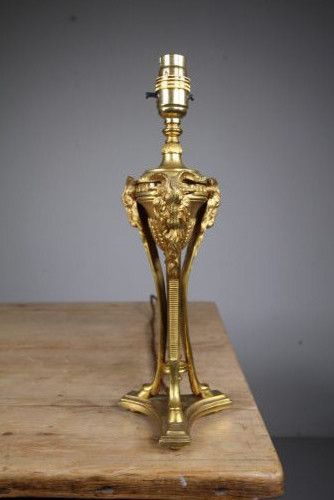
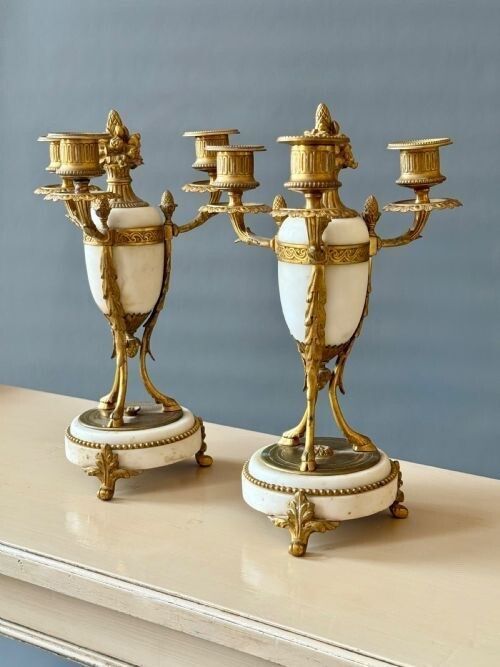
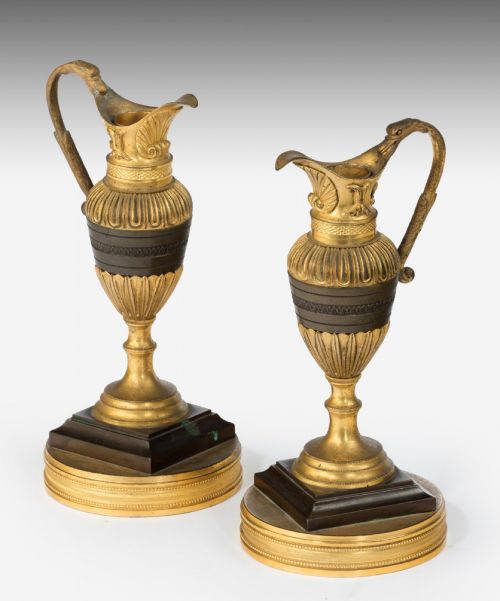
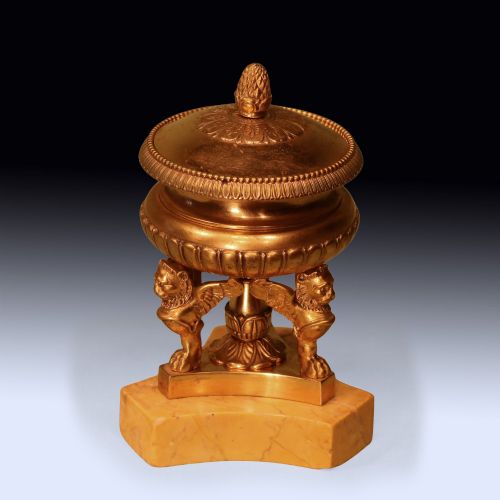
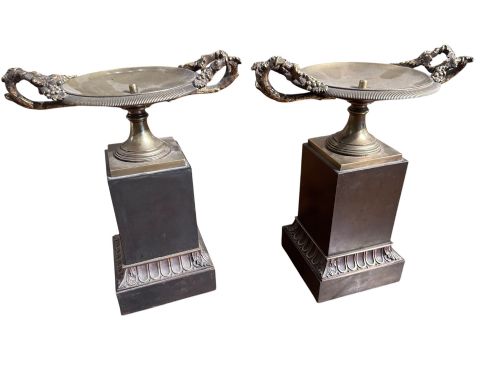
Maker workshops combined cast bronze, patinated bronze, and gilded ormolu with natural stones including white marble, black marble, and Sienna marble. Metal components were cast, chased, and selectively gilded to create textural contrast.
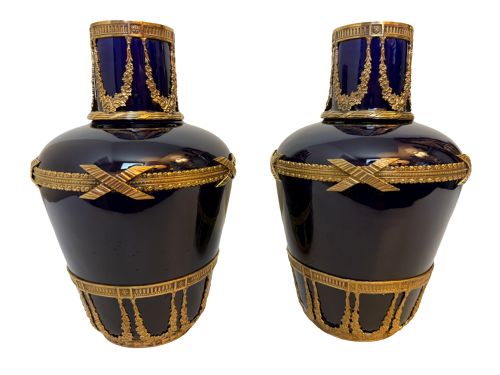
Porcelain elements, including Paris porcelain and Sèvres bodies, were hand-painted and mounted with metal trims or handles. Stonework bases were turned and polished to support heavy metal vessels.
French Empire Urns Retail Price Guide 2026
Typical asking prices for french empire urns among the pieces listed under this phrase on Sellingantiques today, from the lower quarter to the upper quarter. They describe what is for sale here now, not the wider market.
Some lidded urns double as perfume burners, letting your drawing room smell faintly of nineteenth-century French ambition.
What varies in quality
The crispness of chasing on bronze and ormolu details separates standard production from exceptional examples, as sharper cast definition allows ornamental motifs to read clearly. Heavier, more substantial metalwork indicates superior material weight.
The selection and density of marble bases contribute to overall distinction, with figured stones like Sienna marble or dense black marble enhancing the architectural presence of the vessel.
The French Empire Urns Glossary
- Ormolu
- Gilded bronze used extensively for mounts, handles, and decorative trims on nineteenth-century vessels. The technique involves applying a mercury-gold amalgam to bronze before firing.
- Campana
- A bell-shaped classical urn profile with a flaring rim and a pedestal foot. This silhouette originates from ancient Roman pottery traditions.
- Tazza
- A shallow saucer-like ornamental vase raised on a stem and foot. These pieces frequently appear in matched pairs for display.
- Cassolette
- A decorative lidded vase designed to function as a perfume burner or to reverse into a standard urn. The dual-purpose lid is a hallmark of neoclassical design.
- Amphora
- A two-handled ancient storage vessel form adopted by nineteenth-century makers for decorative porcelain and marble objects. These pieces emphasise classical proportions and sweeping handles.
French Empire Urns: Frequently Asked Questions
How were french empire urns used?
These decorative vessels served as mantel garnitures, table centrepieces, and architectural ornaments within nineteenth-century interiors. Certain lidded variants functioned as perfume burners or cassolettes.
They were displayed symmetrically on pedestals, pier tables, or clock garnitures to project classical refinement.
What materials are used in french empire urns?
Construction relies on a combination of cast bronze, patinated bronze, and gilded ormolu mounted onto turned marble bases. Stones such as white marble, black marble, and Sienna marble provide structural weight.
Some examples incorporate hand-painted Paris porcelain or blue glass bodies accented with metal mounts.
Are these urns sold as pairs?
Many examples survive and are presented as matched pairs intended for symmetrical placement on mantelpieces or furniture. Single vessels also appear, often representing centrepieces or specific garniture components.
Pairs generally share identical dimensions, casting details, and stone bases.
How do I identify the period of an urn?
Dating relies on stylistic markers, material combinations, and manufacturing techniques associated with nineteenth-century French production. Early examples align with the strict neoclassical discipline of the Empire period.
Later nineteenth-century pieces often reflect revivals incorporating diverse marbles and patinated spelter alongside traditional bronze.