





French Empire Style Urns
French empire style urns bring neoclassical grandeur and classical proportion into a room through cast bronze and polished marble.
French Empire Style Urns
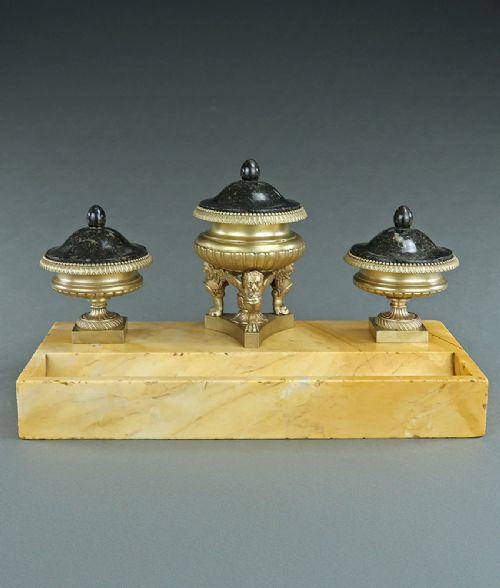
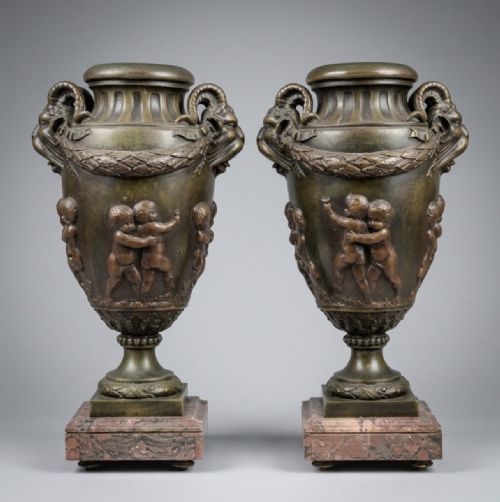
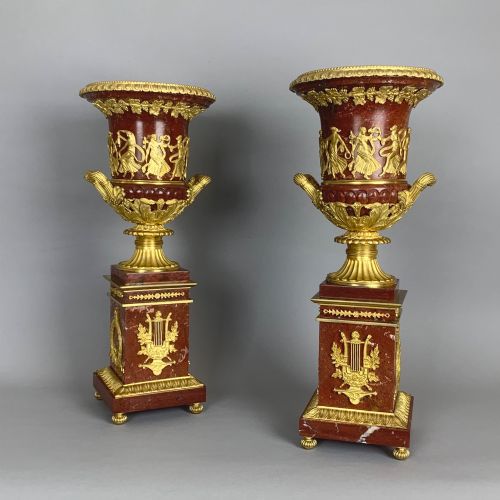
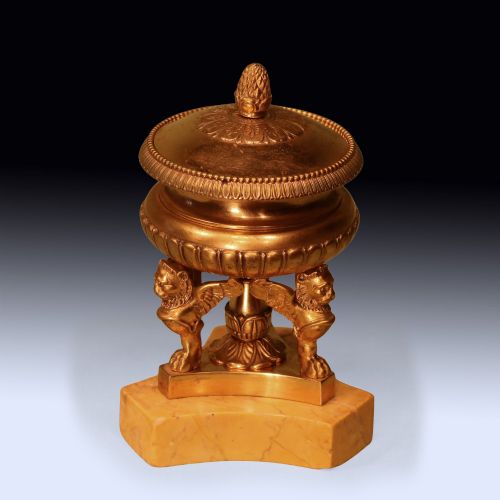
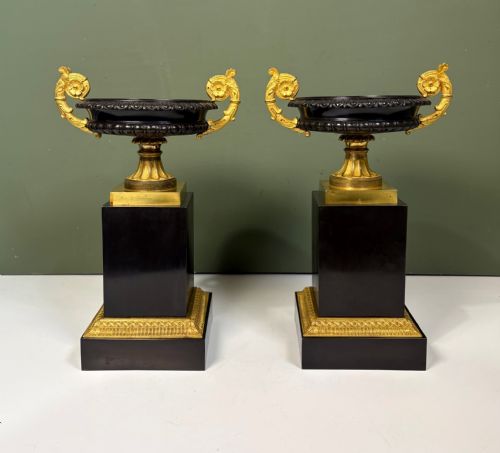
French empire style urns draw upon classical antiquity, Roman forms and neoclassical design principles. These decorative objects take the shape of campana vases, tazzas, cassolettes and amphorae mounted on substantial stone pedestals.
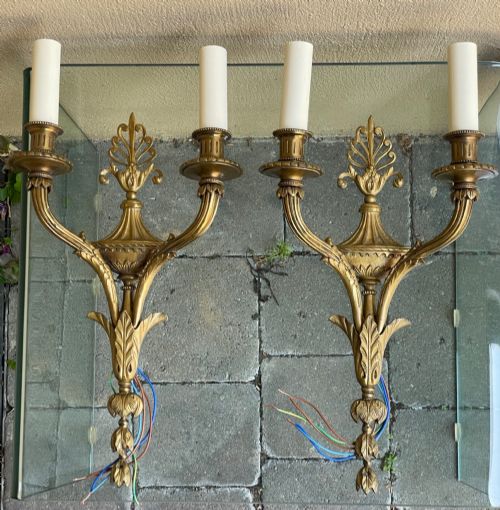
Most examples found here date from the nineteenth century, including pieces produced during the Regency, Charles X and Napoleon III periods. They appear both as standalone decorative items and as functional objects converted into table lamps or fitted as clock garnitures.
The prevalent forms combine classical imagery such as ram heads, maiden figures and laurel wreaths with symmetrical architectural silhouettes. Buyers encounter paired decorative vessels alongside singular monumental centrepieces and mantel ornaments.
Materials and Construction
The foundational metalwork relies on bronze, brass and patinated or silvered bronze, frequently enhanced with fire-gilded ormolu highlights. Artisans cast these metals with high precision before applying chased surface details by hand.
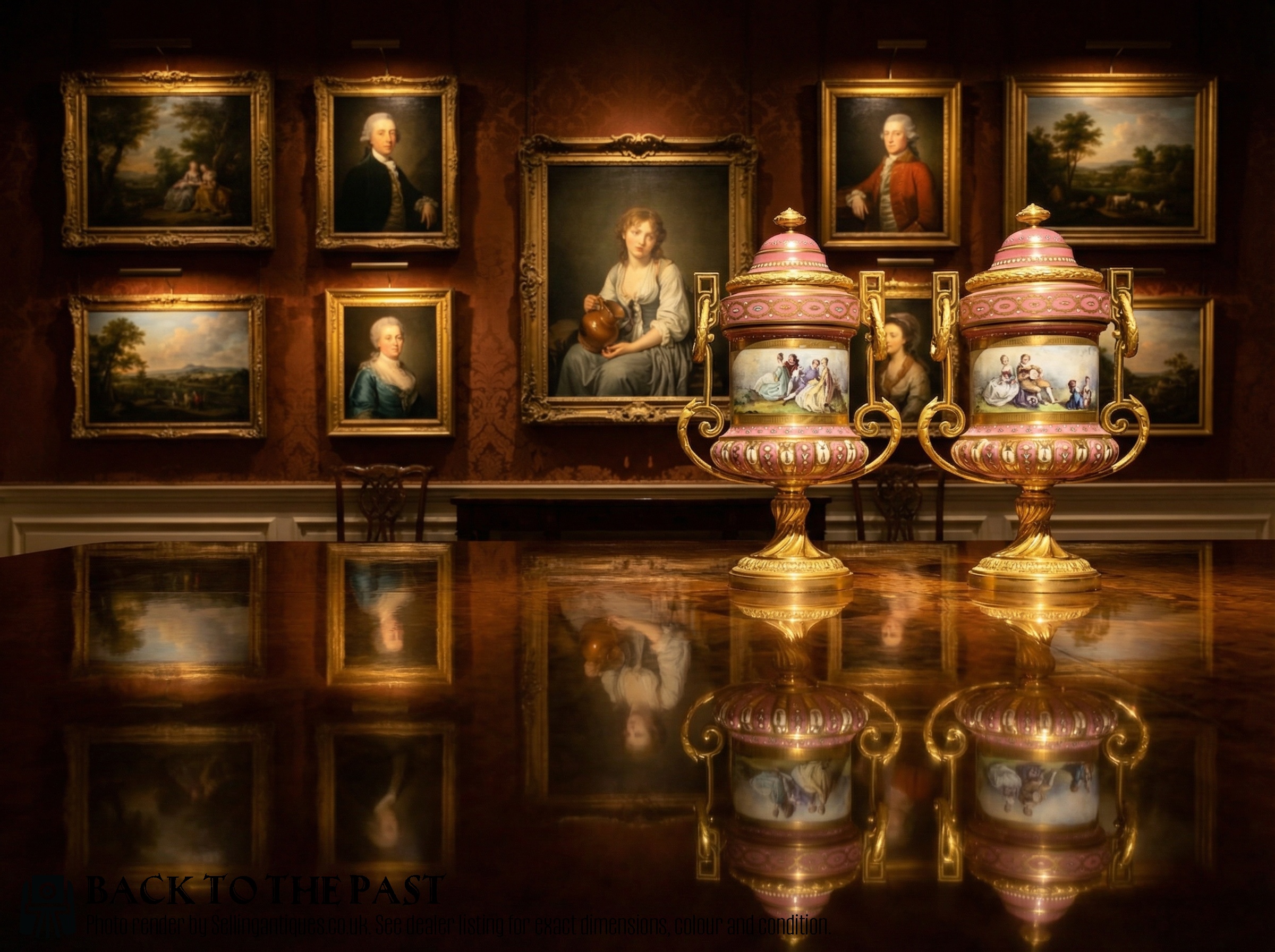
Stones such as white marble, rouge marble and Sienna marble form the heavy bases and bodies of cassolettes and urns. Porcelains from Paris and Sèvres introduce painted classical scenes and vivid colour accents to the metal mounts.
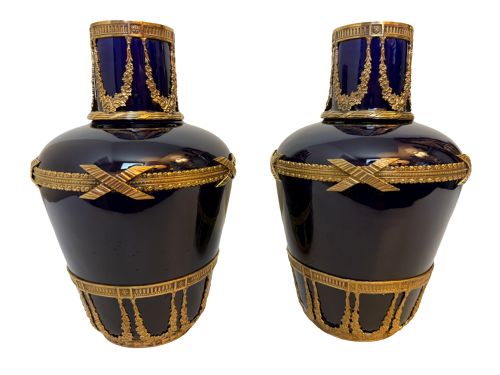
Secondary materials include toleware and blue glass, shaped into vases and paired lamps. Ormolu mounts are secured to the stone and ceramic bodies with pinned or threaded brass fixings.
Abolitionist compotes and 'Au Bon Sauvage' subjects occasionally join classical urns in nineteenth-century dining displays.
Evaluating Quality and Execution
The selection of marble reveals much about a piece, with dense, evenly coloured stones and flawless turning marking the best examples. Heavier bronze gauges and robust internal fixings ensure stability in larger vessel and lamp formats.
Hand-painted porcelain elements display varied artistic competency, where finely rendered figural scenes and rich gilding elevate specific pairs above standard decorative production.
Vincenti of Paris·James Ritchie and Son·Lerolle Fres
The French Empire Style Urns Glossary
- Ormolu
- Gilt bronze produced by applying a mercury and gold amalgam to a bronze object and heating it to drive off the mercury. This technique creates a rich, durable golden surface.
- Cassolette
- A decorative vase or urn featuring a reversible lid that can function as a burner or display a solid top. They frequently incorporate marble bodies with cast ormolu mounts.
- Tazza
- A shallow saucer-shaped vessel mounted on a stem and foot, originating in classical antiquity. These pieces served as display tazze or compotes in nineteenth-century interiors.
- Campana
- A bell-shaped classical urn profile with an everted rim and a stepped foot. The form derives directly from ancient Roman pottery and stone vessels.
- Garniture
- A set of three or more matching decorative objects, typically comprising a mantel clock flanked by matching urns, candelabras or vases.
French Empire Style Urns: Frequently Asked Questions
What are French empire style urns?
These decorative vessels draw inspiration from ancient Roman and Greek designs, reinterpreted through nineteenth-century French classicism. They combine cast metal and stone to create monumental mantel and table ornaments.
Craftsmen utilised bronze, marble and porcelain to build architectural forms that emphasise symmetry, restraint and classical motifs like acanthus leaves and classical figures.
How were these urns used historically?
Originally created as purely decorative focal points for grand interiors, many urns formed part of matching garniture sets placed on mantelpieces. Others served practical functions as inkwells, table lamps or parfum burners.
Over time, numerous classical urns and vases underwent conversion into lighting fixtures to suit changing domestic requirements while retaining their antique aesthetic.
How do I live with antique urns?
Place these substantial pieces on sturdy furniture such as sideboards, console tables or mantelpieces where their weight and height command attention. Pair them symmetrically to preserve the classical balance intended by nineteenth-century designers.
Keep them away from direct heat sources and clean metal mounts gently with a soft, dry cloth to preserve the original gilt or patinated surfaces.
How do I date a nineteenth-century urn?
Dating relies on examining the combination of materials, casting techniques and stylistic markers associated with specific periods like the Regency, Charles X or Napoleon III eras. The weight of the bronze and the type of marble provide primary clues.
Signatures, foundry stamps or specific porcelain painting styles can occasionally narrow the production date to a tighter window within the nineteenth century.