




French Empire Bust
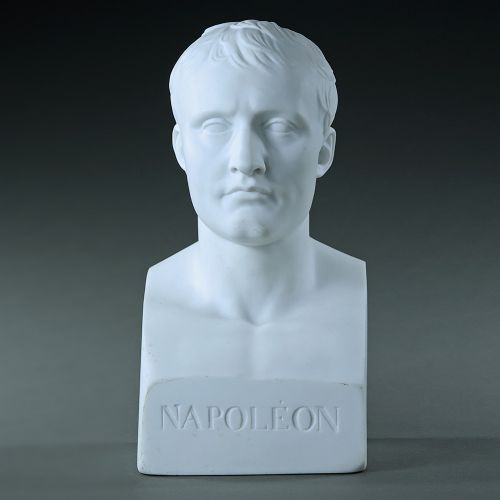
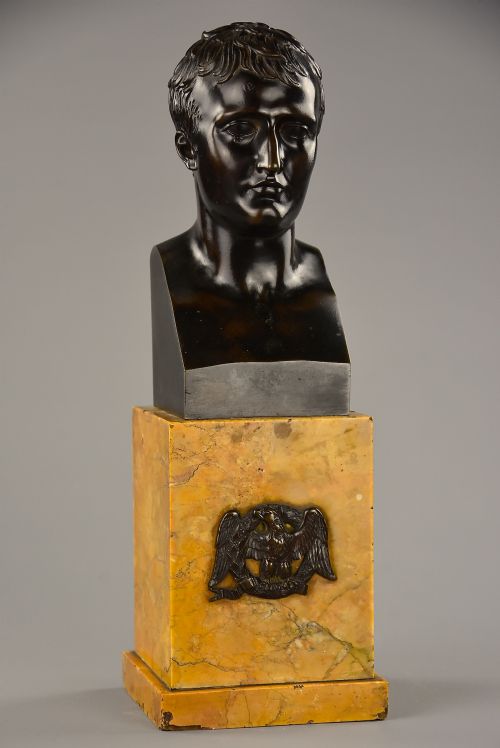
A French Empire bust brings neoclassical gravity to a room, cast in bronze or carved from marble with the severe profile of Napoleon or Apollo.

French Empire Bust
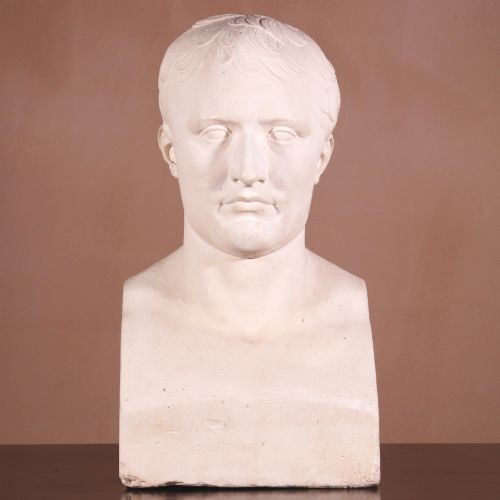
A french empire bust presents historical and mythological figures, most notably Napoleon Bonaparte and Apollo, modelled with the austere discipline of the neoclassical taste. These sculptural works derive from nineteenth-century workshops and take their visual cues from classical antiquity.
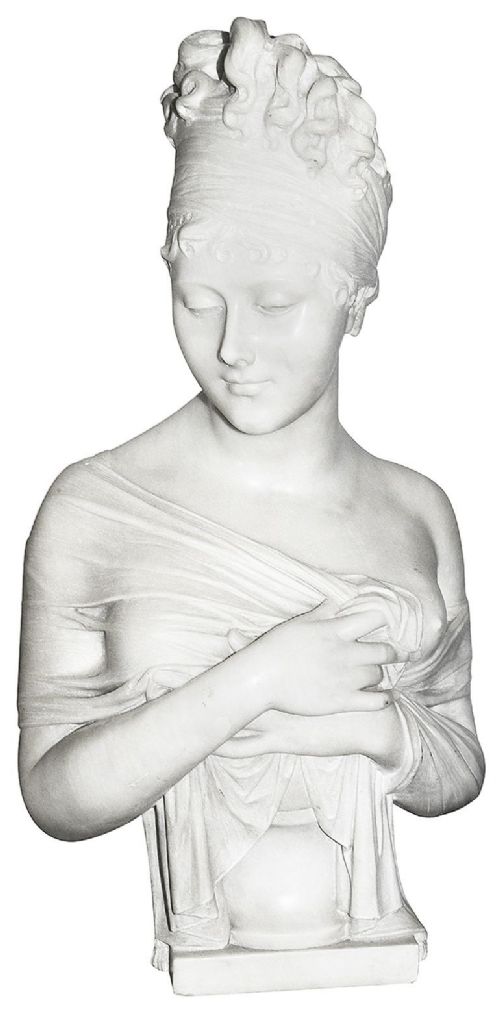
Most examples encountered on this page date from the nineteenth century, including the early decades, and pair sculpted white or grey marble with gilt bronze, orrmolu, and solid plaster. Forms range from cabinet-sized portrait heads to monumental pieces mounted upon tall mahogany or marble pedestals.
Beyond standalone portraiture, the aesthetic extends to utilitarian desk pieces such as inkwells and inkstands that incorporate miniature busts into their gilt bronze mounts. These functional objects share the same sculptural vocabulary and materials as the larger portrait pieces.
How they were made
Sculptors carved portrait heads from white and grey marble, mounting them securely onto contrasting dark marble or stone bases. Alternatively, workers cast metal versions in bronze and gilt bronze, applying ormolu highlights to enrich the surface texture.
Complementary supports such as pedestals and gueridon tables relied on dense timbers like mahogany, frequently finished with gilt bronze mounts to echo the metalwork of the busts themselves. Plaster served as a more accessible medium for substantial sculptural portraits.
French Empire Bust Retail Price Guide 2026
Typical asking prices for french empire bust among the pieces listed under this phrase on Sellingantiques today, from the lower quarter to the upper quarter. They describe what is for sale here now, not the wider market.
A bronze bust of Apollo once resided in the collection of Gianni Versace before finding its way to the current market.
What varies in quality
Provenance and association elevate certain works, as demonstrated by pieces linked to notable past collections or specific makers. The integration between the bust and its supporting base or pedestal further dictates the overall cohesion of the object.
Gianni Versace
The French Empire Bust Glossary
- Ormolu
- Gilt bronze produced by applying a finely ground high-carat gold mercury amalgam to a bronze object before firing. This technique creates a durable, luminous golden surface characteristic of the period.
- Neoclassical
- A style inspired by the art and architecture of ancient Greece and Rome that dominated European design around nineteen hundred. It values symmetry, restraint, and classical motifs.
- Gueridon
- A small French round table, often supported by a single central column or pedestal. These pieces frequently accompany sculptural busts within domestic interiors.
- Patina
- The surface sheen and coloration developed by bronze, marble, and wood over decades of handling and exposure to the environment. It indicates age and the natural settling of materials.
French Empire Bust: Frequently Asked Questions
What figures do these busts depict?
The available subjects focus primarily on historical leaders and mythological figures, with Napoleon Bonaparte and Apollo appearing most frequently in the evidence.
These portraits capture subjects associated with imperial power and classical ideals, rendered in strict alignment with neoclassical aesthetics.
How were these busts displayed originally?
Larger sculptural pieces were typically placed upon dedicated marble or mahogany pedestals to elevate them within a room. Smaller iterations sat upon side tables or functioned as decorative elements on desks alongside inkwells.
Such placement allowed the works to command visual attention as standalone interior focal points.
What materials are most common?
Marble and bronze dominate the surviving pieces, often combined with gilt bronze or ormolu mounts for decorative contrast. Plaster and mahogany also appear frequently in larger sculptural formats and pedestals.
These materials reflect the standard luxury manufacturing palette of nineteenth-century French workshops.
How do I identify the period?
Dating relies on material combination, casting quality, and stylistic markers associated with the nineteenth century. Evidence points to production spans ranging from the early decades through the late eighteen hundreds and into nineteen twenty.
Comparing the mount construction and the handling of the marble helps establish the approximate era of manufacture.