
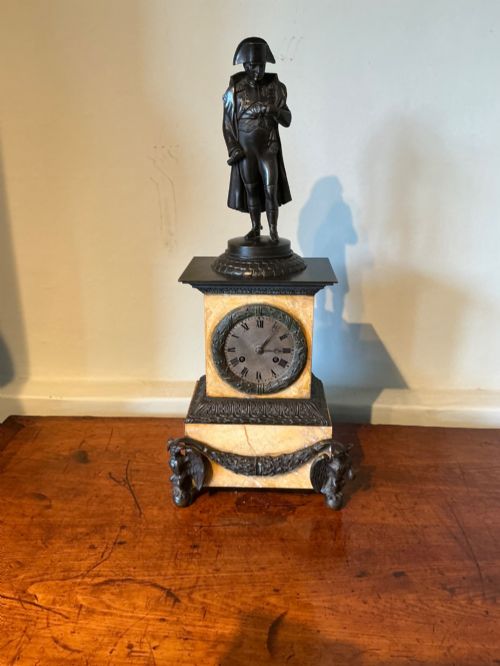
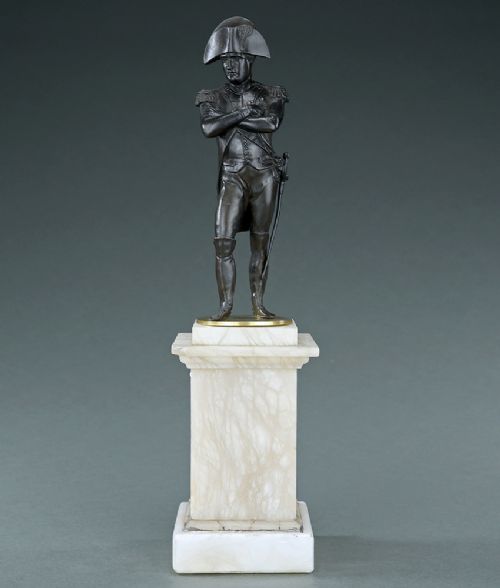
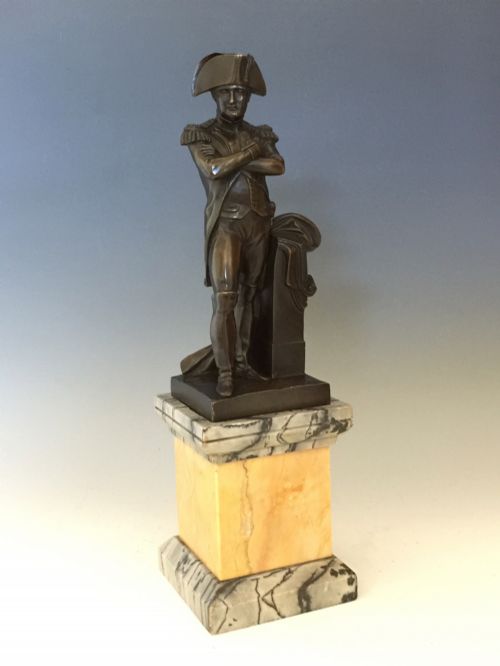


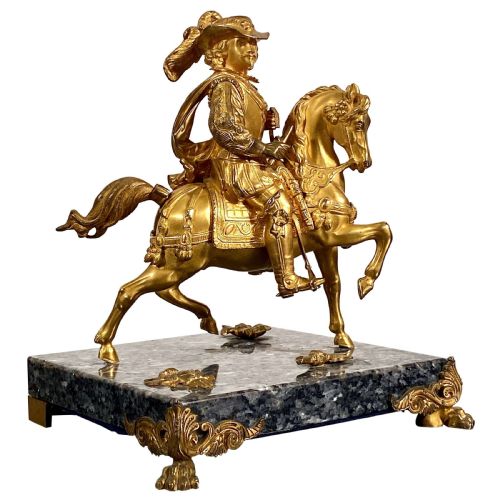
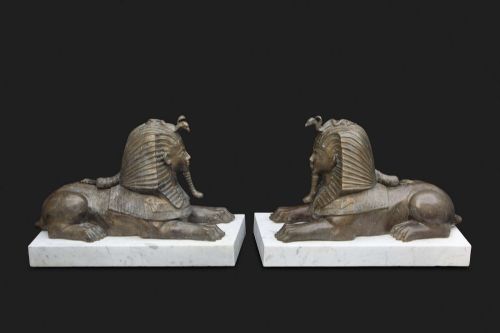
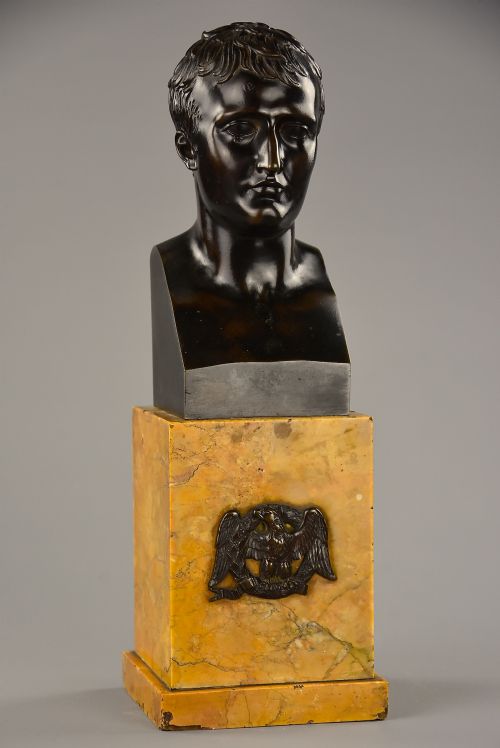


French Empire Bronze Statue
A french empire bronze statue brings classical dignity and military history into a room, cast in heavy metal and mounted on stone.
French Empire Bronze Statue
A french empire bronze statue is a sculptural object or functional piece adorned with cast metal figures, heavily influenced by classical antiquity and Napoleonic iconography. These works emerge predominantly across the nineteenth century, encompassing standalone bronzes, mantel clocks, inkstands, and figural lamps.
The subjects most frequently encountered on this page include historical figures such as Napoleon Bonaparte, classical deities like Apollo, and architectural models from the Grand Tour. Pieces often integrate rich motifs from the French Empire and Neoclassical styles, reflecting military triumph and ancient heritage.
Many sculptures and decorative objects pair patinated dark metal with bright ormolu highlights, frequently elevated on heavy marble plinths. This combination creates a striking visual contrast that defines the aesthetic of the period.
Materials and Casting Methods
Foundries utilised copper alloy casting to achieve fine detail, often finishing pieces with a dark chemical patina or fire-gilding to create ormolu. This dual treatment of the metal allowed makers to accentuate garments, facial expressions, and ornamentation.
Sculptures and clock cases were regularly mounted upon solid bases of Carrara or coloured marble, which added substantial weight and stability to the composition. Brass and glass components occasionally supplement the primary bronze structure in functional items such as lamps and inkstands.
Listings feature periods spanning the early nineteenth century through the Victorian era, including specific dates from eighteen hundred to nineteen hundred twenty.
Distinctions in Quality
The integration between the cast metal and its stone base indicates the level of craftsmanship involved. High-quality pieces feature tightly fitted mounts and heavy, unblemished marble plinths that complement the proportions of the bronze.
Emile Guillemin·James Pradier·Jean Jacques Pradier·Victor Paillard·Pierre Hebert·Albert Carrier Belleuse·Simon Louis Boizot
The French Empire Bronze Statue Glossary
- Ormolu
- Gilded bronze produced by applying a mercury and gold amalgam to a bronze base and heating it to drive off the mercury. This technique creates a durable, luminous golden finish characteristic of luxury nineteenth-century decorative arts.
- Patina
- The surface sheen or coloration developed naturally over time or applied artificially through chemical treatment. On these bronzes, it usually appears as a rich dark brown or black coating.
- Grand Tour
- A cultural journey undertaken by nineteenth-century elites across Europe, collecting small bronzes, architectural models, and souvenirs. These portable items often replicated famous antiquities or monuments.
- Plinth
- A heavy rectangular or square block of marble or stone that supports a bust or statue. It provides both structural balance and a distinct visual boundary for the metalwork.
- Neoclassical
- An artistic movement drawing inspiration from the art and culture of classical Greece and Rome. It prioritises symmetry, solemn dignity, and direct historical reference.
French Empire Bronze Statue: Frequently Asked Questions
What subjects do these bronzes usually depict?
The subjects commonly reference classical mythology, allegorical figures, and military leaders from French history. Napoleon Bonaparte appears frequently in various uniform and equestrian configurations.
Other works portray classical deities, literary heroines, and architectural columns associated with European travel and antiquity.
How are these pieces mounted?
Many sculptures and clock cases stand upon heavy marble bases, often in white Carrara or darker decorative stone. These plinths provide physical stability and enhance the monumental appearance of the metalwork.
Some smaller decorative objects and candelabras rely entirely on integrated bronze feet rather than separate stone plinths.
What is the difference between bronze and ormolu?
Bronze is the copper alloy used to cast the primary figure or structural housing. Ormolu refers specifically to the applied gold-gilded finish found on highlighted sections of the piece.
Many nineteenth-century works combine dark patinated bronze with bright ormolu details to create contrast within a single composition.
How do I care for a nineteenth-century bronze?
Maintenance requires gentle dusting with a soft, dry cloth to prevent dust accumulation in the recessed chasings. Avoid chemical cleaners and commercial polishes, which can strip the original patination or damage fire-gilded surfaces.
Keep the pieces away from direct sunlight and excessive moisture to preserve the stability of both the metal and the underlying marble.