




Winged Figure Bronze Statue
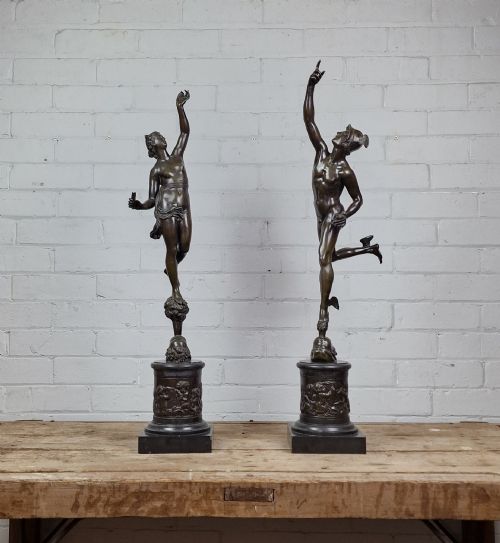
These winged figure bronze statue pieces bring mythological presence and neoclassical form to a room.
Winged Figure Bronze Statue
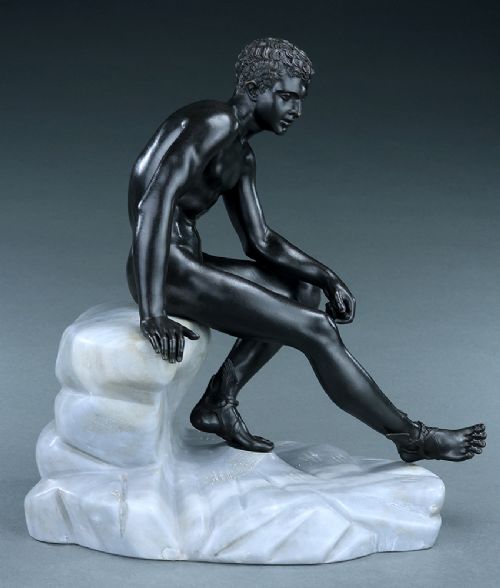
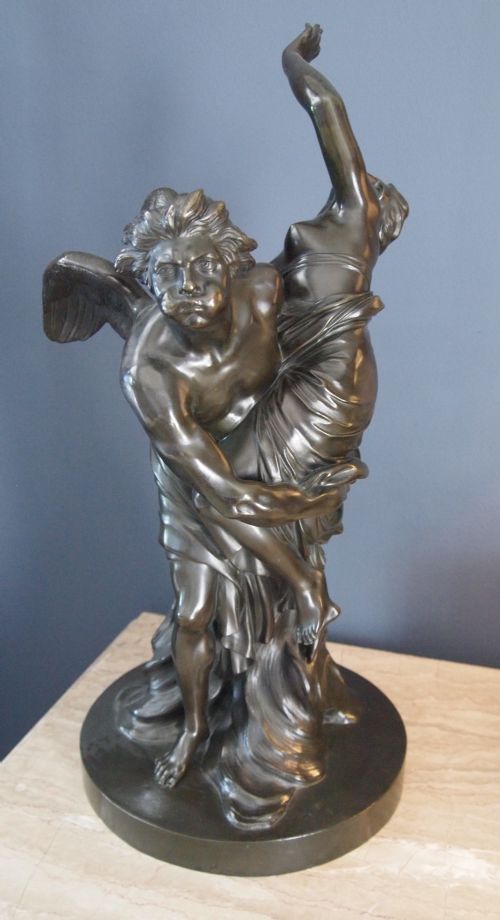
A winged figure bronze statue search uncovers sculptural works depicting mythological and classical subjects, predominantly originating from the nineteenth century. These sculptures take the form of figures such as Mercury, Hermes, Cupid, putti, and winged lions, rendered in cast metal.
Buyers frequently encounter French academic and Grand Tour pieces on this page, often mounted on marble or slate bases. The selection ranges from cabinet statuettes to larger sculptural groups representing classical narratives.
Representations span multiple cultural traditions within the evidence, including Tibetan deities alongside European neoclassical interpretations. This variety gives collectors access to both domestic decorative bronzes and distinct regional foundry works.
How they were made
Many sculptures are paired with heavy bases fashioned from marble, black slate, or brass. These architectural mounts provide stability and contrast with the dark or gilded tones of the metal figures.
Winged Figure Bronze Statue Retail Price Guide 2026
Typical asking prices for winged figure bronze statue among the pieces listed under this phrase on Sellingantiques today, from the lower quarter to the upper quarter. They describe what is for sale here now, not the wider market.
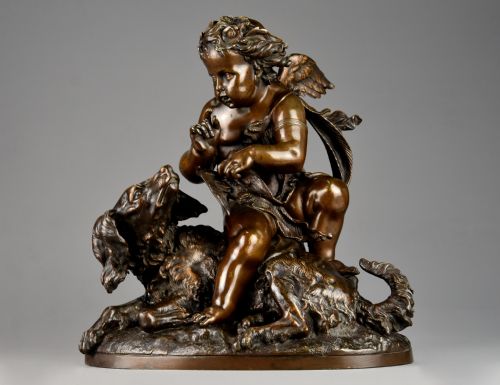
A winged putto shares sculptural space with a spaniel dog in one nineteenth-century French bronze.
What varies in quality
The quality of the material mounting, such as veined marble or slate plinths, contributes to the overall presence of the sculpture. Integration between the bronze figure and its base reflects the care taken by the foundry or maker.
Antoine Louis Barye·Barbedienne·Louis Auguste Moreau·Charles Cumberworth·Simon Louis Boizot
The Winged Figure Bronze Statue Glossary
- Patinated bronze
- Bronze that has been chemically treated to produce a dark or coloured surface finish. This technique protects the metal and defines the shadows of the sculpture.
- Grand Tour
- Souvenirs and classical replicas acquired by travellers touring European cultural sites during the eighteenth and nineteenth centuries. These pieces often depict mythological figures.
- Neoclassical
- A style inspired by the art and culture of classical antiquity, focusing on proportion, restraint, and classical subjects. It dominates much nineteenth-century European sculpture.
- Animalier
- A nineteenth-century French artistic movement dedicated to the realistic portrayal of animals. Figures in this style often combine wildlife subjects with classical settings.
- Putto
- A plump, winged child figure frequently found in Renaissance and neoclassical art. These figures often appear as cupids or cherubs in bronze sculpture.
Winged Figure Bronze Statue: Frequently Asked Questions
What periods do these bronzes come from?
The listings span the nineteenth century, with specific examples dating from the Georgian period through to the nineteen thirties. Many pieces reflect nineteenth-century French academic and Grand Tour traditions.
Production dates rely on stylistic evidence and foundry signatures recorded in the titles. The selection documents a strong focus on nineteenth-century casting methods and neoclassical revival designs.
How were these statues displayed originally?
Many nineteenth-century bronzes were designed as cabinet statuettes or decorative ornaments for domestic interiors. Grand Tour pieces served as mementos of travel and education.
Heavier examples mounted on marble or slate bases stood upon mantelpieces, desks, or pedestals. Their materials allowed them to function as stable ornamental centerpieces.
What subjects do these statues depict?
Common subjects include classical deities and mythological figures such as Mercury, Hermes, and Cupid. Winged putti, cherubs, and allegorical figures also feature prominently.
Additional subjects range from Venetian winged lions to Eastern deities such as Garuda. Human figures from classical history and literature complete the range of representations.
How do I identify a Grand Tour piece?
Grand Tour bronzes often replicate famous classical sculptures encountered by travellers in Italy and Greece during the nineteenth century. They frequently feature detailed patination and specialised marble bases.
These pieces were produced to satisfy the demand for portable antiquities among collectors of the period. Their subjects draw directly from ancient mythology and classical monuments.