
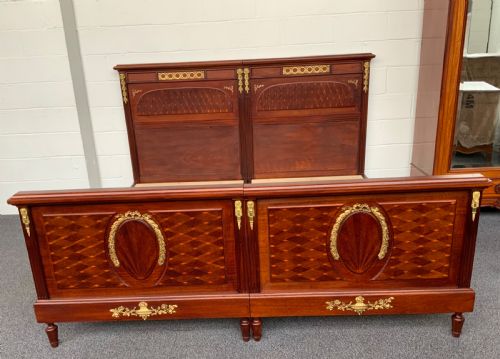
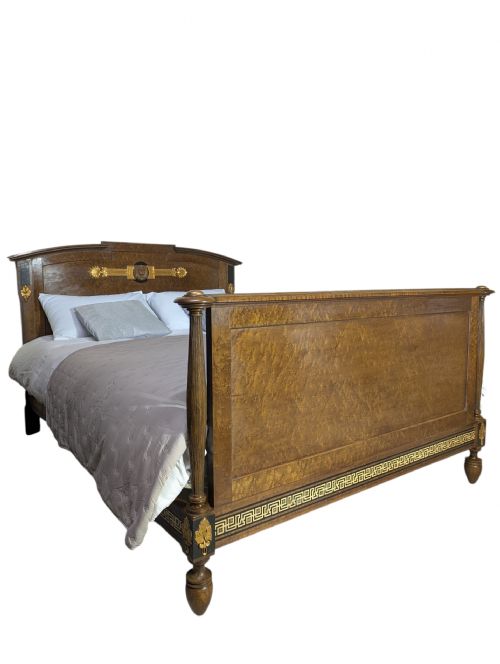


French Empire Bedstead
A french empire bedstead brings monumental neoclassical presence to a bedroom through rich mahogany timbers and heavy ormolu mounts.
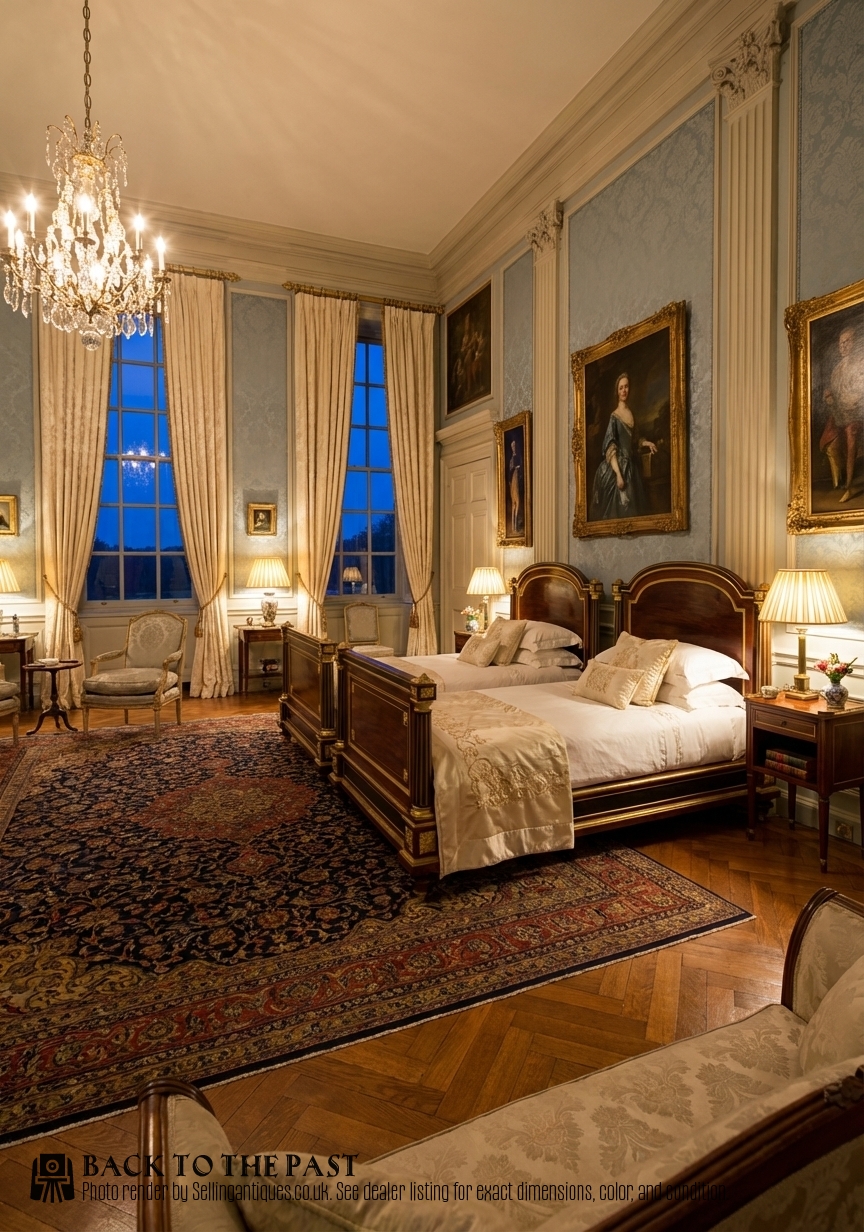
Defining the french empire bedstead
A french empire bedstead embodies the bold neoclassical vocabulary of the early nineteenth century through architectural forms and classical proportions. When buyers search for a french empire bedstead, they encounter substantial wooden frameworks designed to anchor large principal chambers.
Variations in these forms include characteristic headboard and footboard silhouettes flanked by matching bedside furniture like marble topped cabinets. These pieces combine functional sleeping quarters with the striking decorative presence characteristic of French cabinet making.
Construction and materials
Construction relies upon solid timber foundations overlaid with select veneers including mahogany and burr walnut. These primary woods provide a dark, figured backdrop designed to showcase applied metal decorations.
Decorative detailing incorporates cast ormolu, gilt brass, and gilt metal embellishments secured directly to the wooden surfaces. Painted finishes also appear on select early twentieth century examples, offering alternative aesthetic treatments while retaining traditional structural forms.
Retail Price Guide 2026
Typical UK retail prices for french empire bedstead, calculated from the Sellingantiques database of over a million retail prices indexed since 2003. This retail price guide relies exclusively on Sellingantiques data; no external sources or auction records are used, so the figures do not describe the wider market.
Current listings feature beds dated across the nineteenth century, nineteen hundred, and nineteen ten, constructed from mahogany, burr walnut, and satinwood.
Judging quality
Superior examples of a french empire bedstead display exceptional depth in the timber grain and particularly crisp casting within the ormolu and brass mounts. The weight and architectural precision of the metalwork separate high end commissions from simpler commercial productions.
Integration of matching side cabinets with stone surfaces enhances the architectural completeness of an ensemble. Finer execution is further evident in the seamless application of veneers and the harmony between structural timber and decorative metal elements.
The French Empire Bedstead Glossary
- Ormolu
- A gilded bronze or brass mount applied to furniture for decorative contrast. This technique creates bright metallic highlights against dark timber surfaces.
- Veneer
- A thin layer of figured wood applied over a secondary timber base. This method displays striking grain patterns while maintaining structural stability.
- Emperor
- An oversized scale designation denoting substantial bed dimensions. Such proportions require dedicated chamber space.
- Satinwood
- A pale, lustrous timber utilised for decorative contrast and secondary details. Its bright tone complements deeper mahogany elements.
Frequently Asked Questions
What dimensions are these beds?
Sizes range from standard double and king configurations up to larger emperor proportions. These generous scales reflect nineteenth century architectural interior standards.
Buyers should verify mattress compatibility as historical sizing conventions often differ from contemporary bedding measurements.
How do I style this bed?
These monumental frames suit large rooms with high ceilings where their architectural presence can dominate the space. Pairing them with matching cabinets creates a cohesive neoclassical room scheme.
Keep surrounding textiles relatively simple to allow the dark timber and gilt metal details to remain the visual focus.
Are matching side cabinets common?
Certain listings include associated marble topped side furniture designed to complement the main sleeping structure. These pieces share stylistic motifs such as gilt metal embellishments.
Such additions provide functional bedside storage while reinforcing the unified aesthetic of the bedroom set.
What period do they date from?
Available examples span the nineteenth century alongside pieces produced around nineteen hundred and nineteen ten. These later items continue traditional decorative styles well into the twentieth century.
Construction methods and material choices help distinguish nineteenth century origins from subsequent revival periods.