



French Ebonised Desk
When you search for a french ebonised desk, you enter a world of nineteenth-century revival craftsmanship defined by dark polished surfaces and gilt metal mounts.
French Ebonised Desk
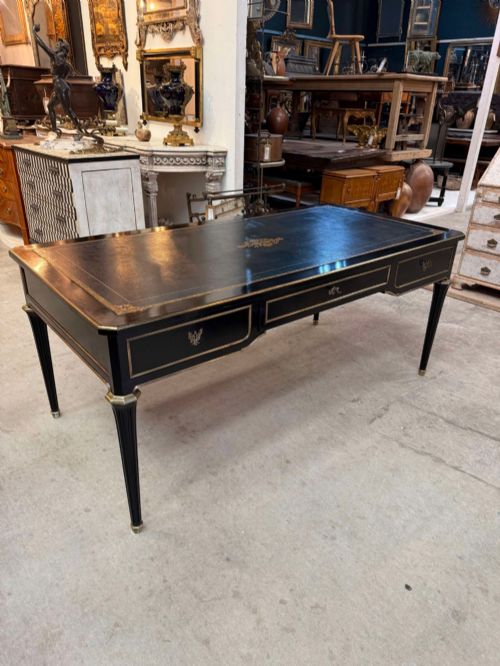
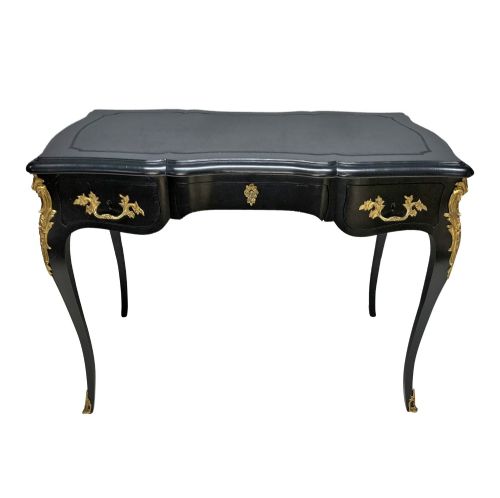
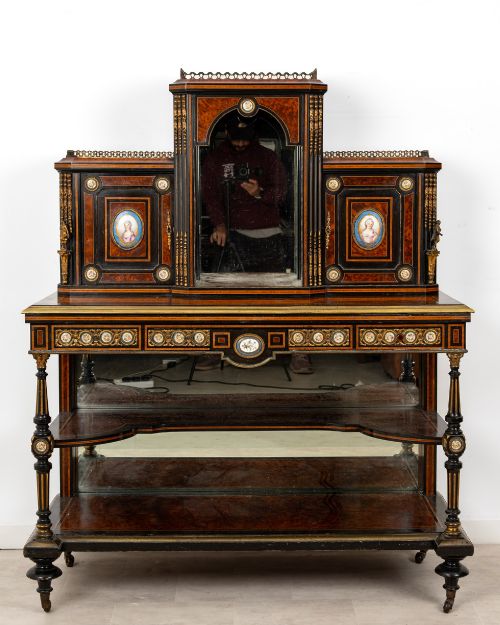
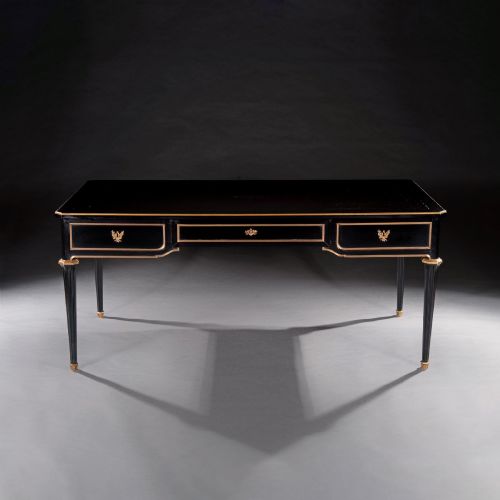
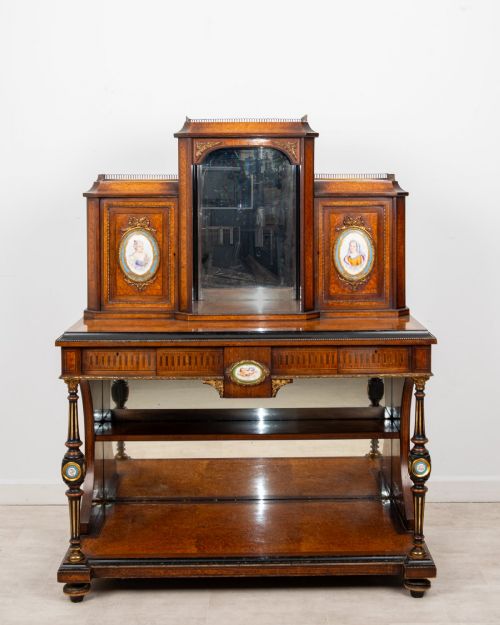
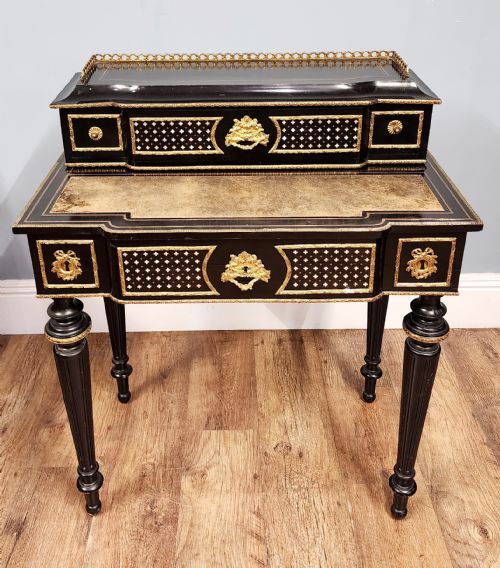
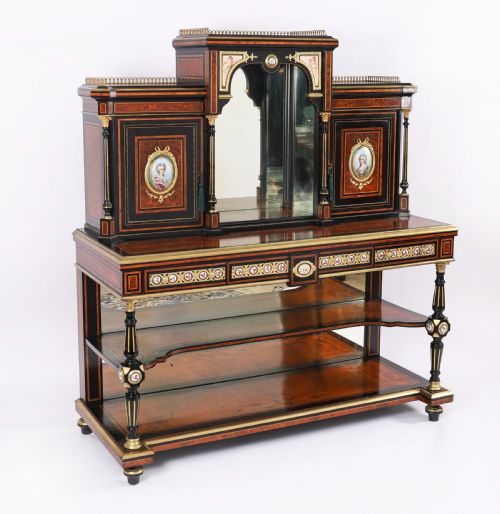
A french ebonised desk brings together nineteenth-century writing tables, bureau plat forms, and bonheur du jour cabinets finished in dark wood. These pieces reflect revival aesthetics including Napoleon III, Louis XV, and Louis XVI styles originating in French and Victorian workshops.
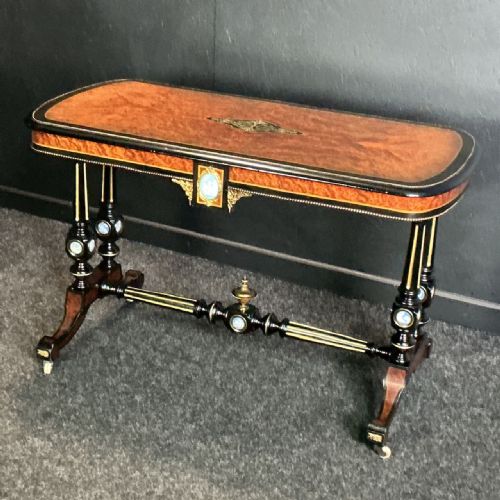
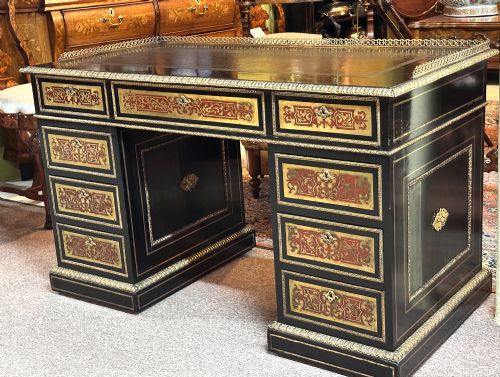
The version most commonly met on this page is a freestanding writing table or bureau plat featuring brass inlay, ormolu mounts, and cabriole legs. Such pieces range from compact ladies writing cabinets to larger library tables designed to sit centrally in a room.
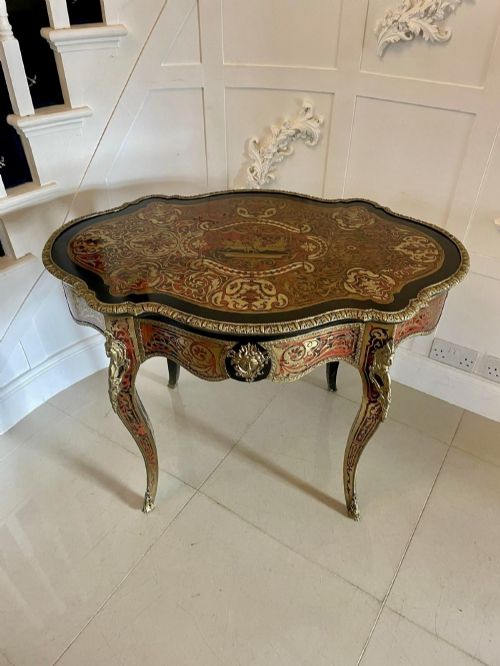
Makers and cabinetmakers of the period utilised contrasting veneers, tortoiseshell, and porcelain plaques alongside ebonised timber to create formal writing furniture. Surviving examples demonstrate the sustained popularity of dark-finished revival designs throughout the nineteenth century and into subsequent decades.
How They Were Made
Makers built these desks using a timber carcass, often mahogany or walnut, treated to achieve a dense black ebonised finish that imitated ebony. Surfaces were meticulously polished to a high gloss to provide a dark field for metal ornamentation.
Decoration relied on brass inlay, tortoiseshell, and gilt bronze or ormolu mounts applied to borders, corners, and legs. Writing surfaces frequently incorporated tooled leather inserts framed by inlaid banding.
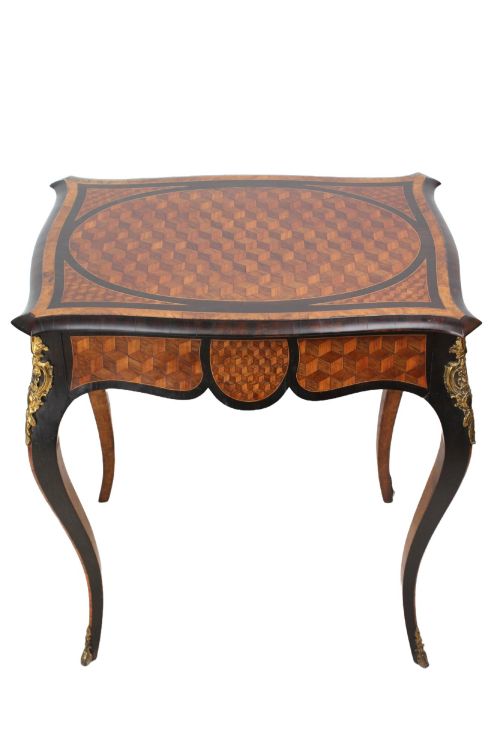
Cast metal mounts and handles were chased by hand before being gilded and secured to the ebonised wood structure. Marquetry and parquetry elements utilised contrasting natural timbers alongside tinted woods to introduce geometric or floral patterns.
French Ebonised Desk Retail Price Guide 2026
Typical asking prices for french ebonised desk among the pieces listed under this phrase on Sellingantiques today, from the lower quarter to the upper quarter. They describe what is for sale here now, not the wider market.
Several desks hide tiny secret compartments originally designed for love letters and hidden ledgers.
What Varies in Quality
The standard of a desk rests upon the precision of its brass inlay and the crispness of its ormolu mounts. Finer examples display hand-chased bronze work where details remain sharp, whereas lesser pieces rely on simplified cast metal fittings.
Construction methods distinguish workshop output, particularly in the handling of internal drawer framing and the selection of veneer timbers. Pieces attributed to established makers exhibit tighter joinery and more ambitious parquetry or boulle work across secondary surfaces.
JAS Shoolbred·Walker and Hall·Maison Millet·Paul Sormani·Diehl Paris
The French Ebonised Desk Glossary
- Ebonised Wood
- Timber stained or painted to resemble ebony. This dark finish was popular in nineteenth-century revival furniture to create high contrast with metallic mounts.
- Ormolu
- Gilt bronze ornamentation applied to furniture. The technique involves coating cast bronze in a layer of gold amalgam before heating.
- Boulle Work
- Marquetry technique utilising brass and tortoiseshell. Named after French cabinetmaker André-Charles Boulle, it creates intricate metallic patterns against a dark ground.
- Bureau Plat
- A flat-topped freestanding writing table. Typically fitted with one or more drawers in the frieze and designed to be viewed from all sides.
- Bonheur du Jour
- A light small desk featuring an upper cabinet or superstructure. These pieces often incorporate small drawers, shelves, and decorative plaques.
- Parquetry
- Geometric wood inlay forming patterns such as cubes or chequers. Craftsmen used contrasting timber veneers laid onto the carcase surface.
French Ebonised Desk: Frequently Asked Questions
What is an ebonised desk?
An ebonised desk is a wooden writing table treated with a dark stain or finish to imitate solid ebony. These pieces date predominantly to the nineteenth century and often feature gilt bronze mounts.
Such furniture encompasses freestanding tables, bureau plat forms, and refined bonheur du jour cabinets. The dark surface serves as a backdrop for brass inlay and decorative hardware.
How do I identify Napoleon III furniture?
Napoleon III furniture embraces eclectic revivals of earlier French court styles, particularly Louis XV and Louis XVI. Ebonised finishes combined with boulle work and ormolu mounts are characteristic of this period.
Makers working in the nineteenth century reinterpreted these historical motifs with rich materials such as tortoiseshell, porcelain plaques, and parquetry.
Were these desks used for writing?
These tables served as functional writing surfaces for correspondence and administrative tasks in wealthy homes. Many incorporate tooled leather inserts designed to provide a smooth plane for ink and quills.
Smaller bonheur du jour variants were intended for personal correspondence in private sitting rooms, featuring compartments for stationery and small valuables.
How should I care for an ebonised surface?
Maintenance requires gentle dusting with a dry lint-free cloth to protect the polished dark finish from abrasion. Avoid commercial polishes containing silicone or harsh solvents that can damage historical surfaces.
Keep wooden furniture away from direct sunlight and steady heat sources to prevent timber movement and protect fragile brass or tortoiseshell inlay.