

Antique Escritoire
When choosing an antique escritoire, you select a dedicated writing cabinet featuring a drop-down writing surface and concealed compartments for private correspondence.
Antique Escritoire
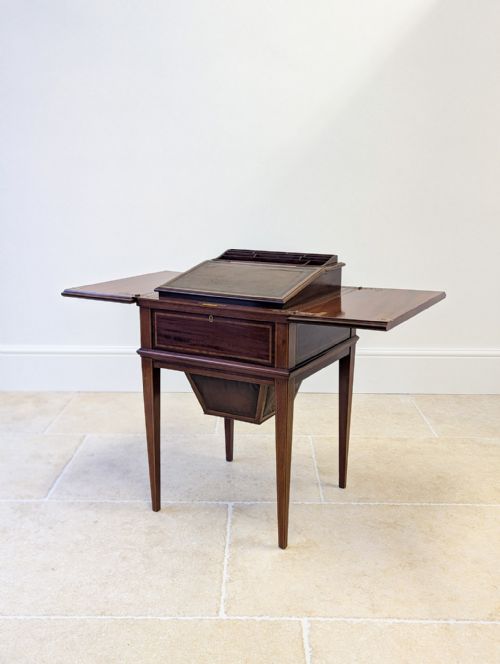
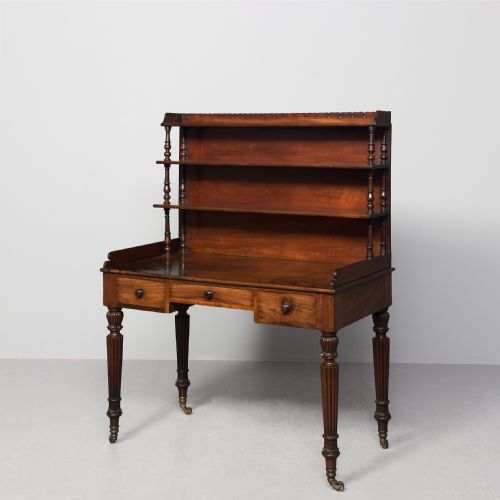
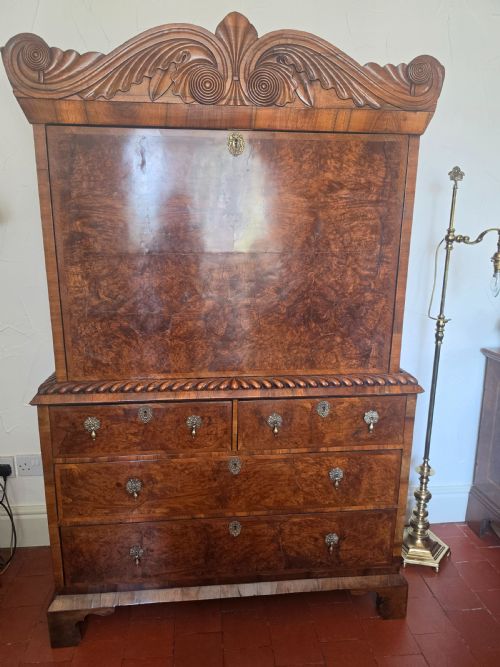
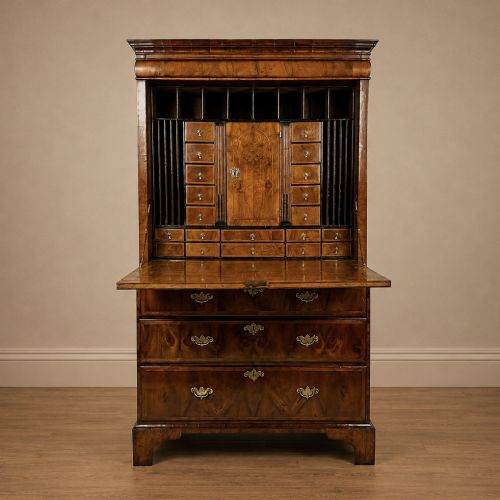
An antique escritoire functions primarily as a formal writing cabinet, historically designed for letter writing and the storage of private documents. The form typically incorporates a fall-front panel that lowers to reveal a fitted interior of small drawers and pigeonholes.
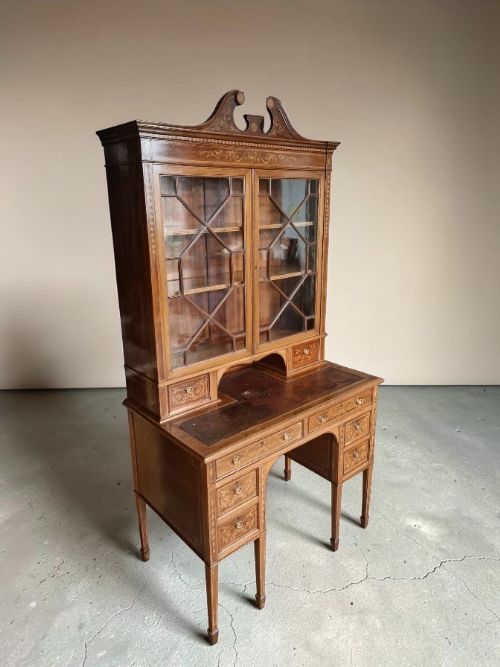
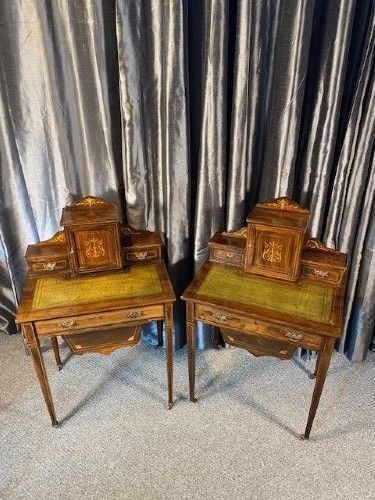
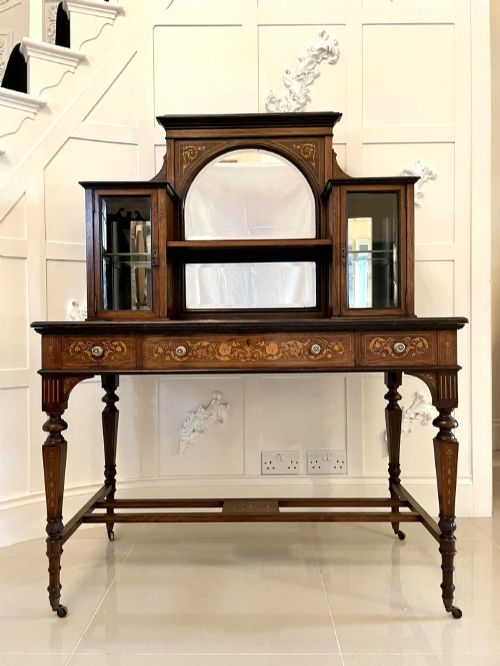
Examples on this page span from the seventeenth century through the Edwardian period, encompassing both English cabinetwork and continental forms. Buyers encounter tall upright bureau cabinets alongside smaller ladies writing desks and French abattants.
The materials reflect the prevailing tastes of each era, ranging from figured walnut and mahogany to exotic veneered woods such as kingwood and rosewood.
Materials and Construction
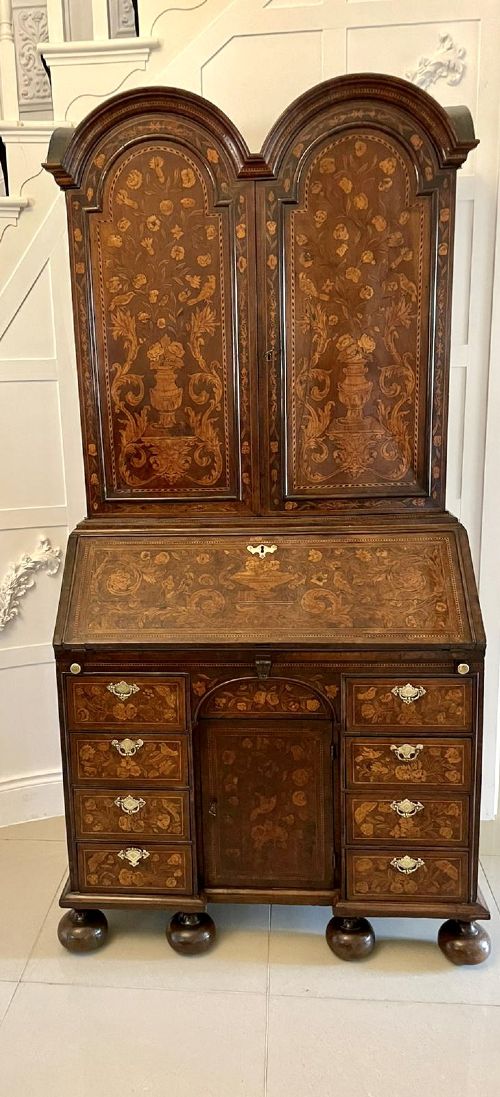
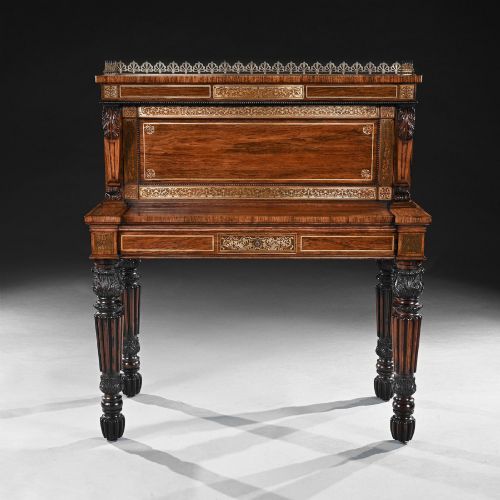
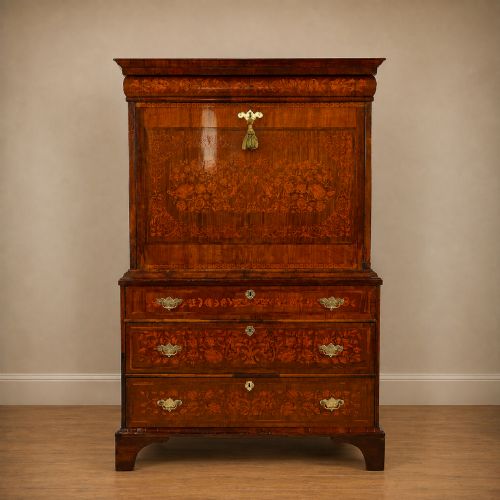
Cabinetmakers utilised solid secondary timbers such as oak or pine for internal carcases, applying choice veneers of walnut, mahogany, or kingwood to external surfaces. Marquetry and brass inlay frequently decorate the primary writing fronts and friezes.
Decorative elements often include cast or gilt ormolu mounts, marble slab tops on continental pieces, and hand-painted details on satinwood examples. Joinery techniques rely on traditional dovetailing for drawers and mortise and tenon joints for the main housing.
Listings feature walnut, mahogany, rosewood, and satinwood pieces spanning the seventeenth century to the Edwardian era.
Assessing Quality and Execution
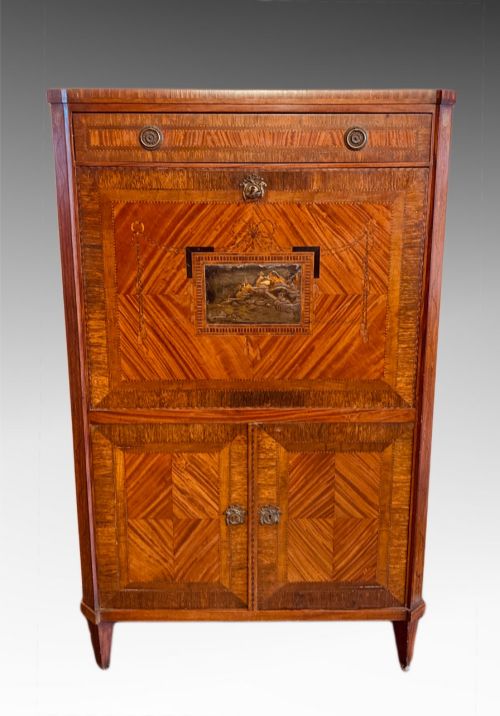
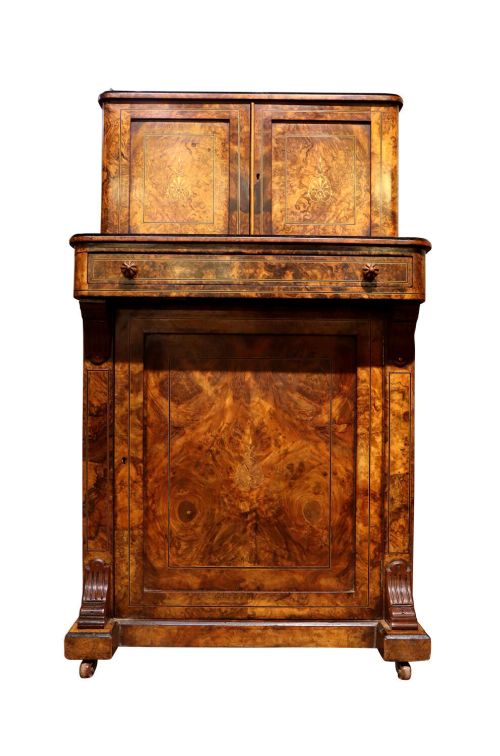
Quality reveals itself in the choice of grain patterns and the precision of the veneer matching across the fall-front and drawer facades. Figured walnut, flame mahogany, and burr elm display deliberate selection by the original maker.
The internal architecture of the writing compartment dictates much of the distinction between standard and superior pieces. Elaborate secret drawers, sliding panels, and finely turned pigeonhole surrounds indicate meticulous workshop standards.
Gillows Oxford Street Workshop·James Mein of Kelso
The Antique Escritoire Glossary
- Escritoire
- A writing cabinet featuring a fall-front writing surface concealing small drawers and pigeonholes. This term encompasses various forms of tall writing chests and cabinets.
- Secretaire à abattant
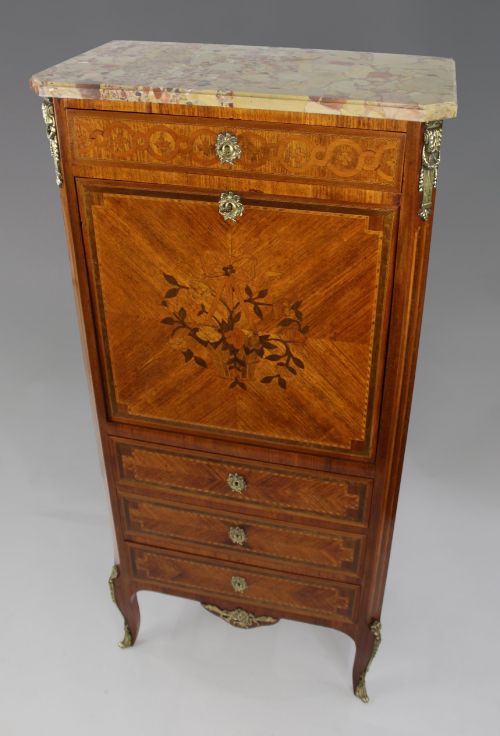
- A tall, upright cabinet with a hinged vertical writing flap that drops forward to create a desk surface. This form frequently incorporates a marble top and ormolu mounts on continental furniture.
- Marquetry
- The art of forming decorative patterns by fitting together small pieces of wood veneer of various colours and grains. Cabinetmakers applied this technique to elaborate floral and geometric table tops and writing fronts.
- Bonheur du jour
- A light lady's writing desk featuring a small set of drawers and shelves on top of the main writing surface. These pieces emerged during the eighteenth century and remained popular through the Victorian and Edwardian periods.
- Ormolu
- Gilt bronze ornamentation applied to the corners, feet, and friezes of fine furniture. This decorative metalwork is particularly common on French pieces from the nineteenth century.
Antique Escritoire: Frequently Asked Questions
What is the difference between an escritoire and a bureau?
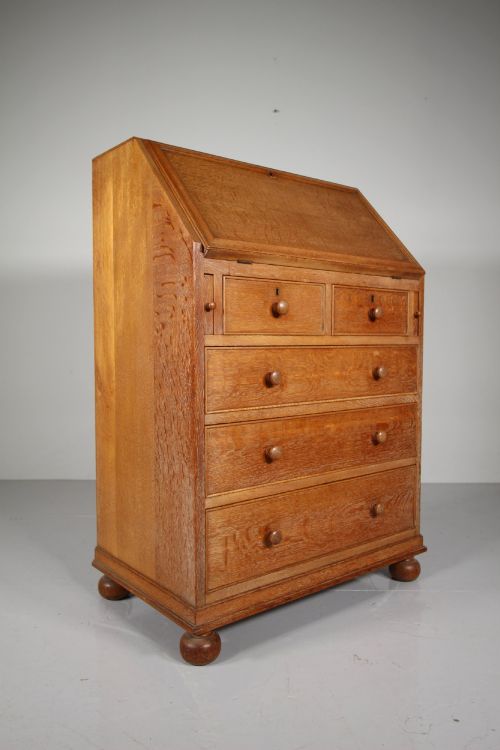
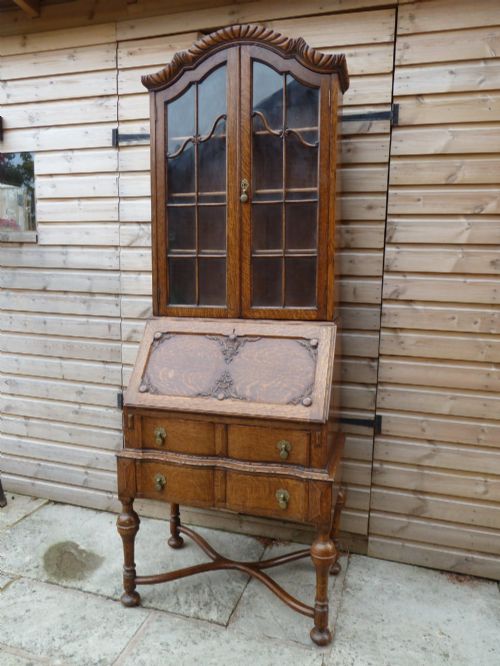
An escritoire generally refers to an upright cabinet with a fall-front writing flap, often associated with French or formal seventeenth and eighteenth-century English cabinetwork. A bureau more commonly describes a sloping desk built over a chest of drawers.
Both forms serve similar correspondence needs, but their internal configurations and exterior proportions vary significantly according to period and origin.
How do I maintain the wood surface?
Maintaining antique wood surfaces requires consistent dusting with a soft, dry cloth and the occasional application of traditional beeswax to nourish the timber. Avoid placing writing cabinets near direct heat sources or in strong sunlight to prevent veneer cracking.
Leather writing inserts benefit from specialised leather dressings applied sparingly to maintain flexibility without staining adjacent wood.
Are the writing surfaces usually leather?
Many writing surfaces feature inset panels of leather, frequently decorated with gold tooling around the perimeter. Some fall-front desks and writing tables retain bare wood interiors or veneered writing flaps instead of leather.
When leather is present, it may show historical tooling and wear consistent with age and actual use.
How do I identify a French piece?
French escritoires and abattants typically feature distinctive elements such as marble tops, gilt ormolu mounts, and exotic wood veneers like kingwood and amboyna. The proportions tend to be upright and architectural, often incorporating rounded corners or cabriole supports.
English equivalents generally rely on architectural cornices, figured walnut or mahogany veneers, and bracket feet or chest bases.