





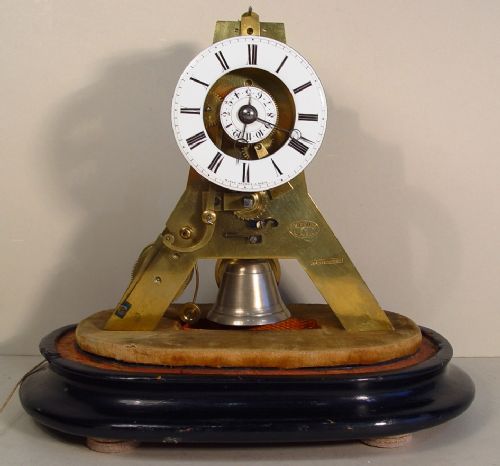


French Ebonised Clock
A french ebonised clock brings dark, reflective timber and crisp gilt mounts together, offering both striking presence and reliable timekeeping for the mantelpiece.
French Ebonised Clock
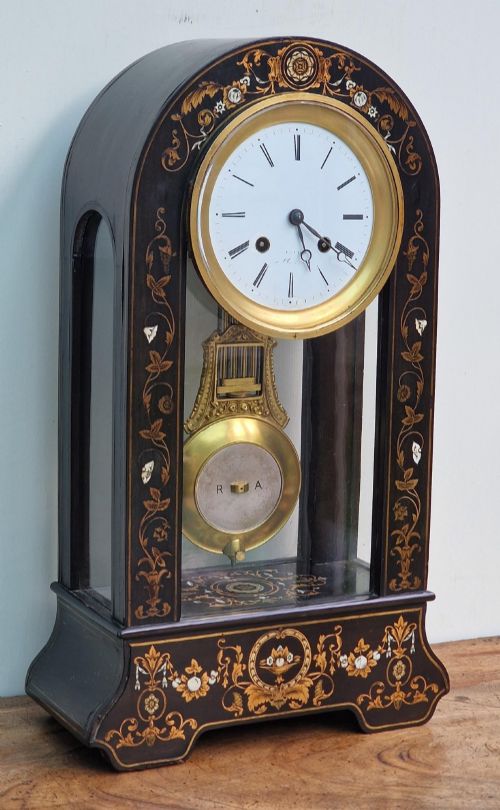
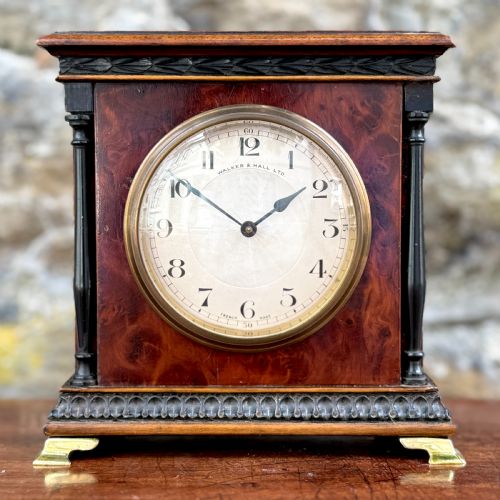
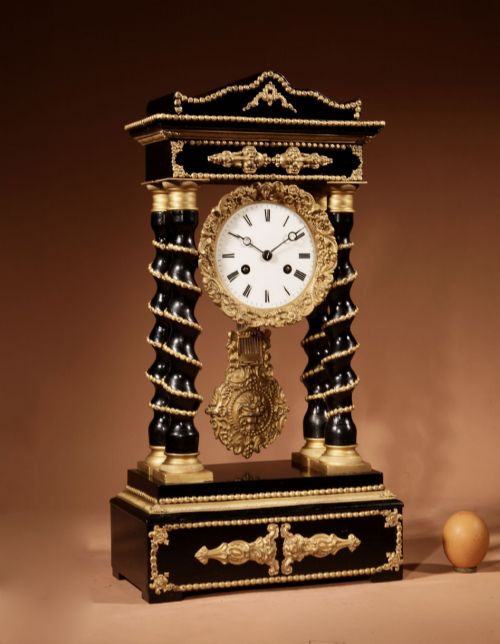
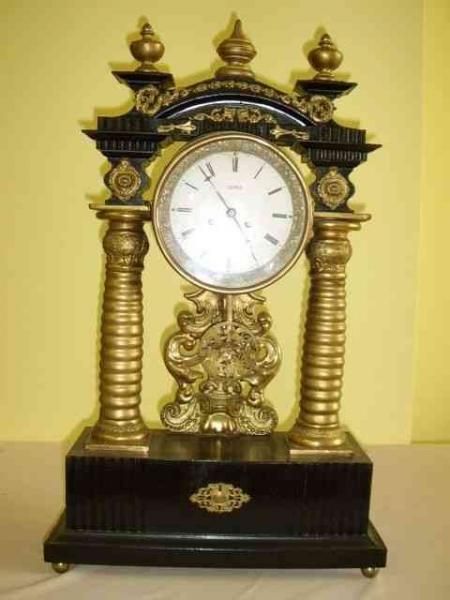
A french ebonised clock takes many forms across the selection, ranging from architectural portico models to wall clocks, picture frame formats, and traditional mantel pieces. These horological pieces combine dark stained wood with contrasting metallic details, suiting studies and drawing rooms alike.
The pieces appearing here span several periods, with Victorian examples and mid-19th century creations appearing alongside Regency, Edwardian, and 18th century pieces. Stylistically, they draw heavily on French Empire, Louis XV Revival, and Napoleon III aesthetics.
Buyers will most frequently encounter mantel clocks and wall clocks within this group, often featuring enamel dials and striking movements. Each piece demonstrates the distinct decorative vocabulary of its period, whether through marquetry inlay or simple architectural lines.
Evaluating the standard
Quality in these clocks rests upon the crispness of the timber finish and the precision of the metal mounts. Better examples display finely cast ormolu and meticulous mother of pearl or metal wire inlay that remains entirely intact.
The sophistication of the movement and the integrity of the dial also divide the range. Superior pieces often house signed movements from recognised makers, paired with balanced proportions and well-preserved glass components.
Several clocks hide complex musical movements and tiny pull alarms inside their dark wooden architectural facades.
Walker and Hall·Le Roy·Henri Marc·Thomas A Paris·Charles Frodsham and Holingue Freres·Payne and Co London·Henri Dasson
The French Ebonised Clock Glossary
- Ebonised
- Wood treated with stain or paint to resemble natural ebony. This dark finish creates a dramatic backdrop for gilt bronze mounts.
- Ormolu
- Gilt bronze ornaments applied to furniture and clock cases. The technique involves coating metal in a gold amalgam.
- Portico clock
- An architectural clock style supported by columns. These tall, symmetrical designs often feature a pendulum visible within the central space.
- Fusee
- A conical pulley used in spring-driven clocks to maintain even power as the mainspring unwinds. This mechanism improves timekeeping accuracy.
- Marquetry
- Decorative veneer patterns applied to wooden surfaces. Artisans cut thin pieces of wood or shell to form pictorial designs.
French Ebonised Clock: Frequently Asked Questions
Where should I place a portico clock?
A portico clock requires a sturdy mantelpiece or console table with adequate depth to support its architectural frame. Because these pieces often feature visible pendulums, positioning them on a level surface ensures proper movement.
Placing the clock away from direct sunlight protects the ebonised finish and enamel dial from fading over time.
How do I wind an antique striking clock?
Winding involves inserting the key into the appropriate winding holes on the enamel dial and turning gently until resistance is felt. Care must be taken not to overwind the mainspring.
For striking models, allowing the strike train to complete its cycle without interruption keeps the timing sequence aligned.
What is the difference between a wall clock and a mantel clock?
Wall clocks are designed to hang securely using dedicated brackets or wall fixings, often incorporating glazed doors or wooden frames like the picture frame format. Mantel clocks stand independently on flat surfaces.
Both types utilise similar mechanical movements, but their housing reflects different interior placement requirements.
How do I identify a Napoleon III period clock?
Napoleon III pieces often combine ebonised wood with lavish ormolu mounts and intricate marquetry or mother of pearl inlay. This mid to late 19th century style draws inspiration from earlier French royal courts.
Examining the construction of the case and the style of the enamel dial helps confirm the Victorian era context.