


French Drop Leaf Table
A french drop leaf table offers clever folding leaves and timber warmth, bringing classic continental utility to modern rooms.

Identifying the French Drop Leaf Table
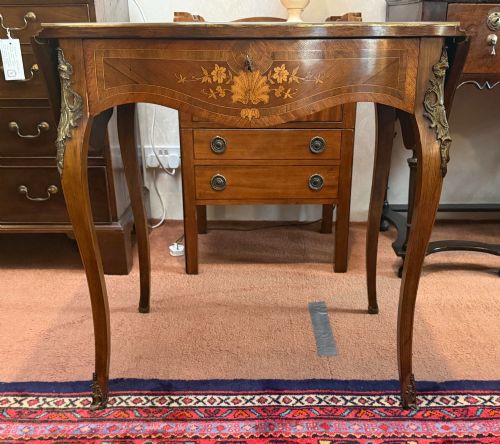
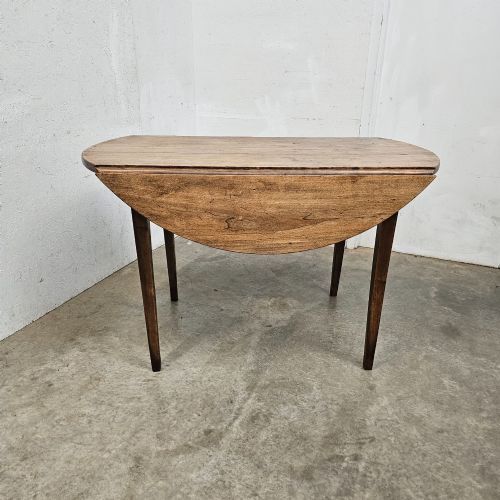
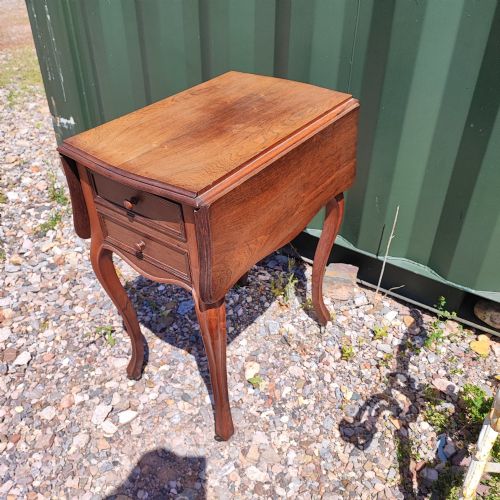
A french drop leaf table combines hinged flaps with sturdy timber framing to save space when not in use. These pieces span compact side tables, occasional lamp tables, and substantial dining or sofa tables. Buyers will regularly encounter walnut, fruitwood, and mahogany examples across this selection.
The styles range from rustic provincial forms to sophisticated Empire, Rococo Revival, and Napoleon III designs. Many pieces feature marquetry inlay, gilt mounts, or ormolu details that elevate the domestic surface into decorative art. Dating stretches from the eighteenth century through the nineteenth century.
Drop leaf mechanisms vary from simple swing legs to gateleg frames supporting extended leaves. Whether seeking a small occasional surface or a larger dining piece, these tables provide flexible footprints suited to varied interior layouts. Each period brings distinct timber choices and decorative flourishes.
Materials and Construction
Cabinet makers utilised a rich palette of solid timbers and veneers including oak, fruitwood, walnut, rosewood, elm, and mahogany. These woods were selected for grain pattern and structural resilience, often finished with a warm, aged patina. Structural stability relied on tight joinery suited to the folding leaf mechanism.
Decorative surfaces frequently incorporated intricate marquetry inlay using contrasting woods and floral motifs. Metal elements such as brass hinges, ormolu mounts, and bronze details were cast and applied to enhance key structural junctions. Timber veneer techniques allowed makers to wrap curved surfaces in rich grain figures.
Retail Price Guide 2026
Typical UK retail prices for french drop leaf table, calculated from the Sellingantiques database of over a million retail prices indexed since 2003. This retail price guide relies exclusively on Sellingantiques data; no external sources or auction records are used, so the figures do not describe the wider market.
Listings feature eighteenth and nineteenth century periods alongside wood types including mahogany, rosewood, fruitwood, oak, and walnut.
Assessing Quality and Execution
Superior execution shows in the precision of the marquetry and the crispness of the gilt bronze or ormolu mounts. The timber selection dictates visual depth, with well-figured veneers and rich patination lifting a piece above standard utility items. Joints remain tight and hinges operate smoothly without sagging flaps.
Design ambition separates simple provincial tables from high-style Empire or Napoleon III showpieces. Master craftsmanship reveals itself in balanced proportions, seamless leaf extensions, and meticulous attention to secondary timbers. The integrity of the drop leaf hinges and supporting framework dictates longevity.
Jean-Joseph Chapuis
The French Drop Leaf Table Glossary
- Drop Leaf
- A table with a fixed centre section and hinged flaps that fold down to save space. These folding leaves are supported by swing legs or brackets.
- Ormolu
- Gilded bronze mounts applied to furniture for decorative accent. This technique was widely utilised in elite French cabinet making.
- Marquetry
- Decorative veneer patterns formed by fitting together small pieces of tinted wood, bone, or shell. It creates intricate pictorial or floral designs across the table top.
- Gateleg Table
- A table with hinged legs that swing out like a gate to support the drop leaves. This construction provides robust support for larger dining surfaces.
- Patina
- The deep, lustrous surface sheen developed on old wood through age, handling, and wax polishing. It serves as a sign of authenticity and careful preservation.
Frequently Asked Questions
How do you use a drop leaf table daily?
These tables adapt easily to changing room layouts by keeping the leaves dropped against the wall or sides as a compact console. Raising one or both leaves creates a larger surface for dining, reading, or displaying objects.
The folding mechanism allows owners to maximise floor space in smaller rooms without sacrificing surface area when entertaining.
How do I care for antique wood surfaces?
Maintain antique timber by keeping it away from direct sunlight and sudden temperature shifts that cause wood to dry or crack. Regular dusting with a soft cloth preserves the finish.
Apply a quality beeswax polish periodically to nourish the grain and protect the historic patina without using harsh modern chemical sprays.
How do I date a nineteenth century table?
Dating relies on examining the timber species, construction techniques, hardware, and stylistic motifs characteristic of specific periods like the Empire or Napoleon III eras. Hand-cut joinery and aged patination point towards older manufacturing methods.
Comparing decorative details such as marquetry patterns and ormolu casting styles helps narrow down the decade of production.