

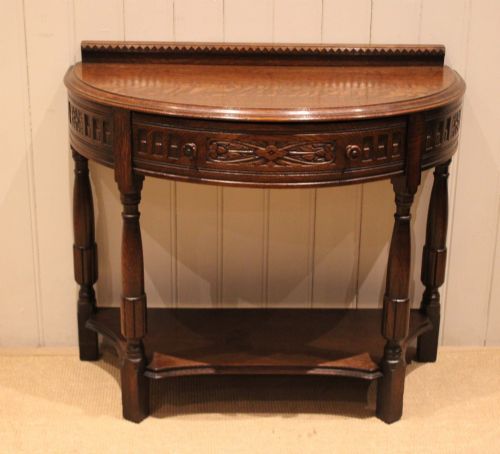
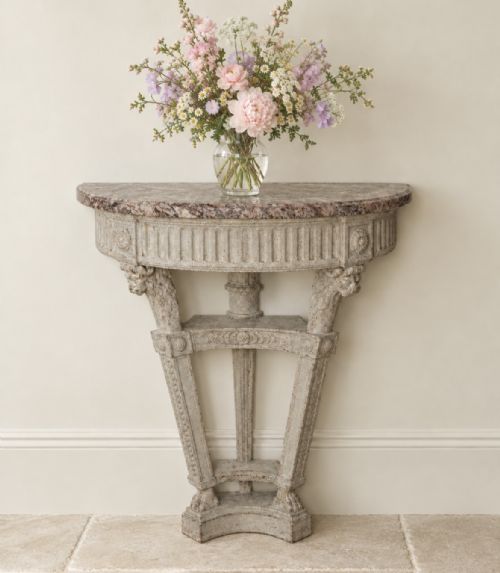


French Demilune Console
A French demilune console brings half-moon elegance to a hallway or drawing room, offering flat-backed poise against a wall.
French Demilune Console
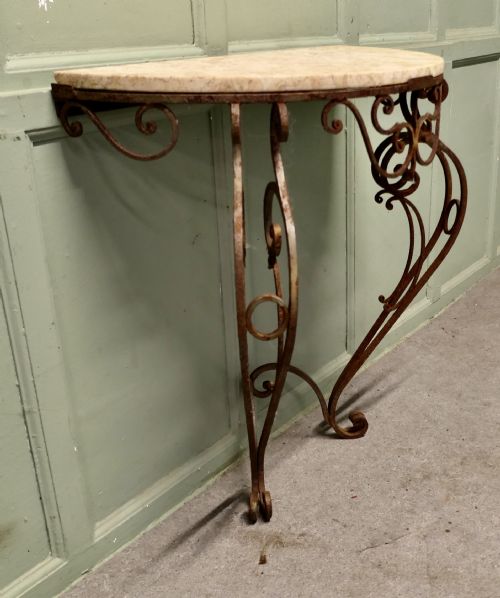
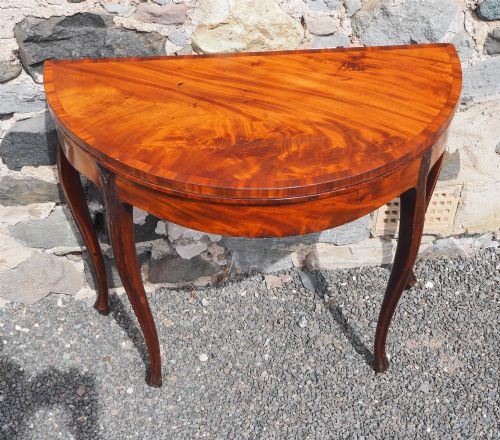
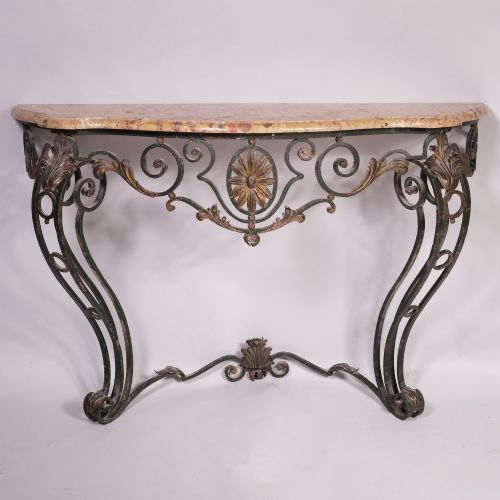
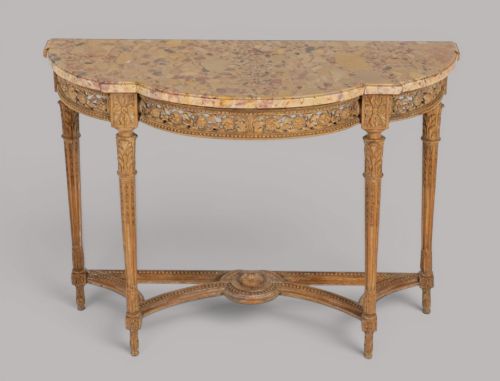
When you search for a french demilune console, you encounter half-moon tables designed to sit flush against a wall in hallways and principal rooms. The selection ranges from eighteenth-century examples to later pieces from the nineteenth and early twentieth centuries.
Most entries on this page adopt classical furniture languages such as Louis XVI, Neoclassical, and French Rococo. Alongside dedicated console tables, the inventory includes card tables, side cabinets, and occasional tables sharing the characteristic semi-circular footprint.
How they were made
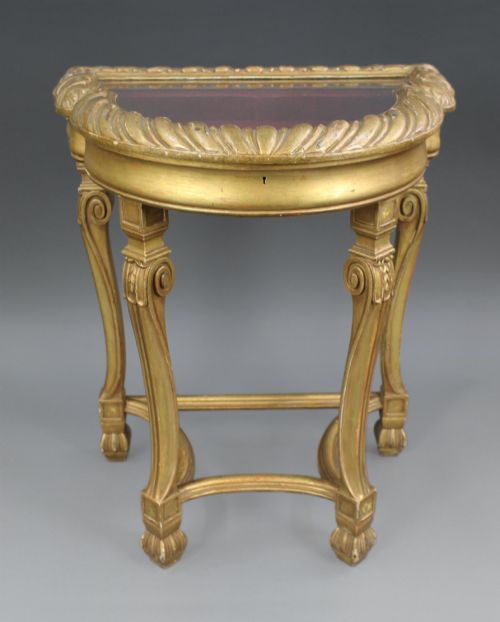
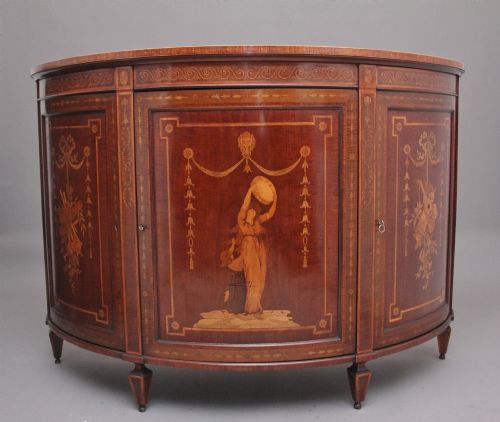
Cabinetmakers constructed these frames from timber such as mahogany, walnut, oak, and kingwood, frequently applying paint, gold leaf, or gesso finishes. Surface decoration also incorporates parquetry inlay and elaborate carving.
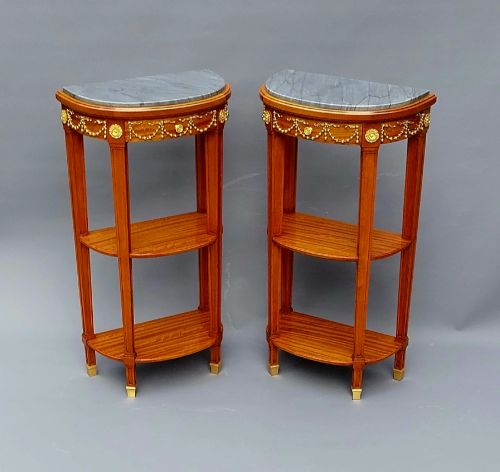
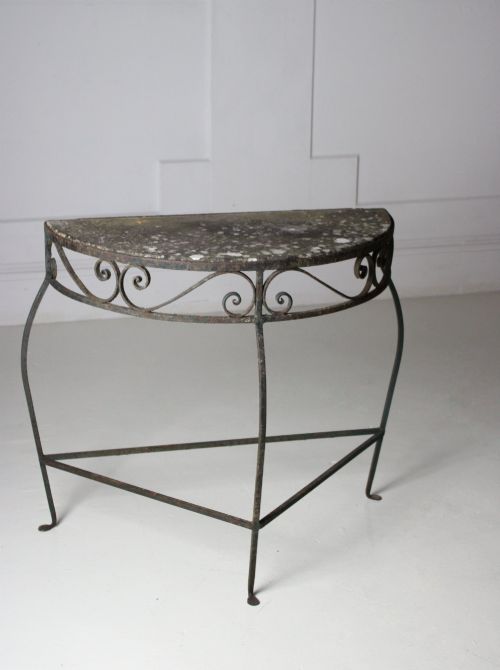
Many tables are topped with heavy stone slabs, predominantly marble, shaped to match the curved wooden frames beneath. Structural support relies on sturdy carpentry joined with ironwork elements like wrought iron for rustic or industrial variations.
French Demilune Console Retail Price Guide 2026
Typical asking prices for french demilune console among the pieces listed under this phrase on Sellingantiques today, from the lower quarter to the upper quarter. They describe what is for sale here now, not the wider market.
Listings span multiple decades from the eighteenth century through the 1930s, featuring timber, marble, and wrought iron.
What varies in quality
The distinction between ordinary and exceptional pieces rests upon the crispness of the carved ornamentation and the finesse of the applied gilding or paint. Superior examples display harmonious proportions between the heavy marble tops and the supporting woodwork.
Material selection dictates the grade of the console, separating solid native hardwoods and finely figured veneers from simpler painted pine or rustic iron frames. The integrity of the original stone slab and the precision of the joinery further separate workshops.
The French Demilune Console Glossary
- Demilune
- A half-moon shape used for console tables designed to fit flat against a wall.
- Giltwood
- Timber coated with gold leaf or gold paint to provide a reflective surface.
- Parquetry
- Geometric wood inlay patterns fitted together to create decorative tabletops.
- Console
- A decorative table supported by wall brackets or legs, built to stand against vertical surfaces.
- Gesso
- A plaster-like mixture applied to wood surfaces to prepare them for painting or gilding.
French Demilune Console: Frequently Asked Questions
Where should I place a demilune table?
These half-moon tables suit entrance halls, narrow corridors, and drawing rooms where floor space is limited. Their flat backs allow them to stand securely against vertical surfaces.
They function well beneath mirrors or paintings, providing a display surface without blocking thoroughfares.
How do I care for a marble top?
Marble surfaces require regular dusting with a soft cloth and immediate wiping of spills to prevent staining. Acidic liquids can etch the stone polish over time.
Use coasters and protective pads beneath objects placed on the stone to guard against scratches.
Are these tables strictly French?
While the design vocabulary draws heavily on French styles like Louis XVI and Rococo, the inventory includes pieces made across different regions. Makers in various countries interpreted these aesthetic traditions.
Stylistic markers indicate the design lineage rather than guaranteeing a workshop origin in France.
What is the difference between a console and a side cabinet?
A console table is primarily an open frame with legs supporting a top slab, intended mainly for display. Side cabinets incorporate enclosed storage space behind doors.
Both formats utilise the half-moon footprint to save space against walls.