

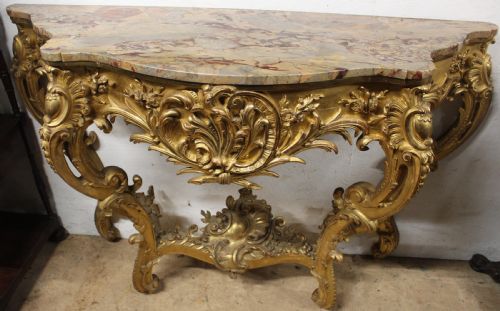


French Gilt Entry Table
A French gilt entry table brings gilded splendour and cool marble into a hallway, offering an instant statement of continental grandeur.
French Gilt Entry Table
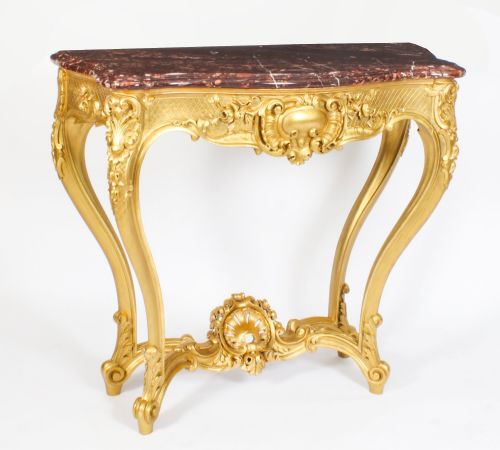
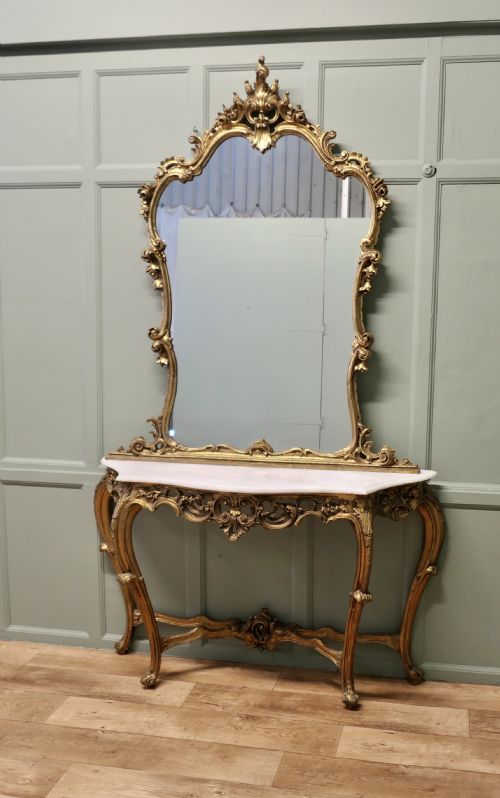
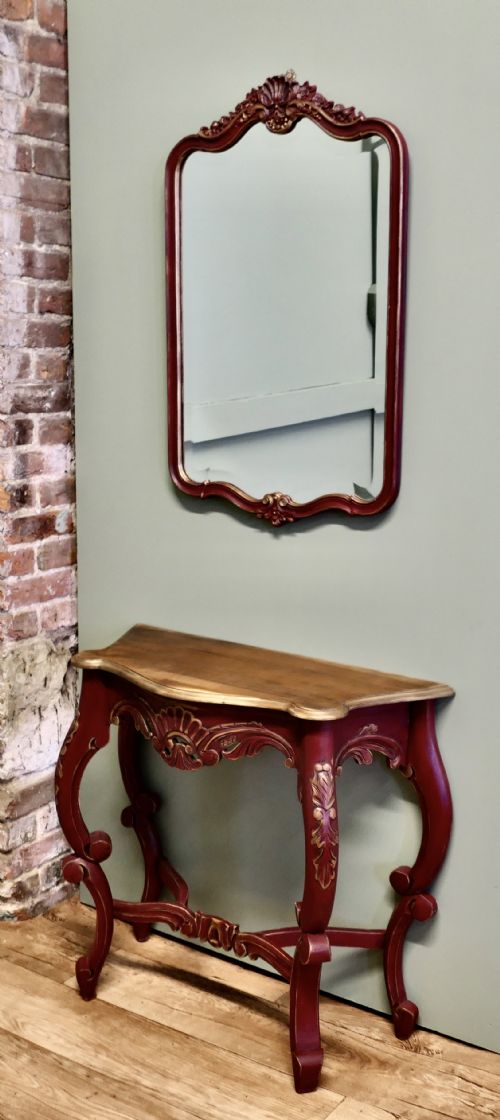
A French gilt entry table is a decorative furnishing designed for hallways and reception rooms, combining carved wooden frames with metallic leaf and stone tops. These pieces take the form of console tables placed against walls, complete mirror sets, or freestanding centre tables.
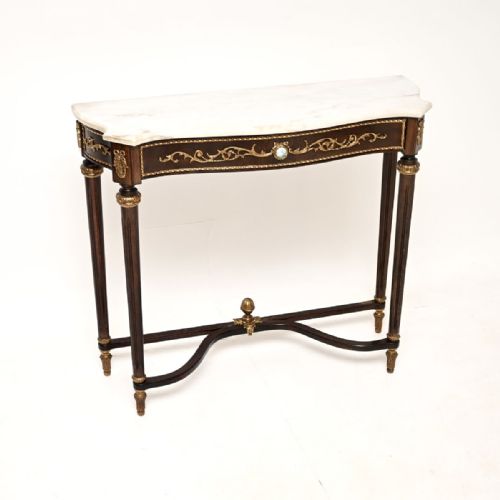
The selections available here span several centuries and stylistic revivals, with the nineteenth century heavily represented alongside eighteenth-century examples and later twentieth-century iterations. Buyers encounter forms ranging from ornate Rococo curves to restrained Louis XVI neoclassical lines.
Console tables dominate the listings, often featuring shaped marble surfaces paired with giltwood or gesso structures. Centre tables also appear, providing circular or oval formats finished with bronze ornaments and parquetry.
Materials and construction
The structural foundations rely on timber such as kingwood, painted wood, and carved giltwood, often enriched with applied gesso to build up intricate relief ornaments. Artisans applied gold leaf or metallic gilding to these wooden carcasses to achieve the characteristic reflective brilliance.
Heavy stone slabs, notably marble and Sienna marble, form the traditional table tops, providing a cool and durable surface that contrasts with the ornate gilded frames below. Bronze or ormolu mounts and wrought iron elements occasionally appear as decorative accents or structural supports.
French Gilt Entry Table Retail Price Guide 2026
Typical asking prices for french gilt entry table among the pieces listed under this phrase on Sellingantiques today, from the lower quarter to the upper quarter. They describe what is for sale here now, not the wider market.
Materials documented across the inventory include marble, giltwood, gesso, ormolu, painted wood, gold leaf, and kingwood.
Assessing craftsmanship and execution
Quality reveals itself in the crispness of the wood carving and the depth of the gilding, where hand-tooled details surpass flat or mechanically applied finishes. Superior examples show meticulous attention to the joints and the integration of the marble top within the wooden frame.
The selection of materials further distinguishes the range, particularly the thickness and figuring of the marble slab and the use of dense hardwoods like kingwood. Finer pieces demonstrate harmonious proportions between the elaborate base ornamentation and the supporting stone surface.
Francoise Linke
The French Gilt Entry Table Glossary
- Giltwood
- Wood that has been coated with gold leaf or a gold-coloured metallic finish. This technique creates a luminous surface that catches candlelight and daylight alike.
- Console table
- A table supported by wall brackets or console legs, designed to stand flush against a wall. They frequently accompany matching wall mirrors.
- Ormolu
- Gilded bronze ornamentation applied to furniture and decorative objects. The technique involves fusing gold amalgam to a bronze base through intense heat.
- Gesso
- A plaster mixture applied to wood surfaces as a base for painting or gilding. It allows craftsmen to carve intricate low-relief decorations before applying gold leaf.
- Kingwood
- A dense, richly figured exotic wood utilised in fine cabinetry and parquetry. Its dark grain provides a striking contrast to gilt mounts.
French Gilt Entry Table: Frequently Asked Questions
Where should I place a console table?
These tables find their natural home in entrance halls, corridors, or principal reception rooms where their decorative presence can be appreciated immediately upon entering a space.
Because they traditionally stand against a wall, they occupy minimal floor depth while offering a surface for lamps, vases, or decorative objects.
How do I care for a marble top?
Marble surfaces require gentle cleaning with a soft, damp cloth and neutral soap, avoiding acidic cleaning agents that can etch the polished stone.
Using coasters and placemats helps protect the historical surface from moisture rings and scratches during daily use.
What is the difference between a console and centre table?
A console table is built to stand flat against a wall, frequently anchored or shaped to fit architectural perimeters.
By contrast, a centre table is freestanding and finished on all sides, designed to occupy the middle of a room.
How do I identify Louis XVI style?
Louis XVI style is characterised by straight tapered legs, neoclassical symmetry, and geometric or classical motifs rather than the exuberant curves of Rococo.
This aesthetic favours architectural restraint, crisp carving, and balanced proportions.