


French Country Tapestry
French country tapestry pieces bring domestic warmth and historic texture into a room through woven pastoral scenes and floral motifs.
French Country Tapestry
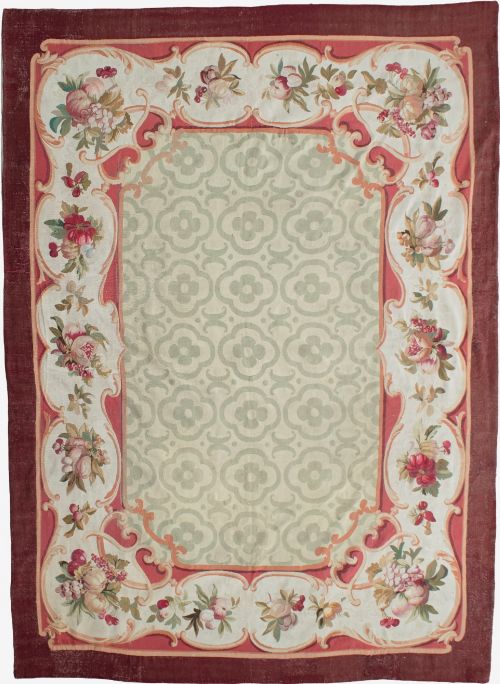
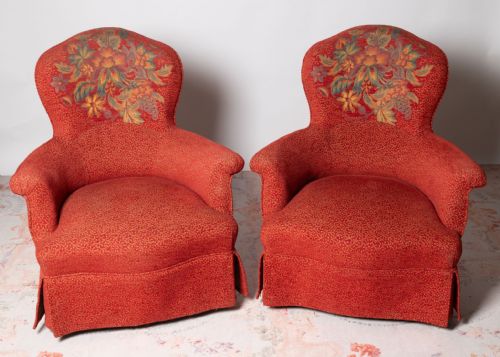
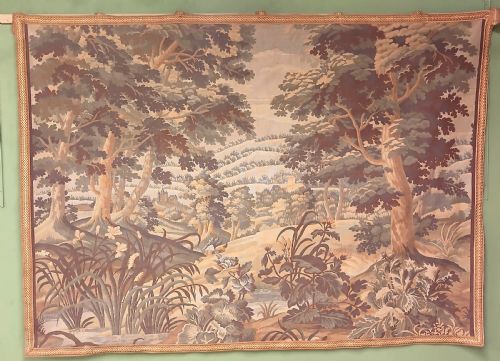
When you search for french country tapestry, you encounter wall hangings, carpets, cushions and upholstered seating like armchairs and settees. The pieces originate from periods spanning the seventeenth century through to the nineteen-thirties, reflecting regional craft traditions.
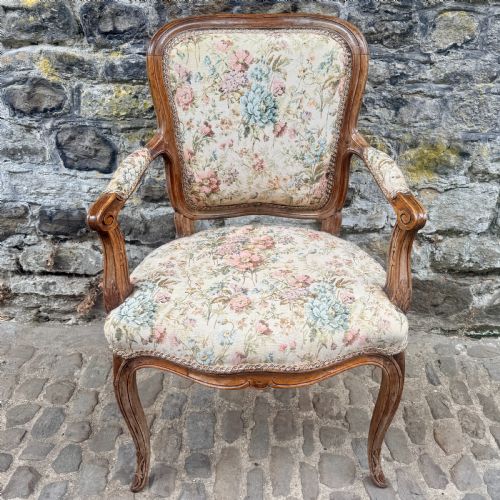
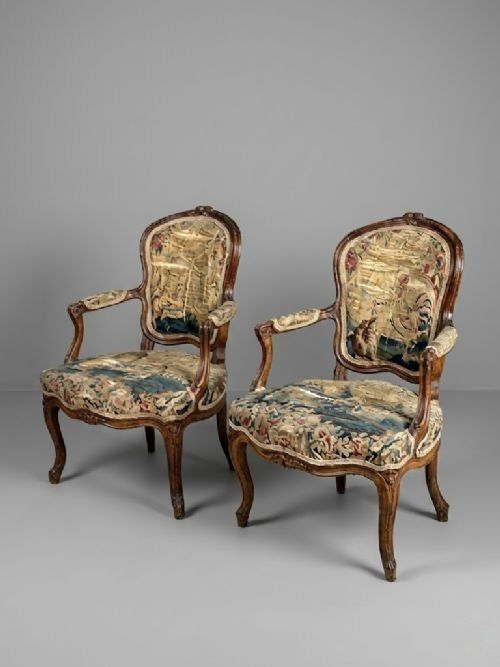
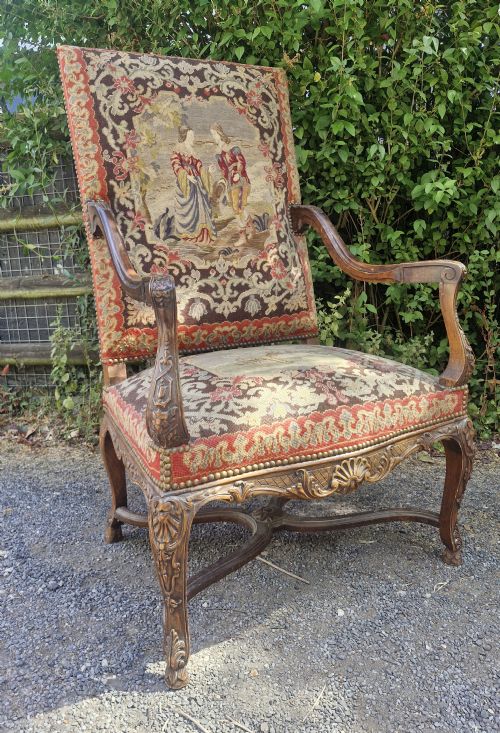
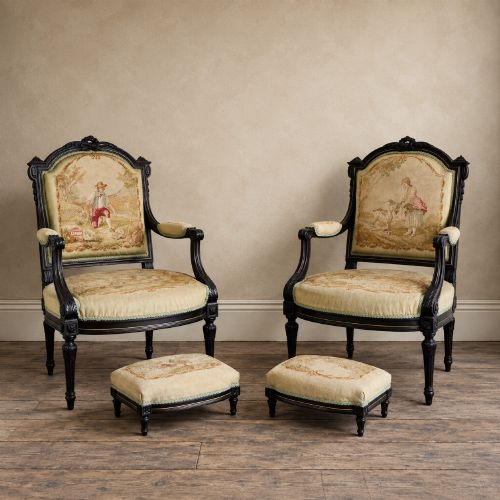
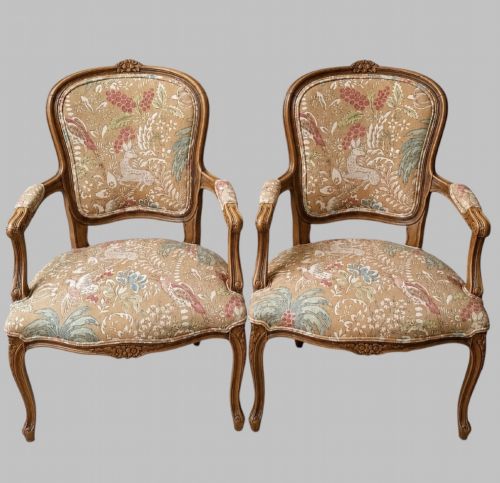
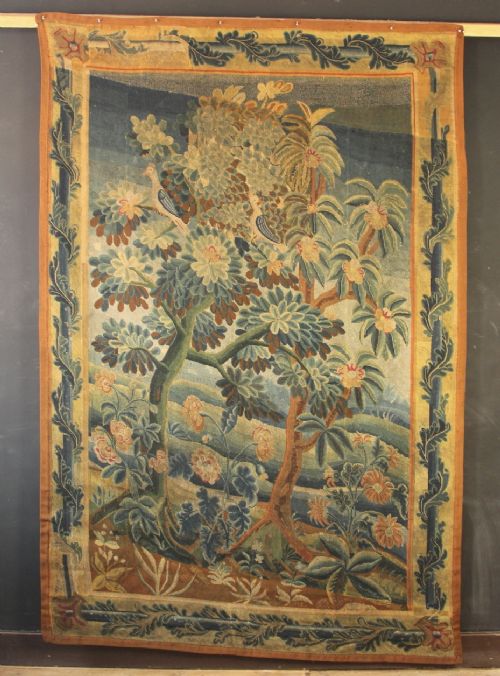
You are most likely to meet nineteenth-century armchairs and smaller cushions upholstered in needlework and tapestry fabric, alongside wall panels depicting pastoral subjects. These items draw on styles such as French provincial, Louis XV and Louis XVI revivals.
The selection includes larger rugs and carpets, often associated with Aubusson production, which bring patterned colour directly to the floor. Frames accompanying these textiles are typically carved from walnut, beech or painted wood.
What varies in quality
The density and fineness of the weave determine the crispness of the pictorial detail in the textile sections. Tighter stitching and careful colour blending in wool and silk separate standard work from finer productions.
Woodwork quality rests on the depth and definition of hand carving on frames, alongside the structural integrity of joints in armchairs and settees. The harmony between the original frame and its textile covering influences the overall integrity of the piece.
Current listings feature materials including wool, cotton, silk, walnut, brass and tapestry fabric across pieces dated from the seventeenth century to the nineteen-thirties.
The French Country Tapestry Glossary
- Aubusson
- A town in France renowned for producing carpets and wall tapestries woven on low-warp looms. These items often feature floral bouquets or pastoral landscapes.
- Fauteuil
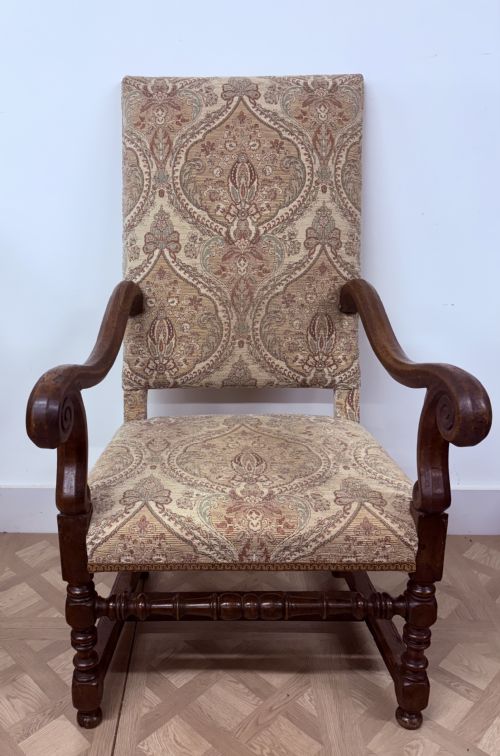
- An open-framed armchair with upholstered seat and back, originating in France. Wooden armrests typically feature padded elbow rests.
- Canapé
- A French decorative sofa or settee designed for multiple seating. These pieces often share stylistic traits with contemporary armchairs.
- Needlepoint
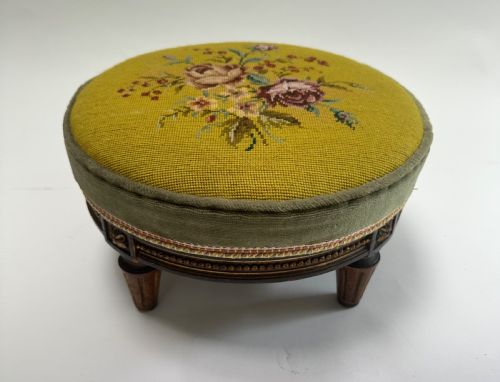
- Embroidery stitched onto a canvas mesh ground to create pictorial or geometric designs. This technique frequently appears on period chair seats and cushions.
- Louis XV Revival
- A nineteenth-century design style mimicking the flowing asymmetrical curves and rococo motifs of the mid-eighteenth century. Furniture from this period exhibits cabriole legs and carved floral ornament.
French Country Tapestry: Frequently Asked Questions
How do I clean an antique tapestry?
Antique tapestries require gentle surface cleaning and professional textile conservation rather than standard washing. Vacuuming through a protective mesh screen removes loose dust without catching fragile threads.
Avoid chemical solvents and direct sunlight to protect the wool and silk fibres from fading or weakening over time.
Where were these tapestries made?
Many woven carpets and wall hangings originate from weaving workshops in Aubusson and other regional French centres. Other pieces represent local domestic production across French provincial areas.
Maker attributions often rely on stylistic conventions, textile techniques and regional weaving characteristics rather than explicit signatures.
Can I use these cushions daily?
Period cushions upholstered in antique tapestry fabric add historic character to modern seating but require mindful handling. Gentle use helps preserve fragile wool and cotton threads from excessive friction and wear.
Rotating the cushions periodically ensures even distribution of use across the antique needlework surfaces.
How do I identify a revival style?
Revival pieces incorporate design elements from earlier French reigns, such as the curved cabriole legs of Louis XV or the straighter lines of Louis XVI. Cabinetmakers produced these interpretations during the nineteenth century and into the twentieth century.
Wood types, construction methods and joinery details help distinguish nineteenth-century revival furniture from authentic eighteenth-century originals.