
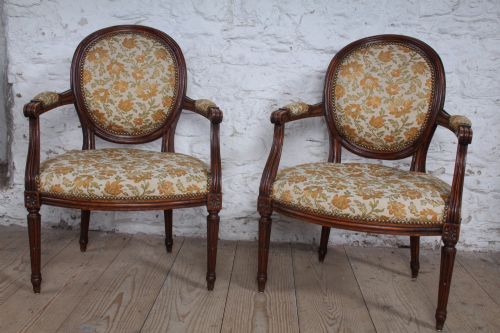
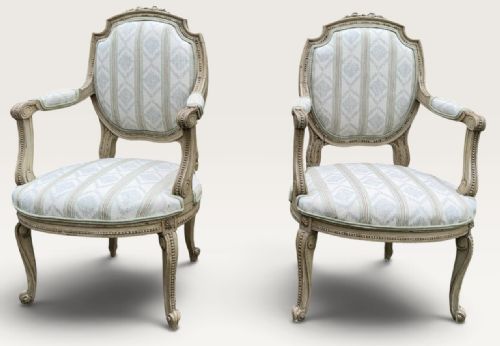
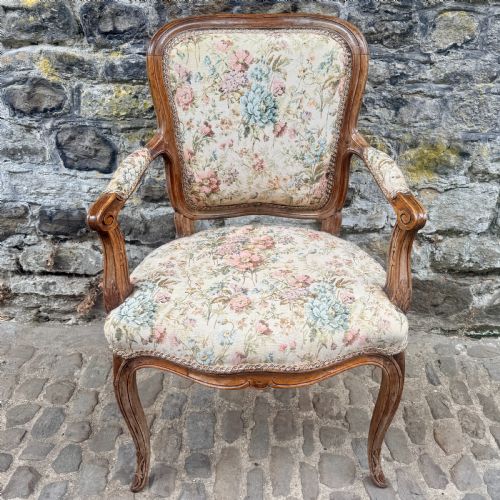
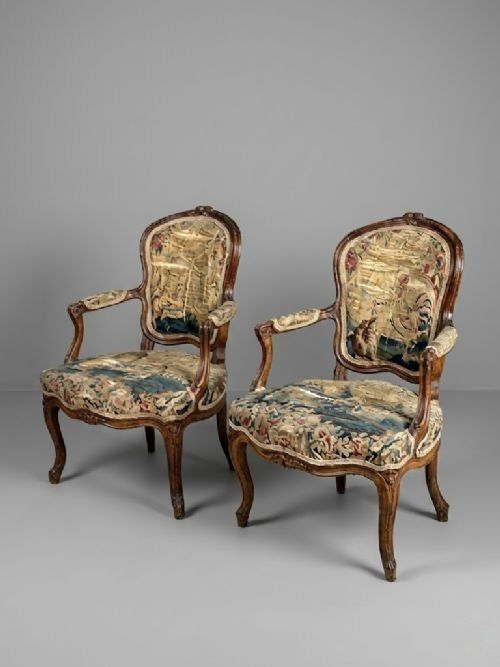
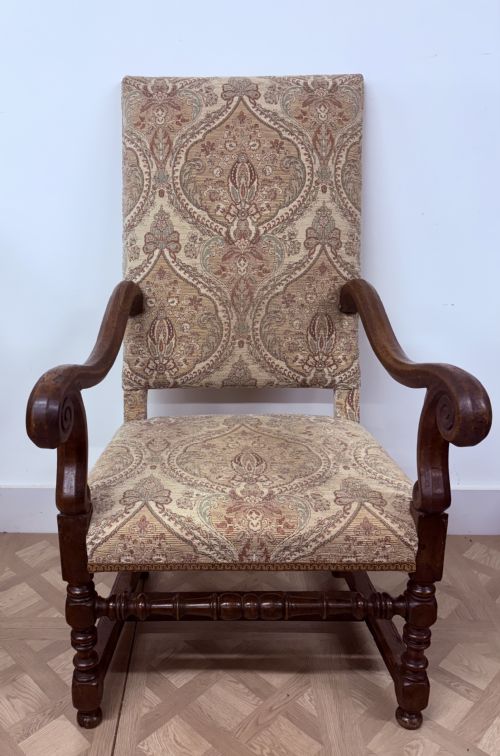
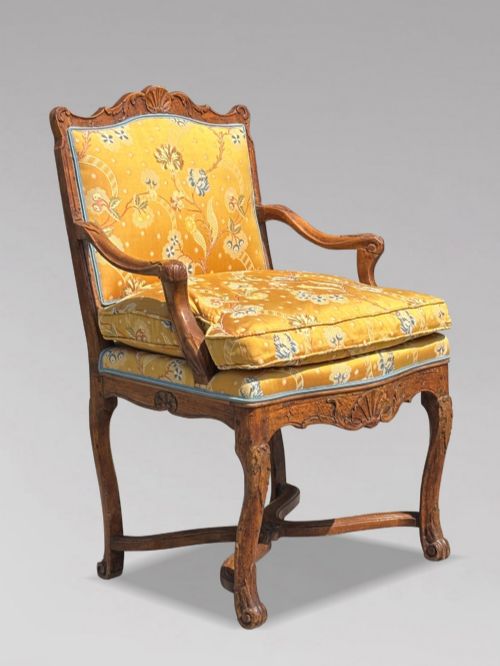
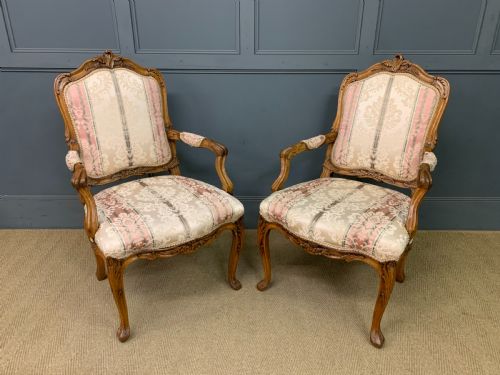
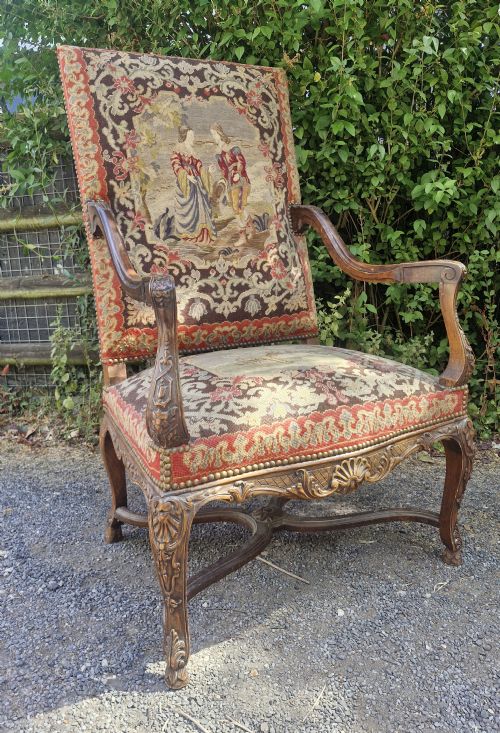
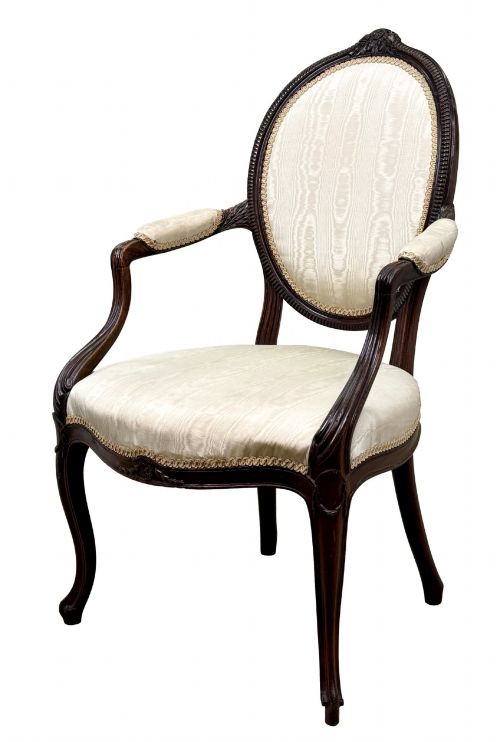
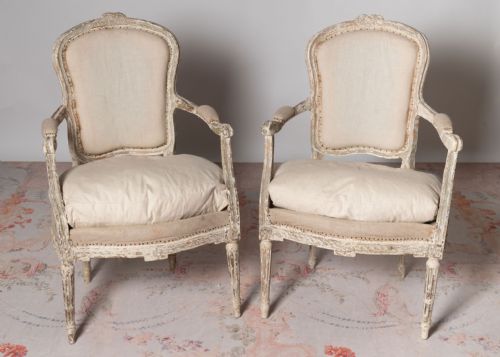


French Country Fauteuil
A french country fauteuil brings relaxed elegance and carved wood to a room, offering comfortable seating rooted in traditional provincial design.
French Country Fauteuil
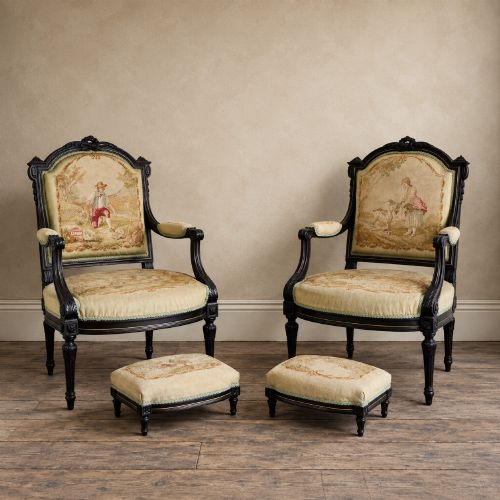
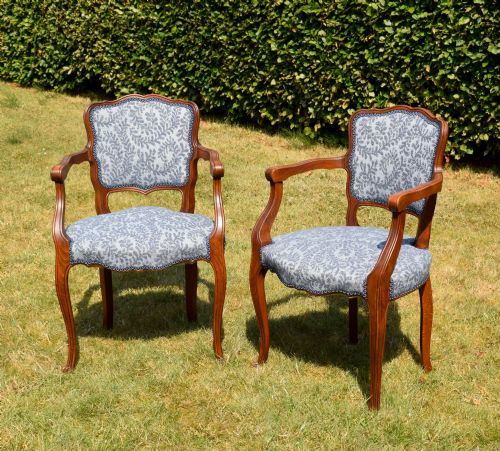
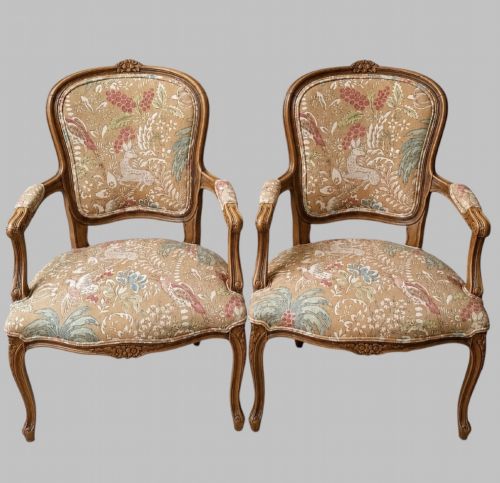
A french country fauteuil is an open-arm upholstered chair originating from continental traditions, designed for parlour and salon use. Buyers searching this phrase look for seating that combines formal curves with rustic charm.
The selections available here span from authentic eighteenth-century examples to later revival pieces produced across the nineteenth and early twentieth centuries. Many survive as pairs or within small suite groupings alongside matching sofas.
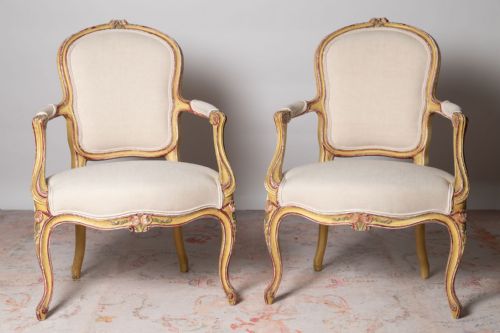
Provincial interpretations lean towards simpler carved frames and original painted surfaces rather than heavy gilding. These domestic seating forms remain practical additions to modern interiors seeking historical character.
Materials and construction methods
Cabinetmakers shaped the structural frames of a french country fauteuil from domestic hardwoods including beech and walnut. Walnut frames often display intricate hand-carved details, while beech frequently accepted the layers of paint found on provincial pieces.
Traditional upholstery techniques utilised natural stuffing materials secured beneath woven textiles, tapestry fabric, or needlework panels. Many surviving examples retain original painted finishes applied directly to the timber frame.
Current listings demonstrate a prevalence of nineteenth-century walnut and beech frames alongside eighteenth-century provincial examples.
Distinguishing quality in period seating
The definition of a superior french country fauteuil rests upon the crispness of the wood carving and the integrity of the frame joints. Hand-carved walnut exhibits depth and precision that distinguish bespoke workshop production from later mass-produced revivals.
Surface preservation dictates much of the desirability, particularly where original paint or patinated walnut remains intact. Chairs retaining period textile covers or traditional needlepoint upholstery offer greater authenticity than modern replacements.
The French Country Fauteuil Glossary
- Louis XV
- A decorative style defined by asymmetrical curves, cabriole legs, and organic rococo motifs. Named after the French monarch, it heavily influences provincial furniture.
- Louis XVI
- A neoclassical design movement characterised by straight tapered legs, fluted columns, and geometric symmetry. It represents a shift away from earlier curving rococo excess.
- Provincial
- Furniture made in the regions outside Paris by local craftsmen adapting metropolitan styles. These pieces often display simpler execution and charming local characteristics.
- Aubusson
- Tapestry woven in the French town of the same name, frequently utilised for historical chair coverings. Such textiles depict floral scenes or pastoral landscapes.
French Country Fauteuil: Frequently Asked Questions
How do I date a french country fauteuil?
Dating relies upon examining the tool marks left by hand-carving, the construction joints of the wooden frame, and the ageing of the timber. Stylistic clues such as cabriole legs or straight tapered supports align pieces with specific eighteenth or nineteenth-century periods.
Changes in upholstery methods and textile types also assist in determining age. Examining the underneath of the seat rails reveals historical webbing or foundation materials consistent with particular eras of production.
Are these chairs comfortable for daily use?
Most antique french country fauteuil designs provide an upright seating position intended for formal conversation rather than lounging. The open armrests and supportive back structures suit placement in studies, bedrooms, or drawing rooms.
Comfort depends heavily on the condition of the internal stuffing and springing. Buyers intending frequent use often assess whether the historical upholstery requires professional reupholstering for modern standards.
Should I keep original painted finishes?
Original painted surfaces on a french country fauteuil carry significant historical value and desirable patination. Preserving the worn layers of historic paint maintains the authentic character acquired over centuries of use.
Stripping or repainting an antique frame removes evidence of age. Collectors generally prefer pieces displaying untouched surface wear rather than freshly applied decoration.