
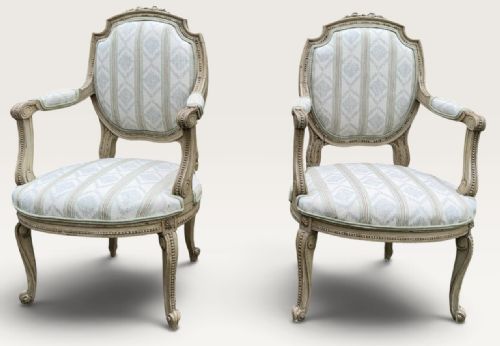
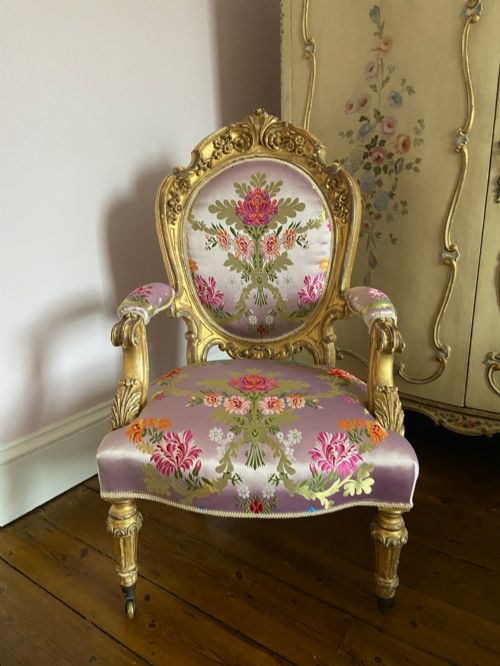
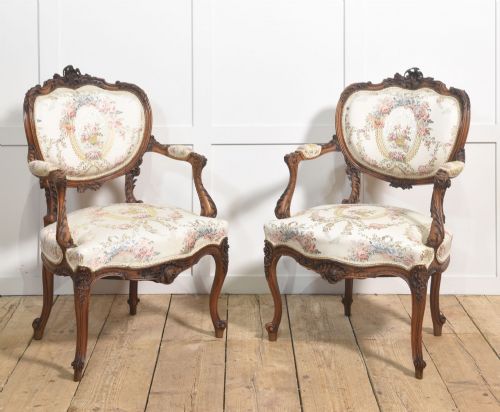
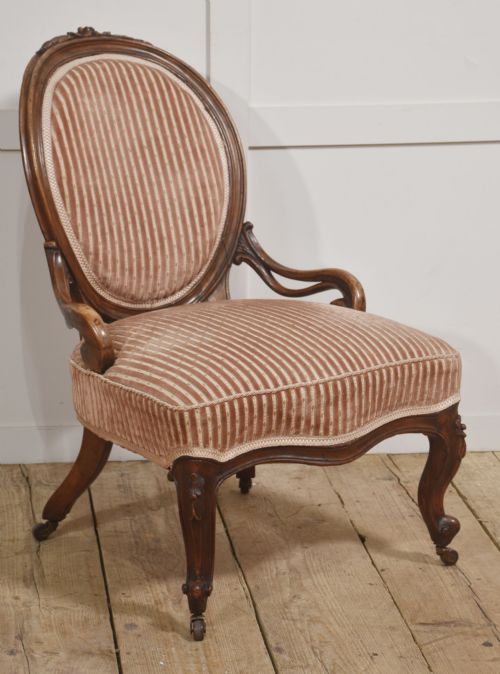


Carved Frame Open Armchair
A carved frame open armchair offers exposed timberwork and upholstered comfort, making it a striking seating choice for a traditional interior.
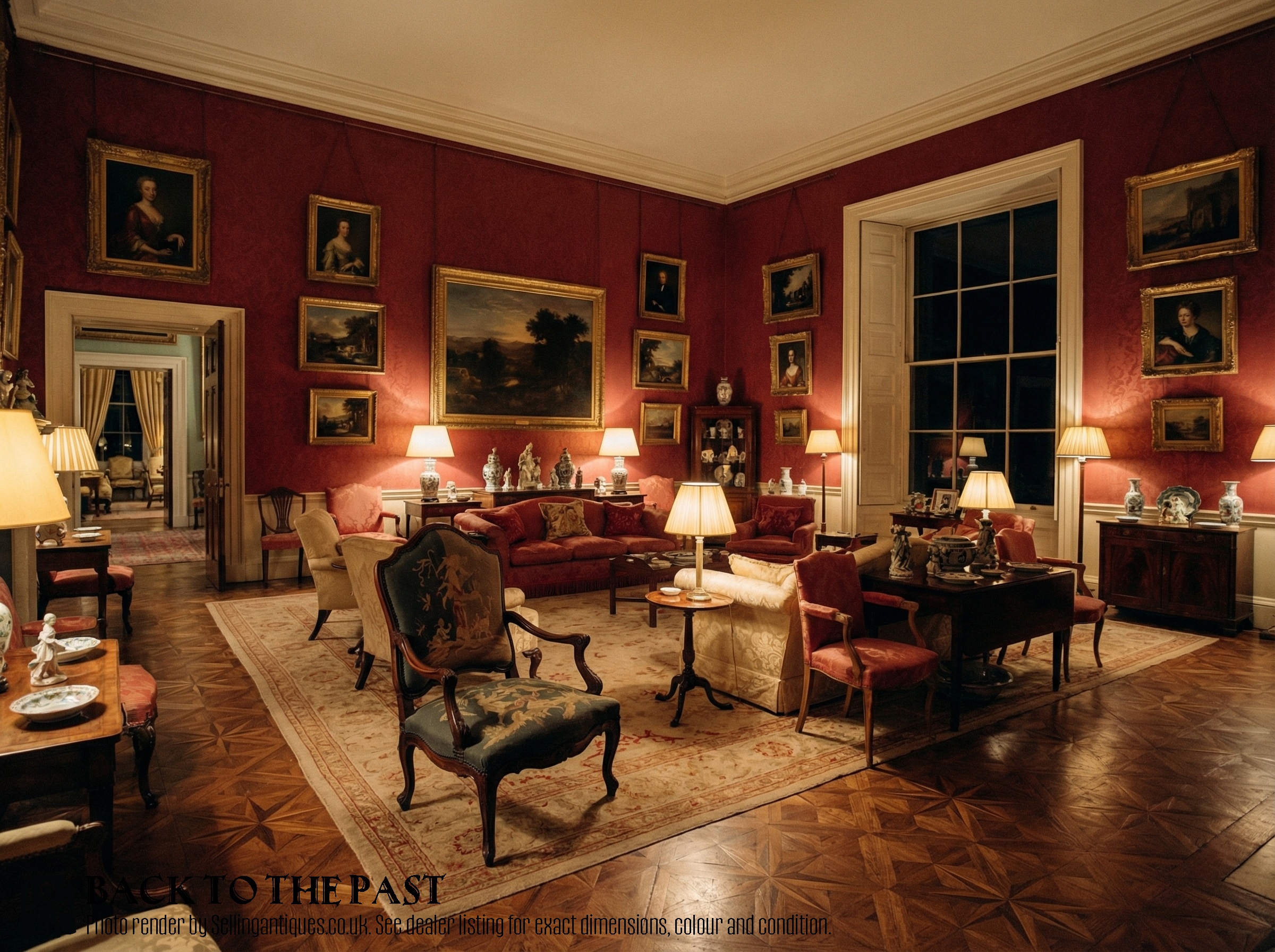
Carved Frame Open Armchair
When you search for a carved frame open armchair, you are looking at seating defined by a visible timber structure and open sides rather than fully upholstered arms. These pieces range from compact salon chairs to large proportioned examples designed for drawing rooms and halls.
On this page, the most frequent forms you will meet date from the nineteenth century, including Victorian and Edwardian periods. Many of these reflect continental influences such as French Louis XV style fauteuils alongside English mahogany and walnut framing.
The selection includes pairs and sets alongside individual armchairs, spanning styles from French Rococo and Gothic to Georgian revival. Materials vary from walnut and mahogany to rosewood and giltwood, often upholstered in velvet, leather, or textile.
How they were made
Cabinet makers and joiners shaped these structures from dense hardwoods such as walnut, mahogany, rosewood, and oak. Frames were intricately hand-carved with floral motifs, scrolls, or structural moulding before being polished or painted.
Upholstery techniques involved securing webbing and springs to support horsehair or textile stuffing, which was then covered in materials like velvet, leather, or decorative fabric. Brass tacks or gimping secured the edges of the upholstery against the show frame.
Some nineteenth-century makers evidently decided that an armchair simply wasn't finished without an abundance of carved rosewood foliage.
What varies in quality
The depth and crispness of the hand-carving define the distinction between standard production and superior craftsmanship. Sharp detailing on walnut and mahogany frames indicates a skilled hand at work.
Proportion and timber selection also divide the range, with dense grain patterns and well-balanced structural forms commanding greater attention. Original surface treatments, whether historic paint or aged polish, preserve the integrity of the piece.
The Carved Frame Open Armchair Glossary
- Fauteuil
- An open-arm armchair with an exposed wooden frame, originating in France and typically upholstered on the seat and back.
- Show frame
- A wooden chair structure where the carved timber remains entirely visible around the upholstered elements.
- Oval back
- A chair back shaped in an oval contour, frequently found in French style seating from the nineteenth century.
- Curule style
- A form of chair design featuring X-shaped supporting legs inspired by ancient Roman folding seats.
Carved Frame Open Armchair: Frequently Asked Questions
What is a fauteuil armchair?
A fauteuil is an open-arm chair with a visible wooden frame, typically walnut, mahogany, or giltwood. These pieces originated in France and combine exposed decorative carving with upholstered seating.
The design allows for comfortable yet formal seating, making them popular additions to drawing rooms and reception spaces throughout the nineteenth century.
How do I identify a Victorian armchair?
Victorian armchairs often feature dark hardwoods like walnut or mahogany with substantial carved frames. They frequently showcase revival influences, including Louis XV styles and Gothic motifs.
Upholstery on these chairs commonly utilises velvet, leather, or woven textiles, set within robust proportions that reflect nineteenth-century comfort and craftsmanship.
Were these chairs made in pairs?
Many nineteenth-century and Edwardian open armchairs survive as matched pairs or larger sets. Drawing rooms of the period typically required symmetrical seating arrangements.
Pairs often share identical carved details, timber selections, and upholstery styles, making them suitable for flanking a fireplace or positioning across a room.
What woods were used for frames?
Walnut and mahogany are the most common hardwoods found in these framed armchairs. Rosewood, oak, and giltwood also appear across various nineteenth-century styles.
These dense timbers provided the structural strength required for intricate hand-carved details along the arms, legs, and crest rails.